Quick Answer: Are Electric Sports Cars Worth Buying?
Electric sports cars deliver supercar-level acceleration (0-60 in 2-4 seconds) at a fraction of the running cost, but they demand trade-offs: higher insurance premiums (20-40% above gas equivalents), heavy curb weights that affect tire wear, and range that drops 20-30% on aggressive canyon drives or in cold weather. The best fit is a driver with home Level 2 charging who wants daily-drivable performance and doesn't need 400+ miles of track-day range. If you lack reliable home charging, a gas sports car or performance hybrid like the Corvette E-Ray remains more practical.
The Electric Sports Car Landscape in 2026
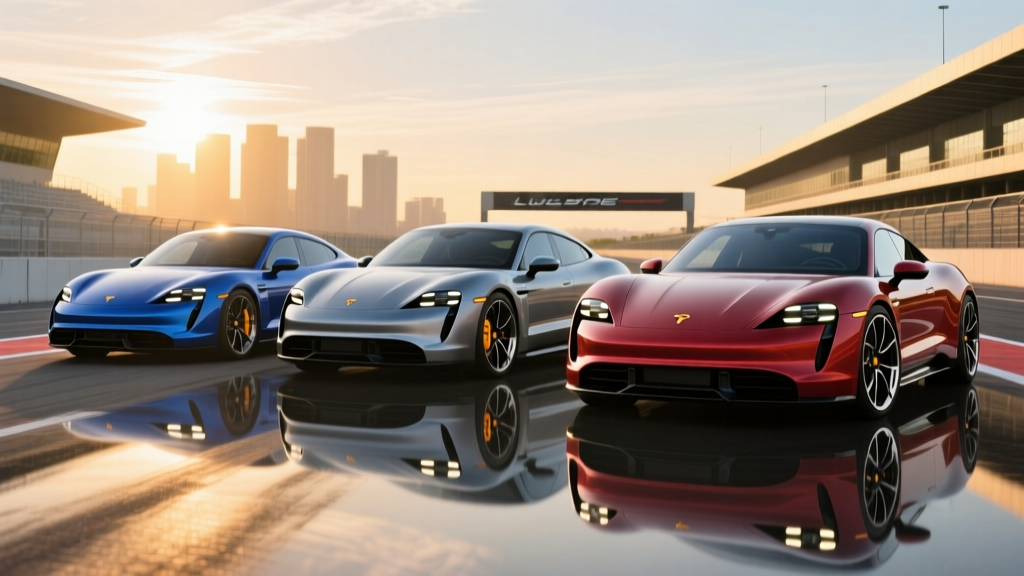
The performance EV segment has matured significantly. What once meant only the Tesla Model S Plaid now includes the Porsche Taycan Turbo GT, BMW i4 M50, Hyundai Ioniq 5 N, Audi RS e-tron GT, and the Lotus Emeya R. Each targets a different buyer: the Ioniq 5 N simulates gear shifts for engagement purists, the Taycan Turbo GT chases Nürburgring lap records, and the i4 M50 offers luxury grand-touring with 593 horsepower.
Here's how the top contenders stack up on paper and in the real world:
| Model | EPA Range | Battery (kWh) | Peak DC kW | 10-80% Min | 0-60 mph | HP | Base MSRP |
|---|---|---|---|---|---|---|---|
| Tesla Model S Plaid | 396 mi | 100 (NMC) | 250 kW | ~27 | 1.99s | 1,020 | $89,990 |
| Porsche Taycan Turbo GT | 269 mi | 105 (NMC) | 320 kW | ~18 | 2.1s | 1,019 | $230,000 |
| BMW i4 M50 | 271 mi | 84 (NMC) | 205 kW | ~31 | 3.7s | 593 | $69,900 |
| Hyundai Ioniq 5 N | 221 mi | 84 (NMC) | 240 kW | ~18 | 3.25s | 641 | $67,495 |
| Audi RS e-tron GT | 232 mi | 93 (NMC) | 270 kW | ~22 | 3.1s | 637 | $164,195 |
| Lotus Emeya R | 290 mi | 102 (NMC) | 350 kW | ~18 | 2.78s | 905 | $149,900 |
Sources: EPA fueleconomy.gov, manufacturer press sites. Real-world highway range at 75 mph typically runs 15-25% below EPA. Aggressive driving or cold weather (below 32°F) can cut range 30-40%.
Electric Sports Cars vs Gas: The Real Performance Trade-Offs
The acceleration advantage of electric sports cars is undeniable — instant torque means a $67,000 Ioniq 5 N hits 60 mph in 3.25 seconds, matching a $180,000 Porsche 911 Turbo S from two generations ago. But performance is more than a drag strip.
| Factor | Electric Sports Car (e.g., Ioniq 5 N) | Gas Sports Car (e.g., BMW M3) |
|---|---|---|
| 0-60 mph | 3.25s (launch control, consistent) | 3.5s (varies with gear, altitude) |
| Curb Weight | 4,861 lbs | 3,840 lbs |
| Sustained Track Laps | 2-3 hard laps before thermal throttle | Unlimited with cooling |
| Refuel/Recharge Time | 18 min (10-80% at 240 kW) | 5 min (gas station) |
| Cost per "Full Tank" | ~$12-18 (home, 84 kWh) | ~$65-80 (premium, 15.6 gal) |
| Sound/Engagement | Simulated (N e-Shift, speaker) | Natural inline-6 exhaust note |
| Tire Wear | 20-30% faster (weight + torque) | Baseline |
The weight penalty is physics you can't cheat. The Ioniq 5 N carries nearly 1,000 lbs more than an M3, which means higher tire consumption (expect $1,200-$1,800 per set of performance rubber, lasting 12,000-18,000 miles under spirited use) and more brake dust even with regen braking doing most of the work.
Ownership Costs: What You'll Actually Spend
Purchase price is only the start. Here's a realistic 5-year cost breakdown for an electric sports car versus a comparable gas performance car, assuming 12,000 miles/year, home Level 2 charging at $0.14/kWh, and premium fuel at $4.50/gallon.
| Expense (5 Years) | Electric (Ioniq 5 N) | Gas (BMW M3) |
|---|---|---|
| Purchase Price | $67,495 | $76,995 |
| Federal Tax Credit (§30D) | $0 (MSRP/income/sourcing rules) | $0 |
| Fuel/Energy | $3,528 (84 kWh × 180 charges) | $17,640 (24 MPG, 2,500 gal) |
| Insurance (avg) | $14,400 ($240/mo) | $10,200 ($170/mo) |
| Maintenance | $2,100 (cabin filter, fluid, tires) | $5,500 (oil, brakes, filters, tires) |
| Tire Replacement (2 sets) | $3,200 | $2,400 |
| Total 5-Year Cost | $90,723 | $112,735 |
| Cost per Mile | $0.38 | $0.47 |
Insurance estimates based on industry averages for performance vehicles. Actual premiums vary by age, location, and driving record. The Ioniq 5 N does not qualify for the §30D federal tax credit due to MSRP caps (vehicle must be under $80,000 for SUVs/trucks, $55,000 for sedans — sports car classification varies) and battery-sourcing requirements. Always verify current-year eligibility with a tax professional.
Real-World Ownership: Charging, Climate, and Daily Driving
Owning an electric sports car is a fundamentally different experience from a gas equivalent, and your lifestyle determines whether it works.
Home Charging Is Non-Negotiable
You need a Level 2 home charger (240V, 40-48 amps) to make an electric sports car practical. A typical installation runs $800-$2,000 if your electrical panel has capacity, or $2,500-$5,000+ if you need a 200-amp panel upgrade. Without home charging, relying on public DC fast chargers at $0.35-$0.50/kWh erases most of the fuel-cost advantage and adds 20-40 minutes to your week. Most electric sports car owners charge overnight, waking to a full battery every morning — something no gas car can match.
Cold Weather Cuts Range Hard
Battery chemistry doesn't lie. In sustained sub-32°F weather, expect 20-30% range loss from the EPA sticker. A Porsche Taycan Turbo GT rated at 269 miles may deliver 185-210 miles in a Minnesota winter. Heat pumps (standard on the Taycan and Lotus Emeya, optional on some models) mitigate this by 5-10%, but physics wins. If you live in a cold climate and need full range daily, a gas sports car or a plug-in hybrid like the Corvette E-Ray (which pairs a V8 with a small electric front axle) may serve you better.
Track Days Require Planning
Electric sports cars thermal-throttle on sustained track use. The Ioniq 5 N has a dedicated "N Track" mode with enhanced cooling, but even it manages roughly 2-3 hot laps at a road course before power output drops to protect the battery and motors. Gas cars can run all day with adequate cooling. If track days are your primary use case, electric isn't there yet. If you want explosive street acceleration with occasional canyon carving, electric excels.
Common Misconceptions About Electric Sports Cars
| Myth | Fact |
|---|---|
| "EVs are slow once the battery depletes" | Performance remains strong down to ~20% SoC. Below that, some models limit peak power, but you still have 80%+ of rated horsepower. |
| "Electric sports cars have no soul" | Subjective, but Hyundai's N e-Shift simulates 8-speed gear changes with torque interruption, and the Ioniq 5 N's synthetic sound system is genuinely engaging. Porsche and Lotus focus on chassis feedback instead. |
| "Batteries won't last" | Modern NMC batteries with active thermal management degrade ~10-15% over 100,000 miles. All models above carry 8-year/100,000-mile battery warranties (10 years in CARB states) guaranteeing 70%+ capacity retention. |
| "Charging takes too long for road trips" | At a 250-350 kW DC fast charger, you add 150-200 miles in 15-20 minutes. That's a restroom and coffee break. The charge curve slows above 80% SoC — the smart move is charging 10-80% and moving on. |
| "All electric sports cars qualify for tax credits" | Most do not. The §30D credit requires final assembly in North America, battery critical-mineral sourcing thresholds, MSRP caps, and buyer income limits. Many European-built performance EVs (Porsche, Audi, BMW) are ineligible. Check IRS.gov for the current qualified vehicle list. |
Decision Framework: Should You Buy an Electric Sports Car?
Buy an Electric Sports Car If:
- You have home Level 2 charging (or can install it). This is the single biggest predictor of EV satisfaction.
- Your daily drive is under 150 miles, leaving ample range buffer for detours and climate effects.
- You value instant acceleration and low running costs over lightweight handling purity and exhaust sound.
- You can absorb higher insurance premiums — get a quote before purchasing, not after.
- You want a daily-driver that happens to be fast, not a dedicated weekend track car.
Stick with Gas or a Performance Hybrid If:
- You lack home charging access and public infrastructure in your area is sparse.
- You regularly drive 300+ miles in a day in cold or mountainous terrain.
- Track days are your primary hobby — gas cars handle sustained heat far better.
- Weight-sensitive driving matters to you — no EV matches a 3,400-lb Miata or Cayman in a tight autocross.
- Your budget is tight on insurance — performance EVs are among the most expensive vehicles to insure.
Frequently Asked Questions
What is the fastest electric sports car you can buy today?
The Tesla Model S Plaid holds the production-car record at 1.99 seconds 0-60 mph, followed closely by the Porsche Taycan Turbo GT (Weissach Package) at 2.1 seconds and the Lotus Emeya R at 2.78 seconds. Rimac and Pininfarina hypercars are faster but cost $2M+ and aren't practical purchases.
Do electric sports cars hold their value?
Depreciation on performance EVs has been steeper than gas equivalents — expect 40-55% value loss over 3 years for most models, versus 25-35% for a Porsche 911 or BMW M3. Tesla's frequent price cuts have hurt resale across the segment. Buy if you plan to keep the car 5+ years, or lease to transfer depreciation risk.
Can I daily-drive an electric sports car year-round?
Absolutely, with caveats. All-wheel-drive models (Taycan, Emeya, Model S, i4 M50) handle snow and rain well thanks to precise torque vectoring and low centers of gravity. The main winter concern is range reduction (20-30% in cold) and the need to precondition the battery before DC fast charging for optimal speed.
How much does it cost to charge an electric sports car at home?
At the US average of $0.14/kWh, fully charging an 84 kWh battery (Ioniq 5 N) costs about $11.76 and provides roughly 200 real-world miles. That's $0.06 per mile — versus $0.27-$0.33 per mile for a gas sports car on premium fuel. Over 12,000 miles/year, you'll save $2,500-$3,200 on energy.
What happens if the battery fails out of warranty?
Full battery replacement on a performance EV costs $15,000-$30,000 depending on the model and pack size. However, catastrophic failure is rare — most degradation is gradual capacity loss. Module-level repairs (replacing individual cell groups) cost $3,000-$8,000. Third-party EV repair shops are expanding, and NHTSA monitors battery safety recalls.
Are electric sports cars safe in a crash?
Yes. The low-mounted battery pack creates a rigid floor structure, and electric powertrains eliminate the engine block intrusion risk. The Porsche Taycan and Tesla Model S both earned IIHS Top Safety Pick ratings. Battery fire risk in EVs is statistically lower than gas-car fire risk, per NHTSA data.
The Bottom Line
Electric sports cars in 2026 deliver acceleration that would have defined a hypercar five years ago, at running costs that undercut their gas rivals by thousands per year. The Ioniq 5 N and BMW i4 M50 represent the sweet spot: under $70,000, daily-drivable, and genuinely thrilling. The Taycan Turbo GT and Emeya R serve buyers who want exotic presence with electric efficiency. But these cars demand a lifestyle that supports them — home charging, moderate daily distances, and acceptance that track-day dominance still belongs to internal combustion. Match the car to your life, not the spec sheet, and you'll be rewarded.