Quick Answer: Should You Buy an Electric Snow Bike?
If you ride groomed trails within 20–30 miles of home in temperatures above 0°F, a 2026 electric snow bike like the Taiga TS4 (15 kWh battery, ~35–40 miles real-world range in cold) can be a low-maintenance, quiet alternative to a gas snowmobile. Expect to pay $12,000–$16,000 MSRP, charge at home for roughly $0.50–$0.80 per ride (at $0.15/kWh), and spend almost nothing on maintenance. If you ride 100+ mile backcountry days, operate below -10°F, or lack home 240V charging, a gas sled remains the practical choice. Federal §30D EV tax credits do not apply to off-road snow bikes per current IRS rules.
What Is an Electric Snow Bike — And How Does It Differ From a Gas Snowmobile?
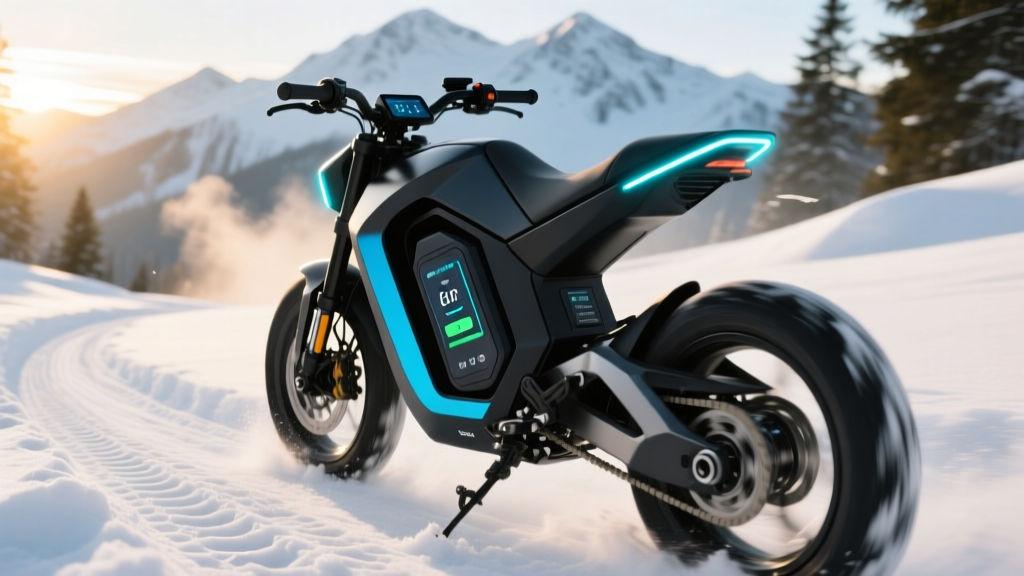
An electric snow bike is a single-track, battery-electric vehicle designed for snow travel, using a track-and-ski system similar to a dirt bike fitted with a snow conversion kit. Unlike a traditional gas snowmobile (which uses a 600cc–900cc two- or four-stroke engine producing 120–180 hp and consuming 8–15 mpg), electric snow bikes use a brushless motor (typically 40–80 kW peak output) powered by a lithium-ion battery pack (10–20 kWh usable capacity).
| Metric | Electric Snow Bike (Taiga TS4 2026) | Gas Snowmobile (Ski-Doo MXZ 600) |
|---|---|---|
| Powertrain | 60 kW (80 hp) electric motor | 599cc 2-stroke, ~120 hp |
| Energy/Fuel Capacity | 15 kWh usable (NMC lithium-ion) | 10.6-gallon fuel tank |
| Real-World Range | 35–45 mi (moderate riding, 10°F) | 120–160 mi |
| Weight | ~485 lbs | ~470 lbs (dry) |
| 0–30 mph | ~2.8 seconds | ~3.5 seconds |
| Noise Level | ~65 dB (conversation level) | ~90+ dB (hearing protection needed) |
| MSRP | $13,990–$15,990 | $11,500–$14,000 |
| Fuel/Energy Cost Per Ride (30 mi) | $0.50–$0.80 | $8–$15 (premium gas) |
| Annual Maintenance | $50–$100 (track tension, fluid) | $300–$600 (belts, plugs, oil, clutch) |
The fundamental trade-off is range vs. simplicity. Gas sleds win on distance and refueling speed. Electric snow bikes win on instant torque, near-silent operation, zero tailpipe emissions, and dramatically lower maintenance. For riders who value quiet trail access (many national forests restrict gas sleds by decibel level), the electric option opens terrain that gas machines cannot legally enter.
Real-World Range in Cold Weather: What the Battery Spec Doesn't Tell You
Here's where most buyers get burned — literally and figuratively. A 15 kWh battery rated for "50 miles of range" under ideal conditions will deliver significantly less in actual winter riding.
Cold-weather battery physics: Lithium-ion cells (whether NMC or LFP chemistry) experience increased internal resistance below 32°F. At 0°F, expect 25–35% range reduction. At -15°F, that loss can reach 40–50%. Unlike EVs with active thermal management systems (like Tesla's heat pump and battery preconditioning), most electric snow bikes use passive or minimal battery heating, making cold-weather degradation more severe.
Real-World Range Expectations (Taiga TS4, 15 kWh Pack)
- Manufacturer claim: 50+ miles (moderate riding, 40°F)
- Real-world, 20°F, moderate riding: 35–42 miles
- Real-world, 0°F, moderate riding: 28–35 miles
- Real-world, 0°F, aggressive riding (hills, deep snow): 20–28 miles
- Real-world, -15°F, any riding: 18–25 miles
These figures assume a 170-lb rider on packed/groomed trails. Deep powder or heavy rider weight (220+ lbs with gear) will reduce range an additional 15–20%.
For context, a typical gas snowmobile burns roughly 1 gallon per 10–15 miles depending on engine size and riding style, giving a 10-gallon tank 100–150 miles of range. The gap is substantial, and no amount of battery preconditioning closes it for all-day backcountry rides.
Charging an Electric Snow Bike: Home Setup, Speed, and Cost
Most electric snow bikes charge via a standard J1772 connector or a proprietary plug, and support Level 1 (120V household) and Level 2 (240V) charging. None currently support DC fast charging — the battery packs are too small to justify the infrastructure, and the charge times are already reasonable.
| Charging Level | Power (kW) | Charge Time (0–100%, 15 kWh) | Cost to Full Charge* |
|---|---|---|---|
| Level 1 (120V / 15A outlet) | 1.4–1.8 kW | 9–11 hours | $2.25 (at $0.15/kWh) |
| Level 2 (240V / 30A) | 6.6 kW | 2.5–3 hours | $2.25 (at $0.15/kWh) |
| Level 2 (240V / 40A, max) | 9.6 kW | 1.8–2.2 hours | $2.25 (at $0.15/kWh) |
*Based on US average residential electricity rate of ~$0.15/kWh (EIA 2025 data). Rates vary by state — Alaska and mountain states often exceed $0.20/kWh.
Home charging reality: If you have a standard 120V outlet in your garage, Level 1 charging works fine for overnight replenishment — plug in after a ride, and the bike is full by morning. A Level 2 charger (240V) cuts charge time to under 3 hours, which matters if you ride multiple sessions per day or need a quick turnaround. Installing a dedicated 240V/30A circuit typically costs $500–$1,500 depending on your electrical panel capacity and distance from the panel to the garage. Most residential panels can handle this without an upgrade, but older homes with 100A service may need a panel upgrade ($2,000–$4,000) — consult a licensed electrician for your specific situation.
Cold-weather charging note: Charging a frozen lithium-ion battery (below 32°F cell temperature) can cause lithium plating, permanently damaging cells. Most quality electric snow bikes include a battery management system (BMS) that restricts charge current when cells are cold, extending charge time. Store and charge your snow bike in a heated garage (above 40°F) whenever possible to preserve battery health and maintain charge speed.
Total Cost of Ownership: Electric Snow Bike vs. Gas Snowmobile (5 Years)
| Cost Category | Electric Snow Bike (5 Yrs) | Gas Snowmobile (5 Yrs) |
|---|---|---|
| Purchase Price (MSRP) | $14,990 | $12,500 |
| Federal Tax Credit (§30D) | $0 (off-road, ineligible) | $0 |
| Energy/Fuel (50 rides/yr × 5 yrs) | $150–$200 | $2,500–$3,750 |
| Maintenance (5 years) | $250–$500 | $1,500–$3,000 |
| Insurance (annual avg) | $300–$500/yr ($1,500–$2,500 total) | $250–$450/yr ($1,250–$2,250 total) |
| Estimated Resale Value (Year 5) | $6,000–$8,000 | $5,000–$7,000 |
| Net 5-Year Cost | $8,390–$11,040 | $12,500–$18,000 |
The electric snow bike costs more upfront but recoups the premium within 2–4 years through fuel and maintenance savings — assuming you ride 40–60 times per year. For casual riders (10–15 rides/year), the payback period extends to 6–8 years, potentially beyond the machine's practical lifespan. Insurance for electric snow bikes tends to run slightly higher due to the specialized battery replacement cost ($3,000–$5,000 for a new pack).
Tax credit clarification: The federal §30D Clean Vehicle Credit (up to $7,500) applies only to on-road vehicles meeting specific battery-sourcing, MSRP, and buyer-income requirements per IRS guidelines. Electric snow bikes are classified as off-road recreational vehicles and do not qualify. Some states or utilities may offer separate rebates for electric off-road equipment — check your state energy office or local electric cooperative for current programs.
Common Misconceptions About Electric Snow Bikes
| Myth | Fact |
|---|---|
| "Batteries die in extreme cold and won't work" | Modern BMS-protected packs function down to -20°F, but range drops 30–50%. The battery doesn't "die" — it delivers less usable energy. Pre-warming the pack (if equipped) before riding helps. |
| "Electric snow bikes have no power for hills or deep snow" | Electric motors deliver peak torque from 0 RPM. A 60 kW (80 hp) electric snow bike out-accelerates most 600cc gas sleds off the line and climbs effectively. The limitation is sustained high-load range, not peak power. |
| "You can't ride far from home — it's a toy, not a real sled" | For groomed trail loops within 25 miles of home, electric snow bikes are fully practical. For 100-mile backcountry expeditions, they are not — and no manufacturer claims otherwise. Match the machine to your riding pattern. |
| "Battery replacement will cost more than a new sled" | Replacement packs currently cost $3,000–$5,000. Most NMC packs retain 80%+ capacity after 800–1,000 full charge cycles. At 50 rides/year, that's 16–20 years before significant degradation — longer than most owners keep a sled. |
| "They qualify for the $7,500 EV tax credit" | They do not. §30D credits apply to highway-capable vehicles with 4+ wheels (or specific 2/3-wheel on-road motorcycles meeting speed requirements). Off-road snow bikes are excluded per current IRS guidance. |
Battery Longevity, Degradation, and What to Expect
Most 2026 electric snow bikes use NMC (nickel manganese cobalt) lithium-ion cells for their superior energy density — critical when every pound matters on a single-track vehicle. NMC chemistry typically offers 800–1,200 full charge cycles before reaching 80% state of health (SoH). For a 15 kWh pack with 40 miles of real-world range, that translates to 32,000–48,000 lifetime miles before notable degradation.
Degradation factors specific to snow bikes:
- Cold cycling: Repeatedly discharging in sub-zero temps and then charging in warmth accelerates calendar degradation slightly. Store at 50–60% SoC during off-season.
- Deep discharge: Running the pack to 0% repeatedly shortens lifespan. Most BMS systems maintain a 5–8% bottom buffer, but avoid habitually riding until the bike shuts down.
- Fast charging heat: While snow bike packs don't support DC fast charging, high-rate Level 2 charging (9.6 kW into a 15 kWh pack is a ~0.64C rate) generates some heat. Allow the pack to cool between rides if doing multiple sessions.
Most manufacturers offer a 2–3 year battery warranty covering defects, with some covering capacity below 70–80% SoH. Always confirm warranty terms before purchase — battery replacement is the single largest potential ownership cost.
Decision Framework: Is an Electric Snow Bike Right for You?
Choose an Electric Snow Bike If:
- Your typical ride is under 35 miles round-trip on groomed or moderate trails
- You ride primarily above 0°F (most winter days in the lower 48 states)
- You have access to a standard 120V or 240V outlet in your garage or shed
- Noise restrictions affect your riding area (national forest decibel limits, residential proximity)
- You want near-zero maintenance (no belts, spark plugs, oil changes, or carburetor tuning)
- You value instant throttle response and quiet operation for wildlife viewing or photography
Stick With a Gas Snowmobile If:
- You regularly ride 60+ miles per day or do multi-day backcountry tours
- You operate in sustained temperatures below -10°F (Alaska, northern Minnesota, Montana)
- You ride deep powder or extreme hill-climb terrain that demands sustained high-load output
- You have no access to any electrical outlet near your sled storage
- You need rapid refueling (5 minutes for gas vs. 2–3 hours for electric recharge)
- You need proven dealer support and parts availability in remote areas
First-Time Buyer Checklist: What to Know Before You Order
- Test ride before buying. Electric snow bikes have a fundamentally different feel — instant torque, no engine braking sound cues, and regenerative braking that can be aggressive. Most riders love it within 10 minutes, but confirm the ergonomics match your body.
- Verify your electrical setup. A 120V/15A outlet is the minimum. If your garage is on a shared circuit with a freezer or space heater, you may trip breakers. A dedicated circuit is strongly recommended.
- Ask about battery warranty specifics. "2-year warranty" means different things to different manufacturers. Does it cover capacity degradation below 80%? Does it cover cold-damage claims? Get it in writing.
- Check local trail access rules. Some jurisdictions classify electric snow bikes differently from gas snowmobiles for registration and trail-permit purposes. In some areas, electric machines are exempt from certain registration fees — a small but real savings.
- Budget for winter gear upgrades. Electric snow bikes generate far less radiant heat than a gas engine between your legs. Riders consistently report feeling colder on electric sleds and need heavier insulation in boots, gloves, and torso layers.
- Plan for off-season storage. Store the battery at 50–60% SoC in a cool, dry place (50–70°F). Never store at 100% or 0% for months — both accelerate degradation.
Frequently Asked Questions
Can I charge an electric snow bike from a regular household outlet?
Yes. All major electric snow bikes support Level 1 charging from a standard 120V/15A outlet. A full charge takes 9–11 hours for a 15 kWh pack — adequate for overnight replenishment. For faster turnaround, a 240V Level 2 setup cuts this to 2–3 hours.
How long do electric snow bike batteries last before needing replacement?
NMC lithium-ion packs typically retain 80%+ capacity after 800–1,000 full charge cycles. At 50 rides per year, that's 16–20 years of use. Calendar aging (degradation from time, not use) may reduce capacity to 80% in 8–12 years regardless of mileage. Replacement packs currently cost $3,000–$5,000.
Do electric snow bikes qualify for any tax credits or rebates?
The federal §30D Clean Vehicle Credit does not apply — these are classified as off-road recreational vehicles. However, some state energy offices, electric cooperatives, and environmental programs offer rebates for electric off-road equipment. Check your state's energy website or contact your local utility for current programs.
Are electric snow bikes safe in avalanche terrain?
Electric snow bikes are not inherently safer or more dangerous than gas snowmobiles in avalanche terrain. The same safety protocols apply: carry a beacon, probe, and shovel; take an avalanche safety course; check forecasts; and ride with partners. The lighter weight of some electric models may offer a marginal advantage in reducing slab-triggering load, but this is not a substitute for proper training and decision-making.
What's the top speed of a 2026 electric snow bike?
Most production electric snow bikes are electronically governed at 60–75 mph. The Taiga TS4, for example, reaches approximately 65 mph. This is comparable to many mid-range gas trail sleds, though high-performance gas mountain sleds can exceed 100 mph. For snow riding, top speed matters less than torque delivery and throttle control, where electric motors excel.