The Quick Answer on Electric Skis
If you searched for electric skis hoping to find motorized, battery-powered skis you strap to your feet — that product category doesn't meaningfully exist in 2026. What does exist, and what most searchers actually want, falls into two categories: electric snowmobiles (like the Taiga TS2 and Ski-Doo's emerging EV concepts) and electric ski-tow systems used at resorts. For EV owners who ski, the real question is how to tow a ski trailer or cargo box to the mountain in winter without losing half your range. This guide covers all three angles with exact numbers.
Electric Snowmobiles: The Real "Electric Skis" Market
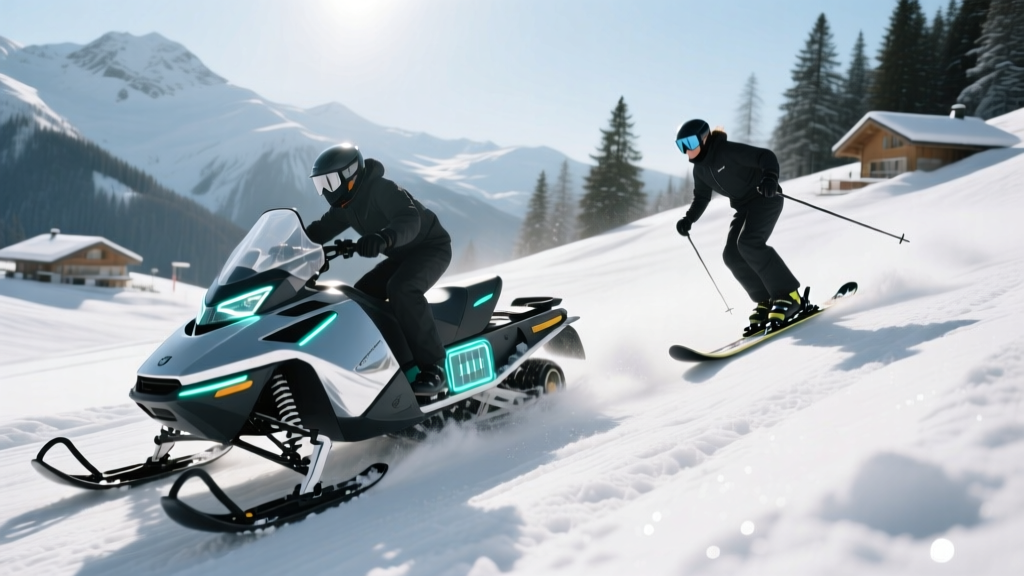
The closest consumer product to "electric skis" is the electric snowmobile segment, led by Taiga Motors out of Canada. Their flagship TS2 (Orca and Atlas variants) represents the state of the art for 2026 model-year deliveries.
| Specification | TS2 Orca (Sport) | TS2 Atlas (Utility) |
|---|---|---|
| Battery Capacity | 22.5 kWh (NMC) | 22.5 kWh (NMC) |
| Claimed Range | ~62 miles (100 km) | ~62 miles (100 km) |
| Peak Power | 180 HP | 180 HP |
| 0-60 mph | ~3.0 seconds | ~3.5 seconds |
| Charge Time (Level 2, 240V) | ~2 hours (0-100%) | ~2 hours (0-100%) |
| DC Fast Charge | Not available | Not available |
| Base MSRP | ~$16,490 USD | ~$17,490 USD |
| Weight | ~560 lbs | ~600 lbs |
The range figure demands context. Taiga's 62-mile estimate assumes moderate trail riding at sustained speeds around 25-35 mph. Aggressive mountain riding, deep powder, or sub-zero temperatures will cut that to 35-45 miles — similar to the cold-weather range loss EV owners already know from their cars. NMC (nickel manganese cobalt) battery chemistry provides the energy density needed in a lightweight sled, but it's more temperature-sensitive than LFP in extreme cold.
EVs for Ski Trips: Towing, Cargo, and Cold-Weather Range
For most skiers researching "electric skis," the underlying need is practical: Can my EV get me and my gear to the mountain in winter? The answer is yes, with planning. Here's what the data shows for popular 2026 EVs commonly used for ski trips:
| Vehicle | EPA Range | Est. Winter Range* | Cargo (cu ft) | Towing Cap. | Base MSRP |
|---|---|---|---|---|---|
| Tesla Model Y LR | 320 mi | ~220-250 mi | 72 | 3,500 lbs | $44,990 |
| Rivian R1S (Dual Max) | 410 mi | ~280-310 mi | 104 | 7,700 lbs | $79,900 |
| Hyundai Ioniq 5 LR AWD | 290 mi | ~200-225 mi | 59 | 2,300 lbs | $49,950 |
| Ford F-150 Lightning Ext. | 320 mi | ~220-250 mi | 52.8 (bed+frunk) | 7,700 lbs | $59,990 |
| Kia EV9 GT-Line AWD | 270 mi | ~190-210 mi | 81 | 5,000 lbs | $60,500 |
*Winter range estimates assume 20-30°F temperatures, highway speeds of 70+ mph, and use of cabin heat. Cold weather typically reduces EV range by 20-35% per EPA testing data and independent studies by AAA and Consumer Reports. Vehicles with heat pumps (Ioniq 5, EV9, Model Y) lose less range than those relying on resistive heating.
The Ski-Box and Roof-Rack Penalty
Mounting a rooftop cargo box (Thule, Yakima) adds aerodynamic drag that typically reduces highway efficiency by 10-17%. On a Model Y rated at 28 kWh/100mi, expect that to climb to 32-33 kWh/100mi with a loaded box. Combined with cold weather, a 320-mile EPA Model Y could see real-world ski-trip range drop to 180-200 miles on a 75 mph interstate at 15°F. This is where route planning with DC fast chargers becomes non-negotiable.
Cost Breakdown: Electric Snowmobile vs. Gas Snowmobile
If you're considering a Taiga TS2 over a conventional gas sled, here's the 5-year ownership math:
| Cost Factor | Taiga TS2 (Electric) | Ski-Doo MXZ (Gas, 850cc) |
|---|---|---|
| Purchase Price | $16,490 | $13,200 |
| Fuel/Energy (5 yrs) | ~$600 (electric, $0.14/kWh avg) | ~$4,500 (premium gas, ~$4.50/gal) |
| Maintenance (5 yrs) | ~$300 (track tension, fluids) | ~$3,200 (belt, clutch, engine service) |
| Insurance (est. 5 yrs) | ~$2,500 | ~$2,200 |
| 5-Year Total | ~$19,890 | ~$23,100 |
The electric sled costs more upfront but breaks even around year 3-4 for riders putting in 1,000+ miles annually. For casual riders doing 300 miles per season, the payback stretches to 6+ years — making the gas sled more economical purely on cost.
Charging Infrastructure at Ski Resorts: 2026 Reality
Destination charging at ski resorts has expanded significantly. As of the 2025-2026 season, major resorts including Vail, Park City, Whistler, Mammoth, and Killington have installed Level 2 chargers (typically 7.2-19.2 kW) in base-area parking lots. However, DC fast charging near mountain towns remains inconsistent.
Myths vs. Facts: EVs and Ski Season
| Myth | Fact |
|---|---|
| "EVs can't handle cold weather" | Modern EVs with heat pumps and battery preconditioning retain 65-80% of rated range at 20°F. Preconditioning while plugged in preserves range further. |
| "You'll get stranded on the way to the mountain" | With route planning via A Better Routeplanner or built-in nav, charging stops add 15-25 minutes on a 300-mile ski trip. Plan it as a lunch break. |
| "Charging takes too long in the cold" | Preconditioning the battery before arriving at a DC fast charger maintains peak charge rates. A Tesla Model Y at a V3 Supercharger still hits 250 kW peak, 10-80% in ~18 minutes, even at 25°F — if preconditioned. |
| "Electric snowmobiles are toys, not real sleds" | The Taiga TS2 produces 180 HP and out-accelerates most 850cc gas sleds. Range is the legitimate limitation, not power. |
| "You can't tow a ski trailer with an EV" | The Rivian R1S and F-150 Lightning both tow 7,700 lbs — enough for enclosed snowmobile trailers. Expect a 30-45% range reduction when towing at highway speeds. |
Decision Framework: What Kind of "Electric Ski" Setup Do You Need?
If X, Then Y
- If you want a personal electric snowmobile → Look at the Taiga TS2. Budget $16,500-$17,500. Ensure you have 240V outlet access at your trailhead cabin or garage for overnight charging. Accept ~40-50 miles of real-world winter range.
- If you need an EV to drive to ski resorts → Prioritize AWD, heat pump, and 300+ miles EPA range. The Rivian R1S and Tesla Model Y Long Range AWD lead the category. Budget for a rooftop cargo box and accept 20-30% winter range loss.
- If you live 200+ miles from the nearest resort → Map DC fast chargers along your route before buying. I-70 (Colorado), I-80 (Utah/Wyoming), and I-93 (New Hampshire) have improved coverage, but gaps remain in rural mountain corridors.
- If you want to tow a snowmobile trailer → Choose an EV rated for 5,000+ lbs towing (F-150 Lightning, R1S, Rivian R1T). Add a brake controller. Expect to charge more frequently — towing at 65 mph in cold weather can cut range nearly in half.
- If you're researching resort-side electric ski tow systems → These are infrastructure (surface lifts, magic carpets) powered by the grid — not consumer products. No purchase decision applies.
First-Time EV Buyer? What to Know Before Your First Ski Season
If this is your first EV and you're planning winter mountain trips, build your purchase around these non-negotiable factors:
- Home charging is essential. A Level 2 home charger (240V, 32-48 amps) is the foundation. Budget $500-$1,500 for the charger unit and $800-$2,500 for professional installation (electrician, permit, potential panel upgrade). Without home charging, winter EV ownership becomes significantly harder.
- Heat pump matters. EVs with heat pumps (Hyundai/Kia E-GMP platform, Tesla Model Y, Rivian) use 30-50% less energy for cabin heating than resistive systems. Over a ski season, that's 15-25 extra miles per charge in cold weather.
- Preconditioning is your best tool. Set your EV to precondition the battery and cabin while still plugged in at home. You leave with a warm cabin, warm battery, and 100% state of charge — minimizing range loss on the highway.
- Federal tax credit eligibility. Under IRS §30D rules, the $7,500 clean vehicle credit requires meeting battery sourcing, MSRP caps ($55,000 sedans / $80,000 SUVs/trucks), and buyer income limits ($150K single / $300K joint). Point-of-sale transfer is available at participating dealers. Verify current-year rules with a tax professional — sourcing requirements tighten annually.
- Winter tires are mandatory for safety, not optional. EVs are heavier than gas equivalents (the Model Y LR weighs ~4,400 lbs). That mass demands winter-rated tires for mountain-pass traction. Budget $800-$1,400 for a set of studless winter tires on dedicated wheels.
FAQ: Electric Skis, Snowmobiles, and Winter EV Ownership
Do electric skis that you wear on your feet exist?
Not as a mainstream consumer product. A few prototype concepts (like the Moonwalkers-style motorized attachments) have appeared at trade shows, but nothing is commercially available or practical for actual skiing in 2026. The term "electric skis" in search almost always refers to electric snowmobiles or the question of using EVs for ski trips.
How far can an electric snowmobile go on a charge?
The Taiga TS2 is rated for approximately 62 miles (100 km) under moderate trail conditions. Real-world mountain riding in deep snow at sub-zero temperatures will reduce that to roughly 35-45 miles. There is no DC fast charging option — you must plan rides around 240V Level 2 charging access at cabins or trailhead facilities.
Will my EV battery degrade faster in cold mountain climates?
Cold weather itself doesn't cause permanent degradation — it temporarily reduces available capacity. Modern EVs use active thermal management to protect the battery. Permanent degradation accelerates from repeated high-speed DC fast charging to 100% and from sitting at high state of charge in extreme heat. For winter storage, keep your EV plugged in and set the charge limit to 50-70%. Most manufacturers warrant the battery for 8 years / 100,000 miles with a minimum 70% capacity retention threshold.
What's the best EV for driving to ski resorts in 2026?
Based on the combination of winter range, cargo space, AWD traction, and charging network access, the Tesla Model Y Long Range AWD (320 mi EPA, Supercharger network) and Rivian R1S Dual Max (410 mi EPA, 7,700-lb towing) lead the category. The Hyundai Ioniq 5 AWD offers the best value at ~$49,950 with a heat pump and 10-80% DC fast charging in approximately 18 minutes at a 350 kW station.
Can I charge my EV at ski resort parking lots?
Many major resorts now offer Level 2 destination chargers (7.2-19.2 kW), which add roughly 25-75 miles of range per hour depending on the vehicle and charger amperage. This works well if you're parked for a full ski day (6-8 hours). Do not rely on destination chargers as your sole charging strategy — arrive with sufficient range for the return trip or confirm DC fast charger availability within 10-15 miles of the resort.