Quick Answer: An electric skid truck with scale is a compact, battery-electric utility vehicle designed for material handling, warehouse logistics, and short-haul industrial use — equipped with an integrated weighing scale for on-the-spot load measurement. Most 2026 models offer 40–80 miles of range per charge, tow capacities of 2,000–6,000 lbs, and integrated scales accurate to ±0.5%. They cost $18,000–$45,000 before incentives but deliver 60–80% lower per-mile energy costs compared to diesel equivalents, with near-zero drivetrain maintenance. They are best suited for facilities with predictable daily routes under 50 miles and access to overnight Level 2 charging.
What Is an Electric Skid Truck With Scale?
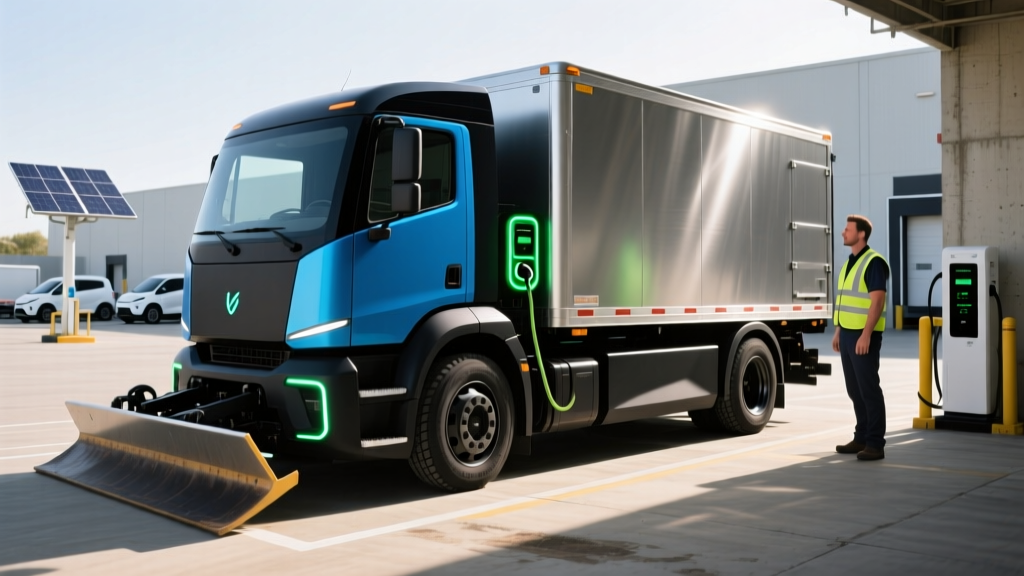
An electric skid truck — sometimes called an electric tug, cart, or burden carrier — is a low-speed, battery-powered industrial vehicle used to move palletized goods, raw materials, or equipment across warehouses, manufacturing campuses, ports, and agricultural sites. The "with scale" designation means the vehicle has a built-in onboard weighing system, typically using load cells integrated into the cargo bed or hitch, allowing operators to weigh loads without a separate floor scale.
In 2026, the market for these vehicles has matured significantly. Lead-acid battery models are being replaced by lithium iron phosphate (LFP) packs, which offer 2,000–3,000+ charge cycles, faster charging, and no thermal runaway risk compared to NMC chemistries. Key manufacturers include Taylor-Dunn (now part of Club Car), Columbia ParCar, Lantech, and a growing number of Chinese importers offering budget models through North American distributors.
Typical 2026 specifications for a mid-range electric skid truck with scale:
| Specification | Typical 2026 Range |
|---|---|
| Battery capacity | 8–18 kWh (LFP) |
| Range per charge | 40–80 miles (unloaded); 25–50 miles (loaded) |
| Top speed | 15–25 mph |
| Payload capacity | 1,500–4,000 lbs |
| Tow capacity | 2,000–6,000 lbs |
| Scale accuracy | ±0.2% to ±0.5% of rated capacity |
| Scale capacity | 2,000–5,000 lbs |
| Charge time (Level 1, 120V) | 8–14 hours (full charge) |
| Charge time (Level 2, 240V) | 3–6 hours (full charge) |
| Base MSRP | $18,000–$45,000 |
Electric vs. Diesel Skid Trucks: The Real Cost Comparison
The core buying decision for fleet operators comes down to total cost of ownership (TCO). Electric skid trucks carry a higher upfront price — typically $5,000–$15,000 more than a comparable diesel or LPG unit — but the operational savings compound quickly in high-use environments.
| Cost Factor (Annual, 250 workdays) | Electric Skid Truck | Diesel Skid Truck |
|---|---|---|
| Purchase price (amortized over 7 years) | $3,500–$6,400 | $2,500–$4,300 |
| Fuel / energy cost | $400–$800 (electricity at $0.12/kWh) | $2,800–$4,500 (diesel at $3.80/gal) |
| Maintenance (oil, filters, belts, coolant) | $150–$400 | $1,200–$2,500 |
| Brake wear (regen braking extends life) | $100–$200 | $400–$800 |
| Battery replacement reserve (yearly) | $300–$600 | N/A |
| Total annual operating cost | $4,450–$8,400 | $6,900–$12,100 |
The math favors electric when daily use exceeds 15–20 miles and the vehicle operates primarily indoors or in emission-sensitive environments (food processing, pharmaceuticals, cold storage). Diesel retains an advantage for heavy outdoor towing in extreme cold or on sites without charging infrastructure.
Real-World Range and Charging: What to Expect
Manufacturer range claims for electric skid trucks assume flat terrain, moderate loads, and stop-and-go operation at low speeds. In practice, range varies significantly based on payload, grade, temperature, and driving pattern.
Real-world range reconciliation for a typical 14 kWh LFP model (rated 60 miles unloaded):
- Unloaded, flat campus, 70°F: 50–60 miles (near sticker claim)
- 50% payload, mixed terrain: 30–40 miles
- Full payload, inclines present: 20–28 miles
- Full payload, 20°F ambient: 15–22 miles (LFP loses ~25–35% capacity in freezing temps without thermal management)
Charging is straightforward but requires planning. Most 2026 models include a standard 120V onboard charger (1–1.5 kW), which delivers a full charge in 8–14 hours — adequate for overnight turnaround. Optional Level 2 chargers (3.3–6.6 kW at 240V) cut this to 3–6 hours and are worth the $500–$1,500 investment for multi-shift operations.
Unlike highway EVs, these vehicles do not use DC fast charging. Their small battery packs and low C-rate tolerances mean AC charging is the standard. This is not a limitation for the use case — overnight charging on a standard 120V outlet covers most daily needs.
Key Ownership Considerations Before You Buy
Charging Access
You do not need a dedicated EV charging station. A standard 120V/15A outlet near the parking or staging area is sufficient for overnight charging. For multi-shift operations, a 240V/30A outlet with an external Level 2 charger (such as a ClipperCreek or ChargePoint commercial unit) enables mid-shift top-ups. Installation of a 240V outlet by a licensed electrician typically costs $500–$2,000 depending on panel proximity and conduit runs.
Climate and Environment
LFP batteries perform reliably in heat but lose range in freezing conditions. If your operation runs in sub-32°F environments (cold storage, northern winters), specify a model with battery heating or plan for 25–35% range reduction. Indoor or climate-controlled facilities see minimal range variation.
Scale Calibration and Compliance
Integrated scales on electric skid trucks are typically Class III or III-L accuracy, suitable for inventory management, shipping verification, and load balancing. They are generally not NTEP-certified for legal-for-trade applications (selling goods by weight) unless specifically ordered with that option, which adds $1,500–$3,000. Verify certification requirements with your state's weights and measures office before purchasing.
Regulatory and Incentive Landscape
Electric industrial vehicles may qualify for local utility rebates, state air-quality grants, or EPA clean-fleet incentives, but they do not qualify for the federal §30D clean vehicle credit — that credit applies to on-road light-duty vehicles meeting specific MSRP, income, and battery-sourcing requirements per the IRS §30D guidelines. Check with your utility provider and state environmental agency for applicable industrial electrification rebates.
Common Misconceptions About Electric Skid Trucks
| Myth | Fact |
|---|---|
| "Electric tugs can't handle heavy loads" | 2026 models routinely tow 4,000–6,000 lbs. Electric motors deliver peak torque at 0 RPM, giving superior low-speed pulling power vs. diesel. |
| "Batteries need replacing every 2 years" | Modern LFP packs are rated for 2,000–3,000 full cycles — roughly 7–10 years of daily use. Replacement cost: $2,500–$5,000 depending on capacity. |
| "They're too slow for real work" | Top speeds of 15–25 mph exceed typical campus speed limits (10–15 mph). Instant torque means faster acceleration from stops than diesel equivalents. |
| "You need expensive charging infrastructure" | A standard 120V outlet handles overnight charging for most single-shift operations. No dedicated EV charger required. |
| "The scale is just a gimmick" | Integrated scales eliminate double-handling (load → floor scale → load), saving 3–8 minutes per weighing event. At 30+ weighs/day, that's 2–4 labor hours recovered daily. |
Decision Framework: Is an Electric Skid Truck With Scale Right for You?
Choose an electric skid truck with scale if:
- Daily route distance is under 50 miles (loaded)
- Operations are primarily indoors, on paved campuses, or in emission-sensitive zones
- You have access to a 120V or 240V outlet at the staging/parking area
- You perform 15+ weigh events per day and want to eliminate floor-scale bottlenecks
- Noise reduction matters (hospitals, schools, residential-adjacent sites)
- You want to reduce fleet maintenance burden (no oil changes, filters, belts, or DEF fluid)
Stick with diesel or LPG if:
- Daily distance exceeds 60 miles under heavy load
- Operations include sustained grades over 8% with maximum payload
- The site has no electrical access and adding it would cost over $5,000
- Ambient temperatures regularly drop below 0°F without heated storage
- You need road-legal speeds (25+ mph) on public right-of-way
Frequently Asked Questions
How long does the battery last before needing replacement?
LFP batteries in 2026 electric skid trucks are rated for 2,000–3,000 full charge cycles. At one cycle per day, that translates to roughly 7–10 years before capacity drops below 80% of original. Partial cycles (common in opportunity-charging scenarios) extend this further. Budget $2,500–$5,000 for eventual pack replacement.
Can I use the integrated scale while the truck is moving?
No. Onboard scales require the vehicle to be stationary on a level surface for accurate readings. Most systems lock out the display during motion and prompt the operator to stop and stabilize before weighing. Readings typically settle within 2–4 seconds.
What electrical work do I need for charging?
For single-shift use, a standard 120V/15A grounded outlet is sufficient — no electrical work needed. For faster charging or multi-shift operations, a licensed electrician can install a 240V/30A circuit. Expect $500–$2,000 for installation depending on panel proximity. Always defer to a licensed electrician for final specifications.
Do electric skid trucks qualify for any tax credits or incentives?
They do not qualify for the federal §30D clean vehicle credit, which applies to on-road passenger vehicles. However, many utilities offer industrial electrification rebates ($500–$3,000 per unit), and some state air-quality districts provide grants for replacing diesel equipment. Check with your local utility and state environmental agency for current programs.
What maintenance does an electric skid truck require?
Minimal compared to diesel: tire rotation and replacement, brake inspection (regen braking extends pad life 2–3x), hydraulic fluid checks (if equipped with a tilt bed), battery terminal cleaning, and scale calibration verification (annually recommended). No oil changes, fuel filters, air filters, coolant flushes, or emissions system service.
How accurate is the onboard scale compared to a floor scale?
Quality integrated scales achieve ±0.2% to ±0.5% accuracy — comparable to portable floor scales in the same class. For a 4,000-lb capacity scale at ±0.5%, that's a maximum error of ±20 lbs. This is sufficient for inventory tracking, shipping estimates, and load balancing, but verify NTEP certification if your application requires legal-for-trade accuracy.
Sources consulted: IRS Clean Vehicle Credits, manufacturer specification sheets from Taylor-Dunn/Columbia ParCar product lines, and U.S. Department of Energy industrial electrification resources.