The Quick Answer: Should You Buy an Electric Skid Loader?
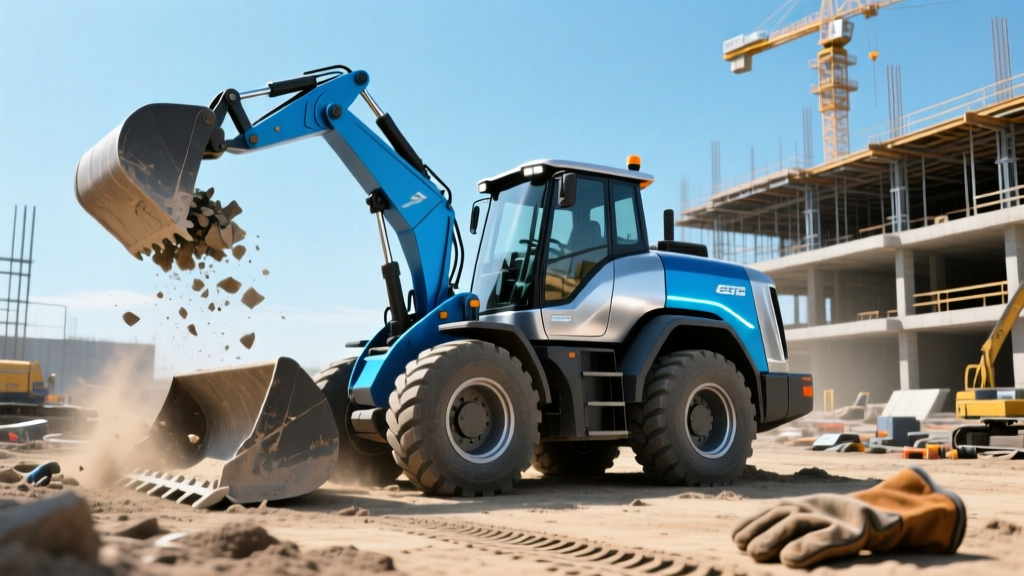
An electric skid loader like the Bobcat S7X E or Volvo ECR25 Electric delivers comparable breakout force and lift capacity to its diesel counterpart while eliminating jobsite exhaust, cutting noise from ~85 dB to ~65 dB, and reducing hourly operating costs by roughly 50–70%. Expect to pay a 30–50% upfront premium over diesel, but recoup that through fuel and maintenance savings in 1,500–3,000 operating hours depending on local electricity and diesel rates. The catch: battery capacity (typically 40–80 kWh) limits continuous runtime to 4–8 hours per charge, and DC fast charging on the jobsite requires 480V three-phase power or a heavy-duty generator.
Compact electric construction equipment is no longer a concept — it's on dealer lots and active jobsites in 2026. But an electric skid loader isn't a passenger EV. The duty cycles, charging infrastructure, and total-cost-of-ownership math are fundamentally different. This guide cuts through the marketing to give you the exact numbers you need to decide whether going electric makes sense for your operation.
What Is an Electric Skid Loader (and How Does It Differ From Diesel)?
An electric skid-steer loader replaces the diesel engine and hydraulic pump drive with one or more electric motors powered by a lithium-ion battery pack — typically NMC (nickel manganese cobalt) chemistry for energy density, though some manufacturers are testing LFP (lithium iron phosphate) for longer cycle life in fleet applications.
Key differences from a diesel skid steer:
- No engine, no DEF, no oil changes: Electric motors have far fewer wear components. No engine oil, coolant flushes, fuel filters, or diesel particulate filter (DPF) regeneration.
- Instant torque: Electric motors deliver peak torque at 0 RPM, which translates to aggressive breakout force without the turbo lag of a diesel spooling up.
- Zero tailpipe emissions: This matters for indoor demolition, warehouse work, and municipalities with emissions ordinances on urban jobsites.
- Dramatically lower noise: Most electric skid loaders operate in the 60–70 dB range versus 80–90 dB for diesel. That opens up nighttime work windows in noise-restricted zones and reduces operator fatigue.
- Regenerative hydraulics: Some models recover energy during boom-lower and tilt-back cycles, extending runtime by an estimated 10–15%.
2026 Electric Skid Loader Models: Specs at a Glance
| Specification | Bobcat S7X E | Volvo ECR25 Electric (Compact) | Caterpillar 260 (Announced) | Diesel Baseline (Bobcat S770) |
|---|---|---|---|---|
| Battery Capacity | ~62 kWh (NMC) | ~48 kWh (NMC) | ~74 kWh (preliminary) | N/A (diesel tank: ~23 gal) |
| Rated Operating Capacity | ~2,700 lbs | ~2,200 lbs | ~2,800 lbs (est.) | 2,700 lbs |
| Estimated Runtime | 6–8 hrs (mixed duty) | 4–6 hrs (mixed duty) | 7–9 hrs (est.) | 8–10 hrs per tank |
| Charge Time (DC Fast) | ~1.5 hrs (10–80%, ~50 kW peak) | ~1 hr (10–80%, ~43 kW peak) | ~2 hrs (est.) | ~5 min (refuel) |
| Operating Weight | ~9,500 lbs | ~7,800 lbs | ~10,200 lbs (est.) | ~8,900 lbs |
| Noise Level (Operator) | ~65 dB | ~63 dB | TBD | ~85 dB |
| Approx. Base Price | ~$95,000–$110,000 | ~$80,000–$95,000 | TBD (announced) | ~$55,000–$70,000 |
Note: Electric skid loader specs vary by configuration and attachment. Caterpillar's 260 electric platform was announced — final specs are preliminary. Always confirm with your dealer for current model-year figures.
The Real Cost Breakdown: Electric vs. Diesel Skid Steer
The upfront price stings. But construction equipment is a total-cost machine, and the operating cost gap is where electric claw back the premium. Here's a realistic 5-year / 5,000-hour comparison:
| Cost Category (5,000 hrs) | Electric Skid Loader | Diesel Skid Steer | Difference |
|---|---|---|---|
| Purchase Price | $100,000 | $62,000 | +$38,000 (electric) |
| "Fuel" (Electricity vs. Diesel) | $3,750 (at $0.15/kWh, 5 kWh/hr avg) | $18,750 (at $4.50/gal, 0.83 gal/hr avg) | -$15,000 (electric saves) |
| Engine Maintenance (oil, filters, DEF, DPF) | $500 (minimal) | $6,500 | -$6,000 (electric saves) |
| Hydraulic System Maintenance | $2,000 | $3,500 | -$1,500 (electric saves) |
| Battery Degradation Reserve | $2,500 (partial replacement fund) | $0 | +$2,500 (electric) |
| Total 5,000-Hour Cost | $108,750 | $90,750 | +$18,000 (electric) |
At 5,000 hours, the electric machine is still more expensive overall. But the crossover point depends heavily on your utilization rate and local energy costs:
- High utilization (2,000+ hrs/year): The fuel and maintenance savings compound faster. Breakeven hits around 6,500–8,000 hours in most markets.
- Commercial electricity below $0.12/kWh: Some operations with solar or off-peak industrial rates see breakeven as early as 4,500 hours.
- Diesel above $5.00/gallon: Every $0.50/gal increase in diesel price shifts breakeven ~500 hours earlier.
Hidden savings to factor in: Many municipalities and general contractors now require zero-emission equipment for indoor work, tunnels, and enclosed parking structures. An electric skid loader unlocks jobs a diesel machine literally cannot bid on. That revenue opportunity doesn't show up in a cost table.
Charging on the Jobsite: What Power Do You Actually Need?
This is where most first-time electric equipment buyers underestimate the infrastructure requirement. Unlike a passenger EV that charges overnight at a depot, a skid loader on an active jobsite needs to top up during lunch breaks or shift changes.
| Charging Method | Power (kW) | Runtime Added Per Hour | Jobsite Feasibility |
|---|---|---|---|
| Standard 240V Outlet (Level 2) | 7–10 kW | ~1–1.5 hrs of runtime | Good for overnight; too slow for mid-shift top-ups |
| 480V Three-Phase (DC Fast) | 30–50 kW | ~4–6 hrs of runtime | Ideal if site has temp power or permanent 480V service |
| Portable Diesel Generator (480V) | 20–40 kW | ~3–5 hrs of runtime | Works but partly defeats the emissions benefit |
| Battery Swap System | N/A (swap in ~10 min) | Full charge instantly | Available on select models; requires $15k–$25k spare pack |
Real-world charging curve reality: Like passenger EVs, electric skid loaders don't sustain peak charge rates to 100%. A unit rated for 50 kW DC fast charging will typically sustain that rate from 10–60% State of Charge (SoC), then taper to 20–30 kW from 60–80%, and drop further above 80%. Plan your charging breaks around the 10–80% window for the fastest turnaround — roughly 60–90 minutes on most current models.
Jobsite power gotcha: A temporary construction service panel is typically 200A at 240V — that's 48 kW total capacity. Running a DC fast charger for your skid loader alongside a job-site trailer, temporary lighting, and power tools may require a dedicated circuit or a panel upgrade. Budget $3,000–$8,000 for a temporary 480V drop if your site doesn't already have it, or coordinate with your utility for a temp service upgrade.
Common Misconceptions About Electric Skid Loaders
| Myth | Fact |
|---|---|
| "Electric skid steers don't have enough power for real digging." | Electric motors deliver peak torque at zero RPM. The Bobcat S7X E matches the breakout force of comparable diesel models. The limitation isn't power — it's duration under continuous heavy load, which drains the battery faster. |
| "The battery will need replacing every few years." | Industrial NMC packs are typically warrantied for 5 years or 5,000+ charge cycles at 80% capacity retention. With one charge cycle per day, that's 13+ years before hitting the warranty threshold. Degradation is real but gradual — expect ~2–3% capacity loss per year under normal use. |
| "You can't use electric equipment in cold weather." | Battery performance drops in cold temperatures — expect 15–25% runtime reduction below 20°F — but most electric skid loaders include battery thermal management systems that precondition the pack. Operators in northern climates report acceptable winter performance with 10–15 minutes of preconditioning before heavy work. |
| "There are no incentives for electric construction equipment." | While the federal §30D tax credit applies to on-road vehicles, many states and utility districts offer off-road equipment electrification grants. California's CORE program, for example, has offered point-of-sale vouchers up to $45,000 for eligible zero-emission construction equipment. Check your state air quality district and utility for current programs. |
| "Electric skid loaders can't run attachments." | Current models support standard hydraulic attachments via electrically driven hydraulic pumps. Augers, trenchers, breakers, and grapple buckets all function — though continuous high-flow attachments (like large cold planers) will drain the battery significantly faster than intermittent-use tools. |
Real-World Ownership: What First-Time Buyers Need to Know
Beyond the spec sheet, here's what experienced operators report after their first year with an electric skid loader:
Operator acceptance is surprisingly high. The reduced noise and vibration make for a less fatiguing workday. Several contractors report that operators prefer the electric machine once they've run it, citing the instant throttle response and the ability to have a conversation without shouting over engine noise.
Plan your day around the battery, not the other way around. A diesel skid steer runs until the tank is empty and refuels in five minutes. An electric machine requires intentional charging breaks. Most successful operators structure work so the machine charges during lunch, material delivery waits, or while the crew is doing handwork. One contractor we spoke with runs a "charge while you eat" protocol — 45 minutes on a DC fast charger adds enough for the afternoon shift.
Attachment selection matters more than you think. Electric-driven hydraulic systems are efficient, but high-flow continuous-use attachments (cold planers, large brush cutters) can cut runtime in half. If your primary work involves sustained high-flow applications, either spec a larger battery pack or plan for mid-shift charging.
Insurance and resale are still evolving. Insurers are still building actuarial data on electric construction equipment. Expect premiums comparable to diesel initially, potentially lower as loss data accumulates. Resale values for electric skid loaders are currently uncertain — the used market is thin, and battery State of Health (SoH) will be the key depreciation factor. Manufacturers offering transferable battery warranties will likely command better resale.
Decision Framework: Is an Electric Skid Loader Right for You?
Choose Electric If:
- You work indoors or in emissions-restricted zones — warehouses, parking garages, tunnels, urban sites with air quality ordinances. This isn't optional; it's the only way to bid these jobs.
- Noise restrictions limit your work hours — residential areas, hospitals, schools, and municipalities with nighttime noise bans. An electric skid loader at ~65 dB can work when a diesel at ~85 dB cannot.
- You have predictable daily duty cycles under 6–8 hours — landscaping, light grading, material handling, and site cleanup typically fit within a single charge.
- You have access to 480V charging at your shop or jobsite — or you can invest in the infrastructure. This is the make-or-break factor.
- Your state or utility offers off-road equipment incentives — these can cut the effective purchase price by $20,000–$45,000 and dramatically accelerate breakeven.
Stick With Diesel If:
- You run 10+ hours/day in heavy digging or high-flow attachment work — continuous heavy load drains batteries faster than current packs can sustain without mid-shift charging.
- Your jobsites are remote with no grid power access — hauling a diesel generator to charge an electric skid loader negates most of the emissions and cost benefits.
- You need maximum machine utilization with zero downtime tolerance — until battery swap infrastructure matures, a 60–90 minute charge break is a real productivity hit on tight schedules.
- Your fleet turnover is under 5 years — the upfront premium may not be fully recouped through operating savings in a short ownership window, and resale value remains uncertain.
Frequently Asked Questions
How long does an electric skid loader battery last before replacement?
Most manufacturers warranty their battery packs for 5 years or 5,000 charge cycles at 80% State of Health (SoH). Real-world data from early adopters suggests 7–10+ years of usable service before capacity drops below practical thresholds. A full pack replacement, if needed, currently runs $15,000–$30,000 depending on the model and chemistry.
Can I charge an electric skid loader from a standard outlet?
Yes, but slowly. A standard 240V/50A outlet (like a welder outlet) delivers roughly 10 kW, adding about 1–1.5 hours of runtime per hour of charging. For overnight charging at the shop, this works fine. For mid-shift top-ups on the jobsite, you'll need 480V DC fast charging to get meaningful runtime in under 90 minutes.
Does an electric skid loader qualify for any tax credits or incentives?
The federal §30D clean vehicle tax credit applies to on-road vehicles and generally does not cover off-road construction equipment. However, the EPA and state air quality districts often fund off-road electrification. California's CORE program, the DOE Industrial Assessment Centers, and various utility demand-management programs offer grants and rebates. Consult your dealer and state clean-air agency for current eligibility.
What happens if the battery runs out mid-job?
The machine stops — just like a diesel that runs out of fuel. Most electric skid loaders provide detailed State of Charge (SoC) displays and low-battery warnings at 20% and 10%. Experienced operators plan charging breaks proactively. Some fleet managers keep a portable battery pack or generator on standby for critical-path days.
Is an electric skid loader safer than diesel?
In several measurable ways, yes. There's no diesel fuel on-site (spill and fire risk eliminated), no carbon monoxide or particulate exhaust (critical for enclosed spaces), and significantly lower noise reduces long-term hearing damage risk. However, high-voltage battery systems require proper training for maintenance personnel — never attempt DIY battery service. All major manufacturers include lockout/tagout procedures and high-voltage safety training as part of delivery.
Sources consulted: Manufacturer specification sheets from Bobcat Company and Volvo Construction Equipment; EPA off-road emissions standards; industry testing data from construction equipment trade publications. Pricing and availability vary by dealer and region — confirm with your local distributor.