Quick Answer: Are Electric Ski Vehicles Worth It in 2026?
Bottom line: Electric ski vehicles — primarily electric snowmobiles and electric snowbikes — are viable for trail riders, backcountry explorers, and resort workers who prioritize instant torque, near-silent operation, and zero trailside emissions. Expect 50–100 miles of real-world range (depending on terrain and temperature), $12,000–$20,000 purchase prices, and charging times of 1.5–4 hours on Level 2. They cost more upfront than gas sleds but can save $800–$1,500 per season on fuel and maintenance for moderate-use riders.
What Is an Electric Ski Vehicle?
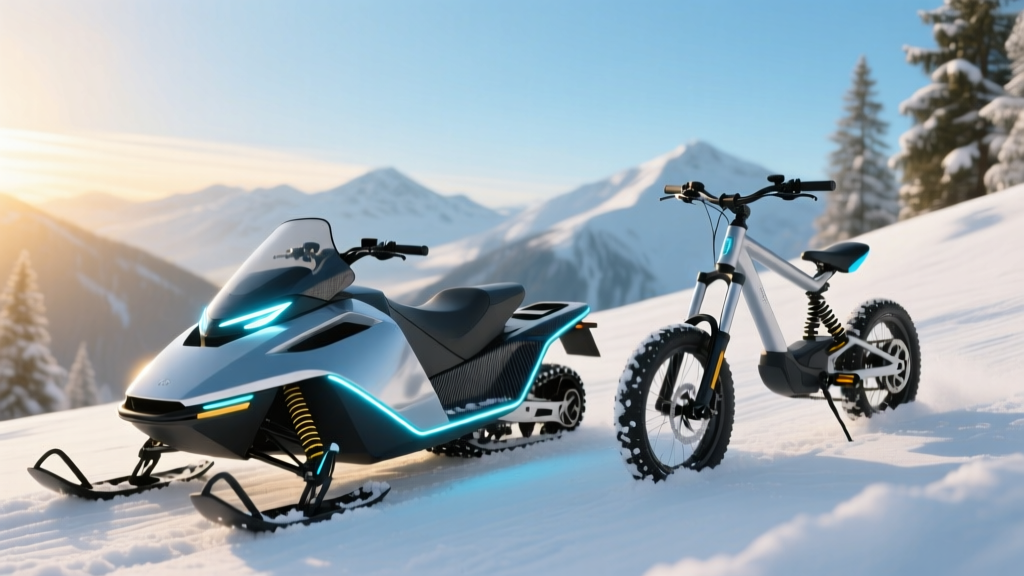
The term "electric ski" generally refers to battery-electric snowmobiles and snowbikes — tracked or ski-steered vehicles designed for snow travel. Unlike gas-powered sleds with 2-stroke or 4-stroke engines, these use lithium-ion battery packs (typically 10–20 kWh) and electric motors producing 80–180 horsepower. Major players in 2026 include Taiga Motors (TS2 lineup), limited electric offerings from legacy brands, and niche manufacturers targeting utility and resort markets.
These vehicles share EV architecture with cars — NMC battery chemistry, regenerative braking, thermal management systems — but face unique challenges: extreme cold (–20°F and below), deep-snow resistance, and the absence of public charging infrastructure in backcountry areas.
Electric Ski vs Gas Snowmobile: By the Numbers
| Metric | Electric (Taiga TS2, 2026) | Gas (Ski-Doo MXZ 850, 2026) |
|---|---|---|
| Power | 180 HP | ~165 HP |
| 0–60 mph | ~3.0 seconds | ~4.5 seconds |
| Range (real-world, moderate trail) | 60–80 miles | 150–200 miles |
| Weight | ~530 lbs | ~470 lbs |
| Noise level | Near-silent (motor whine only) | 85–95 dB |
| Fuel/energy cost per 50 mi | ~$1.50–$3.00 (electricity) | ~$12–$18 (premium gas) |
| Annual maintenance | ~$100–$200 (belt, ski runners) | ~$400–$800 (engine oil, spark plugs, clutch, exhaust valves) |
| Base MSRP | $16,990–$19,990 | $12,500–$15,000 |
| Exhaust emissions | Zero at point of use | CO₂, unburned hydrocarbons, particulates |
Key takeaway: Electric ski vehicles win on acceleration, noise, and per-mile operating cost. Gas snowmobiles win on range, refueling speed, and initial purchase price. If your typical ride is under 60 miles round-trip and you can charge at home or at a lodge, the EV math works. For multi-day backcountry tours or areas without power access, gas remains the practical choice.
Range Reality: Cold Weather Changes Everything
Battery chemistry is the single biggest factor in electric ski ownership. Cold temperatures reduce lithium-ion battery performance significantly:
- 32°F (0°C): Expect ~15–20% range reduction vs. mild-weather rated range
- 0°F (–18°C): Expect ~30–40% range reduction
- –20°F (–29°C): Expect ~45–55% range reduction, plus slower charge acceptance
Taiga and other manufacturers use battery preheating systems and insulated enclosures to mitigate this, but physics is unforgiving. A sled rated for 100 miles in ideal conditions may deliver only 50–55 miles in deep cold with aggressive riding in powder.
Real-world ownership tip: Store the vehicle in a heated garage when possible, and precondition the battery (if the model supports it) before riding. This warms the cells and restores charge/discharge efficiency — the same principle used in Tesla and Rivian EVs.
Charging Electric Ski Vehicles: What You Need
Most electric snowmobiles charge via standard AC power. Here's what that looks like:
| Charging Method | Power | Time (10–80%) | Infrastructure Needed |
|---|---|---|---|
| Standard 120V outlet (Level 1) | ~1.4 kW | 6–10 hours | Any household outlet |
| 240V Level 2 (NEMA 14-50) | ~3.3–7.2 kW | 1.5–3 hours | 240V circuit, EVSE unit ($300–$600) |
| DC fast charge (where supported) | ~15–25 kW | 30–45 min | Specialized connector; rare in backcountry |
Unlike electric cars, the electric ski/snowmobile market has no standardized DC fast-charging network. You won't find CCS or NACS connectors at trailheads. Charging is almost entirely a home-base or lodge-base operation. Plan your rides around your charging radius.
Total Cost of Ownership: 5-Season Breakdown
| Cost Category (5 Seasons) | Electric Ski Vehicle | Gas Snowmobile |
|---|---|---|
| Purchase price | $17,500 | $13,500 |
| Fuel / electricity (est. 1,500 mi/season) | $1,500 | $6,750 |
| Maintenance (oil, plugs, belts, clutch) | $750 | $3,000 |
| Insurance (average) | $1,800 | $1,500 |
| Resale value (est. after 5 yr) | –$7,000 | –$5,500 |
| Net 5-season cost | $14,550 | $19,250 |
The electric ski vehicle costs roughly $4,700 less over five seasons despite the higher purchase price, driven by dramatically lower fuel and maintenance costs. Break-even typically occurs around season 3–4, depending on mileage and local electricity rates.
Note: Federal EV tax credits under IRS §30D apply to qualified plug-in vehicles with 4+ wheels. Most electric snowmobiles do not qualify. Check IRS.gov for current eligibility rules. Some states or utilities offer powersports rebates — check your local provider.
Myths vs Facts: Electric Ski Vehicles
| Myth | Fact |
|---|---|
| "Electric snowmobiles can't handle deep powder." | Modern models like the Taiga TS2 produce 180 HP and instant torque, competitive with 850cc gas sleds in powder. Weight distribution and track design matter more than powertrain type. |
| "The battery will die in the cold." | Cold reduces range by 30–55% at extreme temperatures, but thermal management systems prevent cell damage. You'll have less range, not a dead battery. |
| "You can't ride far from home." | True for now — without trailside charging infrastructure, your range is limited to ~60–80 miles round-trip. This suits trail riding and resort work but not multi-day expeditions. |
| "Electric means no maintenance." | Less maintenance, not zero. Track tensioning, ski runners, suspension, brake pads, and belt/chain drives still require seasonal service. |
| "Charging takes all day." | On a 240V Level 2 circuit, a full charge takes 1.5–3 hours — enough to top up during a lunch break at a lodge with power access. |
Decision Framework: Should You Buy Electric?
Choose an electric ski vehicle if:
- Your typical rides are under 60 miles round-trip
- You have access to 240V charging at home or a lodge
- You ride in noise-sensitive areas (near residences, wildlife zones, or resorts with sound restrictions)
- You want instant throttle response and minimal maintenance
- You're willing to pay a $3,000–$5,000 upfront premium for lower operating costs
Stick with gas if:
- You regularly ride 100+ miles in a day or do multi-day backcountry tours
- You have no reliable access to electrical outlets near your riding area
- You ride in extreme cold (–20°F and below) where range loss is severe
- Upfront budget is a primary constraint
- You need to refuel in under 5 minutes and keep moving
Frequently Asked Questions
What's the real-world range of an electric snowmobile in winter?
Expect 50–80 miles on moderate trail riding at temperatures around 10–25°F. In deep powder or extreme cold (below 0°F), range can drop to 35–50 miles. Always plan rides with a 30% range buffer for safety.
Can I charge an electric snowmobile from a regular outlet?
Yes, but slowly. A standard 120V outlet delivers about 1.4 kW, meaning a full charge takes 6–10 hours. For practical daily use, a 240V Level 2 circuit (like an EV home charger) cuts this to 1.5–3 hours.
How long do electric snowmobile batteries last?
Most manufacturers warrant their battery packs for 3–5 years with a capacity retention threshold of 70–80%. With proper care (avoiding full discharges, storing in moderate temperatures), NMC packs can last 1,000–2,000 charge cycles — roughly 8–12 seasons of moderate use. Replacement costs range from $3,000–$6,000 depending on the model.
Do electric ski vehicles qualify for federal EV tax credits?
Generally, no. The federal §30D clean vehicle credit applies to 4-wheeled motor vehicles. Snowmobiles and powersports vehicles typically don't qualify. Check IRS guidelines and consult a tax professional for your specific situation.
Are electric snowmobiles allowed on public trails?
Yes, in most jurisdictions where snowmobiles are permitted. Some areas actually incentivize electric sleds due to their lower noise and zero trailside emissions. Check your state's DNR or parks department for specific trail regulations and any quiet-zone designations.
How does towing or hauling affect electric ski vehicle range?
Significantly. Towing a sled or hauling heavy loads can reduce range by 25–40% due to increased energy demand. If you plan to tow regularly, factor this into your range planning or consider a gas model for heavy-duty work.
Sources: Taiga Motors official specifications; fueleconomy.gov for energy cost comparisons; IRS.gov for §30D eligibility rules.