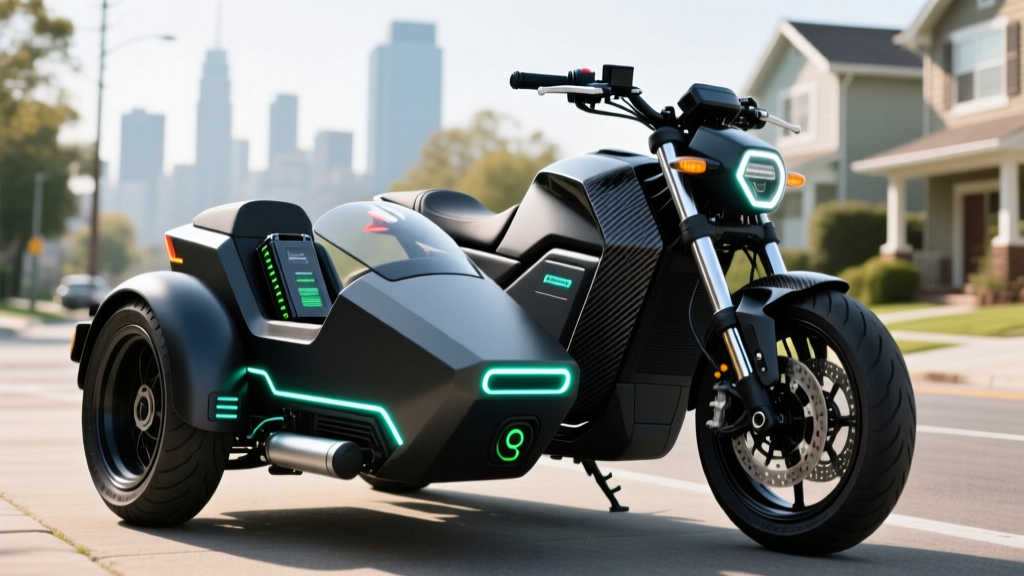
If you are looking for an electric sidecar, you are likely navigating a highly specialized intersection of the motorcycle world and electric vehicle technology. As of 2026, the market for dedicated electric sidecar rigs is extremely niche. While major manufacturers like Ural have ceased production of their sidecar models, and mainstream EV automakers do not produce street-legal electric three-wheelers with sidecars, the enthusiast market remains active. The most practical path to owning an electric sidecar today involves either retrofitting a classic sidecar-equipped frame (like a BMW R75 or Harley-Davidson) with an electric powertrain or commissioning a custom build from specialized EV conversion shops. Expect a custom electric sidecar build to cost between $25,000 and $50,000, with real-world ranges typically between 60 and 100 miles depending on battery capacity and the immense weight of the sidecar assembly.
The Quick Verdict on Electric Sidecars
Availability: No mass-produced, street-legal electric sidecars are currently available from major OEMs in 2026.
Best Route: Custom EV conversion of a classic motorcycle/sidecar rig.
Estimated Cost: $25,000 - $50,000+ (donor bike + conversion + sidecar reinforcement).
Typical Range: 60 - 100 miles (real-world, mixed riding).
The State of the Electric Sidecar Market
For decades, the Ural Gear Up was the undisputed king of the modern sidecar market. However, Ural officially exited the market in 2022, leaving a void for riders who want the utility and stability of a sidecar (often called a "hack"). While the electric motorcycle market has seen growth with brands like Zero, LiveWire, and Energica, none of these companies offer a sidecar-equipped model. The physics of a sidecar—adding significant weight, aerodynamic drag, and asymmetrical handling—make it a challenging platform for mass-market EV engineering.
Consequently, the "electric sidecar" is currently a project for the dedicated enthusiast. You are not walking into a dealership to buy one; you are building it or hiring a fabricator. The core challenge is energy density. A sidecar rig can easily weigh 800 to 1,000 lbs (wet), requiring massive torque to accelerate and significant battery capacity (kWh) to achieve even modest range. Most standard electric motorcycles use 10 to 15 kWh battery packs; a heavy sidecar rig will require 15 to 20+ kWh to maintain a usable 70-mile range at highway speeds.
EV Conversion vs. Gas Sidecar: Cost and Performance
When deciding between a traditional gas-powered sidecar (like a used Ural or classic BMW) and an electric conversion, the financial and mechanical trade-offs are stark. Below is a comparison of a typical used gas sidecar versus a modern custom electric conversion.
| Feature | Used Gas Sidecar (e.g., 2018 Ural) | Custom Electric Sidecar Conversion |
|---|---|---|
| Upfront Cost | $12,000 - $18,000 | $25,000 - $50,000+ |
| Fuel / Energy Cost | ~$0.15 - $0.20 per mile (30 MPG) | ~$0.03 - $0.05 per mile (home charging) |
| Maintenance | High (oil, valves, carbs/EFI, shaft drive) | Low (tires, brakes, fluid checks) |
| Real-World Range | 150 - 200 miles | 60 - 100 miles |
| Torque & Acceleration | Slow (60-80 HP, heavy clutch) | Instant (100+ lb-ft torque, no shifting) |
| Refueling / Charging | 3 minutes at any gas station | 3-8 hours (Level 2), no standard DCFC |
Note: Electric sidecars rarely qualify for the Federal §30D Clean Vehicle Credit because the base vehicles (donor motorcycles) are usually used, and the conversion does not meet the MSRP and battery-sourcing requirements for new vehicles.
Real-World Ownership Considerations
Owning an electric sidecar is not like owning a Tesla Model Y or even a standard Zero SR/S. You are dealing with a bespoke machine. Here is what you must account for in your daily life:
1. Home Charging and Electrical Upgrades
You cannot rely on public charging infrastructure for an electric sidecar. Most public Level 2 chargers use the J1772 connector (for cars), and DC Fast Chargers (NACS/CCS) are designed for four-wheeled vehicles with specific CAN-bus communication protocols that a custom bike won't have. You must have home charging. A standard 120V (Level 1) outlet will take 12-18 hours to charge a 10 kWh pack. You will need a 240V Level 2 setup. For a custom build, expect to pay an electrician $800 to $1,500 to install a 240V NEMA 14-50 outlet in your garage.
2. The Weight and Handling Physics
A sidecar creates "asymmetrical drag." The motor must work much harder to push the rig forward, especially at highway speeds (65+ mph). While an electric motor provides instant torque (measured in lb-ft), which is excellent for pulling a heavy rig away from a stoplight, the aerodynamic penalty will drain your battery (kWh) rapidly above 50 mph. If your commute is 40 miles of 75 mph interstate, an electric sidecar is likely not viable due to range drop-off.
3. Climate and Battery Degradation
Lithium-ion batteries lose efficiency in cold weather. A gas Ural is miserable in the winter but will still run; an electric sidecar might see its range drop by 30% in freezing temperatures due to increased internal resistance and the energy required to keep the battery warm (if equipped with thermal management). Most custom builds use air-cooled packs (like those from Thunderstruck Motors or Zero), which lack active heating, making winter riding a significant range gamble.
The Financial Breakdown: Cost to Own
Let's look at a 5-year ownership scenario for a rider putting 5,000 miles per year on the rig.
| Expense Category | Gas Sidecar (Used Ural) | Electric Sidecar (Custom Build) |
|---|---|---|
| Purchase Price | $15,000 | $35,000 |
| Fuel / Electricity (5 yrs) | $3,750 (at $3.50/gal) | $750 (at $0.15/kWh) |
| Maintenance (5 yrs) | $4,000 (tires, oil, valves) | $1,000 (tires, brake pads) |
| Insurance (5 yrs) | $3,000 | $4,500 (agreed value custom) |
| Total 5-Year Cost | $25,750 | $41,250 |
The Takeaway: You will not save money by going electric in the sidecar niche. The premium for the conversion and the specialized insurance outweighs the fuel savings. You choose an electric sidecar for the silence, the torque, the lack of vibration, and the engineering satisfaction—not the ROI.
Common Misconceptions About Electric Sidecars
Myth: I can just bolt a sidecar onto a Zero or LiveWire.
Fact: Most modern electric motorcycles have aluminum perimeter frames or cast monocoques that are not designed to handle the mounting stresses of a sidecar. Attaching a sidecar subframe to a Zero SR/S could compromise the frame's integrity and void any warranty. You need a steel-tube cradle frame (common on older BMWs and Harleys) for a safe sidecar mount.
Myth: I can use Tesla Superchargers.
Fact: No. Electric motorcycles use entirely different charging protocols and connectors. You are limited to Level 1 (wall plug) and Level 2 (J1772 with adapter) charging.
Myth: Regenerative braking will save my brake pads.
Fact: While regen helps, the immense weight of a sidecar rig (often 1,000+ lbs with rider/passenger) puts massive thermal load on the front brake rotor. You will still go through brake pads faster than on a solo electric motorcycle.
Decision Framework: Is an Electric Sidecar Right for You?
- Choose Gas if: You need >150 miles of range, you ride in extreme cold, you want to take cross-country trips, or you are on a budget under $20,000.
- Choose Electric if: You are a local rider (under 60-mile radius), you have a garage with 240V power, you want zero-emission urban riding, you value instant torque over top speed, and you have a budget of $35,000+ for a custom build.
Frequently Asked Questions
Can I buy a factory-made electric sidecar in 2026?
No. As of 2026, there are no major manufacturers (Ural, Harley-Davidson, Zero, etc.) producing street-legal electric sidecars. The market is entirely custom-built or retrofitted.
What is the best donor bike for an electric sidecar conversion?
The BMW R-series (Airhead models from 1970-1995) and the Harley-Davidson Sportster or Softail are the most common donors. They have robust steel frames, abundant aftermarket sidecar mounting points, and large communities for EV conversion support.
How long does it take to charge an electric sidecar?
Assuming a 15 kWh battery pack and a standard 110V wall outlet (Level 1), it will take approximately 15-18 hours. With a 240V Level 2 home charger (3.3 kW to 6.6 kW), you can achieve a full charge in 3 to 5 hours.
Are electric sidecars legal on the street?
Yes, provided the conversion meets your state's DOT requirements for lighting, braking, and registration. Many states require a "Specially Constructed Vehicle" (SPCNS) inspection. Check with your local DMV for specific titling rules.