Quick Answer: What Is the Electric Shuttle Car Market in 2026?
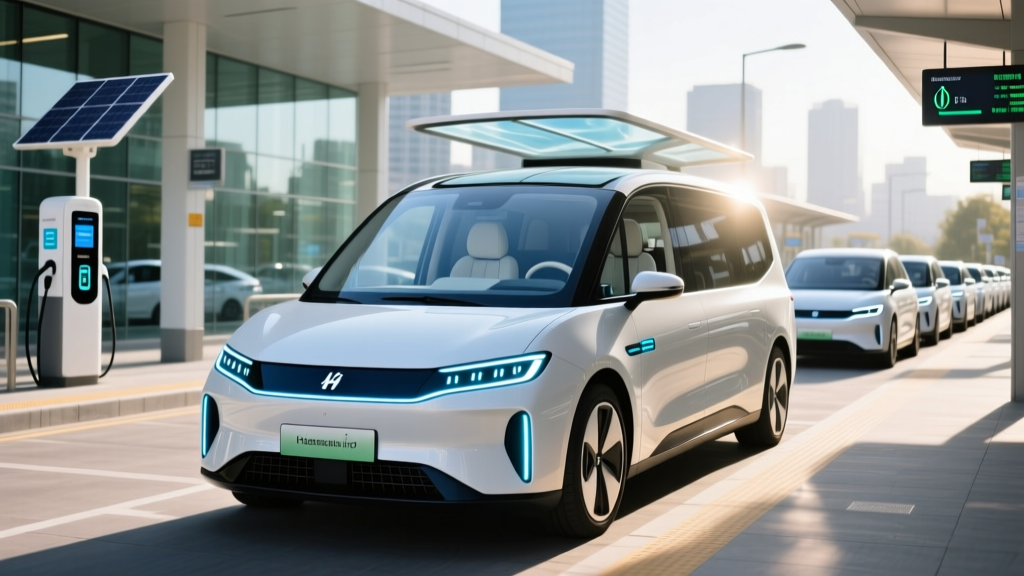
The electric shuttle car market in 2026 is a rapidly maturing segment covering low-speed campus shuttles, airport people-movers, hotel/resort carts, and full-size passenger vans (15-30 seats) used by universities, municipalities, airports, and private fleet operators. Vehicles range from $28,000 low-speed neighborhood shuttles to $130,000+ Class 3-4 electric transit shuttles. Compared to diesel equivalents, electric shuttles offer 60-75% lower fueling costs and dramatically reduced maintenance, but buyers must plan for depot charging infrastructure ($8,000-$45,000 per stall depending on power level) and cold-weather range loss of 20-35%.
Why Fleet Operators Are Switching to Electric Shuttles
The electric shuttle car market has accelerated because shuttle duty cycles — short, predictable routes with frequent stops and long dwell times — are nearly ideal for battery-electric powertrains. Regenerative braking recovers significant energy during stop-and-go operation, and overnight depot charging eliminates the need for public fast-charging networks entirely for most operators.
Municipalities and universities are also under pressure from state-level clean-fleet mandates. California's Advanced Clean Fleets regulation, for example, requires medium- and heavy-duty fleets to transition toward zero-emission vehicles on a phased schedule, pushing transit agencies and campus operators to evaluate electric shuttles now rather than later.
Key demand drivers in 2026:
- Total cost of ownership (TCO) parity: Electric shuttles reach TCO parity with diesel within 3-5 years for high-utilization routes (80+ miles/day).
- EPA and state emissions compliance: Zero tailpipe emissions simplify regulatory reporting.
- Passenger experience: Quieter operation, smoother acceleration, and no diesel exhaust odor.
- Maintenance reduction: No oil changes, no diesel exhaust fluid (DEF), no particulate filters, fewer brake replacements due to regen.
Electric Shuttle Categories and 2026 Specs
The electric shuttle car market segments into three broad vehicle classes. Specs below reflect current or announced 2026 model-year data from major manufacturers.
| Category | Example Models | Battery (kWh) | EPA / Mfr. Range | Peak DC Charge (kW) | 10-80% Time | Seats | Base MSRP |
|---|---|---|---|---|---|---|---|
| Low-Speed Campus/Resort | GEM eLXD, Club Car Villager LSV | 10-18 kWh (LFP) | 30-50 mi (mfr.) | 3-7 kW (L1/L2 only) | 4-6 hrs (full) | 6-14 | $28,000-$52,000 |
| Mid-Size Passenger Van | Lightning eMotors Class 3, GreenPower EV Star | 80-120 kWh (NMC/LFP) | 100-150 mi (mfr.) | 50-80 kW | ~60-90 min | 15-24 | $95,000-$135,000 |
| Full-Size Transit Shuttle | BYD K-series, Proterra ZX5 (35-ft) | 200-440 kWh (LFP/NMC) | 150-250 mi (mfr.) | 150-250 kW | ~45-75 min | 30-40+ | $450,000-$750,000 |
Real-world range caveat: Manufacturer-stated range for commercial shuttles is often measured under optimal conditions. Expect 20-30% range reduction in cold climates (below 32°F) and 15-25% reduction on routes with significant elevation gain or sustained highway speeds above 45 mph. A mid-size van rated at 150 miles may realistically deliver 105-125 miles in a northern winter. Always spec battery capacity for your worst-case day, not your average day.
Electric vs. Diesel Shuttle: The Real Cost Breakdown
Fleet purchasing decisions come down to total cost of ownership, not sticker price. Here's a 7-year comparison for a mid-size 20-passenger shuttle running 12,000 miles per year on a campus loop route.
| Cost Category | Electric Shuttle | Diesel Shuttle |
|---|---|---|
| Purchase Price (base) | $115,000 | $78,000 |
| Federal/State Incentives | -$40,000 (est. combined)* | $0 |
| Net Acquisition Cost | $75,000 | $78,000 |
| Depot Charger Install (1 unit) | $18,000 (Level 2, 19.2 kW) | $0 |
| Fuel / Energy (7 yrs, 84,000 mi) | $8,400 ($0.10/kWh avg, 2 kWh/mi) | $31,500 ($3.75/gal, 7 mpg avg) |
| Maintenance (7 yrs) | $7,500 | $22,000 |
| Brake Replacement | 1x ($1,200) | 3x ($3,600) |
| Insurance (7 yrs, est.) | $14,700 | $12,600 |
| Total 7-Year Cost | $124,800 | $147,700 |
*Incentive estimates vary by jurisdiction. The IRA §30D and commercial clean vehicle credit (§45W) offer up to $7,500 or $40,000 respectively for qualifying commercial vehicles, subject to MSRP, sourcing, and income/entity requirements. Always consult a tax professional and check current IRS guidance.
The electric shuttle saves roughly $22,900 over 7 years in this scenario, and the gap widens as diesel prices rise or daily mileage increases. For routes exceeding 80 miles/day, payback typically occurs within 4 years.
Charging Infrastructure: What Fleet Buyers Must Plan For
The single biggest mistake new electric shuttle fleet operators make is underestimating charging infrastructure cost and lead time. You cannot simply plug a 120 kWh shuttle into a standard outlet and expect operational readiness.
| Level | Power (kW) | Miles Added/Hour | Full Charge Time (120 kWh) | Install Cost per Stall |
|---|---|---|---|---|
| Level 2 (AC) | 7.2-19.2 kW | 8-22 mi/hr | 6-16 hours | $3,500-$12,000 |
| DC Fast (Level 3) | 50-80 kW | 55-90 mi/hr | 1.5-2.5 hours | $25,000-$55,000 |
| DC Ultra-Fast | 150-250 kW | 150-250+ mi/hr | 45-75 min (10-80%) | $60,000-$120,000 |
kW vs. kWh reminder: kW (kilowatts) measures the rate of energy delivery — how fast you're charging. kWh (kilowatt-hours) measures total energy stored in the battery. A 120 kWh battery charged at 19.2 kW takes roughly 6.25 hours; at 60 kW it takes roughly 2 hours (minus taper above 80% SoC).
Most shuttle fleets operating predictable daytime routes with overnight depot parking do perfectly well with Level 2 charging. A 19.2 kW Level 2 unit adds approximately 20 miles of range per hour, meaning a 120 kWh shuttle can fully replenish in 6-7 hours — ideal for overnight turnaround. DC fast charging becomes necessary only when shuttles run multiple shifts or mid-day top-ups are required.
Infrastructure lead time warning: Commercial-grade EV charger installations often require utility service upgrades, trenching, conduit runs, and permitting. Plan for 3-9 months from site assessment to energization. Engage your utility early — some offer make-ready programs that cover a portion of the electrical infrastructure cost.
Common Misconceptions About Electric Shuttles
| Myth | Fact |
|---|---|
| "Electric shuttles can't handle cold weather." | Range drops 20-35% below freezing, but LFP batteries with active thermal management (standard on most 2026 mid- and full-size models) mitigate this. Properly spec'd fleets add 30% battery buffer for winter routes. |
| "Batteries will need expensive replacement within 5 years." | Modern LFP and NMC packs in commercial shuttles carry 8-10 year / 150,000-300,000 mile warranties with guaranteed 70-80% capacity retention. Real-world data from early-adopter transit agencies shows 10-15% degradation at 5 years — well within operational margins. |
| "You need DC fast chargers for every shuttle." | Most fixed-route shuttles returning to depot overnight charge fully on Level 2 at a fraction of the cost. DC fast charging is only necessary for multi-shift or on-demand operations. |
| "Electric shuttles are slow and can't keep up with traffic." | Low-speed campus models are governed to 25 mph by design. Mid-size and full-size electric shuttles produce 200-400+ hp and reach highway speeds. The Lightning eMotors Class 3 van, for example, delivers 320 hp and a governed top speed of 65 mph. |
| "There are no incentives for commercial EVs." | The IRA's §45W Commercial Clean Vehicle Credit provides up to $40,000 for qualifying commercial EVs over 14,000 lbs GVWR. State and utility incentives can stack on top. Consult a tax professional for eligibility. |
Battery Chemistry: LFP vs. NMC for Shuttle Duty
Most 2026 electric shuttles in the low- and mid-size segments use either lithium iron phosphate (LFP) or nickel manganese cobalt (NMC) cells. The choice matters for fleet planning.
- LFP (Lithium Iron Phosphate): Lower energy density but superior cycle life (3,000-5,000+ cycles to 80% SoH), better thermal stability, no cobalt sourcing concerns, and lower per-kWh cost. Ideal for shuttles that charge daily and can accommodate a slightly heavier pack. BYD and many Chinese-market platforms use LFP exclusively.
- NMC (Nickel Manganese Cobalt): Higher energy density means more range in a lighter, smaller package. Cycle life is typically 1,500-2,500 cycles to 80% SoH — still ample for most shuttle applications. Better suited when weight or packaging constraints are tight, such as retrofitted van platforms.
For shuttle duty — daily shallow-to-deep cycles, predictable routes, depot charging — LFP is increasingly the default for cost-optimized fleet buyers who can accept the weight penalty.
Decision Framework: Should Your Fleet Go Electric?
If X, Then Y — Electric Shuttle Suitability
- If your daily route is under 100 miles and vehicles return to a fixed depot overnight → Electric is a strong fit. Level 2 depot charging handles this easily. Proceed with RFP.
- If your daily route exceeds 150 miles with no mid-day layover → Electric may work but requires either a larger battery (adding $15,000-$30,000) or a mid-day DC fast-charge stop. Run a detailed energy model first.
- If your shuttles run 24/7 with rotating shifts and no downtime → Electric is challenging without a larger fleet to rotate through charging. Consider a mixed fleet or PHEV option.
- If your depot lacks 3-phase electrical service or utility upgrade timelines exceed 12 months → Begin infrastructure planning immediately. Electric shuttles may not be viable until power is available. Engage your utility's EV fleet program.
- If your routes operate in sustained sub-zero (below 0°F) climates → Spec 30-40% extra battery capacity, prioritize models with heat pump HVAC and battery preconditioning, and plan for reduced winter utilization.
- If your fleet qualifies for §45W or state incentives covering 30%+ of acquisition cost → The economics strongly favor electric. Lock in incentive reservations early — some programs have annual funding caps.
First-Time EV Shuttle Buyer Checklist
If this is your fleet's first electric shuttle procurement, work through these steps before issuing an RFP:
- Audit your routes: Log actual daily mileage, stop frequency, elevation profiles, and ambient temperature ranges for every route. GPS telematics from existing vehicles makes this straightforward.
- Size your battery for worst-case: Take your highest-mileage winter day, add a 20% buffer for detours and HVAC load, and spec battery capacity accordingly. A route that needs 80 miles in July may need 110 miles of rated range in January.
- Survey your depot electrical capacity: Hire an electrical engineer to assess available amperage, panel capacity, and conduit pathways. A single 19.2 kW Level 2 charger draws ~80 amps at 240V — four chargers may require a new service panel or transformer.
- Engage your utility: Many utilities offer commercial EV rate schedules (often cheaper than standard commercial rates for off-peak charging), make-ready infrastructure programs, and demand charge management tools.
- Model TCO honestly: Include charger installation, electrical upgrades, driver training, and a 10% contingency. Compare against diesel's rising fuel and maintenance trajectory, not just today's costs.
- Verify incentive eligibility: Check IRS §45W requirements, your state's clean-fleet programs, and local air-quality district grants. Some incentives require pre-approval before purchase.
- Plan for workforce training: Maintenance technicians need high-voltage safety certification. Drivers need regen-braking familiarization and SoC management habits (e.g., plugging in at end of shift without fail).
Frequently Asked Questions
How long do electric shuttle batteries last before replacement?
Most 2026 commercial electric shuttle batteries carry warranties of 8-10 years or 150,000-300,000 miles, guaranteeing 70-80% of original capacity. Real-world fleet data from early-adopter transit agencies shows approximately 2-3% annual degradation under daily cycling — meaning a shuttle may retain 80-85% of its original range after 7 years. Full battery replacement costs $20,000-$60,000 depending on pack size, but most fleets retire or repurpose vehicles before this becomes necessary.
Can electric shuttles operate in extreme heat?
Yes. Active liquid thermal management systems in 2026 models keep battery temperatures within the 59-95°F optimal window even when ambient temperatures exceed 110°F. Range loss in extreme heat is typically 5-10%, far less than cold-weather loss. The primary concern in hot climates is cabin HVAC load — spec a heat pump system rather than resistive heating/cooling to minimize energy draw.
What about the federal tax credit for commercial electric shuttles?
The IRA's §45W Commercial Clean Vehicle Credit offers up to $7,500 for vehicles under 14,000 lbs GVWR and up to $40,000 for vehicles at or above 14,000 lbs GVWR. Eligibility depends on battery component sourcing, critical minerals requirements, and the vehicle being manufactured by a qualified OEM. Most mid-size and full-size electric shuttles exceed the 14,000-lb threshold. Always verify current-year rules with the IRS and a qualified tax professional, as sourcing requirements tighten annually through 2032.
Do I need to worry about charging connector compatibility?
For commercial shuttles, the dominant connectors are CCS1 (most North American OEMs) and, increasingly, NACS (Tesla-standard, now adopted by Ford, GM, and others for passenger vehicles). Low-speed campus shuttles typically charge via standard J1772 (Level 2 AC). Confirm your vehicle's inlet type before ordering depot chargers, and ensure your charger vendor supplies the matching cable or adapter. For mixed fleets, dual-standard DC chargers (CCS + NACS) are available at a modest premium.
How does an electric shuttle handle hilly routes?
Electric motors produce peak torque from 0 RPM, making them strong hill climbers. However, sustained grades consume significantly more energy — a shuttle climbing a 6% grade may use 2-3x its rated kWh/mile. Regenerative braking recovers substantial energy on descents, partially offsetting the climb. If your route includes sustained elevation gains exceeding 500 feet, model energy consumption conservatively and add battery buffer.