The Bottom Line on Electric Semi Tractor Trailers
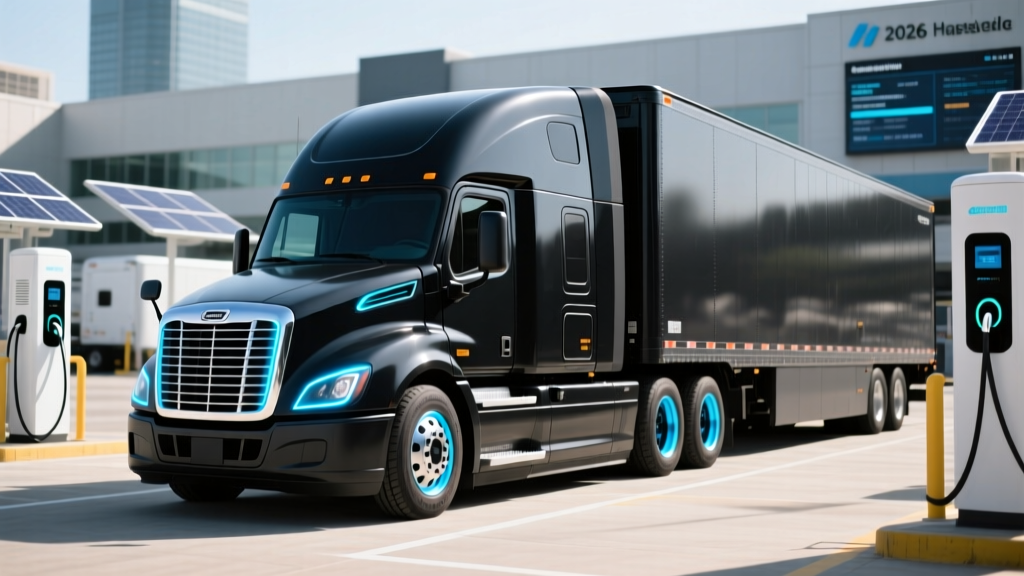
An electric semi tractor trailer is a viable, cost-saving investment for regional-haul and drayage fleets operating predictable routes under 250 miles, with access to depot charging. The Tesla Semi (up to 500 miles EPA range, ~$250,000 base) and Freightliner eCascadia (230 miles range, ~$300,000+) lead the 2026 market. Diesel fuel savings of $0.40–$0.60 per mile and drastically reduced maintenance can yield payback in 3–5 years for high-utilization routes — but long-haul (500+ mile) operations remain impractical without en-route megawatt charging infrastructure, which is still sparse in 2026.
Who Should Consider an Electric Semi Tractor Trailer?
Not every fleet is a candidate. The current generation of Class 8 battery-electric trucks excels in specific duty cycles and struggles in others. Here's how to determine fit:
Decision Framework: Is an Electric Semi Right for Your Fleet?
Choose electric if:
- Your routes are regional or drayage — under 250 miles round-trip with predictable stops
- You have depot space for overnight Level 2 or DC fast charging (minimum 150 kW per truck)
- Your fleet operates in a state with clean-fleet mandates (California's Advanced Clean Fleets rule, for example)
- Daily fueling costs exceed $300 per truck (diesel at ~$4.00/gal, trucks averaging 6.5 MPG)
- You can leverage federal and state incentive programs to offset the 2–3× purchase premium
Stick with diesel (or wait) if:
- Your trucks run long-haul routes exceeding 400 miles between stops
- You operate in regions with no public megawatt-class charging (MCS) infrastructure
- Your loads consistently max out at 82,000 lbs GVWR in mountainous terrain
- Your depot electrical service cannot support multiple 150–350 kW chargers without a costly utility upgrade
2026 Electric Semi Tractor Trailer Models: Specs Compared
The Class 8 electric truck market has matured since the first deliveries in 2022–2023. Here's how the major players stack up on the numbers that matter for fleet planning:
| Specification | Tesla Semi (2026) | Freightliner eCascadia | Volvo VNR Electric | Peterbilt 579EV |
|---|---|---|---|---|
| EPA Range (loaded) | Up to 500 mi (est.) | ~230 mi | ~275 mi | ~150 mi |
| Battery Capacity (usable) | ~900 kWh (est., LFP/NMC) | 438 kWh (NMC) | 565 kWh (NMC) | 396 kWh (NMC) |
| Peak DC Charge Rate | ~1 MW (MCS connector) | ~350 kW (CCS2) | ~250 kW (CCS2) | ~150 kW (CCS1) |
| 10–80% Charge Time | ~40 min (est.) | ~90 min | ~70 min | ~3–4 hours |
| Horsepower | ~1,000+ HP (tri-motor) | ~470 HP | ~455 HP | ~670 HP |
| Base MSRP (est.) | ~$250,000 | ~$300,000–$350,000 | ~$300,000–$340,000 | ~$280,000–$320,000 |
| Warranty (battery) | 8 yr / 1,000,000 mi (est.) | 5 yr / unlimited mi | 5 yr / 400,000 mi | 5 yr / unlimited mi |
| Real-World Range (loaded, 70°F) | ~350–420 mi | ~160–190 mi | ~190–230 mi | ~110–130 mi |
Real-World Range Reality Check
EPA range figures for heavy trucks assume moderate loads and favorable conditions. In real-world operation with a full 80,000-lb payload, expect a 20–30% range reduction from sticker. Cold weather (below 32°F) can further reduce range by 15–25%. Mountain grades with a loaded trailer compound losses. The Tesla Semi's 500-mile claim may yield 350 miles in demanding conditions — still class-leading, but plan routes conservatively.
Total Cost of Ownership: Electric Semi vs. Diesel
The upfront price of an electric semi tractor trailer is 2–3× that of a comparable diesel Class 8 rig. The case for electrification rests entirely on operating-cost savings over a 5–7 year ownership cycle. Here's a data-driven comparison based on 100,000 miles/year utilization:
| Cost Category (5-Year / 500,000 mi) | Diesel Class 8 | Electric Class 8 | Notes |
|---|---|---|---|
| Purchase Price | $140,000–$180,000 | $250,000–$350,000 | Electric premium: $100K–$200K before incentives |
| Federal Tax Credit (§45W) | $0 | Up to $40,000 | Commercial clean vehicle credit — IRS §45W |
| State Incentives (e.g., CA HVIP) | $0 | $50,000–$120,000 | Varies by state; some programs cover 50%+ of incremental cost |
| Fuel/Energy (500K miles) | $300,000–$380,000 | $80,000–$140,000 | Diesel ~$4.00/gal @ 6.5 MPG vs. electricity ~$0.18/kWh @ 2 kWh/mi |
| Maintenance (500K miles) | $50,000–$75,000 | $15,000–$25,000 | No oil changes, no DPF/EGR, far fewer brake replacements (regen) |
| Charging Infrastructure (depot) | $0 | $40,000–$150,000 | Per-truck share of charger install + possible panel upgrade |
| Insurance (5 years) | $35,000–$50,000 | $40,000–$60,000 | Slightly higher for EV due to repair costs and battery value |
| Net 5-Year Cost (after incentives) | $525,000–$685,000 | $385,000–$565,000 | Electric can break even or save $50K–$150K over 5 years |
Key insight: The economics flip decisively in favor of electric at around 80,000–100,000 miles/year. Low-utilization fleets (under 50,000 mi/yr) may never recoup the purchase premium. Fuel cost savings alone — typically $0.40 to $0.60 per mile — are the single largest driver of TCO advantage.
Energy Cost Per Mile: The Core Equation
A loaded Class 8 diesel burns roughly 0.154 gallons per mile (6.5 MPG). At $4.00/gallon, that's $0.62/mile in fuel alone. An electric semi consumes approximately 1.8–2.2 kWh per mile under load. At a commercial depot rate of $0.15–$0.20/kWh, that's $0.27–$0.44/mile in energy. The per-mile savings of $0.18–$0.35 compounds rapidly: over 100,000 miles/year, that's $18,000–$35,000 in annual fuel savings per truck.
Charging Infrastructure: The Depot Challenge
Unlike passenger EVs, where public charging networks provide a safety net, an electric semi tractor trailer depends almost entirely on depot-based charging. Public megawatt-class charging (MCS) for heavy trucks is in its infancy in 2026, with only a handful of pilot corridors operational.
| Charging Level | Power (kW) | Miles Added Per Hour | Use Case |
|---|---|---|---|
| Level 2 (AC, depot overnight) | 19.2–40 kW | 10–20 mi/hr | 8–12 hour overnight top-up; sufficient for daily 150 mi routes |
| DC Fast (CCS, depot or public) | 150–350 kW | 75–175 mi/hr | Mid-day opportunity charging; 1–2 hour turnaround |
| Megawatt Charging System (MCS) | 600 kW–1.2 MW | 300–600 mi/hr | Future en-route charging; 30–45 min for meaningful range |
Depot Electrical Upgrade Reality
Installing even a single 150 kW DC fast charger typically requires 480V three-phase service with a dedicated 200–400 amp circuit. A fleet depot adding 5–10 chargers may need a utility transformer upgrade costing $100,000–$500,000+, plus trenching, conduit, switchgear, and permits. Lead times for utility upgrades in 2026 can stretch 12–18 months in some regions. Engage your utility early — before ordering trucks.
Per-charger installed costs break down approximately as follows:
| Component | Level 2 (40 kW AC) | DC Fast (150–350 kW) |
|---|---|---|
| Charger Hardware | $8,000–$15,000 | $60,000–$150,000 |
| Electrical Work (conduit, wiring, panel) | $5,000–$15,000 | $20,000–$80,000 |
| Utility Service Upgrade (per site) | $0–$30,000 | $50,000–$300,000+ |
| Permits & Engineering | $2,000–$5,000 | $10,000–$30,000 |
| Total Per Charger | $15,000–$65,000 | $140,000–$560,000 |
Common Misconceptions About Electric Semis
| Myth | Fact |
|---|---|
| "Electric semis can't pull a full load." | The Tesla Semi has demonstrated hauling 82,000 lbs over the Grapevine grade in California. Electric motors deliver peak torque at zero RPM — gradeability is not the issue. Range under max load is the planning constraint. |
| "Batteries won't last the life of the truck." | Modern NMC and LFP chemistries are engineered for 1 million+ miles in heavy-duty applications with active thermal management. Warranty coverage of 5–8 years / 400K–1M miles reflects manufacturer confidence. Replacement cost, if needed, is estimated at $40,000–$80,000 for a Class 8 pack. |
| "Charging takes too long for freight operations." | For depot-based overnight operations, 6–10 hours on Level 2 is more than sufficient to fully recharge a 200–300 mile route. Mid-day DC fast charging at 350 kW can add 150+ miles in 45–60 minutes during driver rest breaks. |
| "The grid can't support fleet electrification." | Most depot charging occurs overnight during off-peak hours when grid capacity is underutilized. Smart charging software can stagger sessions and manage demand charges. The challenge is local distribution infrastructure, not generation. |
| "There's no financial incentive for commercial fleets." | The federal §45W Commercial Clean Vehicle Credit provides up to $40,000 per Class 8 truck. States like California, New York, and New Jersey offer additional incentives of $50,000–$120,000+ per vehicle through voucher programs. |
Real-World Ownership: What First-Time Fleet Buyers Must Know
Cold Weather Range Loss Is Real
Battery chemistry is temperature-sensitive. In sub-freezing conditions, expect 15–30% range reduction due to increased internal resistance and cabin/climate-system energy draw. Fleets operating in the Upper Midwest or Northeast should spec routes for worst-case winter range, not summer best-case. Battery preconditioning (available on the Tesla Semi and newer eCascadia models) mitigates charging-speed loss in cold weather but does not fully recover range.
Driver Acceptance and Training
Drivers accustomed to diesel need training on regenerative braking behavior (which can be aggressive and effectively enable one-pedal driving), charge-planning discipline, and the different acceleration profile. Most fleet operators report high driver satisfaction post-transition — electric semis are quieter, smoother, and lack the vibration and fumes of diesel — but the adjustment period is real.
Maintenance Savings Are Significant but Different
Electric powertrains eliminate oil changes, fuel filters, DEF fluid, DPF regeneration, EGR systems, and turbocharger maintenance. Brake wear drops 50–70% thanks to regenerative braking. However, tire wear can increase 10–20% due to the higher curb weight of battery packs and instant torque delivery. Budget for slightly more frequent tire rotation and replacement.
Resale Value Uncertainty
The used electric semi market in 2026 is thin. Residual values are harder to predict than diesel counterparts. Battery State of Health (SoH) will be the primary determinant of resale value — fleets should plan to retain trucks longer (7–10 years) or negotiate buyback/residual guarantees at purchase.
Incentives and Tax Credits: Lowering the Entry Cost
Federal and state incentive programs are critical to making the electric semi tractor trailer pencil out. As of 2026, the key programs include:
- Federal §45W Commercial Clean Vehicle Credit: Up to $40,000 per vehicle for Class 8 trucks. The vehicle must be acquired for use in a trade or business, and the credit equals 30% of the incremental cost over a comparable diesel vehicle (capped at $40,000 for vehicles over 14,000 lbs GVWR). Administered by the IRS.
- State Voucher Programs: California's Hybrid and Zero-Emission Truck and Bus Voucher Incentive Project (HVIP) can provide $50,000–$120,000+ per Class 8 truck. New York's NYTVF, New Jersey's NJ ZIP, and similar programs exist in over a dozen states. Check current availability — these programs are first-come, first-served and subject to legislative renewal.
- Charging Infrastructure Incentives: Federal §30C Alternative Fuel Vehicle Refueling Property Credit covers up to 30% of charger installation costs (capped at $100,000 per item for commercial property). Many utilities also offer make-ready programs covering a portion of electrical upgrade costs.
- IRA Bonus Credits: If the truck's battery components and critical minerals meet domestic-content thresholds, additional bonus credit percentages may apply. Consult a tax professional for current-year sourcing requirements.
Frequently Asked Questions
How long does it take to charge an electric semi tractor trailer?
It depends on the charger and battery size. Overnight depot charging on a 40 kW Level 2 unit takes 8–12 hours for a full charge — perfectly suited for daily-use cycles. A 350 kW DC fast charger can replenish from 10% to 80% in roughly 60–90 minutes for a Freightliner eCascadia. The Tesla Semi, equipped with a Megawatt Charging System (MCS) port, is designed for ~1 MW charging, potentially achieving 10–80% in approximately 30–40 minutes at compatible stations.
Can an electric semi handle long-haul routes over 500 miles?
Not practically in 2026. Even the Tesla Semi's claimed 500-mile EPA range drops to 350–420 miles under a full load. Without a dense network of en-route megawatt chargers (which is still years away outside of select California and Texas corridors), long-haul operations remain diesel territory. Regional and drayage routes under 250 miles round-trip are the current sweet spot.
What happens if the battery degrades over time?
Class 8 EV batteries are engineered for 1 million+ miles with active liquid cooling and sophisticated battery management systems. Expect 10–15% capacity loss over the first 500,000 miles based on current NMC data from early-adopter fleets. If a pack requires replacement outside of warranty, estimated costs are $40,000–$80,000 depending on capacity and chemistry. Most manufacturers offer 5–8 year warranties with capacity retention guarantees (typically 70–80% of original capacity).
How does the electric semi compare to hydrogen fuel cell trucks?
Hydrogen fuel cell Class 8 trucks (e.g., Hyundai XCIENT, Toyota/Kenworth T680 FCEV) offer faster refueling (~15–20 minutes) and longer range (400–500+ miles), making them better suited for long-haul. However, hydrogen fuel costs $15–$30/kg in 2026 (equivalent to $0.80–$1.50/mile), refueling infrastructure is extremely limited, and vehicle cost exceeds $400,000. Battery-electric remains the more mature, lower-operating-cost choice for regional operations where range permits.
What's the first step for a fleet considering electric semis?
Start with a route analysis. Map your daily miles, payload weights, terrain, and ambient temperature ranges against the real-world range of candidate trucks. Then contact your utility to assess depot electrical capacity and upgrade lead times. Apply for state incentive vouchers early — they have limited funding windows. Finally, pilot with 1–3 trucks before committing to a full fleet transition.