The Quick Answer on EV Buses
An electric school bus (commonly searched as an "ev bus") costs between $230,000 and $350,000 to purchase in 2026 — roughly 2 to 3 times the price of a comparable diesel Type C bus. However, fuel savings of $6,000 to $10,000 per year and maintenance savings of $4,000 to $6,000 per year mean most fleets reach cost parity within 5 to 8 years, especially when EPA Clean School Bus grants or state voucher programs offset $100K–$285K of the upfront price. Current models deliver 100 to 150 miles of real-world range, enough for 85%+ of U.S. school routes. The biggest ownership variables are depot charging infrastructure ($20K–$80K per stall) and cold-climate range loss (15–30% below 32°F).
What Exactly Is an Electric School Bus?
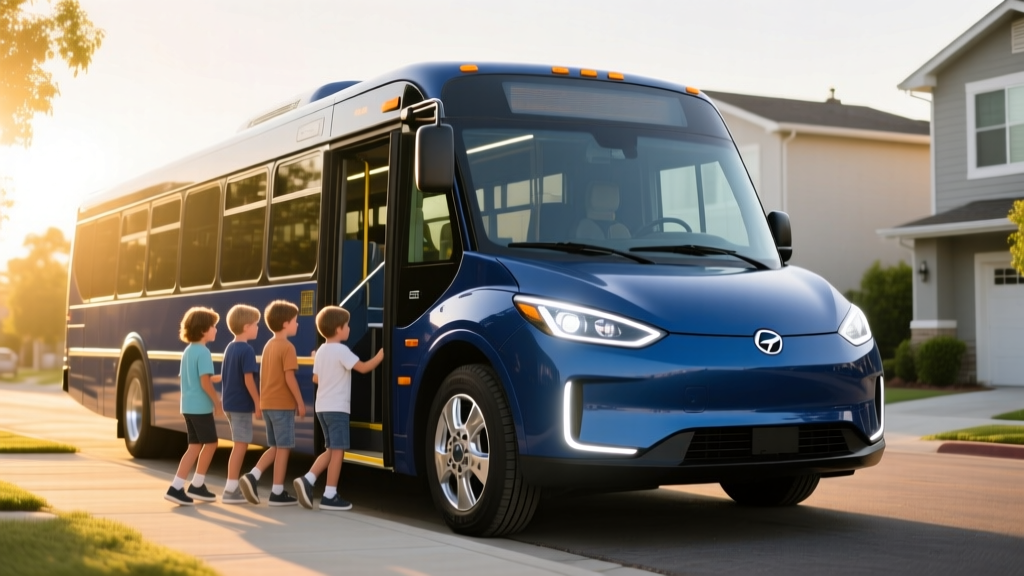
When most fleet managers and community members search for "ev bus," they're referring to battery-electric school buses — zero-tailpipe-emission vehicles replacing diesel, gasoline, or propane Type A, C, or D school buses. These are not city transit buses (like the New Flyer XE40) or motorcoaches. They are yellow school buses built on dedicated electric platforms by manufacturers including Blue Bird, Thomas Built Buses, and IC Bus, serving K-12 routes averaging 60 to 90 miles per day according to the U.S. Department of Energy's Alternative Fuels Data Center.
As of the 2026 model year, three mainstream Type C and Type D electric school buses dominate the U.S. market:
- Blue Bird Vision Electric (Type C) — 150 kWh LFP battery, ~130-mile real-world range
- Thomas Built Saf-T-Liner C2 Jouley (Type C) — 226 kWh NMC battery (two-pack), ~135-mile real-world range
- IC Bus CE Series Electric (Type C) — 210 kWh battery, ~120-mile real-world range
Type A (smaller, van-chassis) electric buses are also available from manufacturers like Collins Bus and the Lightning Electric/Forest River partnership, typically with 75–110 miles of range for special-education and shuttle routes.
EV Bus Specs: Range, Battery, and Charging Data
| Spec | Blue Bird Vision Electric | Thomas C2 Jouley | IC CE Electric |
|---|---|---|---|
| Battery Capacity | 150 kWh (LFP) | 226 kWh (NMC) | 210 kWh (NMC) |
| EPA / Advertised Range | ~150 mi | ~150 mi | ~140 mi |
| Real-World Range (mixed) | 110–130 mi | 115–135 mi | 100–120 mi |
| DC Fast Charge (peak kW) | 60 kW (CCS1) | 60 kW (CCS1) | 50 kW (CCS1) |
| DC 10–80% Time | ~90 min | ~120 min | ~130 min |
| Level 2 Charge Rate | 19.2 kW (AC) | 19.2 kW (AC) | 19.2 kW (AC) |
| Level 2 Full Charge Time | ~8 hours | ~12 hours | ~11 hours |
| Motor Output | ~250 HP / 150 kW | ~295 HP / 220 kW | ~270 HP / 200 kW |
| GVWR | 33,000 lbs | 33,000 lbs | 33,000 lbs |
| Passenger Capacity | Up to 72 | Up to 81 | Up to 72 |
| Base MSRP (approx.) | $280,000–$310,000 | $300,000–$340,000 | $270,000–$300,000 |
| Battery Warranty | 10 yr / unlimited mi | 10 yr / unlimited mi | 10 yr / unlimited mi |
Real-world range caveat: Advertised ranges assume flat terrain, moderate temperatures (65–75°F), and no idling HVAC load. In practice, cold weather below 32°F reduces range by 15–30% due to cabin heating demands and battery chemistry limitations. Hilly routes and stop-and-go traffic with regenerative braking can actually improve efficiency slightly. Districts in Minnesota, New York, and Vermont report winter ranges of 80–100 miles on buses rated for 130+.
Cost Breakdown: Purchase, Charging, Maintenance, and Grants
The single biggest barrier to EV bus adoption is upfront cost. A diesel Type C bus costs roughly $100,000–$130,000 in 2026. An electric equivalent runs $230,000–$350,000. But that's not the full picture. Federal, state, and utility incentives have fundamentally changed the math for many districts.
5-Year Total Cost of Ownership: Electric vs. Diesel School Bus
| Cost Category | Diesel Type C Bus | Electric Type C Bus |
|---|---|---|
| Purchase Price | $115,000 | $300,000 |
| EPA Clean School Bus Rebate (applied) | $0 | –$200,000* |
| Net Purchase After Incentive | $115,000 | $100,000 |
| Charging Infrastructure (amortized over 5 yr) | $0 | $15,000 ($3,000/yr) |
| Annual Fuel/Energy Cost | $8,500/yr ($42,500 total) | $2,200/yr ($11,000 total) |
| Annual Maintenance | $5,500/yr ($27,500 total) | $1,500/yr ($7,500 total) |
| Insurance (5 yr) | $12,000 | $14,000 |
| 5-Year Total Cost | $197,000 | $147,500 |
* EPA Clean School Bus Program rebates for priority districts (high-need, rural, or tribal) can reach $285,000 per bus. Average awarded rebates in recent rounds have been $200,000. Check current-year eligibility at epa.gov/cleanschoolbus. State programs (California HVIP, New York Truck Voucher, Colorado School Bus Grant) may stack.
Fuel cost math: A diesel bus averaging 6 mpg driven 12,000 miles/year consumes ~2,000 gallons. At $4.25/gal, that's $8,500/year. An electric bus averaging 2.0 kWh/mile driven 12,000 miles consumes ~24,000 kWh. At an average depot electricity rate of $0.09/kWh (off-peak commercial), that's $2,160/year. Districts with managed charging programs and utility time-of-use rates report even lower energy costs.
Maintenance savings: Electric school buses eliminate oil changes, diesel particulate filter (DPF) cleaning/replacement, exhaust aftertreatment, transmission service, and fuel filter changes. Brake wear drops 50–70% thanks to regenerative braking. The primary maintenance items are tire rotation, cabin air filters, coolant checks, and annual battery state-of-health diagnostics. Fleet operators consistently report maintenance cost reductions of 60–75% compared to diesel equivalents.
Depot Charging: What Fleets Actually Need
Unlike consumer EVs that rely on a mix of home and public charging, electric school buses are almost exclusively depot-charged. The typical workflow: buses return to the yard between 3:30 and 5:00 PM, plug in, and complete a full charge overnight using Level 2 (19.2 kW AC) chargers before the next morning's routes. DC fast charging is available but rarely needed for daily operations — it serves as insurance for mid-day route additions or split-shift schedules.
Charging Infrastructure Cost Breakdown
| Item | Per-Stall Cost Range | Notes |
|---|---|---|
| Level 2 Charger (19.2 kW, hardwired) | $5,000–$8,000 | Commercial-grade (ChargePoint, BTC Power, Tritium) |
| Electrical Panel / Switchgear Upgrade | $10,000–$40,000 | Depends on existing service capacity; 5+ buses often need a new transformer |
| Trenching, Conduit, Wiring (per stall) | $3,000–$10,000 | Distance from panel to parking stall drives cost |
| Utility Service Upgrade | $0–$50,000+ | Many utilities offer make-ready programs covering this cost |
| Charge Management Software | $500–$2,000/yr | Optimizes charging schedules for TOU rates and demand charges |
| Total Per-Stall Installed Cost | $20,000–$80,000 | Average ~$35,000 for a 5-bus depot buildout |
Critical consideration: Utility interconnection timelines are the #1 project delay for electric bus depots. Districts should engage their utility 12 to 18 months before planned bus delivery. Many utilities now offer "make-ready" programs that cover the cost of infrastructure on the utility side of the meter (transformer, service drop, switchgear) — this alone can save $20,000–$50,000 per depot. The EPA Clean School Bus Program also provides separate infrastructure funding of up to $20,000 per bus in recent funding rounds.
EV Bus vs. Diesel vs. Propane: Which Fuel Makes Sense?
| Factor | Electric (BEV) | Diesel | Propane (LPG) |
|---|---|---|---|
| Purchase Price | $230K–$350K | $100K–$130K | $110K–$140K |
| Fuel Cost per Mile | $0.18–$0.22 | $0.65–$0.80 | $0.40–$0.55 |
| Maintenance Cost per Mile | $0.10–$0.15 | $0.40–$0.50 | $0.30–$0.40 |
| Range (real-world) | 100–135 mi | 400–500 mi | 300–400 mi |
| Refuel/Recharge Time | 8 hr (L2) / 90 min (DCFC) | 10–15 min | 10–15 min |
| Tailpipe Emissions | Zero | NOx, PM, CO₂ | Lower NOx/PM than diesel; still CO₂ |
| Cold-Weather Impact | 15–30% range loss | Minimal (glow plugs, block heater) | Minimal |
| Noise Level (interior) | Very quiet | Loud (85+ dB at idle) | Moderate |
| Grant / Incentive Availability | Extensive (federal + state + utility) | Limited | Moderate (some state programs) |
The honest trade-off: Electric buses win on per-mile operating cost and emissions. Diesel and propane win on range, refueling speed, and cold-weather reliability. For districts running routes under 100 miles with depot charging access, electric is increasingly the lowest-cost option over a 12-year bus lifecycle. For rural districts with 150+ mile routes, extreme cold, or no utility upgrade capacity, propane or clean diesel remain practical choices.
Common EV Bus Misconceptions — Fact-Checked
| Myth | Fact |
|---|---|
| "Electric buses don't have enough range for real routes." | The average U.S. school bus route is 60–90 miles per day. Current EV buses deliver 100–135 real-world miles, covering 85%+ of routes. Only long rural routes and mid-day activity runs consistently exceed this. |
| "Batteries will need replacing and cost $100K+." | LFP and NMC bus batteries are warrantied for 10 years. Real-world degradation data from early-adopter fleets (2018–2022 buses) shows 85–92% state-of-health at year 5. Replacement costs are projected at $30,000–$50,000 by the mid-2030s as battery prices continue declining. No major fleet has reported a full-pack failure requiring out-of-warranty replacement as of 2026. |
| "They can't handle cold weather." | Cold weather does reduce range by 15–30%, and cabin heating draws significant energy. But districts in Massachusetts, New York, and Michigan operate electric buses year-round by planning shorter winter routes, using diesel auxiliary heaters on extreme-cold days, and preconditioning batteries while plugged in. |
| "Charging infrastructure is too expensive and complicated." | Depot charging infrastructure adds $20,000–$80,000 per stall, but EPA infrastructure rebates, utility make-ready programs, and state grants can cover 50–100% of this cost. Most installations are straightforward Level 2 hardwired chargers — not exotic technology. |
| "Electric buses are less safe than diesel." | Electric school buses meet or exceed all FMVSS safety standards. LFP battery chemistry (used by Blue Bird) is inherently more thermally stable than NMC. Multiple crash-test and thermal-runaway certifications are required. The lower center of gravity (batteries mounted under the floor) improves rollover resistance compared to diesel. |
Decision Framework: Is an EV Bus Right for Your Fleet?
If-Then Guide for Fleet Decision-Makers
- IF your average daily route is under 100 miles AND you have depot parking with electrical service access → Electric is a strong fit. Start with 1–3 buses on your shortest, most predictable routes.
- IF your routes regularly exceed 120 miles, include highway segments, or involve mid-day activity runs → Consider a mixed fleet. Assign EV buses to AM/PM school routes and retain diesel/propane for long-haul and extracurricular trips.
- IF you operate in a region with winter temperatures regularly below 20°F → Plan for 30% winter range loss. Specify battery preconditioning, evaluate auxiliary diesel heaters, and assign EV buses to shorter winter routes.
- IF your utility cannot support the electrical load for depot charging within a reasonable timeline (18+ months) → Delay or start with propane. Utility interconnection is the most common project bottleneck and cannot be rushed.
- IF you qualify for EPA Clean School Bus priority funding (high-need, Title I, rural, or tribal district) → The economics strongly favor electric. Rebates of $200,000–$285,000 bring net purchase cost below diesel.
- IF you have no access to federal or state grants and must self-fund → Run a 12-year TCO model. Electric may still win on lifecycle cost, but the payback period extends to 7–10 years without incentive support.
First-Time EV Bus Buyer Checklist
Districts procuring their first electric school bus should approach it as a multi-year infrastructure project, not just a vehicle purchase. Here's what to know before you sign:
- Map every route. Use GPS telematics from your current diesel fleet to log actual daily mileage, elevation changes, and idle time. This data — not advertised range — determines which routes are EV-ready.
- Engage your utility early. Contact your utility's commercial/EV team at least 18 months before planned bus delivery. Request a site assessment and ask about make-ready programs, demand-charge mitigation, and managed-charging incentives.
- Apply for every available grant. The EPA Clean School Bus Program runs annual rebate lotteries. Many states (CA, NY, CO, MA, NJ, MD) offer stacking vouchers. Utilities in PG&E, ConEdison, Xcel, and National Grid territories offer additional rebates. Total incentives can exceed $300,000 per bus.
- Budget for infrastructure. Even with grants, plan for $25,000–$50,000 per charging stall including electrical work, permitting, and software. Factor in future fleet expansion — oversizing conduit and switchgear now avoids costly rework later.
- Train your maintenance team. Electric bus maintenance requires high-voltage safety certification (typically a 2–3 day course from the OEM or a third party like NAFA). Mechanics won't be working on battery internals, but they need to safely perform inspections, coolant service, and component swaps around a 600V+ system.
- Plan for phased deployment. Most successful first-time adopters start with 1–3 buses, learn from one full school year of operation (including winter), and scale to 10–25% of fleet in years 2–3.
Frequently Asked Questions
How long do electric school bus batteries last?
Current LFP and NMC bus batteries are warrantied for 10 years with guaranteed capacity retention above 70–80%. Real-world data from early fleets (2018–2022 deployments) shows degradation rates of approximately 1.5–2.5% per year, meaning a bus battery should retain 80–85% of original capacity at year 8–10. Full pack replacement, if needed beyond warranty, is projected to cost $30,000–$50,000 by the early 2030s as cell prices decline.
Can electric school buses handle summer heat?
Yes. Battery thermal management systems (liquid cooling) keep cells within optimal temperature range even in Arizona and Texas summers. The primary summer impact is cabin air conditioning energy draw, which can reduce range by 10–15%. This is less severe than winter heating losses. Districts in Phoenix and Houston report reliable summer operation with adjusted route planning.
Do electric school buses qualify for the federal §30D tax credit?
No. The §30D Clean Vehicle Credit applies to light-duty vehicles under 14,000 lbs GVWR for personal use. School buses exceed this weight class. Instead, fleets access funding through the EPA Clean School Bus Program (rebates up to $285,000), the IRS §45W Commercial Clean Vehicle Credit (up to $40,000 for vehicles over 14,000 lbs, subject to eligibility), and state/utility voucher programs. Consult a tax professional regarding §45W applicability to your organization's tax status — many school districts are tax-exempt and may benefit from the elective pay (direct pay) provisions under the Inflation Reduction Act.
What happens if a bus runs out of charge mid-route?
This is rare with proper route planning, but it's the scenario that keeps fleet managers up at night. Mitigation strategies include: conservative route assignment (EV buses on routes 20% shorter than max range), real-time telematics monitoring with dispatch alerts at 30% state-of-charge, and a diesel backup bus available for substitution. Some districts carry a portable DC charger or have a tow contract with a flatbed that can relocate the bus to a depot charger. Unlike a diesel bus that can be refueled in 10 minutes from a jerry can, a depleted EV bus requires a flatbed tow or a mobile charging unit.
Are there enough electricians to install bus charging infrastructure?
This is a legitimate concern in many markets. Commercial electricians with EV charging experience are in high demand. Districts should solicit bids from 2–3 licensed electrical contractors early in the planning process and build 3–6 months of scheduling buffer into the project timeline. The National Electrical Contractors Association and many IBEW locals now offer EV infrastructure certification programs to expand the qualified workforce.
What's the resale value of a used electric school bus?
The secondary market for electric school buses is still developing. Early data from 2023–2025 model-year resales shows significant depreciation — 50–70% in the first 5 years — driven by rapid battery technology improvement and buyer uncertainty about battery state-of-health. This is expected to stabilize as the market matures and standardized battery health reporting becomes routine. For now, plan your TCO assuming minimal residual value at year 12.