The Quick Answer: Electric School Bus Pricing in 2026
How much is an electric school bus? A new Type C (full-size) electric school bus in 2026 costs between $250,000 and $350,000 before incentives — roughly 2.5× to 3.5× the price of a comparable diesel bus ($90,000–$120,000). A Type A (smaller, ~14-passenger) electric bus starts around $150,000–$200,000.
After applying EPA Clean School Bus Program grants (up to $345,000 for eligible high-need districts) and state incentives, many districts bring net acquisition cost down to $60,000–$150,000 — competitive with or below diesel over the vehicle's lifetime.
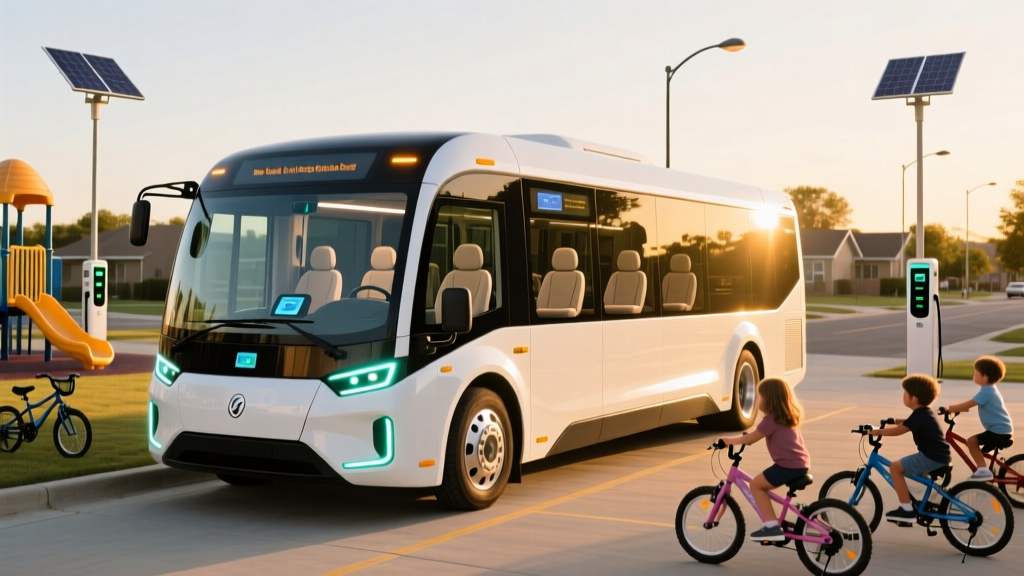
Electric school buses are no longer pilot curiosities. As of early 2026, manufacturers like Blue Bird (Visione), Thomas Built Buses (Saf-T-Liner C2 Jouley), and IC Bus (CE Series Electric) are delivering production units at scale. Lion Electric, after restructuring in late 2024, continues to supply the LionC for districts with existing contracts. The market has matured enough that the question is no longer whether electric buses work, but whether the math works for your district's routes, climate, and depot infrastructure.
Breaking Down the Real Cost of an Electric School Bus
Sticker price is only the opening move. Fleet buyers need to evaluate total cost of ownership (TCO) across a 12–15 year service life, factoring in energy, maintenance, infrastructure, and residual value. Here's how the numbers stack up for a typical Type C 72-passenger bus running a standard 60-mile daily route.
| Cost Category | Electric Bus | Diesel Bus | Notes |
|---|---|---|---|
| Vehicle Purchase (MSRP) | $280,000–$320,000 | $100,000–$120,000 | Varies by OEM, battery size, options |
| Federal / State Incentives | –$150,000 to –$345,000 | $0 | EPA Clean School Bus + state programs |
| Net Acquisition Cost | $60,000–$150,000 | $100,000–$120,000 | After grants applied |
| Charging Infrastructure (per bus share) | $20,000–$50,000 | $0 | Level 2 depot chargers; DCFC optional |
| Energy / Fuel (12 years, 12,000 mi/yr) | $28,000–$45,000 | $85,000–$120,000 | Electricity ~$0.12/kWh avg; diesel ~$4.00/gal |
| Maintenance (12 years) | $15,000–$25,000 | $45,000–$65,000 | No oil, filters, DEF, exhaust; less brake wear |
| Battery Replacement (if needed) | $30,000–$55,000 | $0 | Many OEMs warranty 10yr; not all need replacement |
| Insurance | $8,000–$12,000/yr | $6,000–$9,000/yr | Higher replacement cost drives EV premiums ~20-30% |
| Estimated 12-Year TCO | $380,000–$550,000 | $520,000–$680,000 | Electric wins on TCO when grants cover acquisition gap |
The critical variable is the incentive stack. Without grants, the electric bus costs roughly $200,000 more upfront, and the operational savings (fuel + maintenance) take 10–14 years to close the gap. With the EPA Clean School Bus Program funding — which distributed $5 billion through 2026 under the Bipartisan Infrastructure Law — most districts reach TCO parity within 3–6 years.
Specs That Matter: Range, Battery, and Charging
School bus buyers don't care about 0-60 times. They care about whether the bus finishes its route on a single charge, how long it takes to recharge at the depot, and whether the battery survives 12 years of daily cycling. Here are representative specs for the dominant 2025–2026 production models:
| Spec | Blue Bird Visione | Thomas Jouley | IC CE Electric |
|---|---|---|---|
| Usable Battery Capacity | 155 kWh (LFP) | 226 kWh (NMC) | 150–210 kWh (LFP) |
| EPA Estimated Range | ~130 miles | ~135 miles | ~120–150 miles |
| Real-World Range (loaded, mixed) | 90–115 miles | 95–120 miles | 85–130 miles |
| Real-World Range (cold weather, <32°F) | 65–90 miles | 70–95 miles | 60–100 miles |
| Level 2 AC Charging (19.2 kW) | ~8 hours (0–100%) | ~12 hours (0–100%) | ~8–11 hours |
| DC Fast Charging (peak kW) | 60–80 kW | 60 kW (CCS1) | 60–80 kW |
| DCFC 10–80% Time | ~75–90 min | ~100–120 min | ~80–100 min |
| Motor Output | ~200 kW (268 hp) | ~200 kW (268 hp) | ~190 kW (255 hp) |
| Battery Warranty | 10 yr / unlimited miles | 10 yr / unlimited miles | 10 yr / unlimited miles |
| Base MSRP (approx.) | $280,000–$310,000 | $290,000–$330,000 | $270,000–$320,000 |
Range Reality Check
The EPA range figures above assume moderate temperatures, flat terrain, and a partially loaded bus. In practice, fleet managers should plan routes against the worst-case scenario: a fully loaded 72-passenger bus running stop-and-go routes in January with cabin heating running. That scenario typically delivers 60–70% of the sticker range.
Most school routes in the U.S. run 30–70 miles per day, which keeps even cold-weather operations within a single-charge envelope. Districts with routes exceeding 100 miles or operating in extreme cold (sustained sub-zero°F) should evaluate opportunity charging or specify the largest available battery pack. Electric cabin heating draws 10–20 kW continuously in cold weather — a significant parasitic load on a 155 kWh pack.
Charging Infrastructure: The Hidden Line Item
Depot charging infrastructure is where many electric bus programs hit friction. Each bus needs a dedicated Level 2 (19.2 kW) charging pedestal for overnight charging, installed at the bus yard. Costs break down as follows:
- Level 2 pedestal hardware: $3,000–$7,000 per unit (commercial-grade, dual-port options available)
- Electrical trenching and conduit: $5,000–$15,000 per stall depending on yard layout
- Utility service upgrade: $10,000–$80,000 if the depot needs a new transformer or switchgear to handle a 10–20 bus fleet
- Charge management software: $500–$2,000/yr per site for load balancing and scheduling
A 10-bus fleet can typically charge overnight on Level 2 alone — 8–10 hours at 19.2 kW adds 130–150 kWh, replenishing a full day's route. DC fast chargers (60–150 kW) are useful for mid-day top-ups but add $30,000–$80,000 per unit in hardware and higher demand charges from the utility.
Critical first step: Contact your utility's commercial EV team before ordering buses. Many utilities offer make-ready programs that cover the cost of wiring and infrastructure upgrades on the utility side of the meter. Lead times for transformer upgrades can run 6–18 months.
Electric School Bus vs. Diesel: The Head-to-Head
| Metric | Electric (Type C) | Diesel (Type C) |
|---|---|---|
| Upfront Vehicle Cost | $280K–$330K | $100K–$120K |
| Net Cost After Grants | $60K–$150K | $100K–$120K |
| Energy/Fuel Cost per Mile | $0.22–$0.35 | $0.60–$0.90 |
| Annual Maintenance Cost | $1,500–$2,500 | $4,000–$6,000 |
| Tailpipe Emissions | Zero | NOx, PM, CO₂ |
| Idling Cost (per hour) | $0 (no energy use when off) | $3–$5 in diesel fuel |
| Noise at Stop | Near silent | 80–85 dB |
| Driver Experience | No vibration, single-speed, regen braking | Vibration, multi-gear, engine braking |
| Route Flexibility | Limited by battery; needs planning | Unlimited; refuel anywhere in 10 min |
| Cold Weather Penalty | 30–40% range loss | Minimal (block heater may be needed) |
The diesel bus wins on flexibility and cold-weather resilience. The electric bus wins on operating cost, emissions, and driver comfort — provided the route fits within the battery envelope and depot charging is available. This isn't an either/or for most districts. Many are running mixed fleets, deploying electric buses on shorter urban and suburban routes while keeping diesel or propane for long rural runs and field trips.
Common Misconceptions About Electric School Buses
| Myth | Fact |
|---|---|
| "The battery will need replacing every 5 years." | Modern LFP and NMC school bus batteries are warrantied for 10 years with guaranteed capacity retention (typically ≥70% at end of warranty). Real-world data from early adopters shows degradation of 1–2% per year under normal cycling. |
| "They can't handle cold weather." | Range drops 30–40% in sustained sub-freezing temps, but most routes still fit within the reduced envelope. Battery thermal preconditioning and route planning mitigate this. Districts in Minnesota, Vermont, and Alaska operate electric buses year-round. |
| "Charging takes too long for school schedules." | Overnight depot charging on Level 2 (8–10 hours) fully replenishes the battery. Buses sit parked 14–16 hours per day — there's ample time. DCFC is available for mid-day top-ups if needed. |
| "The grid can't handle a fleet of electric buses." | A 20-bus fleet charging overnight at 19.2 kW each draws ~384 kW — roughly equivalent to a small grocery store. With utility coordination and managed charging software, this is routine commercial load. |
| "There's no funding available." | The EPA Clean School Bus Program has allocated billions through 2026. Many states (California, New York, Colorado, Massachusetts) layer additional incentives. Utility make-ready programs cover infrastructure costs. Stacking incentives routinely covers 60–100% of the acquisition premium. |
Who Should Buy Electric — and Who Should Wait
Choose an electric school bus if:
- Your daily routes are under 80 miles round-trip (accounting for cold-weather reduction)
- You have depot space with utility access for overnight Level 2 charging
- Your district qualifies for EPA Clean School Bus grants or state incentive programs
- You operate in an area with clean electricity (renewables, nuclear, natural gas) — maximizing the emissions benefit
- You plan to hold the bus 10+ years, capturing full TCO savings
- Your routes are urban or suburban with frequent stops (regen braking maximizes efficiency)
Stick with diesel, propane, or CNG for now if:
- Your routes regularly exceed 120 miles per day or include multi-hour field trips
- You operate in extreme cold (sustained below –10°F) with routes near the range limit
- Your depot has no utility upgrade path or faces 2+ year interconnection timelines
- Your district cannot access federal or state grant funding
- You need long-range flexibility for athletics, band trips, or rural consolidation routes
First-Time Electric Bus Buyer Checklist
- Audit your routes. Pull GPS or odometer data for every route. Identify the longest daily mileage and the coldest-month average. Size the battery for the worst day, not the average day.
- Call your utility early. Request a commercial EV infrastructure consultation. Ask about make-ready programs, time-of-use rates, and transformer lead times.
- Apply for EPA Clean School Bus funding. Check epa.gov/cleanschoolbus for current application windows and eligibility. High-need, rural, and tribal districts receive priority and larger awards.
- Layer state incentives. Many states offer $50,000–$150,000 per bus on top of federal grants. Check your state energy office or department of environmental quality.
- Specify managed charging software. Staggered charging (sequencing buses rather than charging all simultaneously) can cut peak demand charges by 40–60%.
- Budget for driver training. Regenerative braking, one-pedal driving feel, and battery-state awareness require a 2–4 hour orientation for drivers transitioning from diesel.
- Plan for battery end-of-life. At 12–15 years, the pack retains 60–75% capacity — suitable for stationary storage or second-life applications. Factor in $30,000–$55,000 for replacement if the bus will serve beyond the warranty period.
Real-World Fleet Data: What Districts Are Reporting
Early-adopter districts have generated enough operational data to move beyond projections. According to reports compiled by the National Renewable Energy Laboratory (NREL) and the World Resources Institute's Electric School Bus Initiative:
- Maintenance cost reduction: Districts report 40–60% lower maintenance spend per mile compared to diesel, driven by elimination of oil changes, fuel filter replacements, DEF fluid, exhaust aftertreatment repairs, and reduced brake wear from regenerative braking.
- Energy cost stability: Electricity rates fluctuate far less than diesel. Districts locking in commercial EV time-of-use rates report $0.20–$0.30 per mile energy cost vs. $0.65–$0.85 for diesel.
- Uptime: Electric bus mechanical uptime is generally higher (fewer moving parts), but early models experienced software and charger communication faults. 2025–2026 models have improved significantly, with fleet managers reporting 90–95% daily availability.
- Driver satisfaction: Overwhelmingly positive. Drivers cite reduced noise, vibration, and heat in the cabin. The quieter bus also improves student behavior, according to multiple district surveys.
Frequently Asked Questions
Can a school district get the $7,500 federal EV tax credit for an electric bus?
No. The §30D Clean Vehicle Credit applies to light-duty vehicles under 14,000 lbs GVWR purchased by individuals or businesses. School buses exceed this weight class and are typically purchased by government entities (which don't pay federal income tax). Instead, districts access funding through the EPA Clean School Bus Program, state incentive programs, and utility rebates — which often provide more total funding than the tax credit would.
What happens if the battery degrades and the bus can't finish its route?
Most OEMs warrant the battery for 10 years with a minimum capacity retention of 70%. If degradation exceeds this threshold, the manufacturer replaces or refurbishes the pack at no cost. In practice, LFP chemistry (used by Blue Bird and IC Bus) degrades more slowly than NMC, with projected 80%+ retention at 10 years under typical school bus cycling (one charge cycle per day, moderate depth of discharge).
How long does it take to charge an electric school bus at the depot?
On a 19.2 kW Level 2 charger, a fully depleted 155 kWh battery takes approximately 8 hours to reach 100%. Since most buses return to the depot by 4 PM and don't depart until 6 AM, there's a 14-hour charging window — more than sufficient. DC fast charging at 60–80 kW can add 50–60 miles of range in 45 minutes for mid-day top-ups.
Do electric school buses work in very cold climates?
Yes, but with planning. Battery capacity drops 30–40% in sustained sub-freezing temperatures due to increased internal resistance and cabin heating loads. Districts in Vermont, Michigan, and Alaska operate electric buses year-round by specifying larger battery packs, using battery preconditioning, and limiting electric bus assignments to shorter routes during winter months.
What's the residual value of an electric school bus after 12 years?
This is still an open question — the first generation of modern electric school buses (delivered 2020–2022) hasn't reached end-of-life yet. Diesel buses typically sell for $5,000–$15,000 at auction after 12–15 years. Electric bus residual value will depend on battery state of health; a bus with 70%+ battery capacity may command a premium for second-life or continued short-route service. Industry consensus expects residual values to firm up as the secondary market matures.
How does V2G (vehicle-to-grid) factor into electric school bus economics?
Vehicle-to-grid technology allows the bus battery to discharge power back to the grid during peak demand events, potentially earning revenue for the district. Several pilot programs (notably with Con Edison in New York and SDG&E in California) have demonstrated this, but V2G is not yet widely available or compensated at rates that significantly move the TCO needle. It's a potential future upside, not a current planning assumption.
For districts evaluating the transition, the bottom line is straightforward: if your routes fit the battery, your depot can support charging, and you can access grant funding, an electric school bus delivers lower total cost of ownership, zero tailpipe emissions near children, and a better experience for drivers and riders. Run your specific route data, call your utility, and apply for the next EPA funding round — the math will tell you which buses to electrify first.