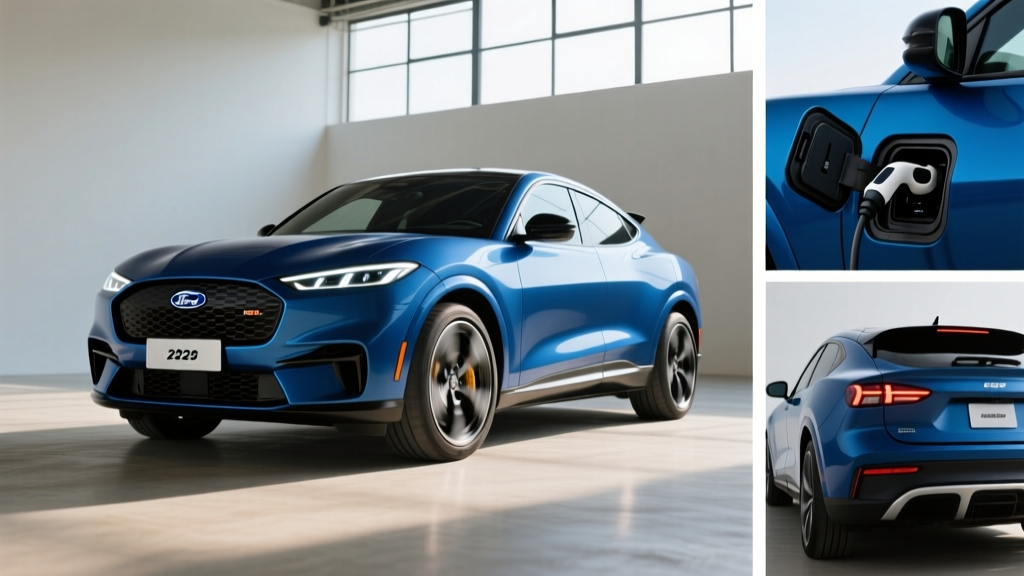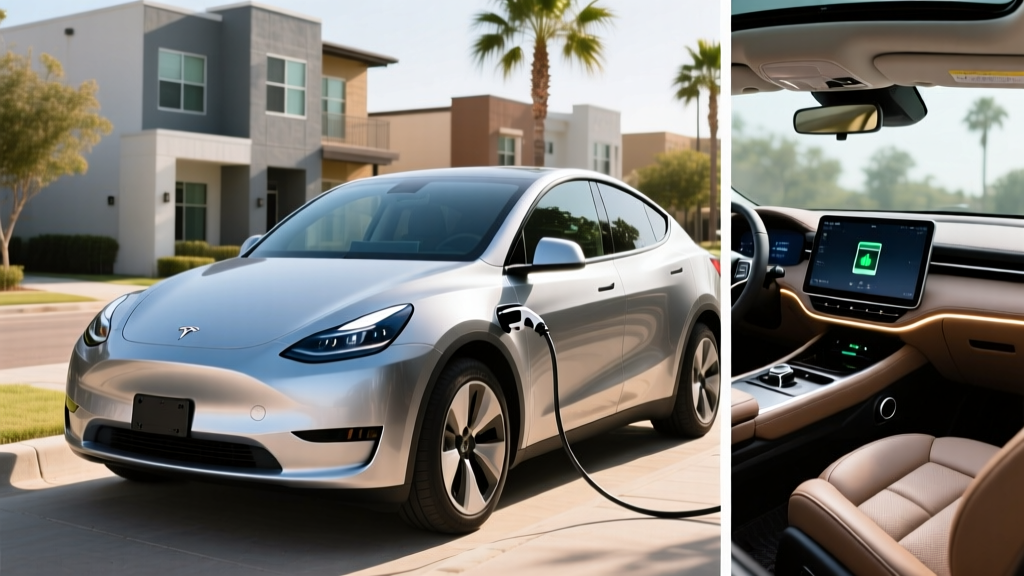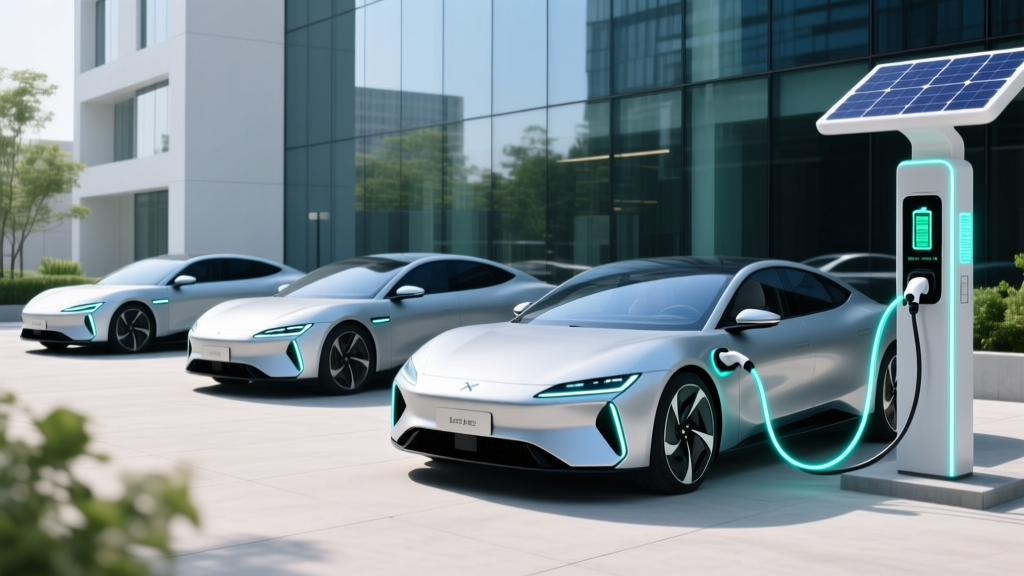
The Short Answer on Electric Saloons
The best electric saloons in 2026—such as the Tesla Model 3, Hyundai Ioniq 6, BMW i4, and Mercedes-Benz EQE—deliver between 300 and 390 miles of EPA-estimated range, start from roughly $39,000 to $75,000, and cost about $0.04–$0.06 per mile to charge at home versus $0.12–$0.16 per mile for a comparable gas sedan. If you can install a Level 2 home charger and drive under 250 miles per day, a modern electric saloon will save most owners $3,000–$6,000 over five years in fuel and maintenance. If you lack home charging access, frequently drive in extreme cold, or regularly take 500+ mile road trips, a hybrid sedan may still be the more practical choice.
What Defines an Electric Saloon in 2026
An electric saloon (or electric sedan, in American terminology) is a battery-electric vehicle with a traditional three-box body style—separate trunk, fixed roof, and seating for four to five. Unlike SUVs and crossovers that dominate EV sales, saloons prioritize aerodynamic efficiency, which directly translates to longer range per kWh of battery capacity. The drag coefficients of the best electric saloons sit between 0.21 and 0.25 Cd, compared to 0.28–0.35 for most electric SUVs.
The current saloon segment spans from the Tesla Model 3 (starting around $39,990) to the Mercedes-Benz EQE (starting near $75,000), with the Hyundai Ioniq 6, BMW i4, and Polestar 2 filling the middle ground. Each targets a different buyer profile, from value-conscious commuters to luxury-oriented executives.
Top Electric Saloons: Spec-by-Spec Breakdown
Here is how the leading 2026-model-year electric saloons stack up on the numbers that matter. All figures reflect EPA estimates and manufacturer data where available. Note: kW (kilowatts) measures power—how fast energy flows during charging—while kWh (kilowatt-hours) measures energy capacity, the size of the battery.
| Model | EPA Range | Battery (usable kWh) | Chemistry | Peak DC Charge (kW) | 10–80% Time | 0–60 mph | Base MSRP |
|---|---|---|---|---|---|---|---|
| Tesla Model 3 Long Range | 363 mi | ~79 kWh | NMC | 250 kW | ~25 min | 4.2 sec | $47,740 |
| Hyundai Ioniq 6 SE Long Range | 361 mi | 77.4 kWh | NMC | 240 kW | ~18 min | 5.1 sec | $42,715 |
| BMW i4 eDrive40 | 307 mi | 81.5 kWh | NMC | 205 kW | ~31 min | 5.5 sec | $58,295 |
| Polestar 2 Long Range Single Motor | 320 mi | 79 kWh | NMC | 205 kW | ~28 min | 5.9 sec | $51,300 |
| Mercedes-Benz EQE 350+ | 390 mi | 90.6 kWh | NMC | 170 kW | ~32 min | 6.2 sec | $75,050 |
Real-World Range Reality Check
EPA estimates assume a mix of city and highway driving at moderate temperatures. In real-world testing, expect approximately 10–15% range reduction during sustained 75+ mph highway driving and 20–30% loss in freezing temperatures (below 25°F) without preconditioning. The Ioniq 6's 361-mile EPA rating, for example, may deliver closer to 250–270 miles on a cold winter highway trip. The Mercedes EQE's larger battery provides a bigger buffer, but its heavier mass partially offsets that advantage.
Electric Saloon vs. Gas Sedan: The Cost Equation
The purchase price of an electric saloon is typically $5,000–$15,000 higher than a comparable gas sedan before incentives. The question is whether fuel and maintenance savings close that gap over your ownership period. Below is a five-year cost comparison using the Hyundai Ioniq 6 versus the Toyota Camry (a common cross-shopped gas sedan) based on 15,000 miles per year.
| Cost Category | Hyundai Ioniq 6 SE (EV) | Toyota Camry SE (Gas) |
|---|---|---|
| Purchase Price (MSRP) | $42,715 | $31,495 |
| Federal Tax Credit (§30D)* | –$3,750 to –$7,500 | $0 |
| Fuel/Energy (5 years) | $3,150 (home charging, $0.13/kWh avg) | $9,750 ($3.25/gal, 32 MPG combined) |
| Maintenance (5 years) | $1,500 | $3,500 |
| Insurance (5-year avg) | $8,500 | $7,200 |
| Estimated 5-Year Total | $44,615–$48,365 | $51,945 |
*Federal §30D credit eligibility depends on MSRP caps, buyer income limits, and battery-sourcing requirements. The Ioniq 6's credit amount varies by model year and trim. Always verify current eligibility at IRS.gov or consult a tax professional. Point-of-sale transfer is available at participating dealers.
The EV pulls ahead on operating costs—saving roughly $6,600 in fuel and $2,000 in maintenance over five years—but insurance premiums run 15–25% higher for electric vehicles on average, according to industry data. The net savings depend heavily on whether you qualify for the federal tax credit and your local electricity rates.
Charging at Home and on the Road: What Saloon Owners Need
Home charging is the backbone of EV ownership. Most electric saloon owners do 80–90% of their charging at home, waking up to a full "tank" every morning. Here is what each charging level delivers:
| Level | Power (kW) | Miles Added per Hour | Typical Use Case |
|---|---|---|---|
| Level 1 (120V outlet) | 1.2–1.9 kW | 3–5 mi/hr | Overnight top-ups, emergencies |
| Level 2 (240V, home charger) | 7.2–11.5 kW | 25–44 mi/hr | Daily home charging, full overnight refill |
| DC Fast Charging | 50–250 kW | 150–600+ mi/hr (peak) | Road trips, rapid top-ups |
A Level 2 home charger installation typically costs $800–$2,500 including equipment and electrician labor, assuming your electrical panel has sufficient capacity (a 200-amp panel is ideal; a 100-amp panel may need a $1,500–$3,000 upgrade). At 11.5 kW, a Level 2 charger refills a 77 kWh Ioniq 6 battery from 10% to 100% in roughly 7 hours—perfect for overnight charging.
On road trips, DC fast charging speed matters. The Ioniq 6's 800-volt architecture enables a 10–80% charge in approximately 18 minutes at a compatible 350 kW charger, though sustained rates average closer to 150–180 kW across the session. The Tesla Model 3 taps into the Supercharger network—widely regarded as the most reliable public charging infrastructure—while the BMW i4 and Mercedes EQE rely on CCS-compatible networks like Electrify America and EVgo. Note that the industry is shifting to the NACS (North American Charging Standard) connector; most non-Tesla automakers are adopting NACS for 2025+ models, so check your vehicle's connector type against available chargers in your area.
Should You Buy an Electric Saloon? A Decision Framework
- If you have a garage or driveway where you can install a Level 2 charger → an electric saloon is an excellent daily driver. You'll save significantly on fuel and enjoy the convenience of home charging.
- If your daily commute is under 100 miles round-trip → any current electric saloon handles this easily, even in cold weather, without needing mid-day charging.
- If you take 2+ road trips per year exceeding 300 miles → choose a model with 340+ miles EPA range and fast DC charging (Ioniq 6 or Model 3 Long Range). Plan charging stops using apps like A Better Routeplanner.
- If you live in an apartment without charging access and cannot use workplace charging → a plug-in hybrid sedan (like the Toyota Prius Prime) may be more practical until public charging infrastructure improves in your area.
- If you frequently tow or carry heavy cargo → saloons aren't ideal; consider an electric SUV or truck instead.
- If you live in a region with extreme cold (regularly below 10°F) → expect 25–35% range loss. Choose a saloon with a heat pump (standard on Ioniq 6, Model 3, and EQE) and a larger battery to maintain usable range.
Common Misconceptions About Electric Saloons
| Myth | Fact |
|---|---|
| "EV batteries need replacing every few years." | Modern NMC and LFP batteries are warrantied for 8 years/100,000 miles (10 years/100,000 miles in California-emission states). Real-world degradation data shows most retain 85–90% capacity after 100,000 miles. Replacement, if ever needed, costs $8,000–$18,000 depending on the model. |
| "You can't drive an EV in the cold." | You absolutely can, but range drops 20–35% in sub-freezing temperatures. Preconditioning the battery while plugged in (a feature on all modern EVs) mitigates this. A 360-mile saloon still delivers 240+ usable cold-weather miles—enough for most daily needs. |
| "Charging takes too long." | At home, you plug in once and wake up to a full charge—zero time spent at a "station." On road trips, a 20-minute fast-charge stop every 2–3 hours aligns with natural rest and meal breaks. The Ioniq 6 adds ~200 miles in 18 minutes at a 250+ kW charger. |
| "EVs are worse for the environment because of battery manufacturing." | Studies from the EPA and Argonne National Lab show that over their lifetime, EVs produce significantly fewer greenhouse gas emissions than gas cars in every U.S. region—even accounting for battery production and grid electricity sources. The break-even point typically arrives within 1–2 years of driving. |
| "All EVs qualify for the $7,500 tax credit." | Federal §30D credit eligibility requires meeting MSRP caps ($55,000 for sedans), buyer income limits ($150K single / $300K joint AGI), and strict battery critical-mineral and component sourcing rules. Many EVs qualify for $3,750 (partial) or $7,500 (full), but some qualify for $0. Always check the fueleconomy.gov tax credit page for the latest list. |
Battery Longevity and Warranty: What Saloon Buyers Should Know
Every major electric saloon sold in the U.S. carries a minimum battery warranty of 8 years or 100,000 miles, whichever comes first, with a capacity-retention threshold of 70% (meaning the manufacturer replaces the battery if it degrades below 70% of original capacity within the warranty period). Hyundai goes further with a 10-year/100,000-mile battery warranty on the Ioniq 6.
Most electric saloons use NMC (nickel-manganese-cobalt) lithium-ion cells, which offer high energy density—critical for fitting long range into a low-slung sedan body. LFP (lithium iron phosphate) chemistry, used in some Tesla Model 3 Standard Range variants, trades slightly lower energy density for superior cycle life and a recommended 100% daily charge state, whereas NMC batteries are generally best kept between 20–80% for daily use to minimize degradation.
Real-world data from fleet operators and long-term owners suggests that an NMC battery in a well-thermally-managed saloon (all models listed above have active liquid cooling) will lose approximately 8–15% capacity over the first 100,000 miles, after which degradation slows considerably. For a 360-mile-range saloon, a 12% loss still leaves roughly 317 miles—far more than most drivers need daily.
Insurance, Maintenance, and the Hidden Costs
Insurance is the ownership cost that catches many first-time EV buyers off guard. Electric saloons typically cost 15–25% more to insure than comparable gas sedans due to higher repair costs (specialized parts, high-voltage safety protocols, and sensor recalibration after bodywork). According to industry averages, expect to pay $1,600–$2,000 per year for full coverage on a $45,000 electric saloon versus $1,300–$1,600 for a gas equivalent.
Maintenance is where EVs shine. There are no oil changes, no transmission fluid, no spark plugs, no exhaust system, and brake pads last significantly longer thanks to regenerative braking (which recovers kinetic energy to recharge the battery). Expect to spend roughly $300 per year on maintenance—primarily tire rotations, cabin air filters, and wiper fluid. Tires, however, may wear 10–20% faster on EVs due to the vehicle's greater weight and instant torque delivery; budget for a set of four tires every 30,000–40,000 miles at $600–$1,200 depending on the model.
Tax Credits and Incentives: The Fine Print
The federal §30D clean vehicle credit can reduce your effective purchase price by up to $7,500, but the rules are complex and subject to change:
- MSRP cap: Sedans must be priced at or below $55,000 (SUVs and trucks: $80,000).
- Income cap: Modified adjusted gross income must not exceed $150,000 (single), $225,000 (head of household), or $300,000 (married filing jointly).
- Battery sourcing: The $7,500 credit is split into two halves—$3,750 for meeting critical-minerals requirements and $3,750 for battery-component sourcing. Vehicles that meet only one threshold qualify for $3,750. Vehicles using battery components from a "foreign entity of concern" may receive $0.
- Point-of-sale transfer: As of 2024, you can transfer the credit to the dealer at purchase, reducing your out-of-pocket cost immediately rather than waiting for tax filing.
Many states offer additional incentives—California's CVRP, Colorado's state credit, and various utility-company rebates for home charger installation. Check afdc.energy.gov for state-specific programs, and always consult a tax professional for your personal situation.
Frequently Asked Questions
Are electric saloons cheaper to own than gas sedans?
Over a 5-year period, yes—for most buyers. An electric saloon like the Ioniq 6 saves roughly $6,000–$8,000 in fuel and maintenance compared to a gas sedan. However, higher purchase prices, potentially higher insurance, and home charger installation costs mean the break-even point typically arrives in year 3–4. If you qualify for the federal tax credit, the economics improve substantially.
How far can I really drive an electric saloon on a single charge?
EPA estimates for current electric saloons range from 307 to 390 miles. In real-world mixed driving, expect to achieve 85–95% of the EPA number in moderate weather and 65–80% in cold weather or sustained highway driving above 75 mph. A 360-mile EPA saloon realistically delivers 250–310 miles depending on conditions.
Do I need to install a home charger to own an electric saloon?
You don't strictly need one—a standard 120V outlet adds 3–5 miles per hour, which can suffice for drivers covering under 30 miles per day. But a Level 2 home charger ($800–$2,500 installed) is strongly recommended. It adds 25–44 miles per hour, enabling a full overnight charge and making EV ownership dramatically more convenient.
What happens if the battery degrades significantly?
If your saloon's battery drops below 70% of original capacity within the warranty period (8 years/100,000 miles minimum; 10 years for Hyundai), the manufacturer replaces it at no cost. Outside of warranty, a replacement battery costs $8,000–$18,000 depending on the model. However, real-world data shows most EV batteries retain 85–90% capacity at 100,000 miles and continue functioning well beyond 150,000 miles.
Can I take an electric saloon on a long road trip?
Yes. With 300+ miles of range and DC fast charging that adds 150–250 miles in 20–30 minutes, electric saloons handle road trips well. The key is planning: use route-planning tools to identify fast-charger locations along your route, and expect to stop every 2–3 hours for a 20-minute charge. The Tesla Supercharger network remains the most seamless option, though Electrify America and other CCS networks are expanding rapidly.
Which electric saloon offers the best value in 2026?
The Hyundai Ioniq 6 SE Long Range at $42,715 offers the best combination of range (361 miles EPA), fast charging (18-minute 10–80%), efficiency (140 MPGe combined per fueleconomy.gov), and a 10-year battery warranty. The Tesla Model 3 Long Range is a close second if Supercharger access and performance are priorities. The BMW i4 and Mercedes EQE serve buyers seeking luxury and brand prestige at higher price points.