Quick Answer: What Is an Electric Rover?
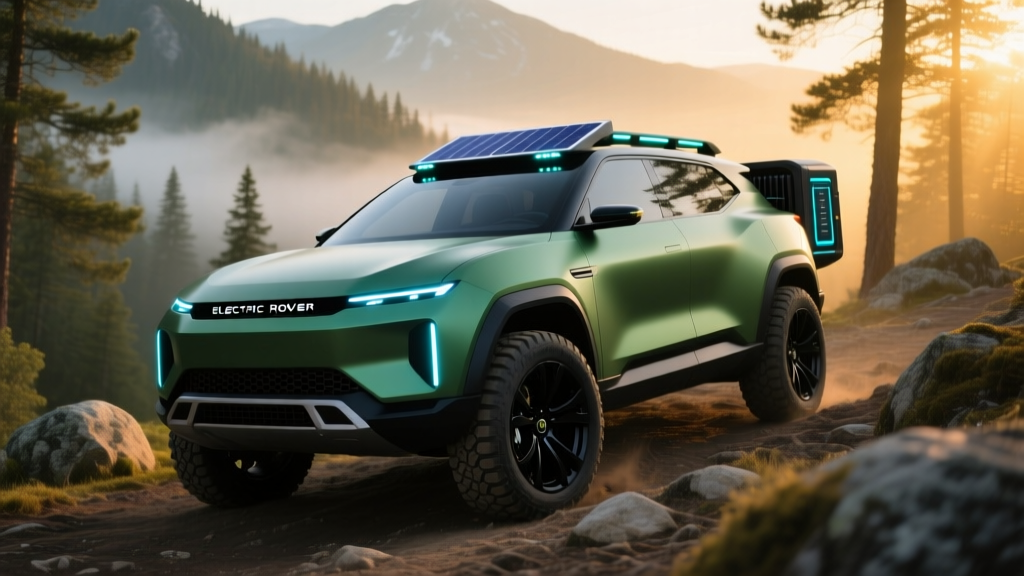
The term "electric rover" typically refers to one of two things: (1) an electric SUV built for off-road and adventure capability — most notably the Rivian R1S, often called the "electric Land Rover" — or (2) the electrified versions of Land Rover vehicles, such as the Range Rover Sport P460e plug-in hybrid. As of 2026, Land Rover does not sell a fully electric vehicle in the U.S., though the Range Rover Electric is announced for late 2026/2027. If you want a true battery-electric adventure SUV you can buy today, the Rivian R1S and upcoming models like the Mercedes G 580 with EQ Technology are your primary options.
The search for an electric rover usually starts with a question: can a battery-electric SUV actually handle off-road trails, cold-weather camping, and long highway stretches to remote trailheads? The short answer is yes — but with caveats around charging infrastructure, range loss under load, and upfront cost that every buyer needs to understand before signing a purchase agreement.
This guide breaks down the real-world numbers, costs, and ownership considerations for anyone researching electric rovers in 2026, whether you're cross-shopping a Rivian R1S against a Land Rover plug-in hybrid or weighing an electric adventure SUV against a conventional body-on-frame rig.
The Electric Rover Landscape in 2026
Buyers searching for an "electric rover" are usually looking for a vehicle that combines three traits: genuine off-road capability, long range for remote adventures, and the efficiency and instant torque of an electric powertrain. Here's where the market stands:
| Vehicle | Powertrain | EPA Range / Electric-Only | Battery (kWh) | 0-60 mph | Base MSRP | Off-Road Capability |
|---|---|---|---|---|---|---|
| Rivian R1S (Dual-Motor Max) | BEV | 410 mi (EPA) | 149 kWh (NMC) | 4.5 sec | $84,900 | Full: 14.9" ground clearance, wading, tank turns |
| Rivian R1S (Dual-Motor Standard) | BEV | 290 mi (EPA) | 106 kWh (LFP) | 4.5 sec | $74,900 | Full: same off-road hardware |
| Range Rover Sport P460e | PHEV | 48 mi electric-only | 31.8 kWh (NMC) | 5.4 sec | $89,500 | Full: Terrain Response 2, air suspension |
| Mercedes G 580 EQ | BEV | 268 mi (EPA est.) | 116 kWh (NMC) | 4.6 sec | $164,900 | Full: G-Turn, G-Steering, 340mm clearance |
| Range Rover Electric | BEV | TBD (announced) | TBD | TBD | ~$120,000 est. | Expected: full Terrain Response |
A few things jump out from this table. First, the Rivian R1S with the Max Pack battery is the range king of adventure EVs at 410 miles EPA — a figure that matters when you're driving to remote trailheads where charging may not exist. Second, the Land Rover PHEV gives you only 48 miles of electric driving before the gas engine kicks in, which is great for commuting but still requires fuel for road trips. Third, the Mercedes G 580 EQ is genuinely capable off-road but carries a luxury price that puts it in a different category entirely.
EV vs. Gas vs. PHEV: Which Rover Makes Sense?
The core decision for electric rover shoppers is powertrain type. Here's how the numbers stack up when you compare a battery-electric adventure SUV (Rivian R1S), a plug-in hybrid (Range Rover Sport P460e), and a traditional gas off-roader (Land Rover Defender 110 P400) across real ownership metrics.
| Cost Factor | Rivian R1S (Dual-Motor Std.) | Range Rover Sport P460e | Defender 110 P400 (Gas) |
|---|---|---|---|
| Base MSRP | $74,900 | $89,500 | $71,300 |
| Federal Tax Credit (§30D) | $0–$7,500* | $0–$3,750* | $0 |
| Fuel / Energy (5 yr, 75k mi) | $5,625 (home charging avg.) | $7,800 (mix of electric + gas) | $13,500 (17 MPG avg, $3.60/gal) |
| Maintenance (5 yr) | $1,800 | $4,200 | $5,500 |
| Insurance (5 yr avg.) | $12,000 | $11,500 | $9,500 |
| Estimated 5-Yr Total Cost | $94,325 | $112,500 | $99,800 |
*§30D tax credit eligibility depends on buyer income caps, vehicle MSRP caps (SUVs: $80,000), battery sourcing requirements, and point-of-sale transfer rules. See IRS §30D guidelines for current-year rules. The Rivian R1S Standard Pack at $74,900 may qualify; the Max Pack at $84,900 exceeds the SUV MSRP cap.
The Rivian R1S wins on operating costs — electricity at $0.15/kWh nationally averages about 4.5 cents per mile for the R1S, versus 21 cents per mile for the gas Defender at 17 MPG combined. But the R1S also carries higher insurance premiums (EV-specific collision coverage runs 15-25% more than equivalent gas SUVs, per industry data). The PHEV Range Rover Sport splits the difference: you get electric-only commuting but still pay for oil changes, transmission service, and gasoline on longer trips.
Real-World Range: What the EPA Sticker Doesn't Tell You
If you're buying an electric rover for adventure, you'll be driving in the conditions that hurt range the most: highway speeds, cold temperatures, roof cargo, and towing. Here's the real-world reconciliation every buyer needs.
Rivian R1S Max Pack: Real-World Range Expectations
- EPA sticker: 410 miles
- Highway driving (75 mph, 70°F): ~320–340 miles
- Cold weather (20°F, highway): ~250–280 miles
- With roof tent + cargo box: subtract 10–15% (~275–300 mi highway)
- Towing (5,000 lb trailer): ~180–210 miles
Source: fueleconomy.gov EV range data and owner-reported testing.
These numbers aren't meant to discourage — they're meant to help you plan. A 410-mile EPA range is exceptional, and even with cold-weather and highway losses, the R1S Max Pack can reach most remote trailheads in the American West from a major city on a single charge. But if your adventures involve towing a camper or driving in sub-zero mountain passes, you need to plan charging stops using networks like Tesla Superchargers (now open to Rivian via NACS adapter) or Electrify America.
The Standard Pack's LFP battery is worth understanding too. LFP (lithium iron phosphate) chemistry trades energy density for longevity — you get 290 miles EPA instead of 410, but LFP cells tolerate daily 100% charging and typically show slower degradation over 10+ years. If your daily driving is under 80 miles and you road-trip a few times a year, the Standard Pack is the pragmatic choice and saves $10,000.
Charging an Electric Rover: Home, Highway, and Trailhead
Charging is where electric rover ownership gets practical — or frustrating. Here's the honest breakdown.
| Charging Level | Power (kW) | Miles Added per Hour | Typical Use Case | Cost per Full Charge |
|---|---|---|---|---|
| Level 1 (120V outlet) | 1.4 kW | ~4 mi/hr | Emergency / overnight trickle | $0 (home electricity) |
| Level 2 (240V home) | 11.5 kW | ~34 mi/hr | Daily home charging (8–10 hr full) | $12–$18 (home rate) |
| Level 2 (public, 19.2 kW) | 19.2 kW | ~56 mi/hr | Destination / workplace | $0.25–$0.49/kWh |
| DC Fast (peak) | 220 kW | ~650 mi/hr (peak) | Road trips: 10–80% in ~30 min | $0.35–$0.55/kWh |
Key distinction — kW vs. kWh: kW (kilowatts) measures charging power — how fast energy flows into the battery. kWh (kilowatt-hours) measures battery capacity — how much energy the battery stores. The R1S Max Pack holds 149 kWh of energy and can accept up to 220 kW of charging power. Think of kW as the hose diameter and kWh as the bucket size.
The DC fast-charging curve matters for road trips. The R1S peaks at 220 kW only between roughly 10–30% State of Charge (SoC). From 30–60%, it sustains around 150–170 kW. Above 80%, it tapers sharply to protect battery health — charging from 80–100% on DC fast can take as long as 10–80%. Plan your road-trip stops to charge from 15–80% and move on; don't wait for a full charge at a fast charger.
Home Charging: The Make-or-Break Factor
If you have a garage or driveway where a Level 2 charger can be installed, electric rover ownership is straightforward. Wake up every morning with a "full tank." A typical Level 2 installation (240V, 48-amp circuit with a Wallbox Pulsar Plus or ChargePoint Home Flex) runs $800–$2,500 total, including electrician labor and permits. If your home electrical panel needs an upgrade from 100A to 200A service, add $1,500–$3,500.
If you live in an apartment or lack dedicated parking, public charging becomes your primary fueling method. This is a real limitation — not a deal-breaker for everyone, but a significant factor. DC fast charging at $0.48/kWh (national average at Electrify America) costs roughly 3–4x more per mile than home charging, and you'll spend 30–40 minutes per session versus 30 seconds at a gas pump. Check your local charging map on PlugShare or the DOV Alternative Fuels Station Locator before committing to an EV.
Off-Road Capability: Can an Electric Rover Really Trail?
This is the question that separates electric rover shoppers from general EV buyers. The answer is nuanced.
Electric Rover Myths vs. Facts
| Myth | Fact |
|---|---|
| "EVs can't go off-road — the battery will get damaged." | The Rivian R1S has a reinforced battery skid plate, 14.9 inches of ground clearance (more than a Defender), and 43.5 inches of water wading. It's engineered for serious trails. |
| "You'll run out of battery on the trail." | Off-road driving at low speeds (5–15 mph) actually uses less energy per mile than highway driving. A typical trail day of 40 miles of rock crawling uses roughly 15–25 kWh — about 10–17% of the Max Pack battery. |
| "Electric motors don't have low-end torque for crawling." | The opposite is true. Electric motors deliver maximum torque at 0 RPM. The R1S's quad-motor variant produces 827 lb-ft instantly, with individual wheel torque vectoring that surpasses mechanical lockers. |
| "Charging in the wilderness is impossible." | This is partially true. Remote trailheads rarely have Level 2 chargers. Plan your route to charge to 80–90% at the last town before the trail. Portable solar and V2L (vehicle-to-load) can supplement for camping but won't meaningfully recharge the traction battery. |
| "Cold weather ruins EV range in the mountains." | Cold does reduce range — expect 25–35% loss at 20°F. The R1S uses a heat pump for cabin heating (more efficient than resistive), and preconditioning the battery before a DC fast charge mitigates some cold-weather charging slowdown. |
The honest limitation: long-distance overlanding where you drive 200+ miles of remote dirt roads between fuel/charge points. In a gas Defender, you can carry jerry cans. In an EV, your range is your range, and there's no quick fix in areas without charging infrastructure. For 90% of trail days — out-and-back runs from a base town — an electric rover works beautifully. For expedition-style overlanding across the Mojave or the Dalton Highway, a gas or diesel rig still has a practical edge in 2026.
Decision Framework: Which Electric Rover Should You Buy?
Choose Based on Your Actual Driving Pattern
Choose the Rivian R1S (Standard Pack, LFP) if:
- Your daily commute is under 80 miles round-trip
- You have home Level 2 charging
- You take weekend trail trips within 150 miles of home
- You want the lowest purchase price ($74,900) and best long-term battery longevity
- You don't tow more than 3,000 lbs regularly
Choose the Rivian R1S (Max Pack, NMC) if:
- You regularly drive 200+ miles to remote trailheads
- You tow a trailer (camping, boats, horses) — range drops significantly under tow
- You live in a cold climate where 30% winter range loss matters
- You road-trip frequently and want to minimize DC fast-charging stops
- Budget allows $84,900+ (note: exceeds the §30D $80K SUV MSRP cap)
Choose the Range Rover Sport P460e (PHEV) if:
- You want Land Rover brand prestige and dealership service
- Your daily commute is under 48 miles (you'll rarely use gas on weekdays)
- You need gas-engine range for long road trips without charging planning
- You don't have reliable home charging access
- You accept higher maintenance costs for the dual powertrain
Wait for the Range Rover Electric if:
- You specifically want a Land Rover-badged full EV
- Your purchase timeline is flexible (expected late 2026/2027)
- You're willing to pay a premium (~$120K+ estimated)
- You want to see real-world range and charging data before committing
What First-Time Electric Rover Buyers Must Know
If this is your first EV purchase — and especially if you're coming from a gas truck or SUV — here are the ownership realities that no marketing brochure will emphasize.
Insurance costs more. EV-specific insurance premiums run 15–25% higher than comparable gas vehicles, driven by higher repair costs for battery packs and aluminum-intensive structures. Get quotes from GEICO, Progressive, and EV-specialty insurers before committing to a trim level.
Tire wear accelerates. The R1S weighs over 7,000 lbs and delivers instant torque. Expect tire replacement every 25,000–35,000 miles rather than the 50,000+ miles typical for lighter vehicles. Budget $1,200–$1,800 for a set of all-terrain tires.
Regenerative braking changes your driving. One-pedal driving — where lifting off the accelerator slows the vehicle significantly via regenerative braking — takes about a week to internalize. On off-road descents, regen provides excellent speed control without riding the friction brakes, which is a genuine advantage on technical trails.
Battery warranty protects you. Rivian covers the R1S battery for 8 years/175,000 miles with a capacity retention threshold of 70%. If your battery degrades below 70% of its original capacity within that period, Rivian replaces or repairs it. For context, most owners see 5–10% degradation over the first 100,000 miles based on fleet data — well within warranty limits. Land Rover covers the P460e's battery for 8 years/100,000 miles at 70% retention.
The §30D federal tax credit has strings. The credit is up to $7,500 for qualifying new EVs, but eligibility depends on:
- Buyer income caps ($300K joint / $150K single modified AGI)
- Vehicle MSRP caps ($80,000 for SUVs, $55,000 for sedans)
- Battery component and critical mineral sourcing requirements (which tighten annually)
- Point-of-sale transfer option (you can apply the credit at purchase rather than waiting for tax filing)
Always verify current-year eligibility on IRS.gov or with a tax professional before relying on the credit in your budget.
Frequently Asked Questions
Is there a fully electric Land Rover I can buy in 2026?
Not yet. Land Rover has announced the Range Rover Electric, built on the MLA-Flex platform, but it is not yet available for purchase in the U.S. as of early 2026. The current electrified option is the Range Rover Sport P460e plug-in hybrid, which offers 48 miles of electric-only range. If you need a full EV with similar capability now, the Rivian R1S is the closest equivalent.
How does Rivian R1S range compare to a gas SUV on a road trip?
The R1S Max Pack at 410 miles EPA actually exceeds the range of many gas SUVs on a single tank (a Defender 110 gets roughly 370 miles at 17 MPG combined from its 23.8-gallon tank). The difference is refueling time: 5 minutes at a gas pump versus 25–35 minutes at a DC fast charger for a 10–80% session. On a 600-mile trip, plan two charging stops of ~30 minutes each in the R1S versus one or two fuel stops of ~10 minutes in the gas SUV.
Can I charge an electric rover at a remote trailhead?
Rarely. Most remote trailheads lack any charging infrastructure. The practical approach is to charge to 80–90% at the nearest DC fast charger in town before heading to the trail. For multi-day camping, the R1S's V2L (vehicle-to-load) feature can power camp appliances, lights, and devices from the traction battery — but this uses a small fraction of the battery and won't meaningfully recharge it.
Does the Rivian R1S qualify for the $7,500 federal tax credit?
It depends on the trim and your income. The R1S Standard Pack at $74,900 falls under the $80,000 SUV MSRP cap and may qualify if you meet income limits and the vehicle meets battery sourcing requirements. The Max Pack at $84,900 exceeds the MSRP cap and does not qualify for §30D. Rules change annually — check the fueleconomy.gov tax credit tracker for the most current eligibility.
What's the total cost of ownership advantage of an electric rover over 5 years?
Based on the comparison above, the Rivian R1S Standard Pack saves roughly $5,500–$10,000 over five years compared to a gas Defender 110 when you factor in fuel savings, lower maintenance, and the potential tax credit — even accounting for higher insurance premiums. The savings widen if you charge primarily at home on off-peak electricity rates ($0.10–$0.15/kWh) and narrow if you rely exclusively on expensive public DC fast charging.
How does cold weather affect an electric rover?
At 20°F, expect 25–35% range reduction compared to the EPA sticker. The R1S uses a heat pump for cabin heating, which is more energy-efficient than resistive heating and reduces the cold-weather penalty compared to older EVs. Preconditioning the battery (warming it before driving or charging) is essential in cold climates — the R1S does this automatically when you set a departure time or navigate to a charger. On the trail in cold weather, low-speed crawling actually generates less range loss than cold highway driving.