The Short Answer: Electric Roller Skates Aren't an EV
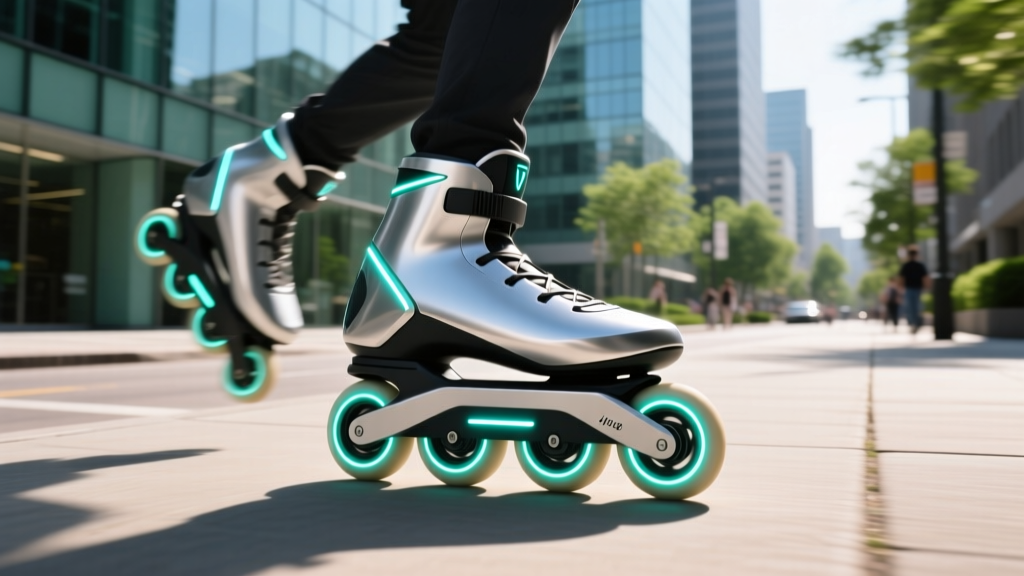
Electric roller skates are small, motorized wearable skates typically powered by hub motors in the wheels and lithium-ion battery packs strapped to the boot or calf. They top out around 10–20 mph, offer 5–15 miles of range per charge, and cost roughly $300–$1,200 per pair. They are not electric vehicles in any regulatory, safety, or ownership sense: they do not qualify for the federal §30D EV tax credit, they are not tested by the NHTSA or IIHS, they cannot be insured like a car, and they are not legal on most roads or bike lanes. If you arrived here while researching an electrified purchase, e-skates are a recreational gadget — not a commute solution, not a car replacement, and not a PHEV bridge.
This guide exists because the keyword "electric roller skates" regularly lands EV-curious shoppers on automotive sites. Rather than waste your time with a fake car review, we'll do three useful things: explain what e-skates actually are (with real numbers), compare them to the electrified options that do belong in a commuter's decision set, and give you a decision framework so your next dollar goes toward a vehicle that actually qualifies for incentives, carries a warranty, and gets you to work in the rain.
What Electric Roller Skates Actually Are (and Aren't)
Modern electric roller skates typically use two 250–500 W brushless hub motors (one per skate, or one powered + one passive), a 100–300 Wh lithium-ion battery pack, and a Bluetooth handheld or app-based throttle. Here is the realistic spec envelope as of current consumer products:
| Spec | Low End | High End |
|---|---|---|
| Top Speed | 10 mph | 20 mph |
| Range per Charge | 5 miles | 15 miles |
| Battery Capacity | 100 Wh | 300 Wh |
| Motor Power | 250 W | 500 W |
| Charge Time (wall) | 2 hours | 4 hours |
| Weight (pair) | 8 lb | 14 lb |
| Retail Price | $300 | $1,200 |
| Warranty | 90 days | 1 year |
Compare that battery capacity — 100 to 300 Wh (watt-hours, a measure of energy storage) — to the 60 to 100 kWh traction batteries in a modern EV. A Tesla Model Y Long Range carries about 75 kWh, or roughly 375× the energy of a mid-tier e-skate pack. The charging power is equally mismatched: e-skates pull ~80–150 W from a wall adapter, while a home Level 2 EV charger delivers 7.2–11.5 kW (kilowatts, a measure of power flow) and DC fast chargers can peak at 150–350 kW. The physics gap is why e-skates belong in the same category as e-scooters and hoverboards, not vehicles.
EV vs Hybrid vs E-Skate: A Real Commuter Comparison
If your goal is to electrify a 15-mile daily commute, here is how the realistic options stack up on cost, weather tolerance, and infrastructure requirements. Numbers reflect 2026 model-year pricing and national-average electricity ($0.17/kWh) and gasoline ($3.40/gal).
| Category | BEV (e.g., Chevy Equinox EV 2LT) | PHEV (e.g., Toyota RAV4 Prime) | HEV (e.g., Toyota Prius) | E-Bike (Class 2) | Electric Roller Skates |
|---|---|---|---|---|---|
| Base MSRP | ~$33,000 | ~$44,500 | ~$28,500 | $1,200–$2,500 | $300–$1,200 |
| EPA Range / MPGe | 315 mi / 114 MPGe | 42 mi EV + 38 mpg | 57 mpg combined | 20–50 mi | 5–15 mi |
| Fuel/Energy Cost per Mile | $0.048 | $0.04 EV / $0.10 gas | $0.060 | $0.003 | $0.004 |
| Federal Tax Credit | Up to $7,500 (§30D, sourcing-dependent) | Up to $7,500 (§30D) | None (HEV) | None | None |
| Weather / Rain Usable | Yes | Yes | Yes | Marginal | No |
| Cargo / Passenger | 5 seats, ~25 cu ft | 5 seats, ~33 cu ft | 5 seats, ~20 cu ft | Panniers only | Backpack only |
| Insurance Required | Yes (~$150/mo avg) | Yes (~$140/mo avg) | Yes (~$120/mo avg) | Optional | No |
Two numbers jump out. First, per-mile energy cost: e-skates and e-bikes are essentially free to run, but they trade that savings for exposure, zero crash protection, and a range ceiling that collapses in wind, rain, hills, or cold. Second, the §30D federal tax credit — which, under current IRS rules, requires the buyer to meet income caps ($150k single / $300k joint), buy a vehicle under the MSRP cap ($55k cars / $80k SUVs/trucks), and source battery minerals and components from approved supply chains — can drop a qualifying BEV or PHEV's effective price by up to $7,500, either as a tax reduction or a point-of-sale transfer. E-skates do not qualify under any interpretation of IRS §30D.
Real Costs: Purchase, Energy, Maintenance, Insurance
A common misconception is that e-skates are a "free commute." They aren't — they're a low-cost commute with high hidden risk. Here is a realistic five-year ownership comparison for a 15-mile round-trip commuter, 250 work days per year (3,750 miles/year, 18,750 miles over five years).
| Line Item | BEV (Equinox EV) | PHEV (RAV4 Prime) | HEV (Prius) | E-Bike | E-Skates |
|---|---|---|---|---|---|
| Purchase (after credit) | $25,500 | $37,000 | $28,500 | $1,800 | $750 |
| Energy (5 yr) | $1,800 | $1,400 | $2,250 | $110 | $140 |
| Maintenance (5 yr) | $1,200 | $2,000 | $2,400 | $400 | $250 |
| Insurance (5 yr) | $9,000 | $8,400 | $7,200 | $0 | $0 |
| Depreciation (est.) | $12,000 | $14,000 | $10,000 | $1,200 | $600 |
| 5-Year Total | $49,500 | $62,800 | $50,350 | $3,510 | $1,740 |
| Rain Days Usable | ~250/yr | ~250/yr | ~250/yr | ~150/yr | ~120/yr |
E-skates win on raw cost but lose badly on usable commute days. In climates with real winter (Chicago, Boston, Minneapolis) or regular rain (Seattle, Portland, Atlanta), you will need a backup vehicle roughly 40–50% of workdays, which means the e-skate is a secondary toy, not a primary commute tool. A PHEV, by contrast, runs electric on short days and burns gas when the battery depletes — no range anxiety, no weather days off. See fueleconomy.gov for official EPA ratings on any model you're comparing.
Common Misconceptions — Facts, Not Hype
| Myth | Fact |
|---|---|
| "E-skates count as an electric vehicle." | No. They are consumer recreational devices with no VIN, no NHTSA oversight, no airbags, and no §30D credit eligibility. |
| "I can ride e-skates on the road like a bike." | Most state vehicle codes do not classify motorized skates as bicycles. Sidewalk riding is often illegal for motorized devices; road riding exposes you to liability without insurance. |
| "E-skates replace a car for short commutes." | Only in dry, flat, warm climates with protected bike infrastructure — a small slice of US commuters. |
| "EV batteries degrade too fast to trust." | Modern NMC and LFP traction batteries carry 8-year / 100,000-mile federal-mandated warranties with capacity-retention thresholds (~70%). E-skate battery packs typically carry 90-day to 1-year warranties and are not federally regulated for longevity. |
| "Charging an EV takes forever." | Home Level 2 (7.2–11.5 kW) adds 25–44 miles per hour of sleep. DC fast charging at 150–250 kW typically reaches 10–80% in 18–30 minutes on modern BEVs. E-skates take 2–4 hours on a wall wart for 5–15 miles of range. |
| "The §30D credit is $7,500 for everyone." | Eligibility depends on buyer income, vehicle MSRP caps, and battery critical-mineral and component sourcing. Many 2026 models qualify for partial or full credit; some qualify for none. Confirm on the IRS clean-vehicle page. |
Decision Framework: What to Actually Buy
Use this if/then logic before spending any money:
- If you need a daily commute vehicle that works in rain, cold, and darkness, carries groceries, and qualifies for tax credits → then buy a BEV or PHEV. A PHEV is the right bridge if you lack reliable home charging or drive >300 highway miles monthly.
- If your commute is under 10 miles, flat, in a warm/dry climate, and you already own a car for bad-weather days → then an e-bike is the most practical micromobility option (more cargo, more stability, more visibility than e-skates).
- If you want a weekend recreational toy for paved paths and already have a primary vehicle → then electric roller skates are a fun $500–$900 novelty, with the understanding that they are not transportation infrastructure.
- If you cannot install a Level 2 home charger (apartment, no garage, panel maxed out) → then prioritize a PHEV (smaller battery, slower Level 2 acceptance is fine) or rely on workplace/public DC charging with a BEV that supports NACS/CCS at 150+ kW.
- If your budget is under $5,000 total → then a used HEV (Prius, Insight, Corolla Hybrid) will deliver 50+ mpg with zero charging infrastructure required, and is a more responsible first electrified purchase than any micromobility gadget.
What First-Time EV Buyers Should Actually Know
If the e-skate search brought you here and you're genuinely considering your first electrified vehicle, here are the five data points that matter more than any marketing brochure:
- Home charging is the whole game. ~80% of EV charging happens at home on Level 2 (240V, 30–50A circuit). Budget $800–$2,000 for a quality EVSE and electrician install; budget an additional $1,500–$4,000 if your panel needs a 200A service upgrade.
- EPA range is not real-world range. Expect ~15–25% loss at sustained 75 mph highway speeds and 20–40% loss in sub-freezing weather. A 315-mile EPA sticker becomes ~230 miles on a cold Midwestern interstate. Plan your longest recurring trip, not your average day.
- Peak charge kW is not sustained charge kW. A BEV that "peaks at 240 kW" typically sustains that rate only between 10–40% state of charge, then tapers. The honest metric is 10–80% time, which for modern 800V architectures is 18–25 minutes.
- LFP vs NMC chemistry matters. LFP (lithium iron phosphate) batteries are heavier, have lower energy density, and tolerate regular 100% charges — ideal for daily commuters. NMC/NCA packs offer more range per kilogram but prefer 80% daily ceilings. Know which chemistry your trim uses.
- The tax credit is not guaranteed. Battery sourcing rules shift annually. A model that qualifies in January may lose eligibility mid-year. Verify on irs.gov at the time of purchase and consider taking the point-of-sale transfer to avoid waiting until April.
FAQ
Are electric roller skates legal on public roads?
Generally no. Most US state vehicle codes do not classify motorized skates as bicycles or low-speed vehicles, which means they are illegal on roads and often illegal on sidewalks. They are intended for private property or paved recreational paths. Always check your local ordinances.
Do electric roller skates qualify for any EV tax credit?
No. The federal §30D clean vehicle credit applies only to four-wheeled motor vehicles meeting weight, MSRP, battery sourcing, and buyer-income requirements. E-skates, e-scooters, e-bikes, and hoverboards do not qualify. Some states have separate e-bike rebates, but these rarely extend to motorized skates.
What's the best electrified option for a 15-mile commute?
If you have home charging and need year-round reliability: a BEV with 250+ miles of EPA range or a PHEV with 30+ miles of electric-only range. If you lack home charging and want low running costs: a HEV (Prius-class) delivers ~57 mpg with no plug. E-skates and e-bikes are supplements, not substitutes, in most US climates.
How much does home Level 2 charging installation cost?
Typical all-in cost is $800–$2,000 for a 240V / 40–50A circuit with a hardwired or NEMA 14-50 outlet and a quality EVSE (ChargePoint, Emporia, Wallbox). If your electrical panel is maxed out or below 200A service, add $1,500–$4,000 for a panel upgrade. Always get a licensed electrician's quote — never DIY high-voltage work.
Should I wait for solid-state batteries before buying an EV?
No. Solid-state packs are announced for limited 2027–2028 production runs at premium price points. For 2026 buyers, modern NMC and LFP packs already deliver 250–400 miles of range, 8-year/100,000-mile warranties, and DC fast charging to 80% in under 30 minutes on most mainstream models. Waiting for next-generation chemistry is a guaranteed way to keep burning gas.