What Is an Electric Roadway?
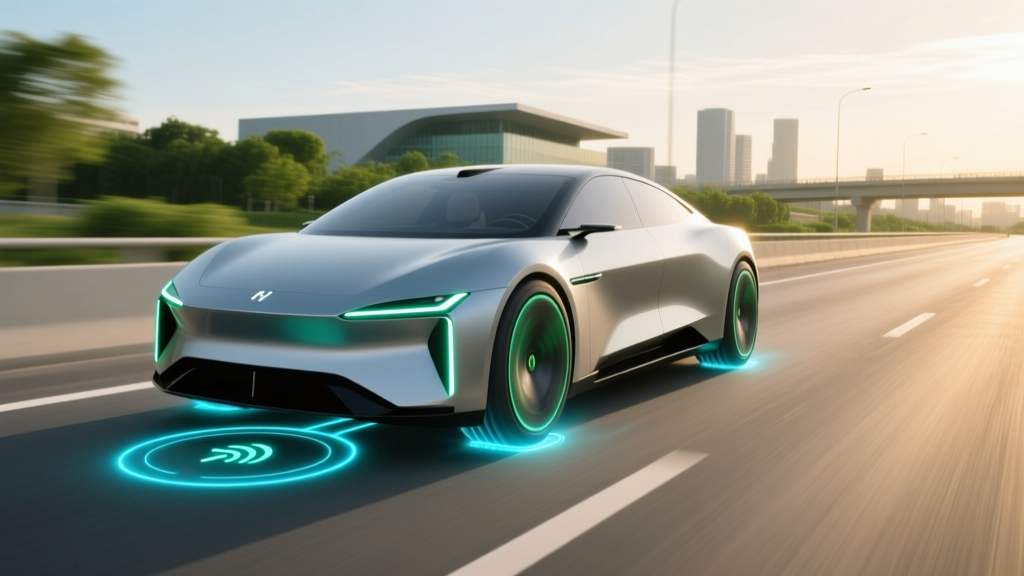
An electric roadway is a stretch of road embedded with wireless charging coils or conductive rails that transfer energy to a moving or stationary electric vehicle. Instead of plugging in at a station, the vehicle picks up power directly from the pavement — either while parked over a pad (static wireless charging) or while driving at highway speeds (dynamic wireless charging). As of 2026, several pilot programs in the U.S. and Europe are testing the technology on public roads, but no consumer vehicle sold today ships with factory-installed in-road charging receivers. For now, electric roadway tech remains a promising infrastructure play for commercial fleets and transit corridors — not a replacement for your home Level 2 charger.
How Electric Roadway Charging Actually Works
Electric roadway systems fall into three categories, each with different physics, costs, and deployment timelines:
1. Inductive (Wireless) Charging
Buried transmitter coils generate an alternating magnetic field. A receiver coil mounted on the vehicle's undercarriage picks up that field and converts it to DC power for the battery. This is the same principle as a Qi phone charger, scaled up to deliver 11 kW (static parking pads) or 25–200 kW (dynamic in-motion systems). Efficiency typically runs 85–93%, meaning 7–15% of energy is lost as heat in the air gap between road and vehicle.
2. Conductive Rail Systems
A physical rail or overhead catenary supplies power through a mechanical contact arm on the vehicle. Germany's eHighway pilots on the A5 autobahn used overhead lines for heavy trucks, delivering up to 350 kW. Sweden's Trafikverket tested a ground-level conductive rail on public roads near Stockholm. These systems are more efficient (95%+) but require physical contact hardware on each vehicle.
3. Embedded Battery-Swap or Inductive Lanes
Some proposals embed standardized battery-swap stations or high-power inductive lanes into highway rest stops, letting vehicles charge in minutes without leaving the roadway corridor. These remain largely conceptual as of 2026.
Real-World Pilot Data: What We Know So Far
The most informative data comes from active deployments rather than lab claims:
| Project | Location | Type | Power | Status (2026) |
|---|---|---|---|---|
| Purdue/INDOT | Indiana, USA | Inductive (dynamic) | 200 kW (truck) | Phase 2 highway testing |
| ENRX (Qualcomm Halo) | Detroit, MI — Stellantis | Inductive (static/dynamic) | 11–25 kW | ¼-mile public road pilot |
| eRoadArlanda | Stockholm, Sweden | Conductive rail | ~125 kW | Pilot complete; commercial study |
| eHighway (Siemens) | Hesse, Germany | Overhead catenary | 350 kW | Operational 2019–2024; decommissioned for cost review |
| WiPower One | South Korea (KAIST) | Inductive (dynamic) | 100 kW (bus) | Operational in Gumi since 2013 |
The Purdue/Indiana DOT project is the most significant U.S. effort. A 200 kW inductive system embedded in a highway test lane successfully charged a Class 8 semi-truck at highway speeds without reducing speed. The implication for passenger EVs is smaller — most consumer wireless pads target 11 kW static charging (roughly equivalent to a Level 2 home charger) because higher power demands tighter air-gap tolerances that passenger-car suspensions can't reliably maintain.
Electric Roadway vs. Plug-In Charging: Cost & Practicality
For a typical EV owner in 2026, plugging in at home or at a public DC fast charger is dramatically cheaper and more available than any electric roadway alternative. Here's the math:
| Factor | Home Level 2 (Plug-In) | Public DC Fast Charger | Electric Roadway (Projected) |
|---|---|---|---|
| Power delivery | 7.7–19.2 kW | 50–350 kW peak | 11–200 kW (varies) |
| Cost per kWh to driver | $0.12–$0.18 (residential rate) | $0.30–$0.55 | Unknown; likely $0.25–$0.45 via toll/mileage fee |
| Infrastructure cost per mile | N/A (home install $500–$2,500) | $50,000–$250,000 per station | $1.5M–$4M per lane-mile (inductive) |
| Vehicle hardware needed | J1772 or NACS port (standard) | CCS or NACS port | Aftermarket receiver coil ($1,500–$3,000 est.) |
| Availability in 2026 | Widespread | Growing (180,000+ U.S. ports) | Pilot programs only |
The U.S. Department of Energy reports over 190,000 publicly available EV charging ports nationwide as of early 2025, growing through 2026. By contrast, electric roadway mileage available to the public is measured in single-digit miles globally. The infrastructure investment gap is enormous: embedding inductive coils costs an estimated $1.5–$4 million per lane-mile, meaning a 500-mile interstate corridor could require $750M–$2B in pavement work alone.
What This Means for EV Buyers Today
If you're shopping for an EV right now, electric roadway technology should not factor into your purchase decision. No 2026 model-year passenger vehicle — not the Tesla Model Y, Hyundai Ioniq 5, Ford Mustang Mach-E, or any BMW iX variant — ships with a factory-installed dynamic wireless charging receiver. The BMW iX was the first production car to offer an optional static wireless charging pad (11 kW, parking-only), but that requires a proprietary ground pad installed in your garage, not an electrified public road.
Who Benefits from Electric Roadways First?
The realistic early adopters are:
- Fixed-route transit buses — KAIST's OLEV buses in South Korea have run on inductive lanes since 2013, using smaller 24 kWh batteries because they top up continuously along the route.
- Long-haul trucking corridors — Purdue's 200 kW system targets Class 8 trucks that can't afford 45-minute DC fast-charge stops. A smaller battery supplemented by continuous road charging reduces payload penalty.
- Mining and port vehicles — Closed-loop environments where route predictability makes embedded charging economical.
For passenger EVs, the value proposition is weaker. A 2026 Chevrolet Equinox EV with an 85 kWh battery and 315 miles of EPA range can already cover most daily driving and road-trip segments with strategic DC fast charging (peak 170 kW, 10–80% in ~22 minutes). The marginal benefit of continuous low-power road charging doesn't justify the vehicle hardware cost or infrastructure investment for individual consumers.
Common Misconceptions About Electric Roadways
| Myth | Fact |
|---|---|
| "Electric roads will eliminate range anxiety within a few years." | Deployment is measured in pilot miles, not thousands of highway miles. Even optimistic timelines put U.S. commercial rollout at 2030+ for limited corridors. |
| "Any EV can charge from an electric roadway." | The vehicle needs a dedicated receiver coil or contact arm. No standard exists yet; SAE J2954 covers static wireless pads but not dynamic in-road systems for passenger cars. |
| "Wireless road charging is as fast as plugging in." | Current dynamic systems deliver 25–200 kW but with 7–15% efficiency loss. A 350 kW CCS plug-in is still faster and more efficient for burst charging. |
| "Electric roadways will make EV batteries smaller and cheaper." | True for fixed-route fleets (buses can use 24 kWh instead of 200+ kWh). For passenger cars that drive unpredictable routes, you still need a large battery for non-electrified roads. |
| "It's already available in the U.S." | Only closed pilot segments exist. Detroit's ¼-mile Stellantis/ENRX test road and Indiana's DOT test track are research installations, not public infrastructure. |
Decision Framework: Should You Wait for Electric Roadway Tech?
Choose to buy an EV now (with standard plug-in charging) if:
- You need a vehicle in the next 0–3 years
- You have access to home Level 2 charging or reliable public DC fast chargers
- Your daily driving is under 250 miles and road trips are occasional
- You want to take advantage of the current §30D federal tax credit (up to $7,500, subject to MSRP caps, income limits, and battery-sourcing requirements that change annually)
It's reasonable to monitor electric roadway developments (but not wait) if:
- You operate a commercial fleet on a fixed, high-mileage corridor
- You're a transit agency planning 10-year vehicle procurement cycles
- You live in a region with active pilot programs (Indiana, Michigan, parts of Scandinavia) and want to track local deployment
Do not delay an EV purchase solely for electric roadway availability. The technology will not reach consumer highway coverage at meaningful scale before the early 2030s, and when it does, it will require aftermarket vehicle hardware and likely operate through a per-mile toll model rather than free charging.
Real-World Ownership Costs: EV Today vs. Waiting for Future Tech
For context, here's what owning a mainstream 2026 EV actually costs compared to a comparable gas vehicle — independent of any electric roadway speculation:
| Cost Factor (5-Year / 75,000 mi) | 2026 Tesla Model Y LR ($46,990) | 2026 Toyota RAV4 Gas ($33,000) |
|---|---|---|
| Purchase price (after est. $7,500 credit) | ~$39,490 | $33,000 |
| Fuel / electricity | ~$3,200 (home charging at $0.15/kWh, 28 kWh/100mi) | ~$8,400 (28 MPG combined at $3.50/gal) |
| Maintenance | ~$1,800 (no oil, fewer brake replacements) | ~$3,500 |
| Insurance (avg) | ~$10,500 (higher premiums for EVs) | ~$7,800 |
| Estimated 5-yr depreciation | ~$18,000 | ~$13,000 |
| 5-Year Total Cost of Ownership | ~$72,990 | ~$65,700 |
The EV still costs more over five years at these prices, primarily due to higher insurance premiums and steeper depreciation. However, the fuel savings ($5,200 over 5 years) and maintenance savings ($1,700) are real and recurring. Electric roadway technology, even if available, would not materially change this equation for a passenger-car owner because the per-mile energy cost is already low with home charging.
FAQ: Electric Roadway Questions Answered
Will electric roadways work in snow and rain?
Inductive systems are sealed beneath the pavement surface and function in wet conditions. However, snow and ice accumulation over transmitter coils can reduce coupling efficiency by 5–20%. Heated pavement elements or plowing protocols are being studied but add to already-high infrastructure costs. Conductive rail systems face more significant weather challenges, including ice buildup on contact surfaces.
Can I retrofit my current EV to use an electric roadway?
Not practically. Dynamic in-road charging requires a precisely positioned receiver coil on the vehicle undercarriage, integrated with the battery management system for real-time power acceptance. No aftermarket kit exists for consumer vehicles as of 2026. Static wireless pads (parking-only, ~11 kW) are available for select models like the BMW iX but require OEM-specific hardware.
Who pays for electric roadway infrastructure?
Current pilots are funded by government transportation agencies (INDOT, Trafikverket) and research grants. Commercial deployment would likely require public-private partnerships, with costs recouped through per-mile usage fees or tolls layered on top of existing road taxes. This is a significant policy barrier — no U.S. state has yet established a regulatory framework for per-mile electric roadway billing.
How does electric roadway efficiency compare to plug-in charging?
Plug-in DC fast charging operates at 95–98% efficiency from grid to battery. Inductive roadway charging achieves 85–93% due to air-gap losses, meaning you'd need roughly 10–15% more grid electricity to deliver the same energy to the battery. Conductive rail systems are closer to plug-in efficiency at 95%+.
When will electric roadways be available for regular drivers?
The most optimistic projections from Purdue/INDOT and European agencies suggest limited commercial highway corridors could open by 2030–2032, initially targeting freight trucks. Passenger-car access on public electrified roads is unlikely before 2035 at the earliest, and would require both vehicle hardware standardization and massive infrastructure investment that currently has no committed federal funding stream.