Quick Answer: Can You Road-Trip an EV From Detroit?
Yes — but your success depends on three concrete factors: your EV's real-world highway range (typically 15–25% below the EPA sticker in Michigan winters), DC fast-charging density along your route (I-94, I-75, and I-96 are well-covered by Electrify America, Tesla Superchargers, and EVgo; rural Upper Peninsula routes are not), and whether you can charge at home overnight before departure. A 300-mile EPA-rated EV like the Hyundai Ioniq 5 or Tesla Model Y can comfortably handle Detroit-to-Chicago (280 miles) with one 20-minute DC stop, but Detroit-to-Traverse City (250 miles) in January may require two stops due to cold-induced range loss of up to 30%.
Detroit sits at the intersection of some of the Midwest's best EV infrastructure and some of its worst. Head south on I-75 toward Toledo or west on I-94 toward Ann Arbor and Chicago, and you'll find 150–350 kW DC fast chargers every 40–60 miles. Point your EV north toward Gaylord or the Upper Peninsula, and gaps stretch past 80 miles between reliable stations. This guide gives you the exact numbers — range, charging times, costs, and cold-weather penalties — to plan an electric road trip from Detroit with confidence.
Detroit's EV Road-Trip Corridors: Charging Infrastructure by Route
Not all highways leaving metro Detroit are created equal for EV travel. Here's how the major corridors stack up in early 2026:
| Route | Destination | Distance | DC Fast Chargers En Route | Typical Spacing | EV Verdict |
|---|---|---|---|---|---|
| I-94 West | Chicago, IL | 280 mi | 12+ stations (EA, Tesla, EVgo) | ~35–50 mi | Easy — one stop for 300+ mi EVs |
| I-75 South | Toledo / Dayton | 60 / 260 mi | 8+ stations | ~40–55 mi | Easy — Toledo is a one-charge day trip |
| I-96 West | Grand Rapids | 150 mi | 5+ stations | ~45 mi | Easy — round-trip possible on one charge (summer) |
| I-75 North | Traverse City | 250 mi | 4 stations | ~60–80 mi | Moderate — plan one stop; two in winter |
| US-131 North | Cadillac / Petoskey | 220 / 280 mi | 3 stations | ~70–90 mi | Challenging — charge in Grand Rapids |
| I-75 to M-27 | Mackinaw City / UP | 290+ mi | 3–4 stations | ~80–100 mi | Difficult in winter — multiple stops required |
Data reflects publicly listed chargers on the Alternative Fuels Data Center and network apps as of early 2026. Always verify station status in your EV's navigation or the charger network's app before departing — downtime at rural Electrify America and EVgo stations remains a real ownership frustration.
Real-World EV Range From Detroit: EPA vs. Highway vs. Winter
The EPA range sticker is a starting point, not a guarantee. For Detroit-area drivers planning road trips, three range figures matter:
Range Reality Check: 2026 Hyundai Ioniq 5 (Long Range RWD)
- EPA sticker: 303 miles (84 kWh usable, NMC battery)
- Summer highway (70 mph, 75°F): ~255–270 miles
- Winter highway (70 mph, 20°F): ~200–220 miles
- Extreme cold (10°F, heater max): ~180–195 miles
Source: EPA via fueleconomy.gov; real-world estimates based on aggregated owner data and controlled testing.
Why the gap? Three physics-driven factors hit Detroit drivers hard:
- Aerodynamic drag at highway speed. EVs lose efficiency faster than gas cars above 65 mph because electric motors don't have a "sweet spot" gear like an engine's top gear. At 75 mph, expect 12–18% less range than the EPA combined figure.
- Cold battery chemistry. Lithium-ion cells (both NMC and LFP) experience increased internal resistance below 32°F. The battery management system also draws power to heat the pack, consuming 2–5 kW continuously in deep cold.
- Cabin heating. EVs with resistive heaters draw 3–6 kW for cabin heat; those with heat pumps (Ioniq 5, Tesla Model Y, Ford Mustang Mach-E) draw 1–3 kW — still a significant range tax on a 250-mile trip.
Practical rule for Michigan road trips: Plan your charging stops using 75% of your EPA range in summer and 60% in winter. A 300-mile EPA EV means stopping at ~225 miles (July) or ~180 miles (January).
Cost Breakdown: EV Road Trip vs. Gas Car From Detroit
Is an electric road trip actually cheaper than driving a gas car? The answer depends on whether you can charge at home before leaving and which public networks you use.
Detroit to Chicago (280 miles, round trip 560 miles)
| Cost Factor | 2026 Hyundai Ioniq 5 (EV) | 2026 Toyota Camry LE (Gas, 32 MPG combined) |
|---|---|---|
| Energy/Fuel Cost (round trip) | $38–$72 (home + 1 DC stop) | $56–$63 (at $3.20–$3.60/gal) |
| Home Charging (if available) | ~$11 (full charge at $0.17/kWh, DTE rate) | N/A |
| DC Fast Charging (1 stop, 10–80%) | $27–$61 ($0.35–$0.55/kWh at EA/EVgo) | N/A |
| Maintenance (per-mile estimate) | ~$0.04/mi ($22 total) | ~$0.09/mi ($50 total) |
| Total Round-Trip Cost | $60–$94 | $106–$113 |
| Time (including stops) | ~5 hr 30 min (4 hr 45 min drive + 25 min charge + 20 min buffer) | ~5 hr (4 hr 45 min drive + 10 min fuel/restroom) |
Key takeaways from these numbers:
- Home charging is where EVs win big. At DTE Energy's standard residential rate of ~$0.17/kWh, a full Ioniq 5 charge costs about $14. If you leave Detroit with a full battery, your "fuel" cost for the first 250 miles is roughly $14 vs. $28–$32 in gas for the Camry.
- Public DC fast charging erodes the savings. At Electrify America's pay-as-you-go rate of ~$0.48/kWh (or $0.36/kWh with their $4/month Pass+ plan), a 10–80% charge adds $25–$40. Tesla Superchargers in Michigan average $0.30–$0.40/kWh for non-Tesla vehicles using the NACS adapter.
- The time tax is real but manageable. A 20–25 minute DC fast charge stop (10–80%) on a 560-mile round trip adds about 25–35 minutes total when you factor in pulling off the highway, plugging in, and getting back on. Plan this around a meal or restroom break.
Cold-Weather EV Road-Trip Tactics for Michigan Drivers
Detroit averages 42 days per year below 20°F. If you're road-tripping an EV between November and March, these tactics preserve range and reduce charging frustration:
1. Precondition the Battery Before Every DC Stop
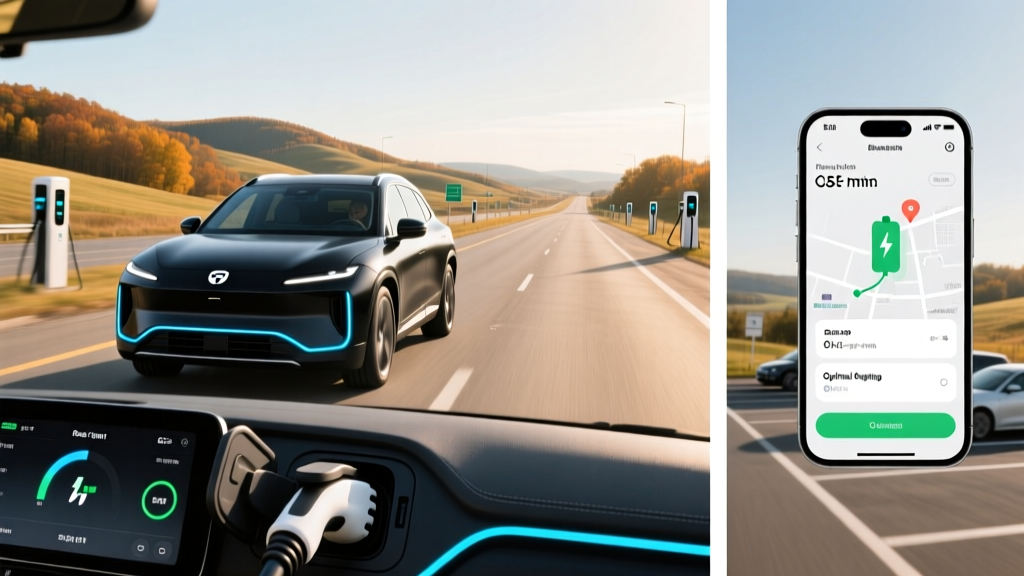
Use your EV's built-in navigation to route through your next charger. This triggers battery preconditioning — warming the pack to ~85–95°F so it can accept peak charge rates. A cold battery at 20°F may accept only 30–50 kW initially, even if the station offers 250 kW. Preconditioning can cut your 10–80% charge time from 45 minutes to 18–22 minutes on vehicles like the Ioniq 5 (peak 240 kW) or Tesla Model Y (peak 250 kW).
2. Use Seat Heaters and Lower the Cabin Temp
Seat heaters and a heated steering wheel draw 100–200 watts combined. Cabin air heating draws 2,000–5,000 watts. Setting the cabin to 65°F instead of 72°F and relying on seat heat can recover 8–12 miles of range over a 200-mile drive.
3. Charge to 90%+ at Your Last Overnight Stop
If you're staying overnight at a hotel with Level 2 charging (increasingly common at Marriott, Hilton, and Holiday Inn properties along I-94 and I-75), plug in and set a 90% limit. Starting a cold-weather highway leg with a 90% SoC gives you a critical buffer. Avoid routinely charging to 100% on NMC batteries — it accelerates degradation — but doing so before a long winter trip is acceptable and recommended.
4. Carry a NACS or CCS Adapter
Michigan's charging landscape in 2026 is split between NACS (Tesla Superchargers, now open to non-Tesla EVs via adapter) and CCS (Electrify America, EVgo, ChargePoint). If your EV has a CCS port (most non-Tesla 2024–2026 models), carry a NACS-to-CCS adapter ($150–$250) to unlock Tesla's superior Supercharger reliability. If you drive a 2025+ model with a native NACS port, you can use both networks without an adapter.
Federal Tax Credit & Michigan Incentives: What Lowers Your EV Purchase Cost
If you're considering buying an EV specifically for road-trip capability, the IRS §30D federal tax credit can reduce your effective purchase price by up to $7,500 — but eligibility is strict and changes frequently:
2026 §30D Credit Requirements
- Income caps: Modified AGI ≤ $150,000 (single), ≤ $300,000 (joint), ≤ $225,000 (head of household)
- MSRP caps: ≤ $55,000 for sedans; ≤ $80,000 for SUVs, vans, and trucks
- Battery sourcing: Critical minerals and battery components must meet escalating domestic/free-trade-partner thresholds — many popular EVs (especially Hyundai/Kia and some European models) may qualify for only $3,750 or $0 depending on current-year sourcing rules
- Point-of-sale transfer: You can transfer the credit to the dealer at purchase, reducing your out-of-pocket cost immediately rather than waiting for tax filing
- Assembly: Vehicle must undergo final assembly in North America
Always verify eligibility on the fueleconomy.gov tax credit page and consult a tax professional before relying on the credit.
Michigan also offers utility rebates: DTE Energy provides up to $500 for residential Level 2 charger installation, and Consumers Energy offers time-of-use rates that can cut overnight home-charging costs to $0.10–$0.12/kWh.
Decision Framework: Is an EV Road-Trip Ready for Your Detroit Driving?
Should You Buy an EV for Road Trips From Detroit?
Choose a battery-electric vehicle (BEV) if:
- You have access to home Level 2 charging (240V, 32–48A circuit) — this is the single biggest predictor of EV satisfaction
- Your road trips are primarily along I-94, I-75, or I-96 corridors with dense charging
- You drive ≤ 300 miles one-way and can accept one 20-minute charge stop
- You want lower per-mile energy costs (~$0.04–$0.06/mi on home power vs. $0.10–$0.14/mi on gas)
- You qualify for the §30D tax credit on your chosen model
Choose a plug-in hybrid (PHEV) like the Toyota RAV4 Prime or Chrysler Pacifica PHEV if:
- You frequently drive to the Upper Peninsula, rural northern Michigan, or areas with sparse charging
- You lack reliable home charging access (apartment, street parking)
- You want 35–42 miles of electric-only range for daily commuting but gas flexibility for 500+ mile trips
- You don't want to plan trips around charging stops
Stick with a hybrid (HEV) or gas vehicle if:
- Your budget is under $30,000 and you can't access the used-EV credit
- You tow a trailer (EV towing range drops 40–60%)
- Your typical trip exceeds 400 miles through areas with limited DC fast-charging infrastructure
Common EV Road-Trip Misconceptions — Fact-Checked
| Myth | Fact |
|---|---|
| "EVs can't handle long road trips." | A 300+ mile EPA EV with DC fast charging can cover 500+ miles in a day with 2–3 stops of 20–25 minutes each. Thousands of owners do this regularly on the I-94 and I-75 corridors. |
| "Charging takes hours." | Modern EVs on 250+ kW chargers add 150–200 miles of range in 15–20 minutes (10–80% SoC). Charging past 80% slows dramatically due to the charge curve taper — that's why road-trippers target 10–80%. |
| "EV batteries die in the cold and won't start." | EV battery management systems actively heat and protect the pack. You won't be stranded by a "dead" battery from cold alone — but range drops 20–30% are real and must be planned for. |
| "All charging stations work reliably." | Unfortunately, no. CCS stations on Electrify America and EVgo still experience 5–15% downtime in some regions. Tesla Superchargers consistently report <3% downtime. Always have a backup station identified in your route planner. |
| "You need a Tesla to road-trip an EV." | Non-Tesla EVs can now access Tesla Superchargers with a NACS adapter, and the CCS network along major Michigan interstates is robust. That said, Tesla's integrated navigation and Supercharger reliability remain best-in-class. |
Frequently Asked Questions
How long does it take to drive from Detroit to Chicago in an EV?
Expect 5 hours 15 minutes to 5 hours 45 minutes total, including one 20–25 minute DC fast-charging stop near Jackson, MI or Kalamazoo, MI. The driving time alone is approximately 4 hours 45 minutes. If your EV has 300+ miles of EPA range and you leave fully charged, one stop to charge from ~20% to 80% is sufficient in summer. Budget a second stop in winter.
Are there enough EV chargers to drive from Detroit to the Upper Peninsula?
It's possible but requires planning. I-75 north has chargers in Grayling, Gaylord, and Cheboygan, but gaps of 70–90 miles exist between some stations. In winter, range loss means you should charge at every available station past Grayling. A PHEV is a more practical choice for frequent UP travel unless you're comfortable with meticulous route planning.
How much does it cost to charge an EV at home in Detroit?
At DTE Energy's standard residential rate of ~$0.17/kWh, fully charging an 84 kWh battery (Hyundai Ioniq 5 Long Range) costs about $14.30. On DTE's time-of-use plan with overnight rates around $0.11/kWh, that drops to ~$9.25. For comparison, filling a 15-gallon gas tank at $3.40/gallon costs $51. Over 12,000 annual miles, home EV charging saves roughly $600–$900/year vs. a 28 MPG gas car.
Do I need a home charger to own an EV in Detroit?
You don't strictly need one — Detroit has public Level 2 and DC fast chargers — but EV ownership satisfaction drops sharply without home charging. Relying on public charging means paying 2–4× more per kWh and spending 30–60 extra minutes per week on charging. If you can install a 240V Level 2 charger (typically $800–$2,000 including equipment and electrician), it transforms the ownership experience.
What's the best EV for road trips from Detroit in 2026?
For pure road-trip capability, the Tesla Model Y Long Range (320 mi EPA, 250 kW peak DC charging, native NACS, best Supercharger access) and Hyundai Ioniq 5 Long Range (303 mi EPA, 240 kW peak, excellent preconditioning) lead the pack. The Ford Mustang Mach-E Extended Range (312 mi EPA, 150 kW peak DC) is a solid Michigan-built option, though its slower peak charging rate adds ~8–10 minutes per stop compared to the Ioniq 5 or Model Y.