The Short Answer: Who Is the Electric Ram For?
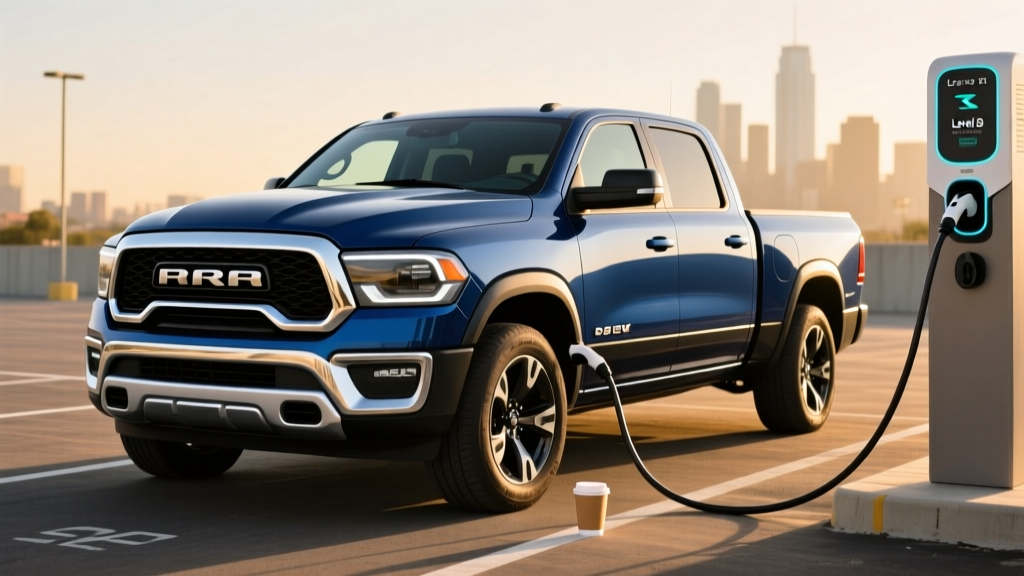
The 2026 Ram 1500 REV is a full-size battery-electric pickup targeting truck buyers who want daily-driver comfort, serious torque, and lower running costs — without giving up utility. With an EPA-estimated range of up to 350 miles (Standard Range) or 500 miles (Max Range with the 227 kWh pack), a peak DC fast-charge rate of 230 kW, and a starting MSRP around $58,095, the electric Ram slots between the Ford F-150 Lightning and the Chevrolet Silverado EV in price and capability. It's best suited for owners with access to Level 2 home charging who commute daily, tow moderately (up to ~10,000 lbs), and want to avoid gas-station price swings. If you regularly tow over 8,000 lbs long-distance in cold weather, or you lack reliable overnight charging, a PHEV or gas truck may still serve you better.
Electric Ram 1500 REV: Core Specs at a Glance
Ram entered the electric truck segment later than Ford and GM, but the 1500 REV rides on the dedicated STLA Frame platform — not a modified gas chassis. Here's what the numbers look like for the 2026 model year.
| Spec | Standard Range (175 kWh) | Max Range (227 kWh) |
|---|---|---|
| Battery Chemistry | NMC (nickel manganese cobalt) | NMC |
| Usable Capacity | ~168 kWh | ~227 kWh |
| EPA Range | ~350 miles | ~500 miles |
| Motor Output | 654 hp / 620 lb-ft (dual motor AWD) | 654 hp / 620 lb-ft (dual motor AWD) |
| 0–60 mph | ~4.4 seconds | ~4.4 seconds |
| Max Tow Rating | ~10,000 lbs | ~10,000 lbs |
| Max Payload | ~1,800 lbs | ~1,600 lbs (heavier battery) |
| Peak DC Charge Rate | 230 kW (800V architecture) | 230 kW (800V architecture) |
| 10–80% DC Fast Charge | ~26 minutes | ~41 minutes |
| Level 2 Charge Rate | 11.5 kW (onboard charger) | 11.5 kW |
| Connector | NACS (native Tesla Supercharger access) | NACS |
| Starting MSRP | $58,095 (Tradesman) | $72,095 (Laramie+) |
| Battery Warranty | 8 years / 100,000 miles | 8 years / 100,000 miles |
Real-World Range vs. EPA Sticker
The EPA number is a laboratory composite. In real-world driving, expect:
- Mild weather, mixed driving: 310–340 miles (Standard Range); 440–480 miles (Max Range)
- Sustained 75 mph highway: ~260–290 miles (SR); ~380–420 miles (MR) — aerodynamic drag hits full-size trucks hard
- Cold weather (below 32°F): subtract 20–30% — cabin heating and battery chemistry slow-down reduce usable capacity. A Standard Range REV may dip to ~220–250 real miles in a Midwest winter.
- Towing a 6,000-lb trailer: expect 150–190 miles (SR) before needing a charge. Towing is where every electric truck's range collapses.
For context, a gas Ram 1500 with the 3.6L Pentastar V6 and a 26-gallon tank delivers roughly 450–520 real-world highway miles — and refuels in 5 minutes.
Electric Ram vs. Gas Ram 1500: Cost and Capability
The electric Ram isn't a drop-in replacement for every gas truck buyer. Here's how the numbers stack up against a comparably equipped gas Ram 1500 Big Horn (4×4, crew cab).
| Factor | 2026 Ram 1500 REV (Standard Range) | 2026 Ram 1500 Gas (3.6L V6 eTorque 4×4) |
|---|---|---|
| Starting MSRP | $58,095 | $47,500 |
| Federal Tax Credit (§30D) | Up to $7,500 (eligibility varies — see below) | $0 |
| Effective Starting Price | ~$50,595 (if full credit applies) | $47,500 |
| Fuel/Energy Cost per Mile | ~$0.05–$0.07 (home charging at $0.14/kWh) | ~$0.16–$0.19 (at $3.50/gal, 19 mpg combined) |
| Annual Fuel/Energy (15k mi) | ~$750–$1,050 | ~$2,400–$2,850 |
| Oil Changes per Year | 0 | 2–3 (~$150–$250 total) |
| Estimated 5-Year Fuel Savings | $7,500–$10,000 (EV advantage, assuming home charging) | |
| Insurance (annual avg) | ~$2,400–$3,000 | ~$1,800–$2,400 |
| EPA MPGe / MPG Combined | ~70 MPGe | ~21 MPG combined |
The math: Even after a potential $7,500 federal credit, the electric Ram carries a modest upfront premium. But the fuel savings alone can close that gap in 3–5 years for a high-mileage commuter. Insurance tends to be higher for EVs due to battery replacement costs in collision claims — get quotes before buying.
Charging the Electric Ram: What You Actually Need
The REV's 800-volt architecture enables some of the fastest charging in the truck segment, but peak kilowatt (kW) numbers don't tell the whole story. The charge curve matters: the battery pulls peak power only at low state-of-charge (SoC), then tapers as it fills. The 227 kWh Max Range pack takes ~41 minutes from 10–80% because it sustains a high rate longer, but that last 20% (80–100%) can add another 25+ minutes — which is why road-trip strategy focuses on 10–80% cycles.
| Charging Level | Power | Miles of Range Added per Hour | Typical Use Case |
|---|---|---|---|
| Level 1 (120V household outlet) | ~1.4 kW | ~4–5 miles/hr | Emergency top-off only — adds ~50 miles overnight |
| Level 2 (240V home charger) | 11.5 kW (max onboard) | ~35–40 miles/hr | Daily charging — full charge in ~15–20 hours (Max Range pack) |
| DC Fast Charge | Up to 230 kW peak | ~250+ miles in ~26 min (SR 10–80%) | Road trips, highway rest stops |
Home Charging Installation Costs
Level 2 home charging is essential for daily REV ownership. Budget for the following:
| Item | Estimated Cost Range |
|---|---|
| Level 2 EVSE (hardwired, 48–60A) | $400–$750 |
| Electrician labor (run 240V/60A circuit to garage) | $600–$2,000 |
| Permit and inspection | $50–$200 |
| Electrical panel upgrade (if needed: 100A → 200A) | $1,500–$3,500 |
| Total (typical install, no panel upgrade) | $1,050–$2,950 |
| Total (with panel upgrade) | $2,550–$6,450 |
Always hire a licensed electrician and pull a permit. The REV's 11.5 kW onboard charger benefits from a 60A circuit — undersizing the circuit wastes charging speed. Consult your electrician on whether your existing panel can handle the additional load; older homes with 100A service often need an upgrade.
Federal Tax Credit: Does the Electric Ram Qualify?
Under IRS §30D rules for 2026, the Ram 1500 REV may qualify for up to $7,500 in federal tax credits — but eligibility depends on several moving targets:
- MSRP cap: The truck must be under $80,000 MSRP for pickup classification. The Standard Range Tradesman and Big Horn trims qualify; fully loaded Max Range Limited trims may exceed the cap.
- Buyer income limits: Modified AGI must not exceed $150,000 (single), $225,000 (head of household), or $300,000 (joint filers).
- Battery sourcing requirements: Critical minerals and battery components must meet phased-in domestic/free-trade-partner thresholds. Ram sources from STLA's supply chain, but exact compliance varies by build date and battery supplier. Confirm with your dealer at point of sale.
- Point-of-sale transfer: As of 2024+, you can transfer the credit to the dealer at purchase, reducing your out-of-pocket cost immediately rather than waiting for a tax refund.
Important: Tax credit rules shift annually. Consult a tax professional and verify eligibility on irs.gov before committing to a purchase.
Real-World Ownership: What First-Time EV Truck Buyers Miss
Charging Deserts Are Still Real
The REV's NACS connector gives it native access to Tesla's Supercharger network — the most reliable DC fast-charging network in the US as of 2026. However, if you live in a rural area or an apartment without garage/outlet access, daily Level 2 charging becomes a challenge. Public DC fast charging costs $0.30–$0.55/kWh depending on the network, which erases much of the fuel-cost advantage over gas. Home charging access is the single biggest factor in EV satisfaction.
Towing with an Electric Truck: The Range Reality
Ram rates the REV at approximately 10,000 lbs max tow. But towing a 7,000-lb enclosed trailer at highway speed will cut range by 40–55%. Plan for charging stops every 120–170 miles when towing heavy. For contractors who tow daily over long distances, a diesel Ram 2500 or a PHEV alternative still makes more sense in 2026.
Cold Weather Hits Trucks Hard
Large battery packs lose efficiency in freezing temps, and heating a spacious truck cabin demands significant energy. The REV includes a heat pump (standard), which helps, but expect 20–30% range loss in sustained sub-freezing conditions. Preconditioning the battery while plugged in — using the Ram app to warm the pack before departure — recovers some of that loss and preserves fast-charging speed.
Common Misconceptions About the Electric Ram
| Myth | Fact |
|---|---|
| "Electric trucks can't tow anything useful." | The REV tows up to ~10,000 lbs — enough for most boat trailers, car haulers, and campers. Range drops significantly, but capability is real. |
| "The battery will need replacing in 5 years." | NMC batteries in modern thermal-managed packs typically retain 85–90% capacity after 100,000 miles. Ram warranties the battery for 8 years/100,000 miles against dropping below 70% capacity. Full replacements, if ever needed, currently cost $15,000–$25,000+. |
| "Charging takes hours on road trips." | At 230 kW peak, the Standard Range pack adds ~200 miles in about 20 minutes. With route-planned Supercharger stops, a 600-mile trip adds roughly 40–60 minutes of charging total. |
| "The electric Ram costs way more than gas." | After the potential $7,500 credit, the effective price gap narrows to $3,000–$8,000 depending on trim. Fuel and maintenance savings recoup that in 3–5 years for most drivers. |
| "You need solar panels to make an EV worthwhile." | Even on grid electricity at the US average of $0.16/kWh, the REV costs roughly $0.06/mile to "fuel" — about one-third the cost of gas. Solar makes it cheaper, but isn't required. |
Decision Framework: Should You Buy the Electric Ram?
Buy the Ram 1500 REV If:
- You have (or can install) a Level 2 home charger and most daily driving is under 200 miles round-trip.
- You want a full-size truck for weekend projects, moderate towing, and daily commuting — and want to stop paying $3.50+/gallon.
- You qualify for the §30D tax credit (income and MSRP thresholds met) and value the point-of-sale price reduction.
- You live in a region with reliable public DC fast charging (Tesla Superchargers, Electrify America) for occasional road trips.
Stick With Gas or PHEV If:
- You regularly tow over 7,000 lbs for distances exceeding 150 miles one-way.
- You lack home or workplace Level 2 charging and rely entirely on public infrastructure.
- You live in extreme cold (sustained below 10°F) and need maximum range reliability year-round.
- Your annual mileage is under 8,000 miles — the fuel savings won't offset the upfront premium in a reasonable timeframe.
5-Year Total Cost of Ownership: Electric Ram vs. Gas Ram
Below is an estimated 5-year / 75,000-mile cost comparison, assuming home Level 2 charging at $0.14/kWh and gas at $3.50/gallon. Actual costs vary by state, utility rate, and driving habits.
| Cost Category | Ram 1500 REV (SR, Tradesman) | Ram 1500 Gas (V6, Big Horn) |
|---|---|---|
| Purchase Price (after credit) | $50,595 | $47,500 |
| Fuel/Energy (5 years) | $3,750–$5,250 | $12,000–$14,250 |
| Maintenance (oil, filters, brakes) | $800–$1,200 | $2,500–$3,500 |
| Insurance (5 years) | $12,000–$15,000 | $9,000–$12,000 |
| Home Charger Install (one-time) | $1,500–$3,000 | $0 |
| Estimated Depreciation (5 yr) | $22,000–$28,000 | $18,000–$23,000 |
| Estimated 5-Year Total | $90,645–$103,045 | $89,000–$100,250 |
The totals are close — and heavily dependent on your electricity rate, insurance quotes, and actual depreciation (which is still settling for newer EV trucks). The REV's advantage grows if gas prices rise, if you drive more than 15,000 miles/year, or if you can charge on off-peak utility rates below $0.10/kWh.
Frequently Asked Questions
Does the electric Ram 1500 REV have a frunk?
Yes. The REV features a front trunk (frunk) with approximately 15 cubic feet of lockable, weather-sealed storage — enough for toolboxes, groceries, or gear you want to keep separate from the bed. It includes a drain plug for use as a cooler.
Can the Ram 1500 REV power my home or tools?
The REV supports V2L (vehicle-to-load) capability, providing up to 7.2 kW of off-board power through bed and frunk outlets. This can run power tools, a campsite, or essential home circuits during an outage (with a compatible transfer switch installed by an electrician). Full V2H (vehicle-to-home) bi-directional capability depends on your home electrical setup and Ram's OTA-enabled features at launch.
How does the electric Ram compare to the Ford F-150 Lightning and Chevy Silverado EV?
The F-150 Lightning starts lower (~$52,000) but offers less max range (320 miles EPA on the extended-range pack). The Silverado EV 4WT starts higher but targets commercial fleets. The REV's 500-mile Max Range option is the longest EPA range in the segment, but it comes at a premium price. For a detailed comparison, check the EPA's fueleconomy.gov tool to compare MPGe and range side-by-side.
What happens if the battery degrades?
Ram warranties the high-voltage battery for 8 years or 100,000 miles (whichever comes first) against capacity loss below 70% of original. Industry data from similar NMC packs suggests 85–92% capacity retention at 100,000 miles under normal use. Avoid frequent DC fast charging above 90% SoC and frequent deep discharges to 0% to maximize longevity.
Is the Ram 1500 REV self-driving?
No. The REV comes equipped with Ram's Active Driving Assist, which is a SAE Level 2 driver-assistance system — meaning it can handle steering and speed on divided highways, but the driver must remain fully attentive with hands on or near the wheel. This is comparable to Ford BlueCruise or GM Super Cruise in capability. It is not autonomous driving.
Where can I see official EPA range and efficiency data?
Once EPA-certified, the REV's official figures appear on the window sticker and at fueleconomy.gov. Always cross-reference manufacturer claims with EPA data before purchasing.