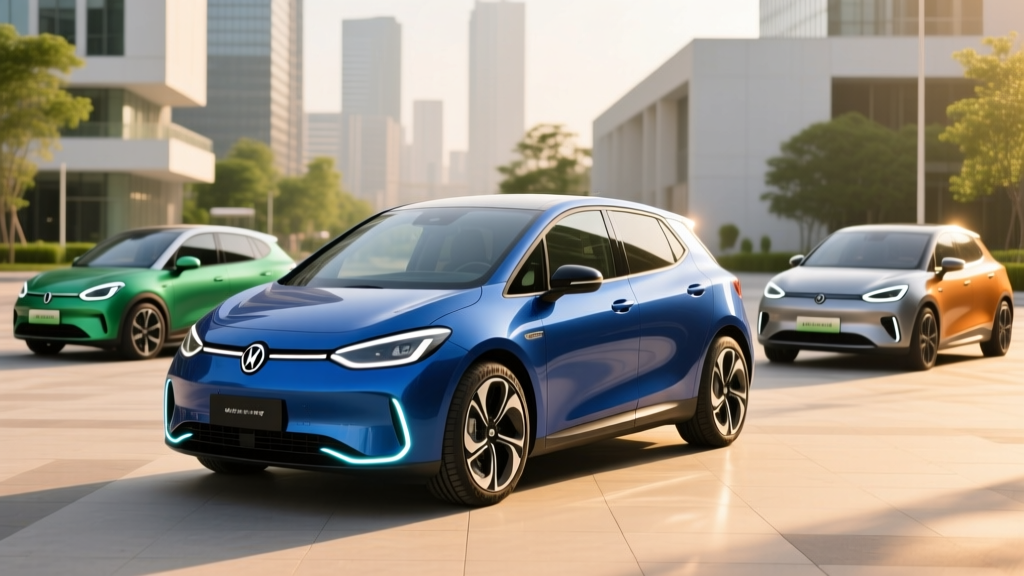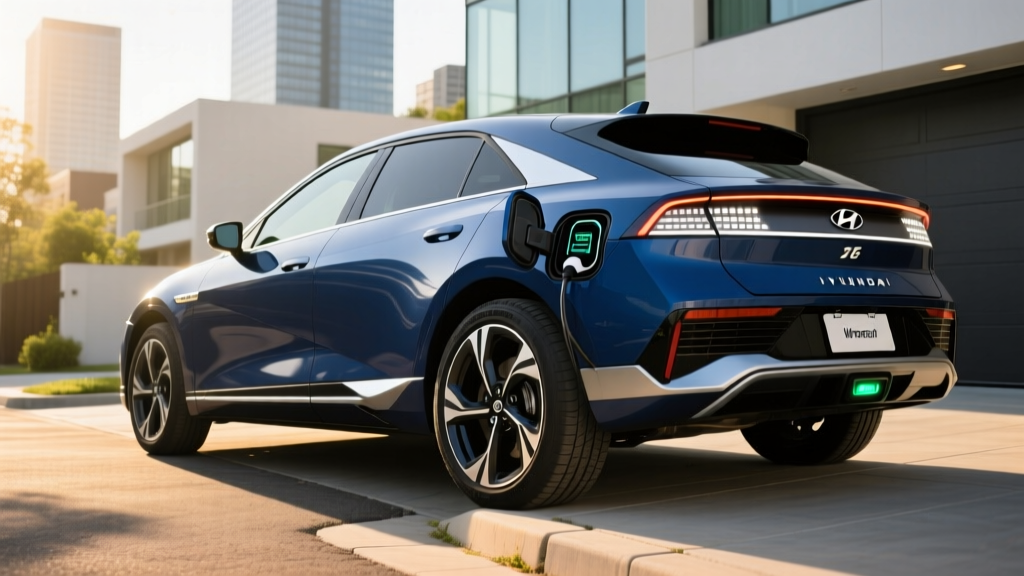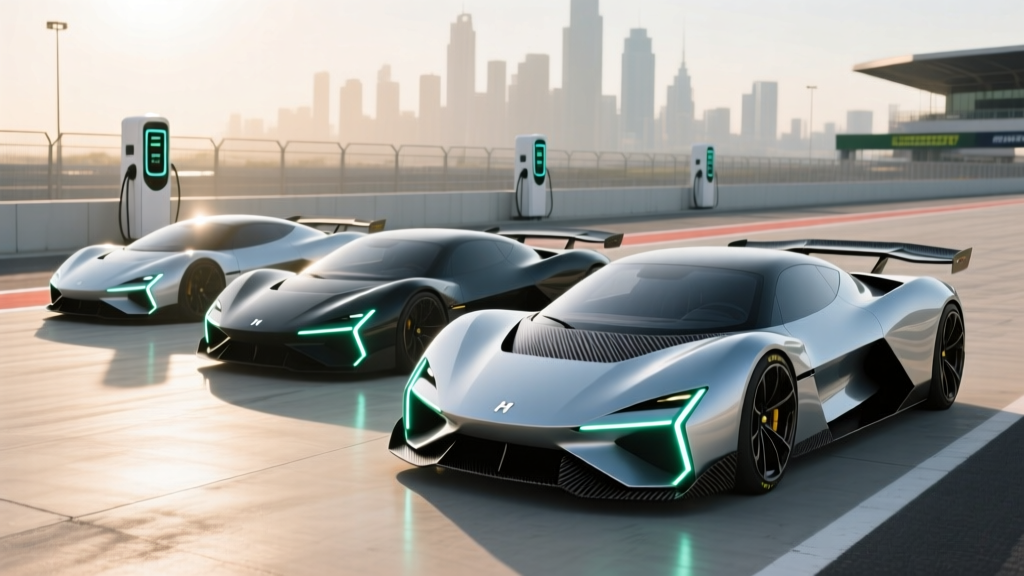
Quick Answer: Street-legal electric race cars in 2026 range from the ~$50,000 Tesla Model 3 Performance (346 mi EPA, 0-60 in 2.9s) to the $150,000+ Porsche Taycan Turbo GT (280 mi EPA, 0-60 in 2.1s, 1,019 hp). Compared to gas sports cars, EVs deliver instant torque and lower per-mile energy costs, but sustained track sessions expose thermal limits and faster range depletion. Expect 40-55% range loss during aggressive track driving versus the EPA sticker. If you want a daily-driver that can hit weekend track days, the Hyundai Ioniq 5 N ($67,500) offers the best balance of track capability and street practicality in 2026.
What Defines an Electric Race Car You Can Drive on the Street
The term "electric race car" covers a wide spectrum. Purpose-built EV racers like the Formula E Gen3 machines or the Volkswagen ID.R aren't street-legal and aren't sold to consumers. What buyers actually search for are production EVs engineered with track-focused hardware: dual-motor AWD systems producing 500+ hp, advanced thermal management for sustained high-output driving, track-tuned adaptive suspensions, and high-performance braking systems capable of repeated hard stops without fade.
In 2026, the street-legal electric race car segment has matured beyond just Tesla. The Hyundai Ioniq 5 N brought genuine Nürburgring-developed track credentials to the mass market. Porsche's Taycan Turbo GT set a Nürburgring lap record for production EVs at 7:07.55. The Tesla Model S Plaid and Model 3 Performance continue to offer supercar-level acceleration at relatively accessible prices. Even the Rimac Nevera, at $2.4 million, represents the absolute ceiling of electric hypercar performance with 1,914 hp and a 0-60 time of 1.85 seconds.
For this guide, we focus on vehicles you can actually purchase and register for street use, with real EPA range figures, public charging compatibility, and daily-driver practicality — not track-only concepts or limited-run hypercars with multi-year waitlists.
2026 Electric Race Cars: Side-by-Side Specs
| Specification | Tesla Model 3 Performance | Hyundai Ioniq 5 N | Porsche Taycan Turbo GT (Weissach) | Tesla Model S Plaid | BMW i4 M50 |
|---|---|---|---|---|---|
| Base MSRP | $54,990 | $67,500 | $165,200 | $89,990 | $70,700 |
| Horsepower | 510 hp | 641 hp (N Grin Boost) | 1,019 hp (Launch Control) | 1,020 hp | 593 hp |
| 0-60 mph | 2.9 seconds | 3.4 seconds | 2.1 seconds | 1.99 seconds | 3.7 seconds |
| EPA Range | 346 miles | 221 miles | 280 miles | 396 miles | 271 miles |
| Battery (usable) | 79 kWh (NMC) | 84 kWh (NMC) | 97 kWh (NMC) | 100 kWh (NMC) | 83.9 kWh (NMC) |
| Max DC Fast Charge | 250 kW | 238 kW | 320 kW | 250 kW | 205 kW |
| 10-80% DC Charge | ~25 min | ~18 min | ~18 min | ~30 min | ~31 min |
| Level 2 Rate | 11.5 kW | 10.9 kW | 19.2 kW | 11.5 kW | 11 kW |
| Curb Weight | 4,065 lbs | 4,861 lbs | 5,137 lbs | 4,766 lbs | 4,862 lbs |
| Battery Warranty | 8 yr / 120,000 mi | 10 yr / 100,000 mi | 8 yr / 100,000 mi | 8 yr / 120,000 mi | 8 yr / 100,000 mi |
| Federal Tax Credit (§30D) | Not eligible (MSRP cap met, sourcing TBD) | Up to $3,750 (partial sourcing) | Not eligible (MSRP exceeds $55K sedan cap) | Not eligible (MSRP exceeds $55K sedan cap) | Not eligible (MSRP exceeds $55K sedan cap) |
Sources: fueleconomy.gov (EPA range/efficiency), manufacturer press sites for 2025-2026 model-year specs. Tax credit eligibility per IRS §30D rules — verify current sourcing requirements and income caps ($150K single / $300K joint) before purchase.
Track Range vs. EPA Sticker: The Reality of Aggressive Driving
This is where electric race cars diverge most sharply from their EPA-rated commuter personas. The EPA range figure assumes mixed driving at moderate speeds. Track driving — sustained high speeds, hard acceleration, heavy regenerative-braking cycling — consumes energy at a dramatically higher rate.
Track Range Reality Check:
- Tesla Model 3 Performance: EPA 346 mi → Expect ~150-180 mi equivalent during a track day (55-65% consumption increase at sustained 100+ mph)
- Hyundai Ioniq 5 N: EPA 221 mi → Expect ~100-130 mi equivalent on track. Hyundai's N division acknowledges this and designed the thermal system for 2-3 hot laps of the Nürburgring Nordschleife before cooldown is needed
- Porsche Taycan Turbo GT: EPA 280 mi → Expect ~130-160 mi on track. Porsche's 800V architecture and advanced cooling allow more consistent lap times before thermal throttling
For context, a gas-powered Porsche 911 GT3 gets roughly 14-15 MPG on track. A 17.4-gallon tank gives ~250 miles of track range — more than most EVs, but refueling takes 3 minutes versus 18-30 minutes at a DC fast charger.
Thermal management is the critical differentiator. The Ioniq 5 N features an enhanced battery cooling system with a dedicated track mode that preconditions the battery to optimal temperature before hot laps. The Taycan Turbo GT uses a two-speed rear transmission and sophisticated heat-pump system to sustain output. Tesla's Plaid models use carbon-sleeved rotors in the motors to handle sustained high-RPM operation without overheating.
For real-world track day ownership: plan to drive to the track with 80-90% SoC, run 2-3 sessions of 15-20 minutes, and fast-charge during lunch. Most track-adjacent DC fast-charging infrastructure remains limited — check PlugShare for 150+ kW stations within 10 miles of your chosen circuit before committing.
Cost Breakdown: Electric Race Cars vs. Gas Sports Cars
The purchase price of a performance EV is often comparable to a gas sports car in the same acceleration bracket — but the ownership economics diverge significantly after delivery.
| Cost Category (5-Year / 60,000 mi) | Tesla Model 3 Performance ($54,990) | BMW M3 Competition ($76,900) | Hyundai Ioniq 5 N ($67,500) | Porsche 911 Carrera S ($131,350) |
|---|---|---|---|---|
| Purchase Price (before incentives) | $54,990 | $76,900 | $67,500 | $131,350 |
| Federal Tax Credit | $0-$3,750 (verify sourcing) | $0 | $0-$3,750 | $0 |
| Energy/Fuel Cost (60K mi) | $4,200 (home L2 avg $0.14/kWh) | $10,800 (premium gas, 20 MPG avg) | $5,040 | $12,960 (premium gas, 18 MPG avg) |
| Maintenance (5 yr) | ~$1,800 (tires, cabin filter, fluid top-offs) | ~$6,500 (oil, brakes, spark plugs, diff fluid) | ~$2,200 | ~$8,000+ |
| Insurance (5 yr avg) | ~$14,000 ($2,800/yr) | ~$12,500 ($2,500/yr) | ~$13,500 ($2,700/yr) | ~$16,000 ($3,200/yr) |
| Tire Replacement (1 set) | $1,600 (Michelin PS4S) | $1,800 | $2,000 (Pirelli P Zero N-spec) | $2,200 |
| Brake Pad Replacement | $0 (regen handles 90%+ of braking) | $1,200 (front + rear) | $0-$400 (track use may require pad swap) | $1,800+ |
| 5-Year Total Cost | ~$74,840 | ~$109,700 | ~$89,840 | ~$172,310 |
Key takeaway: the Model 3 Performance saves roughly $35,000 over five years compared to a BMW M3 while matching or beating its 0-60 time. The Ioniq 5 N saves ~$20,000 versus a comparable gas hot hatch over the same period. However, EV insurance premiums run 10-20% higher on average due to repair costs and battery replacement risk — always get a quote before purchasing.
Track-specific costs add up for both platforms. EV track tires wear faster under the combined load of heavy curb weight (4,000-5,100 lbs for these models) and instant torque. Budget for one set of dedicated track tires per season if you attend 6+ track days annually. Gas sports cars will need brake fluid flushes and pad replacements far more frequently than EVs thanks to regenerative braking handling the majority of deceleration.
Common Misconceptions About Electric Race Cars
| Myth | Fact |
|---|---|
| "EVs can't handle sustained track use — they overheat immediately" | Modern performance EVs (Taycan Turbo GT, Ioniq 5 N, Model S Plaid) have dedicated track cooling modes. The Ioniq 5 N sustains Nürburgring-pace laps for 2-3 sessions before requiring a cooldown lap. Thermal throttling exists but is managed, not catastrophic. |
| "Electric race cars are heavy and don't handle well" | Weight is real — 4,800+ lbs for most performance EVs. But low center of gravity (battery pack under floor) and torque-vectoring AWD produce cornering speeds that rival lighter gas cars. The Taycan Turbo GT holds a 7:07 Nürburgring lap, faster than many gas supercars. |
| "You'll run out of charge mid-lap" | No production EV has stranded a driver mid-lap at a sanctioned track event. Energy consumption is high but predictable. A 221-mi EPA Ioniq 5 N delivers ~100-130 track miles — enough for 3-4 fifteen-minute sessions with fast-charging breaks. |
| "EVs don't have engine braking feel — track driving is numb" | The Ioniq 5 N features N e-Shift, which simulates 8-speed dual-clutch shifts with torque interruption and adjustable regen levels. The Taycan's two-speed rear gearbox provides genuine mechanical differentiation. Simulated or not, modern EVs offer adjustable deceleration profiles that experienced drivers can adapt to. |
| "Battery degradation from track use will void the warranty" | Manufacturer warranties cover battery capacity retention (typically 70% over 8 years / 100K mi) regardless of driving style, provided the vehicle hasn't been modified. Hyundai's 10-year/100,000-mile battery warranty on the Ioniq 5 N is among the most generous. Normal track use does not void coverage — but check your specific terms. |
Charging Infrastructure for Track Day Ownership
Owning an electric race car that you also daily-drive requires a two-part charging strategy: reliable home Level 2 for daily use and access to DC fast charging near your preferred tracks.
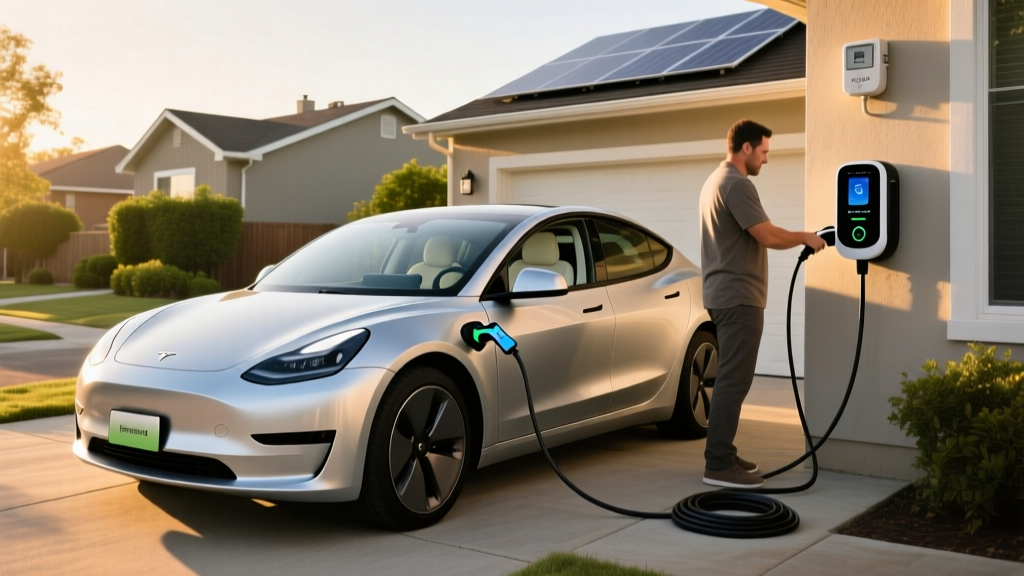
Home charging: A Level 2 charger (240V, 40-48A circuit) is essential for performance EV ownership. These vehicles have large batteries (79-100 kWh) that take 24-40 hours on a standard 120V Level 1 outlet — impractical for daily turnover. A home Level 2 installation typically costs $800-$2,500 including a quality EVSE (e.g., ChargePoint Home Flex, ~$550-$700) and electrician labor for a 50-60A circuit. If your electrical panel is maxed out, a panel upgrade adds $1,500-$3,000.
Track-adjacent DC fast charging: This is the real constraint. Most dedicated race circuits are in rural or semi-rural areas where DC fast-charging infrastructure lags. Before buying, map 150+ kW chargers within a 15-mile radius of the tracks you plan to visit:
| Charging Level | Power (kW) | Miles Added per Hour | Use Case |
|---|---|---|---|
| Level 1 (120V standard outlet) | 1.4 kW | 3-5 mi/hr | Emergency only; not viable for performance EVs |
| Level 2 (240V home/public) | 7.7 - 19.2 kW | 22-55 mi/hr | Daily charging, overnight replenishment |
| DC Fast Charge (50-150 kW) | 50-150 kW | 120-350 mi/hr | Track day top-ups, road trips |
| DC Ultra-Fast (150-350 kW) | 150-350 kW | 350-700+ mi/hr (peak) | 10-80% in 18-25 min for compatible vehicles |
Connector compatibility note for 2026: The industry has largely consolidated around NACS (Tesla's connector, now adopted by Ford, GM, Hyundai, BMW, and others). The Taycan Turbo GT still uses CCS1 in North America but can access Tesla Superchargers via adapter. Verify your vehicle's native connector and network access before purchase — especially if your nearest track is served primarily by one network.
Real-World Ownership: Who Should Buy an Electric Race Car?
Performance EVs aren't universally the right choice. The decision depends on your driving patterns, charging access, and track ambitions.
Choose an electric race car if:
- You have reliable home Level 2 charging (garage or dedicated parking spot with 240V access)
- Your daily commute is under 150 miles round-trip (well within any performance EV's real-world range)
- You attend 2-6 track days per year, not 20+ (thermal management and charging logistics favor gas for high-frequency track rats)
- You value instant torque delivery and all-weather traction (AWD EVs excel in rain and snow where RWD gas sports cars struggle)
- You want supercar acceleration without supercar maintenance (no oil changes, minimal brake wear, fewer moving parts)
- You live in a region with moderate winters or have garage parking — cold weather reduces range 20-35% in performance EVs
Stick with a gas sports car if:
- You attend track events weekly and need quick refueling between sessions
- You lack home charging access and rely on street parking
- Your preferred tracks are in charging-desert regions (rural Midwest, parts of the Mountain West)
- You prioritize lightweight, communicative steering feel over raw acceleration (gas cars still win on weight — 3,500 lbs vs. 4,800+ lbs)
- You want to modify the powertrain extensively (EV tuning options remain limited compared to ECU tuning and bolt-ons for gas engines)
First-Time Performance EV Buyer: What You Need to Know
If you're coming from a gas sports car — or buying your first performance vehicle of any kind — these factors will shape your ownership experience:
Regenerative braking changes your track technique. Most performance EVs offer adjustable regen levels. On track, you'll want to reduce regen to its lowest setting for smoother trail-braking and to prevent unexpected weight transfer. The Ioniq 5 N's N e-Shift mode lets you control "shifts" with paddles, which helps manage speed in a familiar way.
Tire wear is your biggest consumable cost. A 4,800-lb EV with 600+ hp and instant torque will consume tires faster than a lighter gas car with progressive power delivery. Budget $1,500-$2,500 for a set of high-performance summer tires and expect 12,000-18,000 miles of street life, less with track use. The Michelin Pilot Sport 4S and Pirelli P Zero are the current benchmarks.
Insurance is higher — shop early. Performance EVs carry 10-25% higher premiums than comparable gas sports cars, driven by higher repair costs (battery replacement can exceed $20,000) and limited body-shop familiarity with high-voltage systems. Get quotes from GEICO, Progressive, and specialty insurers like Hagerty before finalizing your purchase.
Federal tax credit eligibility is narrow for performance EVs. Under current IRS §30D rules, the MSRP cap for sedans is $55,000 and for SUVs/trucks is $80,000. Buyer income must be under $150,000 (single) or $300,000 (joint). Battery components and critical minerals must meet domestic-sourcing thresholds that tighten annually. Most performance EVs exceed the MSRP cap — the Model 3 Performance is one of the few that qualifies, and even then, sourcing requirements may reduce the credit to $3,750 or eliminate it entirely. Always verify on the IRS Clean Vehicle Credit portal before purchase.
Cold weather reduces performance and range. In sub-30°F conditions, expect 20-35% range reduction and slightly slower acceleration due to battery chemistry limitations. Preconditioning the battery (available on all models listed above) mitigates this by warming the pack before driving — use it before every winter track session.
Frequently Asked Questions
What is the fastest street-legal electric race car available in 2026?
The Rimac Nevera holds the production EV record at 1.85 seconds 0-60 mph and 1,914 hp, but at $2.4 million with limited availability, it's not practical for most buyers. Among accessible production EVs, the Tesla Model S Plaid (1.99s 0-60, 1,020 hp, $89,990) and the Porsche Taycan Turbo GT (2.1s, 1,019 hp, $165,200) are the quickest you can purchase from a dealer today.
Can I take an electric race car to a track day without modifications?
Yes. All vehicles listed here are designed for occasional track use from the factory. The Ioniq 5 N and Taycan Turbo GT are specifically engineered with Nürburgring development programs. No modifications are required — but bring a torque wrench to check lug nuts between sessions, monitor battery temperature via the vehicle's track display, and plan charging breaks into your schedule.
How much does it cost to charge an electric race car at home versus at a DC fast charger?
At home on Level 2 (average US electricity rate of $0.14/kWh), fully charging a 79 kWh Model 3 Performance battery costs approximately $11.06. At a public DC fast charger (average $0.35-$0.48/kWh), the same charge costs $27.65-$37.92. For track days, budget $25-$40 per fast-charge session. Over a year of mixed driving (12,000 mi at 3.5 mi/kWh), home charging costs roughly $480 versus $1,200-$1,650 on public chargers.
Do electric race cars qualify for the $7,500 federal tax credit?
Most do not. The §30D credit has an MSRP cap of $55,000 for sedans and $80,000 for SUVs/trucks, plus buyer income limits and battery-sourcing requirements. The Tesla Model 3 Performance at $54,990 is one of the few performance EVs under the sedan cap, but battery sourcing rules may limit the credit to $3,750. Always check the current eligibility list at fueleconomy.gov and consult a tax professional before relying on the credit in your purchase decision.
Will track driving void my EV battery warranty?
No, provided the vehicle is unmodified and used within its design parameters. Manufacturer battery warranties (8-10 years, 100,000-120,000 miles, 70% capacity retention) do not exclude track driving. However, competitive racing or timed-event competition may be excluded — read your specific warranty booklet. Normal HPDE (High Performance Driver Education) and open-lapping days are covered.
What's the best electric race car for a first-time track driver?
The Tesla Model 3 Performance at $54,990 offers the best entry point: accessible pricing, 346 miles of EPA range for comfortable daily driving, and a 2.9-second 0-60 that teaches respect for instant torque. Its stability control is well-tuned for novice drivers. If budget allows and you want more track-focused engineering, the Hyundai Ioniq 5 N at $67,500 was developed explicitly for track use and offers the most adjustable driving dynamics of any performance EV in its price range.