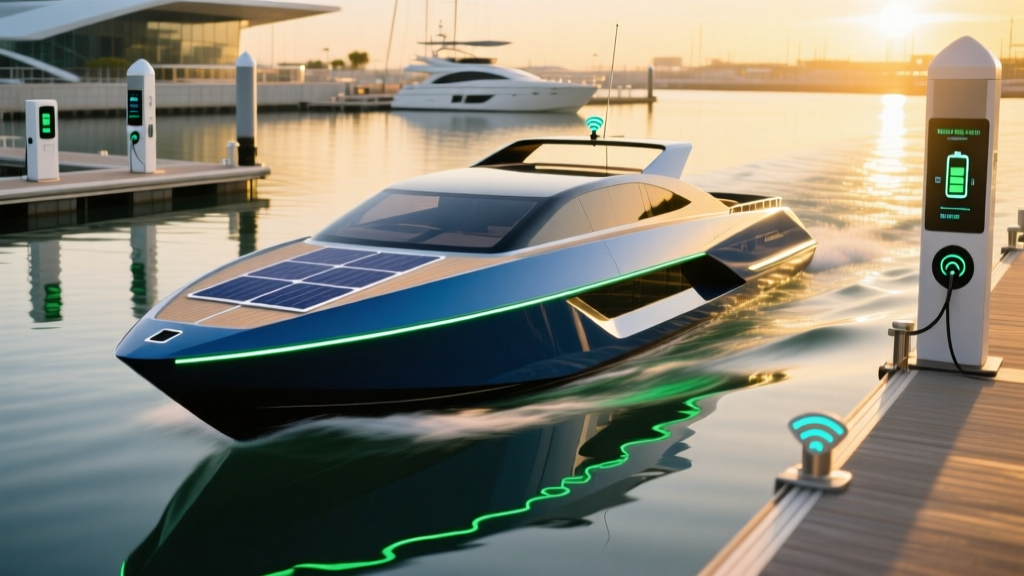
Electric power boats are a niche but growing segment of the broader EV market, and as of 2026 they remain a poor fit for most recreational boaters seeking long range or high-speed performance — but they can be a compelling option for short, predictable trips on lakes, rivers, or coastal waters where quiet operation and zero local emissions matter.
The Quick Answer
Most electric power boats in 2026 offer 15–45 miles of range at cruising speeds, with battery packs ranging from 40 to 120 kWh. Purchase prices start around $35,000 for small runabouts and exceed $250,000 for larger day cruisers. They are best suited for calm, inland waters with reliable dockside charging. For offshore use, watersports, or trips exceeding 50 miles, a gas or hybrid-powered boat remains the practical choice.
What Electric Power Boats Actually Are (And Aren't)
Electric power boats use lithium-ion battery packs — typically NMC (nickel manganese cobalt) chemistry for energy density — paired with electric motors to replace internal combustion engines. Unlike electric cars, where the infrastructure and product lineup have matured rapidly, the marine EV sector is still early-stage. Brands like Pure Watercraft, X Shore, Candela, and Arc Boats have brought production models to market, but volumes remain low and dealer networks are sparse.
Water presents a fundamentally different physics challenge than roads. Hydrodynamic drag increases roughly with the square of speed, and unlike a car that can coast or regen-brake frequently, a boat must push through a dense medium (water is ~800x denser than air) continuously. This means energy consumption at planing speeds (20+ mph) is extremely high, and range drops dramatically compared to displacement speeds (5–8 mph).
A key innovation from companies like Candela is the use of hydrofoiling hulls, which lift the boat above the water at speed, reducing drag by up to 80% and extending range substantially. The Candela C-8, for example, claims up to 57 nautical miles (~66 statute miles) at 22 knots using a 69 kWh battery — a standout figure, but one that depends heavily on calm conditions and moderate speeds.
Electric Boats vs. Gas Boats: The Numbers
| Metric | Electric Power Boat | Gas-Powered Boat |
|---|---|---|
| Typical Range | 15–45 miles (displacement); up to 66 mi (hydrofoil) | 150–400+ miles |
| Top Speed | 25–35 mph (most models) | 40–70+ mph |
| Energy/Fuel Cost per Hour | $3–$8 (electricity at $0.15/kWh) | $30–$80 (gas at $3.50/gal, 8–20 GPH) |
| Purchase Price (20-ft class) | $35,000–$120,000 | $25,000–$60,000 |
| Annual Maintenance | $200–$500 (minimal moving parts) | $1,500–$4,000 (engine, impeller, winterization) |
| Noise Level at Cruise | ~55 dB (conversation-level) | ~75–85 dB |
| Refuel/Recharge Time | 4–10 hours (Level 2 dockside) | 5–10 minutes (gas pump) |
The cost-per-hour advantage of electric is significant: running an electric boat at cruising speed typically costs $3–$8 per hour in electricity versus $30–$80 per hour in gasoline for a comparable gas outboard. Over a 100-hour boating season, that's a potential savings of $2,700–$7,200 annually on fuel alone. Maintenance savings add another $1,000–$3,500 per year, since electric motors eliminate oil changes, fuel stabilizers, impeller replacements, and winterization procedures.
However, the higher upfront cost — often 1.5x to 3x a comparable gas boat — means the payback period can stretch to 7–15 years depending on usage patterns. For boaters who log fewer than 50 hours per year, the economics rarely justify the premium.
Real-World Range: What the Sticker Doesn't Tell You
Just as EPA range estimates for electric cars can overstate real-world highway performance, electric boat range figures are highly sensitive to conditions:
- Speed: Range at planing speed (20–25 mph) is typically 40–60% less than at displacement speed (5–7 mph). A boat rated for 40 miles at 7 mph may deliver only 18–22 miles at 22 mph.
- Water conditions: Choppy water, current, and wind increase drag substantially. Expect 15–30% range loss in rough conditions versus calm.
- Payload: Additional passengers and gear increase displacement and energy consumption. A fully loaded boat may see 10–20% less range than the solo-operator test figure.
- Battery temperature: Cold water actually helps battery thermal management, but cold ambient air (below 40°F) can reduce usable capacity by 5–15% without active battery heating.
For planning purposes, prudent boaters should apply a 30–40% safety margin below the advertised range — the same way experienced EV drivers plan road trips with a buffer for highway speeds and cold weather.
Charging Infrastructure: The Marina Reality
Home charging is straightforward if you have a dock with shore power: a standard 240V / 50-amp marina outlet (common at many slips) delivers roughly 12 kW, which can recharge a 60 kWh battery in about 5 hours. Some newer electric boats support DC fast charging at up to 50–80 kW, but marina-based DC fast chargers are extremely rare as of 2026.
| Charging Method | Power (kW) | Time for 60 kWh Battery | Availability |
|---|---|---|---|
| Standard 120V outlet (trickle) | 1.4 kW | ~43 hours | Anywhere with shore power |
| 240V / 30A marina outlet | 7.2 kW | ~8.5 hours | Most private docks, some marinas |
| 240V / 50A marina outlet | 12 kW | ~5 hours | Many marina slips |
| DC fast charger (where available) | 50–80 kW | ~1 hour (10–80%) | Very limited; a handful of marinas |
The lack of public DC fast charging on waterways is the single biggest practical limitation for electric power boats. Unlike the EV road-trip network (Tesla Superchargers, Electrify America, EVgo), there is no equivalent widespread marine fast-charging network. This means electric boats are effectively limited to day-trip range from a home dock unless the operator arranges destination charging in advance.
Cost Breakdown: Total 5-Year Ownership
| Cost Category | Electric Boat (20-ft, ~$65K) | Gas Boat (20-ft, ~$35K) |
|---|---|---|
| Purchase Price | $65,000 | $35,000 |
| Fuel/Energy (5 yrs, 100 hrs/yr) | $2,500 | $22,500 |
| Maintenance (5 yrs) | $1,500 | $12,500 |
| Insurance (5 yrs) | $7,500 | $5,000 |
| Battery Replacement Reserve | $5,000–$15,000 | N/A |
| Estimated Resale (Year 5) | -$30,000 | -$18,000 |
| Total 5-Year Cost | $51,500–$61,500 | $57,000 |
Insurance for electric boats tends to run 20–50% higher than comparable gas boats due to the specialized nature of battery and motor repairs and the limited number of qualified marine electric technicians. Battery replacement is a long-tail cost: most marine battery packs carry warranties of 5–8 years with capacity retention guarantees of 70–80%, but out-of-warranty replacement for a 60 kWh pack could cost $15,000–$25,000.
Common Misconceptions About Electric Power Boats
| Myth | Fact |
|---|---|
| "Electric boats have zero range anxiety." | Range limitations are more severe than EVs due to lack of public charging and high energy consumption at speed. |
| "They qualify for the $7,500 federal EV tax credit." | The IRS §30D clean vehicle credit applies to qualified on-road vehicles. Boats do not qualify. |
| "Electric boats are maintenance-free." | Hulls, bilge pumps, electronics, trailer brakes, and battery thermal management all require upkeep. |
| "You can use them on any body of water." | Some lakes restrict motorized boats; electric boats may be exempt from certain restrictions, but rules vary by jurisdiction. |
| "Solar panels on the boat provide meaningful range." | Marine solar typically adds 200–600W — enough for accessories or trickle maintenance, not meaningful propulsion range. |
Decision Framework: Is an Electric Power Boat Right for You?
Choose an Electric Power Boat If:
- You boat primarily on calm, inland lakes or rivers within 20 miles of your dock.
- You have shore power at your dock or slip (240V preferred).
- You value quiet operation for fishing, wildlife observation, or conversation.
- You boat 60+ hours per year, making the fuel savings meaningful.
- You want to avoid the hassle and cost of gas engine winterization and maintenance.
- You operate in areas with emissions restrictions or noise ordinances on the water.
Stick With Gas or Hybrid If:
- You need range beyond 50 miles or plan offshore trips.
- You engage in watersports (wakeboarding, skiing) requiring sustained high power.
- You boat fewer than 40 hours per year — the upfront premium won't pay back.
- You lack reliable dockside charging and must trailer your boat to different launches.
- You need fast refueling for multi-day trips or commercial use.
What First-Time Electric Boat Buyers Should Know
If you're considering an electric power boat, treat the purchase more like buying an EV than a traditional boat. Key steps:
- Audit your charging situation first. Before shopping for boats, confirm your dock or marina slip has 240V shore power. If not, budget $2,000–$5,000 for a licensed marine electrician to install a suitable outlet — and get marina approval in writing.
- Calculate your real range needs. Map your typical trips and apply a 35% safety margin to advertised range. If your standard loop is 25 miles, you need a boat rated for at least 38 miles.
- Ask about battery warranty and replacement cost. Get the warranty terms in writing: years, cycle count, and guaranteed capacity retention percentage. Ask the dealer for a current battery replacement quote so you can model long-term ownership.
- Sea-trial at your typical speed. Don't just test at idle. Run the boat at the speed you'll actually use and monitor the energy consumption display (kWh/nautical mile) to validate range claims.
- Check insurance quotes before buying. Get quotes from at least two marine insurers that specifically cover electric propulsion. Some insurers still lack underwriting data for electric boats and may quote conservatively high premiums.
Frequently Asked Questions
Do electric power boats qualify for any federal tax credits?
No. The IRS §30D clean vehicle credit applies to qualified on-road motor vehicles. Electric boats, personal watercraft, and other marine vessels are not eligible. Some states or localities may offer incentives for clean marine propulsion — check your state's energy office or Alternative Fuels Data Center for current programs.
How long do electric boat batteries last?
Most marine-grade NMC lithium-ion packs are warrantied for 5–8 years or 2,000–3,000 charge cycles with guaranteed capacity retention of 70–80%. In practice, a boat used 100 hours per year with one full cycle per outing would accumulate roughly 500–800 cycles over 5–8 years, well within warranty thresholds. Degradation beyond the warranty period depends on usage, storage conditions, and thermal management quality.
Can I trailer an electric boat to different lakes?
Yes, but range planning becomes critical. Without DC fast charging at most boat ramps, you'll need to return to your home dock (or another location with 240V shore power) to recharge. Trailering also adds wear to the trailer and requires the same registration, lighting, and braking maintenance as any boat trailer.
Are electric boats safe in terms of battery fire risk?
Marine battery systems are built to ABYC (American Boat & Yacht Council) standards with sealed, waterproof enclosures, thermal management, and battery management systems (BMS) that monitor cell voltage and temperature. While no energy storage system is zero-risk, modern marine battery packs have robust safety engineering. The risk profile is broadly similar to electric cars, which have a lower fire incidence rate than gasoline vehicles according to NHTSA data.
What's the best electric power boat brand in 2026?
The market is still small and evolving. Notable production models include the Candela C-8 (hydrofoiling, ~$390K, best-in-class range), X Shore Eelex 8000 (~$330K, Scandinavian design), Pure Watercraft pontoon (~$75K+, partnership-backed), and Arc One (~$300K, performance-oriented). For budget-conscious buyers, smaller electric pontoons and fishing boats from brands like Princecraft and LCI Industries offer entry points under $50,000. Always verify current availability and dealer support in your region.