Quick Answer: What Is the Electric Postal Truck?
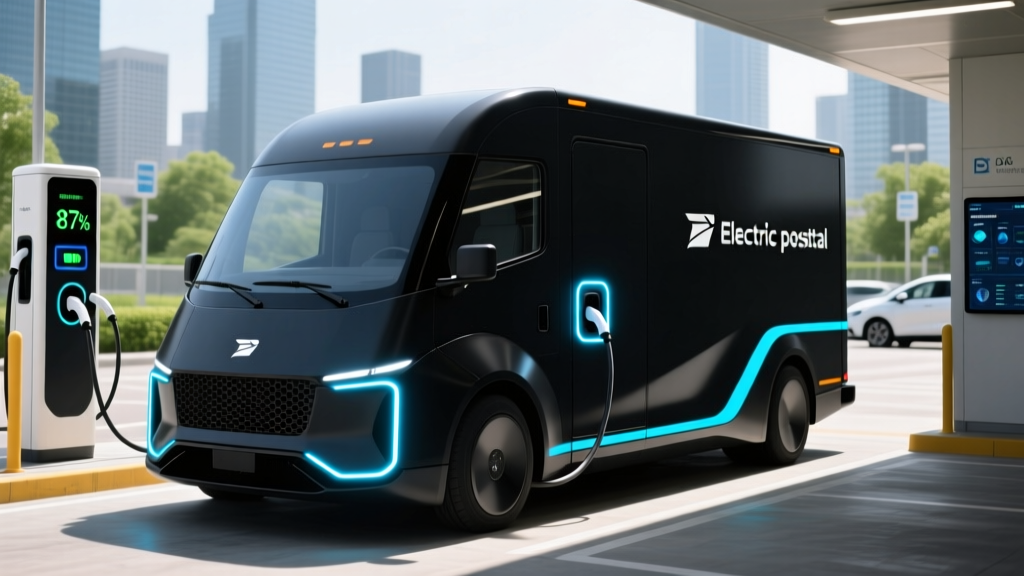
The USPS electric postal truck is the Oshkosh NGDV (Next Generation Delivery Vehicle), built on a battery-electric powertrain supplied by Ford. As of early 2026, USPS has committed to purchasing at least 66,000 electric NGDVs out of a planned 90,000-vehicle order, replacing the aging Grumman LLV fleet. The electric variant uses a ~94 kWh usable battery pack, targets an EPA-estimated range of approximately 70–90 miles depending on payload and climate, and charges via Level 2 (AC) depot charging. It is not sold to consumers — this is a purpose-built fleet vehicle — but its rollout affects taxpayers, postal workers, and the broader EV supply chain.
The Oshkosh NGDV Electric: Specs That Matter
The electric postal truck isn't a consumer EV you can test-drive. It's a commercial-grade delivery platform designed for stop-and-go routes averaging 20–40 miles per day. Here's what we know from Oshkosh and USPS disclosures as of 2026:
| Specification | Electric NGDV (BEV) | Gas NGDV (ICE) |
|---|---|---|
| Battery / Engine | ~94 kWh usable (NMC lithium-ion) | 2.0L turbo 4-cyl (Ford EcoBoost) |
| EPA-Est. Range | ~70–90 miles | ~180–200 miles (12 gal tank) |
| Real-World Range (loaded, cold) | ~50–65 miles | ~140–160 miles |
| Charging | Level 2 AC, ~19.2 kW max | N/A |
| Charge Time (0–100%) | ~5–6 hours (depot overnight) | Refuel: ~5 min |
| Horsepower | ~215 hp (est.) | ~238 hp |
| Payload Capacity | ~2,000 lbs | ~2,000 lbs |
| Cargo Volume | ~140 cu ft | ~140 cu ft |
| Unit Cost (approx.) | ~$65,000–$75,000 | ~$45,000–$50,000 |
Sources: Oshkosh NGDV product page, USPS environmental impact statements.
Electric Postal Truck vs. Gas LLV: The Real Cost Comparison
The old Grumman LLV — built between 1987 and 1994 — gets roughly 8–10 MPG combined and costs USPS an estimated $5,000+ per year in fuel per vehicle at current gas prices. The electric NGDV eliminates tailpipe fuel costs but introduces electricity and infrastructure expenses. Here's the annual operating math for a typical 30-mile/day, 5-day/week route (~7,800 miles/year):
| Cost Factor | Gas LLV (Legacy) | Electric NGDV |
|---|---|---|
| Energy/Fuel Cost per Year | ~$4,680 (at $3.50/gal, 8 MPG) | ~$1,560 (at $0.20/kWh, 2.5 kWh/mi) |
| Maintenance per Year | ~$3,500 (aging fleet, frequent repairs) | ~$1,200 (fewer moving parts, no oil/coolant) |
| Annual Operating Total | ~$8,180 | ~$2,760 |
| 5-Year Operating Savings | — | ~$27,100 saved per vehicle |
| Upfront Purchase Premium | — | +$20,000–$25,000 vs. gas NGDV |
| Depot Charger Install (per stall) | N/A | $8,000–$15,000 |
The break-even point on the electric postal truck's higher upfront cost is typically 3–4 years on operating savings alone, before factoring in reduced HVAC-related breakdowns and the elimination of emissions-related compliance costs. For a fleet of 66,000 vehicles, that's potentially over $1.7 billion in 5-year savings across the USPS network.
Range Reality: Why 70–90 Miles Is Enough (Mostly)
Consumer EV buyers obsess over 300+ mile ranges, but the electric postal truck operates under fundamentally different constraints:
- Average USPS route: 20–40 miles per day, returning to the same depot nightly
- Stop-and-go efficiency: Regenerative braking recovers significant energy at low speeds — delivery routes are ideal for EVs
- Overnight Level 2 charging: At 19.2 kW, a depleted 94 kWh pack recharges fully in ~5 hours, well within a 10-hour depot window
This route-matching strategy is critical. A rural carrier in Montana covering 80 miles in January cannot rely on the BEV variant, while a city carrier in Atlanta covering 28 miles in stop-and-go traffic will rarely use more than 50% of the battery.
Charging Infrastructure: The Hidden Challenge
Electrifying 66,000 postal trucks means building out depot charging at thousands of USPS facilities — many of which were constructed decades ago with minimal electrical capacity.
| Charging Level | Power (kW) | Miles Added per Hour | Use Case for NGDV |
|---|---|---|---|
| Level 1 (120V) | 1.4 kW | ~3 mi/hr | Not practical (too slow) |
| Level 2 (240V, 80A) | 19.2 kW | ~40–48 mi/hr | Primary depot charging — full charge overnight |
| DC Fast Charge | N/A (no DC port on NGDV) | — | Not supported — not needed for depot-based routes |
Key infrastructure realities:
- Panel upgrades: Many post offices will need 480V three-phase service upgrades, costing $50,000–$200,000+ per facility depending on local utility capacity
- Charger count: A facility with 20 electric NGDVs needs ~20 Level 2 stalls — or fewer with managed charging software that staggers sessions
- Utility coordination: USPS has partnered with the Department of Energy and local utilities to plan grid capacity, but rural facilities face longer timelines
This is the same challenge commercial fleet operators (Amazon, FedEx) face. The trucks themselves are ready; the electrical infrastructure at depots is the bottleneck.
Common Misconceptions About the Electric Postal Truck
| Myth | Fact |
|---|---|
| "The electric mail truck can't handle cold weather." | Range drops 25–35% in sub-freezing temps, but most urban routes (under 40 mi) remain within range. USPS assigns gas NGDVs to extreme-cold, long-distance routes. |
| "These trucks are made by Ford." | Oshkosh Corp. is the prime contractor and integrator. Ford supplies the powertrain components (motor, battery, e-transaxle) under a sub-contract. The vehicle is badged as an Oshkosh NGDV. |
| "Taxpayers are paying $7,500 tax credits for these." | No. The §30D federal tax credit applies to consumer purchases, not government fleet acquisitions. USPS purchases are funded through congressional appropriations and the Postal Service's operating fund. |
| "All 90,000 new postal trucks are electric." | As of 2026, USPS committed to at least 66,000 BEVs and ~24,000 gas-powered NGDVs. The gas variants serve rural/long-range routes where BEV range is insufficient. |
| "You can buy one as a civilian." | The NGDV is a government-contract-only vehicle. Retired LLVs occasionally reach civilian markets, but NGDVs will not be available for private purchase for decades. |
What This Means for EV Buyers and Taxpayers
Even though you can't buy an electric postal truck, the USPS NGDV program has downstream effects on the EV market you can buy:
- Supply chain scale: Oshkosh/Ford's battery procurement (94 kWh packs × 66,000 vehicles = ~6.2 GWh of demand) helps drive down per-kWh battery costs across the industry — benefiting consumer EVs like the F-150 Lightning and Mustang Mach-E that share Ford's e-platform architecture
- Charging infrastructure: Depot buildouts at USPS facilities expand local grid capacity and utility experience with managed fleet charging, indirectly improving public charging networks
- Proving the fleet-EV case: Successful NGDV deployment validates BEV suitability for last-mile delivery, accelerating adoption by UPS, FedEx, and Amazon (which already operates 100,000+ Rivian EDVs)
- Taxpayer cost: The total USPS NGDV program cost is estimated at $10–12 billion over 10 years (vehicles + infrastructure), with projected operating savings of $3–5 billion over the fleet's 20-year lifespan
Decision Framework: Who Benefits From Fleet Electrification?
If you're a postal worker: Expect a quieter, smoother ride with better HVAC, improved ergonomics (standing-height cargo area, 360° cameras), and no exhaust fumes — but potentially shorter assigned routes in winter for BEV-variant carriers.
If you're a fleet manager: The NGDV program validates the depot-charging model for last-mile delivery. If your routes average under 50 miles/day with predictable return-to-base patterns, BEV fleet conversion likely saves 50–65% on annual energy costs.
If you're a consumer EV shopper: The NGDV doesn't affect your buying decision directly, but the battery cost reductions and grid upgrades it drives will marginally improve consumer EV pricing and charging access over the next 3–5 years.
Frequently Asked Questions
When will the electric postal truck be on the road?
Initial NGDV deliveries began in mid-2025, with volume production ramping through 2026–2028. USPS expects the full 90,000-vehicle order (66,000+ electric) to be deployed by approximately 2030.
How much does it cost to charge an electric postal truck?
At a commercial electricity rate of ~$0.15–$0.25/kWh, fully charging the 94 kWh battery costs approximately $14–$24 per session. For a typical daily route using ~40 kWh, the daily energy cost is $6–$10 — compared to $25–$35 in gasoline for the legacy LLV.
Can the electric NGDV handle rural routes?
Generally no, for long rural routes exceeding 60 miles. USPS assigned gas-powered NGDVs to these routes. In moderate climates with routes under 50 miles, the BEV variant is viable even in rural settings.
What battery chemistry does the NGDV use?
The NGDV uses NMC (nickel manganese cobalt) lithium-ion cells, chosen for energy density to maximize range in a heavy commercial vehicle. LFP chemistry, while cheaper and longer-lasting, would have required a heavier, larger pack for equivalent range.
Does the USPS electric truck have air conditioning?
Yes — a major upgrade from the LLV, which was notorious for lacking adequate climate control. The NGDV includes full HVAC for the driver compartment, though cabin heating in winter does reduce range by 15–25%.
Who manufactures the electric postal truck?
Oshkosh Corporation in Wisconsin is the prime contractor, responsible for vehicle integration and final assembly. Ford Motor Company supplies the battery-electric powertrain under a subcontract worth approximately $1.4 billion.