Quick Verdict: Is the Electric Porsche Macan Worth It?
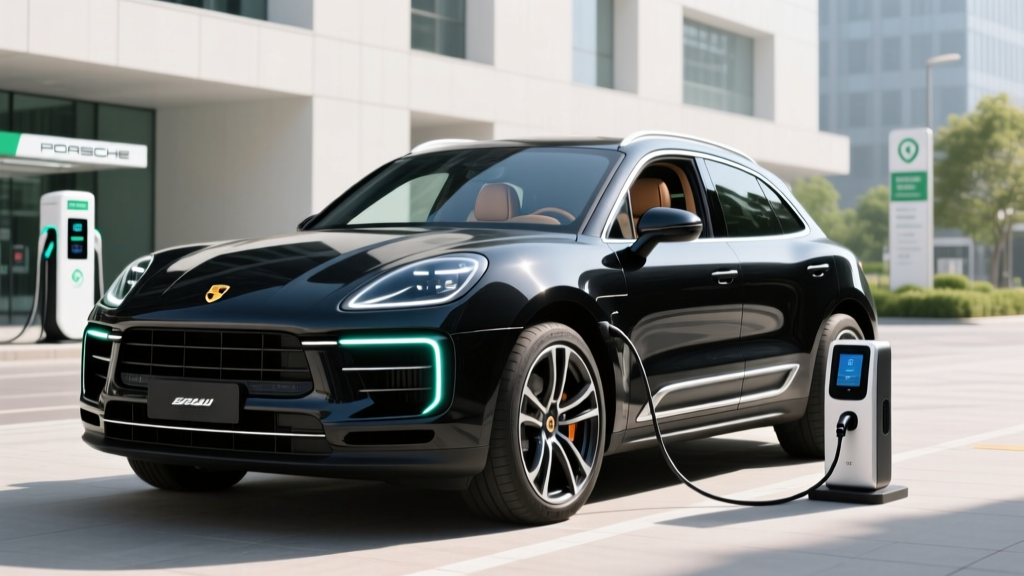
The 2026 Electric Porsche Macan delivers up to 308 miles of EPA range (Macan 4), charges from 10-80% in roughly 21 minutes at 270 kW DC, and produces up to 630 hp in the Turbo trim. Starting at $78,800, it costs significantly more than the outgoing gas Macan and does not qualify for the $7,500 federal §30D tax credit due to its MSRP exceeding the $55,000 SUV cap. It's the right buy if you want Porsche driving dynamics in an EV with 800-volt architecture and can charge at home. It's the wrong buy if budget is the primary concern or you lack reliable Level 2 access.
EPA Range, Battery, and Real-World Expectations
The 2026 Electric Porsche Macan is built on the PPE (Premium Platform Electric) architecture co-developed with Audi, using a 100 kWh gross battery (approximately 95 kWh usable) with NMC (nickel-manganese-cobalt) chemistry. Here's how the two trims break down:
| Spec | Macan 4 | Macan Turbo |
|---|---|---|
| EPA Range | 308 miles | 288 miles |
| Battery (usable) | ~95 kWh (NMC) | ~95 kWh (NMC) |
| Horsepower | 402 hp | 630 hp |
| 0-60 mph | 4.9 seconds | 3.3 seconds |
| Top Speed | 136 mph | 161 mph |
| Drivetrain | Dual-motor AWD | Dual-motor AWD |
Real-World Range Reality
The EPA sticker says 308 miles for the Macan 4, but plan for real-world variability. On highway road trips at 75 mph, expect ~250-270 miles before needing a charge. In cold weather (below 30°F), that number can drop to ~220-240 miles due to cabin heating demands and reduced battery efficiency, even with the Macan's heat pump. The Turbo trim's additional power draw and wider 21-inch wheel option reduce range further — budget around 230-250 highway miles for the Turbo in moderate conditions.
Charging: 800-Volt Architecture and What It Means
The Macan's 800-volt electrical architecture is its charging advantage. Here's the breakdown across all charging levels:
| Charging Level | Power (kW) | Speed | Notes |
|---|---|---|---|
| Level 1 (120V) | ~1.4 kW | ~4 miles/hour | Emergency/top-up only |
| Level 2 (240V, 48A) | 11.5 kW | ~35 miles/hour | Full charge in ~8.5 hours |
| DC Fast Charge (peak) | 270 kW | 10-80% in ~21 min | Requires 350 kW CCS/NACS station |
| DC Fast Charge (sustained) | ~150-180 kW avg | 10-80% real-world ~25 min | Peak rate tapers above 50% SoC |
Key detail on the charge curve: The Macan peaks at 270 kW but does not sustain that rate. In testing, the charge rate holds near peak only between roughly 10-40% State of Charge, then tapers progressively. A 10-80% session at a capable 350 kW charger takes approximately 21-25 minutes. At a 150 kW Electrify America or Tesla Supercharger (via the included NACS adapter), expect 10-80% in roughly 32-38 minutes.
The Macan ships with a NACS charge port for Tesla Supercharger compatibility, with a CCS adapter available for Electrify America and other networks. Porsche also supports preconditioning — the battery warms itself when you navigate to a fast charger in the infotainment system, which is essential for achieving peak charge rates in cool weather. Always precondition; skipping it can add 5-10 minutes to your fast-charge session.
Electric Macan vs. Gas Macan: Cost and Performance
The outgoing gas Porsche Macan (2024 final model year) started around $62,000. The electric version starts at $78,800 — a $16,800 premium before options. But the operating cost picture shifts over time:
| Factor | Electric Macan 4 | Gas Macan (2024 base) |
|---|---|---|
| Base MSRP | $78,800 | ~$62,900 |
| Federal Tax Credit (§30D) | $0 (MSRP exceeds $55K SUV cap) | $0 |
| Fuel/Energy Cost (15,000 mi/yr) | ~$650/yr (home charging at $0.14/kWh) | ~$2,700/yr (premium at $4.20/gal, 21 MPG) |
| Annual Maintenance | ~$300 (tire rotation, cabin filter) | ~$800 (oil, filters, brakes) |
| 5-Year Fuel/Maint. Total | ~$4,750 | ~$17,500 |
| 5-Year Net Cost Advantage | Electric saves ~$12,750 in operating costs, but starts $16,800 higher | |
| 0-60 mph | 4.9 sec (Macan 4) | 6.0 sec (base turbo 4-cyl) |
| EPA Efficiency | ~87 MPGe combined | 21 MPG combined |
The math: the electric Macan saves roughly $12,750 in fuel and maintenance over five years, but that doesn't fully close the $16,800 purchase gap. The breakeven point extends past seven years for most buyers. The electric Macan is not a cost-saving purchase — it's a performance and technology upgrade that happens to have lower running costs.
Ownership Costs: Insurance, Depreciation, and Charging
Estimated 5-Year Total Cost of Ownership
| Category | Electric Macan 4 |
|---|---|
| Purchase Price (MSRP) | $78,800 |
| Estimated Insurance (5 yr) | $14,500–$17,000 |
| Home Charging (5 yr, 15K mi/yr) | $3,250 |
| Public DC Fast Charging (occasional, 5 yr) | $1,200 |
| Maintenance (5 yr) | $1,500 |
| Estimated Depreciation (5 yr) | ~$32,000–$38,000 |
| Estimated 5-Year Total | $131,250–$138,550 |
Insurance: EV insurance premiums run 15-25% higher than equivalent gas vehicles due to battery replacement costs and specialized repair requirements. Expect $2,900-$3,400 annually depending on your state, driving record, and coverage level. Get quotes before committing.
Depreciation: Luxury EVs have seen steeper depreciation than gas equivalents in the 2024-2025 market correction. The electric Macan's Porsche badge provides some buffer, but plan for 40-48% value retention at five years, which is slightly below the gas Macan's historical 45-50%.
Home charging setup: If you don't already have a 240V/48A Level 2 charger, budget $800-$2,500 for equipment and electrician installation. A panel upgrade (200A service) can add $1,500-$3,000 if your home needs one. Home charging is essentially mandatory for convenient EV ownership — relying solely on public charging adds time, cost, and frustration.
Federal Tax Credit and Incentive Reality
§30D Federal Tax Credit: Why the Macan Doesn't Qualify
- MSRP Cap: SUVs must be under $80,000 — the Macan 4 at $78,800 clears this, but the Turbo at $105,000+ does not
- Battery Sourcing: Requires critical minerals and battery components from US/FTA partners — Porsche's supply chain does not currently meet these thresholds for the Macan
- Buyer Income Cap: $150K single / $300K joint AGI limit applies regardless
- Result: The Macan 4 technically meets the MSRP cap but fails battery sourcing requirements. The Turbo fails the MSRP cap entirely. Neither qualifies for the $7,500 credit as of 2026.
Always verify current eligibility at IRS.gov — sourcing requirements tighten annually and rules can shift.
Some states offer their own EV rebates (California, Colorado, New York, and others), which can stack regardless of federal eligibility. Check your state energy office for current programs.
Common Misconceptions About the Electric Macan
| Myth | Fact |
|---|---|
| "It's just a rebadged Audi Q6 e-tron" | Both use the PPE platform, but Porsche tunes the suspension, steering, and powertrain mapping independently. The driving character is distinctly Porsche. |
| "The battery will need expensive replacement" | Porsche warranties the battery for 8 years/100,000 miles with a 70% capacity retention guarantee. NMC degradation data from similar platforms shows ~8-12% loss over 100K miles with normal use. |
| "I can charge it anywhere fast" | You need a 350 kW-capable CCS or NACS station to hit the 270 kW peak. Most public chargers max out at 50-150 kW, where the Macan charges at 50-150 kW — still reasonable but far from the advertised 21-minute time. |
| "It qualifies for the $7,500 tax credit" | It does not, due to MSRP and battery sourcing rules. Don't let a dealer tell you otherwise without IRS verification. |
| "Electric means no maintenance" | Tires wear 20-30% faster on EVs due to weight and instant torque. Brake fluid, cabin filters, and coolant still require service. Budget ~$300/year minimum. |
Decision Framework: Should You Buy the Electric Macan?
Choose the Electric Macan If:
- You have reliable Level 2 home charging (garage or dedicated driveway outlet)
- You want Porsche dynamics in an EV and value 800V fast-charging capability
- Your typical daily drive is under 100 miles and road trips are occasional, not weekly
- You're coming from a luxury gas SUV and can absorb the $78,800+ entry without needing a tax credit
- You live in a region with functional public fast-charging infrastructure (Electrify America, Tesla Supercharger)
Look Elsewhere If:
- You need a sub-$60,000 luxury EV — consider the BMW iX xDrive50 or Genesis GV60
- You regularly tow (the Macan is rated for 4,409 lbs, which is modest for the class)
- You lack home charging access and would rely entirely on public infrastructure
- Federal tax credit eligibility is a dealbreaker for your purchase math
- You need third-row seating — the Macan is strictly a five-seat compact SUV
Frequently Asked Questions
Does the Electric Porsche Macan use the same platform as the Taycan?
No. The Taycan uses the J1 platform. The Macan uses the newer PPE (Premium Platform Electric) co-developed with Audi, which also underpins the Audi Q6 e-tron. PPE offers improved packaging, slightly better efficiency, and the same 800V architecture.
What is the real-world highway range of the Macan 4?
Expect approximately 250-270 miles at highway speeds (70-80 mph) in moderate temperatures. In cold weather (below 30°F), plan for 220-240 miles. The EPA's 308-mile rating includes a significant city-driving component where regenerative braking recovers energy.
Can I charge the Electric Macan at Tesla Superchargers?
Yes. The 2026 Macan ships with a NACS (North American Charging Standard) port, making it natively compatible with the Tesla Supercharger network. You can also use the included adapter for CCS stations like Electrify America.
How long does the Macan's battery last before degradation is noticeable?
Based on data from similar NMC packs in the Taycan and Audi e-tron GT, expect 8-12% degradation at 100,000 miles under normal use patterns. Porsche warranties the battery to retain at least 70% of original capacity for 8 years or 100,000 miles. Avoid frequent DC fast charging above 90% SoC and regular deep discharges below 10% to maximize longevity.
Is the Electric Macan faster than the gas Macan GTS?
Yes. The Macan 4 (402 hp) hits 0-60 in 4.9 seconds, matching the old gas Macan GTS. The Macan Turbo (630 hp) does it in 3.3 seconds — faster than any production gas Macan ever made, including the Turbo S.
What does home charging cost per month?
At the US average electricity rate of $0.14/kWh and 1,250 miles/month (15,000/year), you'll use approximately 375 kWh/month (at ~3.3 miles/kWh efficiency), costing roughly $53/month. Compare that to ~$225/month for premium gasoline in the gas Macan at the same mileage.