The Short Answer: The Electric Porsche Cayman Isn't Here Yet
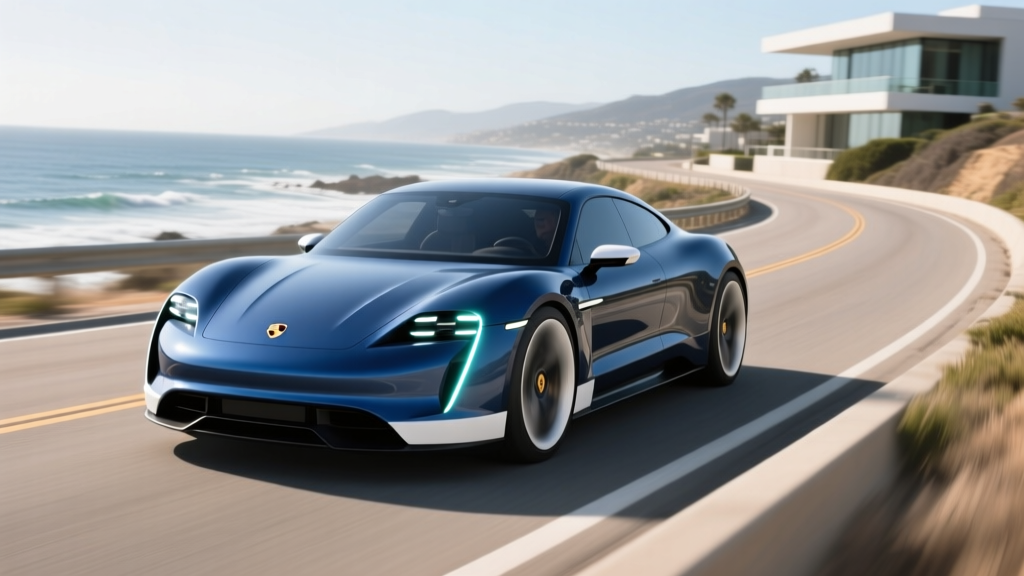
As of early 2026, Porsche has not yet released a fully electric 718 Cayman. The battery-electric 718 lineup (both Cayman coupe and Boxster roadster) has been announced and is expected to arrive as a 2026 or 2027 model-year vehicle, built on a dedicated EV sports-car platform derived from Porsche's PPE (Premium Platform Electric) architecture. All specs discussed below are preliminary and based on Porsche's official statements, prototype sightings, and industry analysis — final EPA figures, pricing, and availability will be confirmed closer to launch. If you need an EV sports car today, your closest alternatives are the Tesla Model 3 Performance, the Lotus Eletre, or waiting for Porsche's official reveal.
What Porsche Has Confirmed About the Electric 718
Porsche CEO Oliver Blume confirmed in 2022 that the next-generation 718 Boxster and Cayman would go fully electric. Originally targeted for a 2024-2025 debut, the program has been delayed to approximately 2026-2027, partly due to Porsche's strategic recalibration — the company announced in late 2024 that it would offer the 718 with both electric and combustion powertrains in parallel, responding to softer-than-expected EV demand in the sports-car segment.
What we know with reasonable confidence from Porsche's official communications and prototype testing:
- Platform: A shortened, sports-car-adapted variant of the PPE architecture (the same 800-volt platform underpinning the Taycan and Macan EV)
- Architecture: 800V electrical system enabling high-speed DC fast charging
- Body styles: Both Cayman (coupe) and Boxster (roadster) will be offered
- Performance tiers: Multiple variants expected, likely including base, S, and GTS or Turbo-badged performance models
- Combustion parallel: The current-generation gas 718 (982) is expected to continue in some markets alongside the EV variant
Projected Specs: Range, Battery, and Charging
Because the electric 718 will share PPE DNA with the Taycan and Macan EV, we can make informed projections based on those vehicles' published performance. These are estimates, not confirmed specs.
| Specification | Estimated / Projected | Reference Point |
|---|---|---|
| Battery Capacity (usable) | ~75–90 kWh (NMC) | Macan EV: 95 kWh usable; Taycan: 84–97 kWh |
| EPA Range | ~250–310 miles (estimated) | Taycan (2025): up to 318 mi; Macan EV: up to 308 mi |
| System Voltage | 800V | Same as Taycan / Macan EV |
| Peak DC Fast Charge Rate | ~270–320 kW | Taycan: 320 kW (2025 refresh) |
| 10–80% DC Charge Time | ~18–22 minutes (projected) | Taycan: ~18 min at 320 kW |
| Level 2 AC Charge Rate | 11 kW (standard) / 22 kW (optional) | Standard PPE capability |
| 0–60 mph | ~3.5–5.0 sec (depending on variant) | Taycan GTS: 3.5 sec; base Taycan: 5.2 sec |
| Horsepower | ~350–600+ HP (depending on variant) | Range from base to GTS/Turbo tier |
| Connector | NACS (Tesla standard, adopted by Porsche for 2025+ models in North America) | Porsche confirmed NACS transition |
Real-World Range Reality Check
Even if the electric Cayman achieves an EPA estimate of ~280–310 miles, expect real-world highway range closer to 220–260 miles at sustained 70–80 mph speeds. Sports cars tend to have less aerodynamic efficiency than sedans, and aggressive driving will further reduce range. In cold weather (below 32°F / 0°C), expect an additional 15–25% range reduction due to battery chemistry limitations and cabin heating demands. A 300-mile EPA sticker could realistically deliver 200–220 miles on a cold winter highway drive.
How the Electric Cayman Compares to the Gas 718
For buyers cross-shopping the electric Cayman against the current gas-powered 718 Cayman, here's a data-driven comparison. Gas figures are based on the 2025 model year from fueleconomy.gov.
| Metric | Electric Cayman (Est.) | Gas 718 Cayman (2025 EPA) |
|---|---|---|
| 0–60 mph | ~3.5–5.0 sec | 4.9 sec (base) / 3.2 sec (GTS 4.0) |
| Horsepower | ~350–600+ HP | 300 HP (base) / 394 HP (GTS 4.0) |
| Range / Tank | ~250–310 mi (EPA est.) | ~380 mi (16.9 gal × 22 combined MPG) |
| Energy/Fuel Cost per Mile | ~$0.04–$0.06/mi (home charging at $0.14/kWh) | ~$0.16/mi (premium at $4.50/gal, 22 MPG) |
| Annual Energy Cost (12,000 mi) | ~$480–$720 | ~$1,920 |
| Estimated Starting MSRP | ~$75,000–$85,000 (base, projected) | $68,300 (base) / $93,400 (GTS 4.0) |
| Maintenance (annual avg.) | ~$300–$500 (no oil, fewer fluids) | ~$800–$1,200 (oil, spark plugs, more wear items) |
| Federal Tax Credit (§30D) | Eligibility uncertain — likely $0–$3,750 depending on battery sourcing | Not eligible |
Key takeaway: The electric Cayman will likely offer sharper off-the-line acceleration in base trims (instant electric torque vs. turbo lag) but will be heavier due to the battery pack. The gas 718's mid-engine balance and ~3,300-lb curb weight give it a handling edge that Porsche's engineers will need to work hard to replicate in a vehicle likely weighing 4,200–4,500 lbs. Range is the gas car's clear advantage for track days and road trips.
Ownership Costs: What to Budget
An electric sports car is a premium purchase. Here's a realistic 5-year ownership projection comparing the electric Cayman (base, ~$80,000 estimated MSRP) against the gas 718 Cayman base (~$68,300 MSRP).
| Cost Category | Electric Cayman (Est.) | Gas 718 Cayman (2025) |
|---|---|---|
| Purchase Price (MSRP) | $80,000 | $68,300 |
| Federal Tax Credit (§30D) | –$0 to –$3,750 (sourcing-dependent) | $0 |
| Fuel / Energy (60k mi) | $2,400–$3,600 | $9,600 |
| Maintenance (5 years) | $1,500–$2,500 | $4,000–$6,000 |
| Insurance (avg. annual) | $2,800–$3,500/yr | $2,200–$2,800/yr |
| Insurance (5-year total) | $14,000–$17,500 | $11,000–$14,000 |
| Estimated Depreciation (5 yr) | ~50–55% ($40,000–$44,000) | ~40–45% ($27,300–$30,700) |
| Total 5-Year Cost (est.) | $137,900–$147,600 | $120,200–$128,600 |
Critical caveats:
- Tax credit: Under current IRS §30D rules, the electric Cayman must meet battery component and critical mineral sourcing requirements to qualify for up to $7,500. Porsche's battery supply chain will determine whether buyers receive $0, $3,750, or the full $7,500. Additionally, the MSRP cap for sedans/coupes is $55,000 under §30D — if the IRS classifies the Cayman as a sedan/coupe rather than an SUV, it will likely exceed the cap and be ineligible entirely. This is a significant factor.
- Depreciation: EVs have historically depreciated faster than comparable ICE sports cars, though the gap is narrowing. Porsche's brand cachet may help, but early EV depreciation risk is real.
- Insurance: EV sports cars typically cost 15–30% more to insure than their gas counterparts due to higher repair costs and specialized parts.
Real-World Ownership Considerations
Before committing to an electric sports car, honestly assess your situation:
Home Charging Access
This is the single biggest ownership variable. A Level 2 home charger (240V, 11 kW) will fully replenish a ~85 kWh battery in roughly 8–9 hours — perfect for overnight charging. If you live in an apartment or lack a garage with a dedicated 240V circuit, public charging for a daily-driver sports car becomes a significant friction point. Home Level 2 installation typically costs $800–$2,500 (charger + electrician + permit), and may require a panel upgrade ($1,500–$3,500) if your home has a 100A service.
Driving Patterns
A sports car with ~250–310 miles of real-world range works well for:
- Daily commuting under 80 miles round-trip
- Weekend canyon runs and track days (with charging planning)
- Regional road trips with DC fast-charger stops every ~180–200 miles
It works poorly for:
- Frequent 400+ mile road trips through charging deserts (rural Mountain West, parts of the Plains states)
- Track-day use where repeated high-power discharge will rapidly deplete the battery and potentially trigger thermal management limits
Climate
If you live in a region with harsh winters (Minnesota, New England, mountain states), expect 15–25% range loss in sustained sub-freezing temperatures. The 800V PPE architecture includes a heat pump for cabin heating efficiency, but battery chemistry still suffers in cold. Preconditioning while plugged in mitigates this significantly.
Common Misconceptions About an Electric Cayman
| Myth | Fact |
|---|---|
| "It'll get the full $7,500 tax credit." | Unlikely. The §30D MSRP cap for non-SUVs is $55,000. The Cayman will almost certainly exceed this. Buyers should plan for $0 federal credit. |
| "Electric sports cars can't handle like mid-engine cars." | Porsche's PPE platform allows a low, flat battery pack. The car will be heavier (~4,300 lbs vs. ~3,300 lbs gas), but a low center of gravity and rear-biased weight distribution can deliver excellent dynamics. It will feel different — not necessarily worse. |
| "Charging takes too long for road trips." | At 270–320 kW peak, the 800V system can add ~180 miles of range in ~15 minutes. However, sustained charging is slower than peak — the charge curve tapers significantly above 80% SoC. Plan 20–25 minute stops, not 15. |
| "The battery will need replacing in 5 years." | Porsche provides an 8-year/100,000-mile battery warranty on the Taycan (guaranteeing ≥70% capacity retention). The 718 EV will likely carry similar coverage. Modern NMC batteries with active thermal management typically retain 85–90% capacity at 100,000 miles. |
| "It'll be lighter than the gas Cayman." | No. Even with weight-saving measures, the battery pack alone adds ~1,000 lbs. The electric Cayman will likely weigh 4,200–4,500 lbs vs. the gas car's ~3,300–3,500 lbs. |
Decision Framework: Should You Wait or Buy Now?
Choose to WAIT for the Electric Cayman if:
- You want a daily-drivable sports car with low running costs and have reliable home Level 2 charging
- Instant torque and silent acceleration appeal to you more than engine sound and mechanical engagement
- Your typical drives are under 250 miles and you rarely drive in extreme cold
- You're comfortable paying a premium ($80,000+ estimated) and accepting first-model-year risk
- You want access to the Tesla Supercharger network via NACS (Porsche's 2025+ adoption)
Choose the GAS 718 Cayman (or another option) if:
- You prioritize lightweight handling dynamics and mid-engine balance above all else
- You plan frequent track days (battery thermal management limits sustained high-power use)
- You regularly drive 300+ miles between stops or travel through areas with sparse DC fast charging
- You want a proven platform with established depreciation data and no first-generation EV risk
- The engine sound and manual transmission option (available on some gas 718 trims) are non-negotiable
Consider THESE Alternatives if You Want an EV Sports Car Today:
- Tesla Model 3 Performance (2025): 0-60 in 2.9 sec, EPA 315 mi, ~$55,000 MSRP — but it's a sedan, not a coupe
- BMW i4 M50: 0-60 in 3.7 sec, EPA 227 mi, ~$69,700 — a sportback, closer in spirit to a grand tourer
- Lotus Eletre R: 0-60 in 2.95 sec, EPA ~304 mi, ~$120,000+ — an SUV, but seriously quick
Frequently Asked Questions
When will the electric Porsche Cayman be available to buy?
Porsche has confirmed the electric 718 is in development, with prototypes undergoing testing. The original target was 2024-2025, but the program has been delayed. Current industry estimates place customer deliveries in late 2026 or 2027 as a 2027 model-year vehicle. Porsche has not announced an official on-sale date.
Will the electric Cayman qualify for the $7,500 federal EV tax credit?
Almost certainly not. Under current IRS §30D rules, the MSRP cap for vehicles classified as sedans or coupes is $55,000. The electric Cayman's projected starting price of $75,000–$85,000 far exceeds this. Even if classified differently, battery sourcing requirements add further uncertainty. Consult a tax professional for your specific situation.
Will the electric Cayman have a manual transmission?
No. Electric vehicles do not use multi-speed transmissions in the traditional sense. Porsche's EVs use a 2-speed rear axle (as in the Taycan) for efficiency and top-speed optimization, but there is no manual shifting. If a manual gearbox is important to you, the gas 718 Cayman (available with a 6-speed manual) remains the choice.
How will the electric Cayman's weight affect handling?
The battery pack will likely add 900–1,200 lbs compared to the gas 718. Porsche's engineers will use a low-mounted battery to keep the center of gravity low, and rear-biased motor placement to approximate the mid-engine feel. It will handle differently — more planted and stable, but less nimble in tight transitions than the ~3,300-lb gas car. Think grand-tourer precision rather than lightweight autocross agility.
What charging connector will the electric Cayman use?
Porsche has confirmed adoption of the NACS (North American Charging Standard) connector for its North American vehicles starting with 2025 model-year production. The electric 718 will use NACS, giving it native access to Tesla Supercharger stations (the largest DC fast-charging network in the US) without an adapter.
Will Porsche continue selling the gas 718 alongside the EV?
Yes. Porsche announced in late 2024 that it plans to offer the 718 with both electric and internal-combustion powertrains in parallel, at least initially. This means the current gas-powered 718 Cayman and Boxster will remain available alongside the new EV variants, giving buyers a choice.