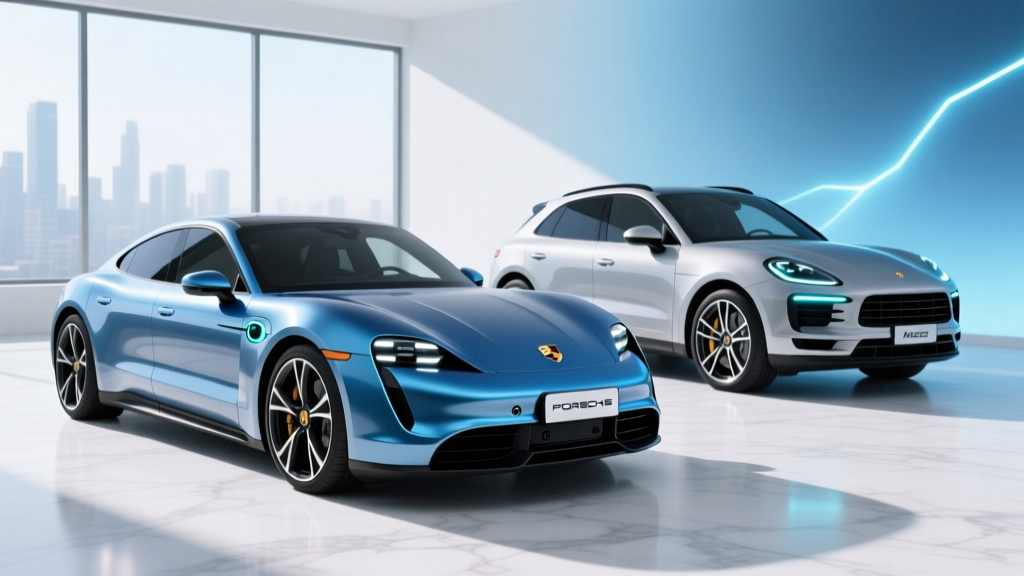
If you are searching for an electric Porsche in 2026, you are primarily choosing between two distinct vehicles: the Porsche Taycan (a performance sedan/cross-tourism) and the Porsche Macan Electric (a compact luxury SUV). The Taycan offers up to an EPA-estimated 318 miles of range and 800-volt architecture for ultra-fast charging, while the Macan EV provides a more practical SUV form factor with up to 308 miles of range. Both require a significant upfront investment—starting around $92,000 and $78,000 respectively—and neither qualifies for the federal §30D tax credit due to MSRP caps and battery sourcing rules.
The Quick Verdict on Electric Porsches
Buying an electric Porsche is a decision driven by performance and engineering rather than pure economics. You are paying for 800V charging speeds (10-80% in ~18 minutes), superior thermal management, and driving dynamics that outclass most rivals. However, be prepared for high insurance premiums, the lack of federal tax incentives, and the necessity of home Level 2 charging to make ownership convenient.
Current Electric Porsche Lineup: Specs & Performance
Porsche's electric strategy relies on its J1 (Taycan) and PPE (Macan) platforms. Both utilize 800-volt systems, allowing them to sustain higher charging speeds for longer than 400V competitors. Below is the 2026 spec breakdown for the most common trims.
| Model | Trim | EPA Range | Battery (kWh) | Peak DC Charge | 0-60 mph | Base MSRP |
|---|---|---|---|---|---|---|
| Taycan | Base (RWD) | ~318 mi | 105 (Gross) | 320 kW | 4.5s | $92,000 |
| Taycan | 4S (AWD) | ~283 mi | 105 (Gross) | 320 kW | 3.5s | $108,000 |
| Macan | Electric 4 | ~308 mi | 100 (Gross) | 270 kW | 4.9s | $78,800 |
| Macan | Turbo | ~288 mi | 100 (Gross) | 270 kW | 3.1s | $106,000 |
Real-World Range Reality: While the EPA numbers are impressive, Porsche's thermal management excels in heat but consumes energy in cold. Expect a 15-20% reduction in range when driving at highway speeds (75 mph+) in temperatures below 40°F. On the positive side, the charge curve is remarkably flat; you can expect to see peak kW rates sustained up to 55-60% SoC before tapering begins.
Electric Porsche vs. Gas Panamera & Macan
How do these EVs stack up against their internal combustion engine (ICE) siblings? The transition to electric changes the maintenance and fueling landscape significantly.
| Feature | Electric Porsche (Taycan/Macan) | Gas Porsche (Panamera/Macan) |
|---|---|---|
| Maintenance | Low (Tire rotations, cabin filters, fluid checks) | High (Oil changes, spark plugs, transmission fluid) |
| "Fuel" Cost (per 1k mi) | ~$45-$60 (Home charging @ $0.16/kWh) | ~$160-$200 (Premium 91+ Octane) |
| Drivetrain Warranty | 8 years / 100,000 miles | 4 years / 50,000 miles |
| Performance | Instant torque, consistent launches | High-end power, turbo lag, heat-soak |
The Economics: Cost of Ownership & Incentives
Owning an electric Porsche involves a unique financial profile. Unlike mainstream EVs, these vehicles exceed the IRS MSRP caps for the §30D tax credit.
Tax Credit & Incentive Eligibility
Under current IRS rules, the Taycan and Macan EV do not qualify for the $7,500 federal tax credit. The §30D credit has an MSRP cap of $55,000 for sedans and $80,000 for SUVs. Even if a trim technically fell under the cap, they often fail the critical mineral and battery component sourcing requirements outlined on IRS.gov.
Estimated 5-Year Cost of Ownership
| Category | Taycan 4S (EV) | Panamera 4 (Gas) |
|---|---|---|
| Purchase Price | $108,000 | $105,000 |
| Energy/Fuel (5 yrs) | $3,500 | $12,000 |
| Maintenance | $2,500 | $6,000 |
| Insurance (Est.) | $18,000 | $14,000 |
| Depreciation | $55,000 | $45,000 |
| Total 5-Yr Cost | $187,000 | $182,000 |
Charging Infrastructure: 800V Advantage
The primary technical advantage of an electric Porsche is its 800-volt architecture. Most EVs use 400V, which limits their charging speed and generates more heat. Porsche's system allows for:
- Peak Charging: Up to 320 kW on the Taycan. At an Electrify America 350 kW stall, you can add roughly 100 miles of range in 10 minutes.
- Thermal Stability: The liquid-cooled battery and stator-mounted heat pumps allow for repeated hard launches and fast charging without "throttling" power.
- Connector Standard: All 2026 models use the NACS (Tesla-style) port, ensuring compatibility with the Supercharger network via native plug or adapter.
Real-World Ownership Considerations
Before signing a lease or purchase agreement, consider these practical realities:
- Home Charging is Mandatory: Relying on public charging for a Porsche is inconvenient and expensive. You will need a 48A-80A Level 2 home charger (Porsche Mobile Charger Connect or similar) and potentially a panel upgrade to 200A service.
- Tire Costs: EV-specific tires with sound-deadening foam and high-load ratings (like the Michelin Pilot Sport EV) cost $350-$500 per corner and wear faster than ICE tires due to vehicle weight and instant torque.
- Insurance Premiums: Expect to pay 20-30% more for insurance compared to a gas equivalent due to the high cost of battery replacement and specialized labor requirements.
Decision Framework: Which Electric Porsche Fits?
Choose the Taycan if: You prioritize driving dynamics, want the fastest possible charging speeds, and primarily drive solo or with one passenger.
Choose the Macan EV if: You need a practical daily driver with cargo space, have a family, or prefer a higher seating position and easier entry/exit.
Look elsewhere if: You require federal tax incentives, frequently drive in remote areas without 350 kW chargers, or cannot install a high-amperage Level 2 charger at home.
Frequently Asked Questions
Do electric Porsches hold their value?
Luxury EVs generally see steep depreciation in the first three years. However, the Taycan has historically held value better than competitors like the Lucid Air or Mercedes EQS due to brand prestige and driving reputation.
How long is the battery warranty?
Porsche provides an 8-year or 100,000-mile warranty on the high-voltage battery, guaranteeing it will retain at least 70% of its original capacity.
Can I use Tesla Superchargers?
Yes. For the 2026 model year, Porsche has adopted the NACS port, providing native access to the Tesla Supercharger network without the need for an adapter.