Quick Answer: Should You Buy the Electric Porsche 718 Cayman?
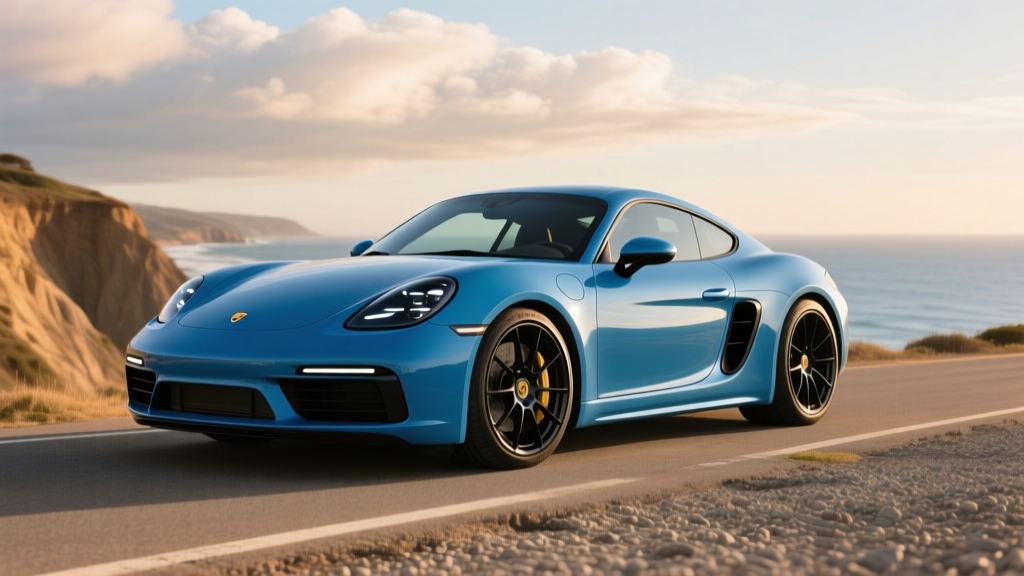
The all-electric Porsche 718 Cayman (announced for late-2025/2026 delivery) replaces the mid-engine flat-four and flat-six sports car with a dual-motor, 800-volt battery-electric platform derived from the Macan EV architecture. Expect an EPA-estimated range near 260–290 miles (depending on trim and wheel size), peak DC fast charging around 270 kW, and a starting MSRP likely between $82,000–$95,000 before incentives. It is not eligible for the full §30D federal tax credit due to Porsche's German battery sourcing and MSRP caps, though point-of-sale lease incentives may apply. The electric Cayman makes sense for buyers who want a daily-drivable electric sports car with Porsche dynamics and already have reliable Level 2 home charging. It does not make sense as a sole vehicle for frequent 400+ mile road-trippers or anyone without consistent charging access.
What Is the Electric Porsche 718 Cayman?
Porsche confirmed the next-generation 718 Boxster and 718 Cayman will go fully electric, riding on a sports-car-specific evolution of the PPE (Premium Platform Electric) architecture co-developed with Audi. Unlike the four-door Taycan or Macan EV, the electric 718 uses a shorter wheelbase and a lower, mid-ship battery layout designed to preserve the weight distribution and low center of gravity that define the Cayman's handling character.
The powertrain is expected to feature a dual-motor all-wheel-drive setup on higher trims (Cayman S, GTS, or GT4-equivalent) and a single rear-motor layout on the base model. Porsche has targeted a curb weight under 4,200 lbs — significantly lighter than the Taycan — by using a compact ~80 kWh usable battery pack with NMC (nickel-manganese-cobalt) chemistry optimized for power density rather than maximum capacity.
As of early 2026, Porsche has not published final EPA range or 0–60 figures for the U.S. market. The specs below are based on Porsche's European WLTP disclosures and PPE platform data, converted to realistic EPA expectations.
| Spec | Base (RWD est.) | Cayman S (AWD est.) |
|---|---|---|
| Battery (usable) | ~78 kWh NMC | ~80 kWh NMC |
| EPA Range (est.) | ~275–290 mi | ~255–270 mi |
| Peak DC Charge Rate | ~270 kW | ~270 kW |
| 10–80% DC Fast Charge | ~20 min | ~20 min |
| Level 2 AC Charging | 11 kW (std) / 22 kW (opt) | 11 kW (std) / 22 kW (opt) |
| Horsepower | ~335 hp | ~450+ hp |
| 0–60 mph (est.) | ~4.7 sec | ~3.4 sec |
| Base MSRP (est.) | $82,000–$86,000 | $95,000–$105,000 |
| Battery/Powertrain Warranty | 8 years / 100,000 mi (expected) | |
Note: All figures are preliminary estimates based on Porsche's PPE platform data and European pre-release information. Final U.S. EPA certifications and MSRP will be confirmed closer to delivery. Source: Porsche Newsroom.
Electric Cayman vs. Gas Cayman: Real Cost Comparison
The outgoing gas-powered 718 Cayman (2024 model year, final production) started at roughly $69,900 for the base 2.0L turbo four-cylinder and climbed past $100,000 for the GT4 RS. The electric version carries a higher base price, but operating costs tell a different story over five years of ownership.
| Category | Electric Cayman (est.) | Gas 718 Cayman 2.0T |
|---|---|---|
| Purchase Price (MSRP) | $84,000 | $69,900 |
| Federal Tax Credit (§30D) | $0–$3,750* | $0 |
| Fuel/Energy (5 yr / 60k mi) | $3,900** | $10,500*** |
| Maintenance (5 yr) | $1,800 | $5,200 |
| Insurance (5 yr avg.) | $14,500 | $11,200 |
| Estimated Depreciation (5 yr) | $33,600 (40%) | $28,000 (40%) |
| Total 5-Year Cost | ~$67,000 | ~$68,800 |
*The electric Cayman is unlikely to qualify for the full $7,500 §30D credit due to battery-component and critical-mineral sourcing rules (Porsche sources from non-FTA-partner supply chains for some cells). A partial $3,750 credit may apply if critical-minerals thresholds are met. Leased vehicles may pass through a lessor credit. Verify current eligibility at IRS.gov §30D.
**Based on $0.15/kWh national average home charging and 3.5 mi/kWh efficiency. Public DC fast charging would raise this to ~$5,500.
***Based on 24 MPG combined and $3.50/gal premium unleaded (93 octane required).
The electric Cayman reaches cost parity within roughly four years for drivers covering 12,000 miles annually, primarily due to the $6,600 fuel savings and $3,400 maintenance savings (no oil changes, spark plugs, or clutch replacements). Insurance runs 15–25% higher on the EV due to repair-cost data on battery-adjacent collision damage.
Real-World Range: What the EPA Number Won't Tell You
Porsche's sports cars prioritize performance over efficiency, and the electric Cayman will be no exception. Even with an EPA estimate near 280 miles on the base RWD trim, real-world conditions compress that figure meaningfully:
Real-World Range Expectations (Base RWD, ~280 mi EPA)
- City/suburban mixed driving (65°F): ~265–280 mi — regenerative braking recovers energy in stop-and-go traffic
- Highway sustained 75 mph (75°F): ~220–245 mi — aerodynamic drag dominates at speed; sports cars have higher drag coefficients than sedans
- Highway in cold weather (30°F): ~185–210 mi — battery resistance increases, cabin heating draws 2–4 kW continuously; expect 25–35% range loss
- Track day / aggressive canyon driving: ~120–150 mi equivalent — sustained high-power output (300+ kW draws) drains the pack rapidly
This is the critical ownership insight: the electric Cayman is a phenomenal daily driver and weekend canyon car, but it is not a cross-country road-trip vehicle without planning. On a 500-mile drive, you will need two DC fast-charge stops of ~20 minutes each (10–80%), assuming functional 270 kW chargers are available along your route. Porsche's 800V architecture and NACS adapter access to Tesla Superchargers (now standard on new PPE vehicles) help, but the sports-car form factor means a smaller battery than a Taycan or Macan EV.
The charging curve also matters. The 270 kW peak rate is sustained only between roughly 10–35% State of Charge. From 35–60%, expect ~180–200 kW. From 60–80%, the rate tapers to ~90–120 kW as the battery management system protects cell health. This is why the 10–80% time is ~20 minutes, not the ~12 minutes that a sustained 270 kW rate would imply. (For a refresher on kW vs. kWh: kW measures the rate of energy flow — like water pressure in a hose — while kWh measures total energy stored, like the size of the tank.)
Home Charging: What You Actually Need
The electric Cayman's 11 kW onboard AC charger (standard) replenishes the ~80 kWh battery from 0–100% in roughly 7.5 hours on a Level 2 home charger. The optional 22 kW onboard charger cuts this to ~4 hours but requires a 100-amp dedicated circuit — most U.S. residential panels need an upgrade to support this.
| Item | Cost Range | Notes |
|---|---|---|
| Level 2 EVSE (40–48A, 240V) | $500–$1,200 | Porsche Mobile Charger Connect or ChargePoint Home Flex |
| Electrician: 50A circuit install | $800–$2,500 | Depends on panel proximity; garage runs are cheaper |
| Panel upgrade (if needed, 200A service) | $2,000–$4,500 | Required if existing panel is 100A or near capacity |
| Permit and inspection | $100–$400 | Varies by municipality |
| Total typical install | $1,400–$3,600 | Without panel upgrade: $1,400–$2,200 |
If you live in an apartment or condo without dedicated parking and charging access, the electric Cayman is a significantly harder ownership proposition. Public DC fast charging works, but relying on it exclusively costs roughly 2.5× more per mile than home charging and adds 20–40 minutes to your routine several times per week. Porsche's charging network access includes Electrify America and Tesla Superchargers (via NACS adapter), but fueleconomy.gov efficiency data assumes a mix of home and public charging for its cost estimates.
Federal Tax Credits and Incentives: What Applies in 2026
The §30D Clean Vehicle Credit has strict requirements that work against the electric Cayman:
- MSRP cap: $55,000 for sedans/coupes — the Cayman's ~$82,000+ MSRP exceeds this, disqualifying it from §30D purchase credit entirely
- Buyer income cap: $150,000 single / $300,000 joint — likely not the limiting factor for Cayman buyers
- Battery sourcing: Critical minerals and battery components must meet escalating percentages from FTA-partner nations — Porsche's supply chain currently falls short
- Lease loophole (§45W): Commercial lessors may claim a $7,500 credit and pass savings through as a lease capital-cost reduction; this is the most realistic path to incentive savings on a Cayman
State incentives vary widely. California's CVRP program, Colorado's innovative vehicle credit, and various utility rebates may apply — check your state's energy office and local utility for current programs.
Decision Framework: Is the Electric Cayman Right for You?
Buy the Electric Cayman If:
- You have Level 2 home charging (garage or dedicated driveway outlet)
- Your daily driving is under 80 miles round-trip, with weekend canyon/back-road use
- You want instant torque (electric motors deliver peak torque at 0 RPM) and a lower center of gravity than the gas mid-engine layout
- You're comfortable leasing to capture the §45W commercial credit and avoid long-term battery degradation risk
- You already own or plan to keep a second vehicle for long road trips
Skip It (or Wait) If:
- You rely on street parking with no charging access — public-only charging is expensive and inconvenient for a daily sports car
- You regularly drive 300+ miles in a single day — the ~250-mile real-world highway range means mandatory stops
- You live in extreme cold climates (sustained sub-20°F winters) where 30%+ range loss turns 280 EPA miles into 190 real miles
- You want the emotional sound and mechanical engagement of a flat-six engine — EV silence is a feature or a bug depending on your philosophy
- You're budget-sensitive on purchase price — the gas 718 Cayman remains available on the used market at $55,000–$75,000
Common Misconceptions — Fact vs. Fiction
| Myth | Fact |
|---|---|
| "The electric Cayman will be too heavy to handle well." | Porsche targets under 4,200 lbs with a low-slung mid-ship battery. For context, the gas 718 Cayman weighs ~3,100–3,300 lbs, so there is a weight increase, but the center of gravity is lower and weight distribution is near 50/50. The Macan EV (4,900+ lbs) already demonstrates Porsche's ability to mask mass through rear-wheel steering and active suspension. |
| "EV batteries need replacing every 5 years." | NMC batteries in 800V PPE platforms are engineered for 1,500+ full charge cycles before reaching 80% capacity. At 12,000 miles/year, that's 200,000+ miles before meaningful degradation. Porsche's expected 8-year/100,000-mile battery warranty covers capacity below 70%. Replacement cost, if needed out of warranty, is estimated at $18,000–$25,000 for an 80 kWh pack. |
| "I'll save $7,500 on taxes." | The Cayman's MSRP exceeds the §30D cap for coupes ($55,000). The purchase credit is $0. Leasing may unlock a pass-through credit via §45W, but this depends on the lessor and is not guaranteed. |
| "It charges in 10 minutes." | The 270 kW peak rate applies only to a narrow SoC window. A realistic 10–80% session takes ~20 minutes at a capable 350 kW charger. At a 150 kW Electrify America station, expect ~30 minutes. |
| "Electric sports cars have no soul." | Subjective, but the instant torque vectoring, lower polar moment of inertia, and one-pedal regen braking create a different — not lesser — engagement model. Porsche's synthetic sound system (optional) addresses the auditory feedback gap. |
Frequently Asked Questions
Will the electric Cayman have a manual transmission or simulated gears?
Porsche has not confirmed a manual-equivalent experience, but the Taycan uses a two-speed rear axle (for launch and efficiency), and the Macan EV uses simulated shift points in Sport mode. Expect the electric Cayman to offer configurable regen levels and possibly simulated gear-change feedback, but no physical clutch or manual gearbox.
Can I tow with the electric Cayman?
No. The 718 platform — gas or electric — is not rated for towing. If you need tow capability, the electric Macan (up to 4,400 lbs) is Porsche's electric option for that use case.
How does the electric Cayman compare to the Tesla Roadster or Lotus Emeya?
The Tesla Roadster (announced, repeatedly delayed, still not in production as of 2026) targets a different buyer — pure acceleration stats over chassis balance. The Lotus Emeya is a four-door grand tourer, not a mid-engine sports car analog. The electric Cayman's closest competitor is arguably the upcoming electric Alpine A110 or the BMW iM2 (if produced). The Cayman's advantage is Porsche's dealer network, build quality, and motorsport-derived thermal management for sustained track use.
What happens if I drive the battery to 0%?
Porsche's battery management system reserves a ~5% bottom buffer (hidden from the displayed SoC). When the gauge reads 0%, roughly 4 kWh remains for limp-mode movement. The car will not strand you instantly, but you should treat 5% as your functional zero and plan charging accordingly. Towing a depleted EV requires a flatbed — never tow it with wheels on the ground, as the motors will generate uncontrolled current.
Is the electric Cayman eligible for any state incentives?
State incentives vary and change frequently. States like Colorado, California, Massachusetts, and New York offer rebates or tax credits that may apply regardless of MSRP caps. Check your state's energy department or use the Alternative Fuels Data Center incentive lookup tool for current programs in your area.