Quick Answer: Is an Electric Police Motorbike Right for Your Fleet?
An electric police motorbike can cut fuel and maintenance costs dramatically for municipal patrol, but the economics depend entirely on duty cycle. For urban patrol with predictable routes under 80 miles per shift and depot charging access, platforms like the Zero DSR/X and LiveWire S2 Del Mar offer 80–146 miles of real-world range, near-silent operation, and fuel savings of $1,200–$1,800 per unit annually. For highway interdiction, extended rural patrol, or departments without depot charging infrastructure, a conventional gasoline police motorcycle (BMW R 1250 RT-P, Harley-Davidson FLHP) remains the practical choice in 2026. The upfront premium for electric units runs $8,000–$14,000 higher than gas equivalents, with payback typically occurring at 36–54 months depending on mileage and local electricity rates.
What Is an Electric Police Motorbike — And Who Makes Them?
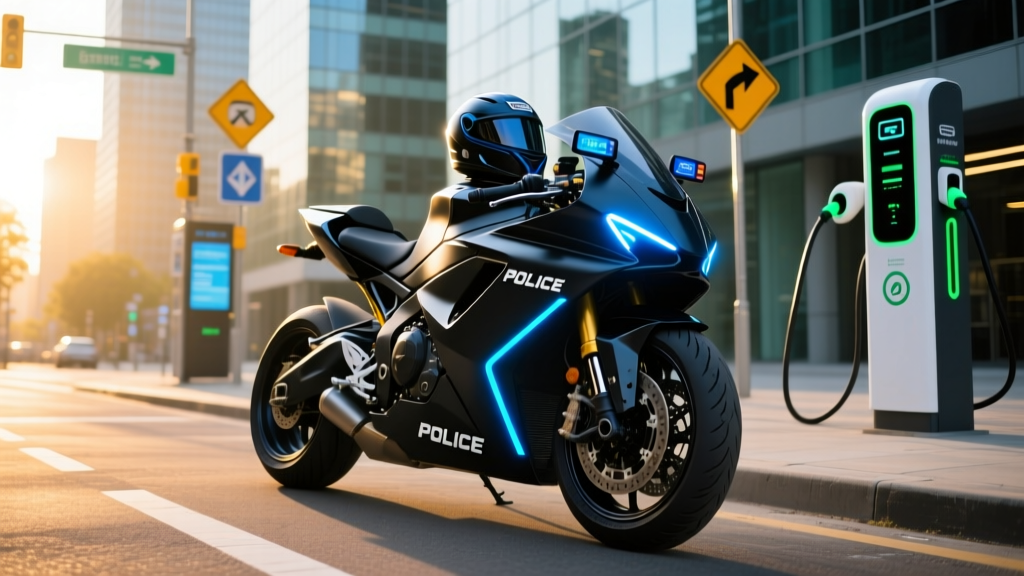
The term "electric police motorbike" refers to battery-electric motorcycles configured for law enforcement patrol, typically equipped with emergency lighting, radio racks, saddlebags, and pursuit-rated components. Unlike consumer EVs, these are purpose-built or upfitted from existing platforms by specialized manufacturers and police equipment upfitters.
The primary platforms available to US fleet buyers in 2026 include:
- Zero Motorcycles DSR/X (Police Package): 17.3 kWh battery (Z-Force Li-Ion NMC), claimed city range of 176 miles, highway range approximately 88 miles at 70 mph sustained. Peak power: 100 HP. Peak DC charge rate: 6 kW via optional Charge Tank accessory (adds ~66 miles per hour of charging). Level 1/Level 2 onboard charging at 1.3 kW standard. MSRP approximately $24,495 before police upfit packages, which typically add $4,000–$7,000 for lighting, radio, and pursuit accessories.
- LiveWire S2 Del Mar (Fleet/LE variant): 15.4 kWh battery (NMC chemistry), EPA-estimated range of 113 miles city, approximately 70 miles highway. Peak power: 84 HP. DC fast charging via CCS at up to 24 kW (0–80% in approximately 35 minutes). MSRP approximately $15,999 base; LE/fleet packages are announced but pricing varies by upfitter.
- Harley-Davidson LiveWire ONE: The original LiveWire platform remains in some fleet inventories but has been superseded by newer S2 models. 15.5 kWh battery, 146 miles city / 95 miles highway (EPA). DC fast charge to 80% in approximately 40 minutes at 24 kW.
Smaller manufacturers such as Damon Motorcycles (Vancouver-based) and various Chinese-market platforms (NIU, CFMOTO electric lines) are in various stages of fleet availability but lack the US dealer and service infrastructure that municipal procurement typically requires.
Electric vs Gas Police Motorcycles: The Numbers
Fleet procurement decisions hinge on total cost of ownership, not sticker price. Here is how a representative electric police motorbike compares against a conventional gasoline patrol motorcycle over a 5-year, 60,000-mile duty cycle:
| Category | Zero DSR/X (Electric) | BMW R 1250 RT-P (Gas) |
|---|---|---|
| Base MSRP + Upfit | $29,500 | $21,000 |
| Fuel/Energy (60k mi) | $1,440 ($0.13/kWh avg) | $7,200 ($3.60/gal, 50 MPG) |
| Scheduled Maintenance | $800 (tires, brake fluid, cabin filter) | $4,200 (oil, filters, valves, chain, tires) |
| Brake Replacement | $0 (regen extends pad life 3–5x) | $600 (2 sets front pads) |
| Insurance (fleet avg) | $4,800 | $4,500 |
| Estimated Resale (5yr) | -$6,000 | -$8,500 |
| Total 5-Year Cost | $30,540 | $28,800 |
| Cost Per Mile | $0.51 | $0.48 |
The electric platform costs approximately $1,740 more over five years in this scenario. However, this calculation is highly sensitive to fuel prices, annual mileage, and electricity rates. Departments running higher mileage (80,000+ miles over 5 years) or operating in states with higher gasoline costs (California, New York) will see the electric option break even or come out ahead.
The intangible advantages — silent operation for stealth approaches, zero exhaust exposure for officers in stationary traffic posts, instant torque for low-speed maneuvering — are difficult to quantify but consistently cited by fleet managers who have adopted electric units.
Range Reality: What the EPA Sticker Doesn't Tell You
This is where fleet buyers encounter the biggest gap between marketing and operational reality. Electric motorcycle range is extraordinarily sensitive to speed, unlike electric cars which benefit from aerodynamic efficiency at highway speeds. A motorcycle's upright riding position and exposed rider create a drag profile that increases energy consumption dramatically above 45 mph.
Real-World Range Expectations: Zero DSR/X Police Package
EPA City (sticker): 176 miles
EPA Highway (70 mph sustained): 88 miles
Real-world patrol mix (stop-and-go, 25–45 mph avg): 120–140 miles
Cold-weather patrol (below 40°F, heater grips, lights): 90–110 miles
Pursuit/extended high-speed (70+ mph sustained): 65–80 miles
Source: Zero Motorcycles specifications and fleet operator reports. Actual range varies with rider weight, cargo, terrain, and ambient temperature.
For a typical 8-hour urban patrol shift covering 60–80 miles with periodic stationary posts, the DSR/X provides adequate range with a 30–40% battery buffer. For highway patrol units covering 150+ miles per shift, mid-shift DC fast charging would be required — adding 30–40 minutes of downtime that most highway patrol schedules cannot accommodate.
Battery chemistry matters here. The NMC (nickel manganese cobalt) cells used in Zero and LiveWire platforms offer high energy density but degrade faster under sustained high-temperature operation. Fleet managers should plan for approximately 10–15% capacity loss over 5 years of heavy use. Zero Motorcycles offers a 5-year/unlimited-mile battery warranty with a capacity retention threshold of 60%, which is industry-standard but means a unit could legally be "within warranty" while having lost 40% of its original range.
Charging Infrastructure: The Hidden Procurement Cost
An electric police motorbike is only as practical as the charging infrastructure supporting it. Fleet buyers must budget for depot charging installation alongside vehicle procurement.
| Level | Power (kW) | Miles Added Per Hour | 0–100% Time | Infrastructure Needed |
|---|---|---|---|---|
| Level 1 (120V standard outlet) | 1.3 kW | ~13 miles | ~13 hours | Standard outlet, no electrician |
| Level 2 (240V, J1772) | 3.3 kW (with Charge Tank: 6 kW) | ~33–66 miles | ~3.5–6.5 hours | 240V circuit, Level 2 EVSE ($500–$1,200 unit + $800–$2,500 install) |
| DC Fast (CCS — LiveWire only) | Up to 24 kW | ~140 miles | 0–80% in ~35 min | Public station or fleet DC charger ($15,000–$40,000 installed) |
Critical distinction: The Zero DSR/X does not support DC fast charging natively. Its maximum charge rate is 6 kW via Level 2 with the optional Charge Tank ($2,495 accessory). This means a fully depleted battery requires approximately 3 hours on Level 2 — feasible for overnight depot charging but impractical for mid-shift top-ups.
The LiveWire S2 Del Mar, by contrast, supports CCS DC fast charging at up to 24 kW, making mid-shift charging viable if a public or depot DC station is accessible. However, 24 kW is modest by EV standards (a Tesla Model Y charges at up to 250 kW) and reflects the smaller battery capacity and thermal constraints of motorcycle platforms.
For a fleet of 10 electric police motorcycles, expect to spend $15,000–$35,000 on Level 2 charging infrastructure installation (10 dedicated 240V circuits, EVSE units, electrical panel upgrades if needed). This is a one-time capital cost that should be amortized across the fleet's service life.
Total Cost Breakdown: Purchase, Energy, and Maintenance
| Expense | Electric (Zero DSR/X) | Gas (BMW R 1250 RT-P) | Annual Savings (EV) |
|---|---|---|---|
| Energy/Fuel | $288 (2,400 kWh @ $0.12/kWh) | $1,440 (240 gal @ $3.60/gal) | $1,152 |
| Oil & Filter Changes | $0 | $480 (4 changes/year) | $480 |
| Tires | $350 (1 rear tire/year) | $450 (1 rear, front every 2yr) | $100 |
| Brake Service | $0 (regen braking) | $120 (annual inspection/pad) | $120 |
| Chain/Sprocket | $0 (belt drive) | $200 (adjustment/replacement) | $200 |
| Coolant/Valves | $0 | $150 | $150 |
| Total Annual | $638 | $2,840 | $2,202 |
The operating cost advantage is substantial — approximately $2,200 per unit per year. Over a 5-year service life, that is $11,000 in operational savings per motorcycle. Whether this offsets the higher purchase price depends on the specific procurement cost and available incentives.
Federal incentives: Under IRS §30D clean vehicle credit rules, electric motorcycles may qualify for a federal tax credit of up to 10% of the vehicle cost, capped at $2,500 (note: the motorcycle credit structure differs from the $7,500 passenger vehicle credit). Eligibility requires the vehicle to be new, assembled by a qualified manufacturer, and the credit is subject to the buyer's tax liability. Municipal and government entities that do not pay federal income tax may be eligible for "direct pay" (elective payment) provisions under the Inflation Reduction Act, allowing them to receive the credit as a payment from the Treasury. Consult your municipal finance office and IRS elective pay guidance for current eligibility.
Common Misconceptions About Electric Police Motorbikes
| Myth | Fact |
|---|---|
| "Electric motorcycles can't keep up in a pursuit." | The Zero DSR/X produces 100 HP and 169 lb-ft of instant torque, with a 0–60 mph time under 4 seconds. Acceleration from 0–40 mph — the critical range for urban pursuit — is faster than most gas police motorcycles. Top speed is electronically limited to approximately 124 mph, adequate for most urban pursuits but a limitation for highway interdiction. |
| "The battery will need replacing and cost $20,000." | NMC motorcycle batteries in police service typically retain 85–90% capacity after 5 years of daily use. Zero's 5-year unlimited-mile battery warranty covers capacity below 60%. Full battery replacement (if out of warranty) runs $4,000–$6,000 — significant but not catastrophic, and rarely needed within a typical 5–7 year fleet lifecycle. |
| "You can't ride them in rain or cold." | Modern electric motorcycles carry IP67-rated battery enclosures and are fully rated for wet-weather operation. Cold weather (below 40°F) reduces range by 15–25% due to increased battery internal resistance and accessory loads (heated grips, lighting). This is a real operational constraint that must be factored into shift planning in northern climates. |
| "Charging takes too long for shift work." | Overnight depot charging on Level 2 (6 kW) fully replenishes a Zero DSR/X in approximately 3 hours. For departments running two shifts, mid-shift charging is a genuine constraint — the unit needs to be rotated to a charging stall. DC fast charging (LiveWire only) can add 50 miles in 20 minutes, making mid-shift top-ups viable. |
| "Electric motorcycles are silent — that's a safety hazard." | The near-silent operation at low speeds is actually a tactical advantage for community policing, stealth approaches, and noise-sensitive patrol zones (parks, residential areas at night). For traffic enforcement, officers report that the element of surprise increases citation effectiveness. The "safety hazard" of pedestrian awareness is mitigated by the motorcycle's physical presence and emergency lighting when activated. |
Decision Framework: Should Your Department Go Electric?
Choose an Electric Police Motorbike If:
- Your patrol routes are urban/suburban with average speeds under 50 mph
- Daily mileage per unit is under 80 miles per shift
- You have (or can install) depot Level 2 charging at your precinct
- Stealth and community-friendly patrol are operational priorities
- Your fleet cycles vehicles every 5–7 years (before significant battery degradation)
- Local electricity rates are below $0.15/kWh and gasoline exceeds $3.50/gallon
- Your department qualifies for federal elective pay or state fleet electrification grants
Stick With Gasoline Motorcycles If:
- Your primary mission is highway patrol with sustained 70+ mph operation
- Daily mileage regularly exceeds 120 miles per unit
- You operate in extreme cold climates (regular sub-20°F conditions) without heated garaging
- Your department lacks depot charging access and cannot budget for infrastructure
- You require rapid refueling (5-minute gas fill vs 30+ minute charge) for multi-shift operations
- Your procurement cycle cannot absorb the higher upfront cost even with operational savings
First-Time Electric Fleet Buyer Checklist
If your department is procuring its first electric police motorbike, these are the non-obvious considerations that experienced fleet managers emphasize:
- Electrical panel capacity: Before ordering vehicles, have a licensed electrician assess your precinct's electrical panel. Ten Level 2 chargers at 6 kW each draw 60 kW — most older municipal buildings will need a panel upgrade ($5,000–$15,000).
- Officer training: Electric motorcycles have fundamentally different throttle response (instant torque with no clutch), regenerative braking behavior, and weight distribution (low center of gravity from floor-mounted batteries). Budget 8–16 hours of familiarization training per officer.
- Maintenance contract: Unlike gas motorcycles, which any municipal mechanic can service, electric motorcycles require manufacturer-certified technicians for high-voltage system work. Confirm dealer support and response times in your area before procurement.
- Telematics and battery monitoring: Zero Motorcycles and LiveWire both offer fleet telematics platforms that track State of Health (SoH), charging patterns, and range utilization. Use this data from day one to optimize shift assignments and detect early battery degradation.
- Insurance: Fleet insurance for electric motorcycles is approximately 5–10% higher than gas equivalents due to higher replacement costs and limited actuarial data. Get quotes before finalizing procurement budgets.
- Resale planning: The secondary market for used electric police motorcycles is thin. Plan for trade-in to the manufacturer or decommissioning rather than auction sale. Expect 5-year residual values of 15–25% of MSRP, compared to 30–40% for well-maintained gas police motorcycles.
Frequently Asked Questions
What is the real-world range of an electric police motorbike on patrol?
For mixed urban patrol (stop-and-go, 25–45 mph average with stationary periods), expect 120–140 miles from a Zero DSR/X and 80–100 miles from a LiveWire S2 Del Mar. Highway-speed operation (70+ mph sustained) cuts these figures roughly in half. Cold weather below 40°F reduces range an additional 15–25%.
How much does it cost to charge an electric police motorcycle per shift?
At an average commercial electricity rate of $0.12/kWh, fully recharging a 17.3 kWh Zero DSR/X battery costs approximately $2.08. A gasoline police motorcycle covering the same distance at 50 MPG with $3.60/gallon fuel costs approximately $8.64. The per-shift energy savings is approximately $6.50.
Do electric police motorcycles qualify for federal tax credits?
Electric motorcycles may qualify for a federal tax credit of up to 10% of the purchase price, capped at $2,500, under IRS §30D provisions for qualified plug-in electric drive motor vehicles with 2 or 3 wheels. Municipal entities that do not pay federal income tax may use the "elective pay" (direct pay) provision to receive the credit as a Treasury payment. Eligibility rules are subject to change — consult the IRS clean vehicle credit page and your municipal finance office.
Can an electric police motorcycle handle a high-speed pursuit?
For urban pursuits (0–60 mph in under 4 seconds, top speed ~124 mph), electric police motorcycles are competitive with or superior to gasoline equivalents in acceleration. The limitation is sustained high-speed range: at 80+ mph, battery depletion accelerates rapidly, limiting pursuit duration to approximately 20–30 minutes of continuous high-speed operation before range becomes critical. For highway interdiction requiring extended high-speed operation, gasoline motorcycles remain more practical.
What happens if the battery degrades significantly?
NMC batteries in police service typically lose 10–15% capacity over 5 years of daily use. Zero Motorcycles warranties the battery for 5 years at unlimited miles with a 60% capacity retention threshold. If capacity falls below this threshold within the warranty period, Zero will replace or repair the battery at no cost. Out-of-warranty replacement runs $4,000–$6,000. Most fleet operators replace the entire vehicle at the 5–7 year mark rather than investing in battery replacement.
Are there electric police motorcycles with DC fast charging?
Yes. The LiveWire S2 Del Mar supports CCS DC fast charging at up to 24 kW, achieving 0–80% in approximately 35 minutes. The Zero DSR/X does not support DC fast charging; its maximum charge rate is 6 kW on Level 2 with the optional Charge Tank. If mid-shift rapid charging is operationally critical, the LiveWire platform is the current choice.