The Bottom Line on Electric Police Cars
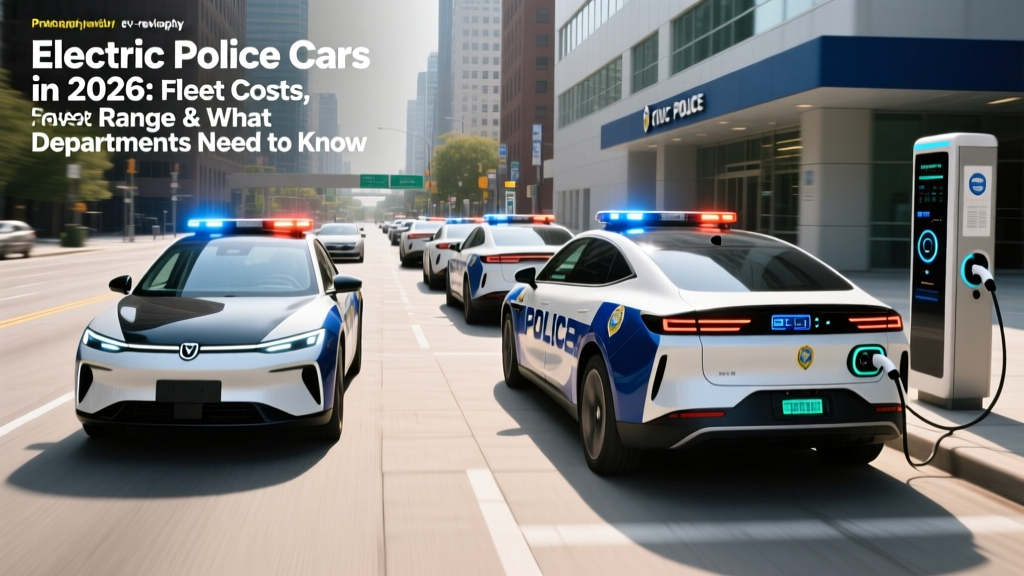
As of 2026, the Ford F-150 Lightning (Police Responder), Chevrolet Blazer EV PPV, and Dodge Charger Daytona EV (concept/pilot phase) represent the primary electric police vehicles entering U.S. fleets. Expect 230–320 miles of EPA range, $45,000–$72,000 base pricing before upfitting, and fuel and maintenance savings of $4,000–$7,000 per vehicle annually compared to gas interceptors. However, real-world pursuit driving, idle time, cold climates, and depot charging logistics can cut effective range by 25–40%. Electric police cars make the most sense for patrol, community policing, and administrative duties — not high-speed pursuit — and require careful depot-level charging infrastructure planning.
Which Electric Police Cars Are Actually Available in 2026?
Unlike the consumer EV market, the law enforcement vehicle segment moves slowly and is dominated by purpose-built or upfitted models. Here is what departments can actually order or pilot in 2026:
| Vehicle | Type | EPA Range | Battery (kWh) | Peak DC Charge (kW) | 10–80% Time | 0–60 mph | Base MSRP (Fleet) |
|---|---|---|---|---|---|---|---|
| Ford F-150 Lightning Police Responder | BEV Pickup | 230–320 mi (est. trim dependent) | 98–131 kWh (usable, NMC) | 150 kW (std) / 150 kW (ext) | ~41 min / ~44 min | ~4.5 sec (ext range) | ~$55,000–$72,000 |
| Chevrolet Blazer EV PPV | BEV Crossover | 279–324 mi (est.) | 85–102 kWh (usable, NMC) | 190 kW | ~28 min | ~4.5 sec (SS trim) | ~$52,000–$60,000 |
| Dodge Charger Daytona EV (Pilot) | BEV Sedan | ~317 mi (announced R/T) | 100.6 kWh (NMC) | ~175 kW | ~32 min (est.) | ~4.3 sec (R/T) | ~$55,000 (consumer; fleet TBD) |
| Tesla Model Y (Aftermarket Upfit) | BEV Crossover | 303–320 mi | 75 kWh (LFP, rear-drive) | 170 kW | ~25 min | ~5.0 sec (LR) | ~$44,000–$50,000 |
The Ford F-150 Lightning Police Responder is the most widely deployed electric police vehicle in North America as of 2026, with agencies in California, Michigan, and Texas operating them in patrol roles. The Chevy Blazer EV PPV (Pursuit Rated) entered limited fleet delivery in late 2024 and is ramping up for 2026 model-year orders. The Dodge Charger Daytona EV remains in pilot and evaluation phases with a few departments, while Tesla Model Ys are being used by smaller agencies and university police via aftermarket emergency equipment upfits — though Tesla does not sell a factory pursuit-rated variant.
Real-World Range: What Patrol Driving Actually Does to an EV
EPA range estimates are measured under controlled conditions that do not reflect law enforcement driving patterns. Departments evaluating electric police cars must account for three major range-reduction factors:
Real-World Range Expectations for Police Use
EPA Sticker: 320 miles (F-150 Lightning Extended Range)
Patrol Reality (mixed driving, idle, equipment load): ~180–240 miles
Pursuit or high-speed response: ~120–160 miles before needing a charge
Cold weather (below 32°F, heater running): Subtract 20–35% from above figures
Why the gap? Police vehicles idle extensively (a gas interceptor idles at ~0.5–1 gal/hour; an EV draws ~1–3 kW for HVAC and electronics, which is more efficient but still drains the battery over a 10-hour shift). Light bars, radios, laptops, and other auxiliary equipment add 1–2 kW of continuous draw. Aggressive acceleration during response calls increases energy consumption to 4–5 kWh/mile compared to the EPA's test cycle of roughly 2–2.5 kWh/mile.
Cold weather compounds the problem. Lithium-ion batteries lose efficiency below freezing, and cabin heating (without a heat pump, which the F-150 Lightning does include) can draw 4–6 kW. Northern departments in states like Minnesota, Michigan, and Maine should plan for effective winter range of 130–180 miles for a typical shift.
Cost Comparison: Electric Police Cars vs. Gas Interceptors
The financial case for fleet electrification hinges on total cost of ownership (TCO), not sticker price. Gas-powered pursuit vehicles like the Ford Explorer Police Interceptor Utility (the dominant gas police SUV) have a lower purchase price but higher operating costs over a 5-year, 100,000-mile service life.
| Cost Factor | Ford F-150 Lightning Police Responder (BEV) | Ford Explorer PIU Hybrid (Gas/HEV) |
|---|---|---|
| Base Vehicle MSRP (fleet) | $55,000–$72,000 | $42,000–$48,000 |
| Upfit (lights, cage, radio, wrap) | $8,000–$15,000 | $8,000–$15,000 |
| Fuel/Energy (100k mi, national avg) | $3,500–$5,500 (electricity at $0.12–$0.18/kWh) | $10,500–$14,000 (gas at $3.20–$3.80/gal, 17–20 MPG) |
| Maintenance (5 years) | $2,500–$4,000 | $7,000–$10,000 |
| Brake Replacement | $0–$500 (regen extends pad life 2–3×) | $1,500–$2,500 (2–3 replacements) |
| Oil Changes / Fluids | $0 | $1,200–$1,800 |
| Depot Charging Infrastructure (per vehicle share) | $3,000–$8,000 | $0 |
| Estimated 5-Year TCO | $72,000–$105,000 | $69,000–$91,000 |
Key takeaway: Electric police vehicles cost more upfront but save $5,000–$9,000 in fuel and maintenance over five years. The break-even point typically occurs at year 4–5, depending on local electricity rates and gas prices. Departments with high idle times (urban patrol, school zones, community events) see the fastest payback because EVs don't burn fuel while stationary.
However, charging infrastructure is the wildcard. Installing depot-level Level 2 chargers (typically 11.5–19.2 kW per stall) costs $2,500–$6,000 per charger, plus potential electrical panel upgrades and trenching. A 20-vehicle fleet might need $50,000–$150,000 in depot charging investment before the first EV arrives. DC fast chargers (50–150 kW) for mid-shift top-ups add $25,000–$80,000 each.
Charging Logistics: Depot, Shift Patterns, and the Downtime Problem
Unlike gas interceptors that refuel in 5 minutes at any station, electric police cars require strategic charging planning. Most departments adopt one of these models:
Depot Overnight Charging (Level 2): The most common approach. Vehicles charge at the station between shifts using 11.5–19.2 kW Level 2 chargers. An F-150 Lightning with a 131 kWh battery takes roughly 7–11 hours for a full charge at 19.2 kW — sufficient for overnight turnaround. Cost per full charge: approximately $16–$24 at commercial electricity rates.
Mid-Shift DC Fast Charging: For 24-hour patrol operations or high-mileage assignments, a 50–150 kW DC fast charger at the depot can add 80–150 miles in 20–30 minutes. This works during meal breaks or report-writing downtime but requires careful scheduling.
Public Charging (Not Recommended for Patrol): Relying on Electrify America, EVgo, or Tesla Superchargers is impractical for marked units due to availability uncertainty, payment logistics, and the optics of an officer sitting at a retail charger during a shift.
Common Misconceptions About Electric Police Cars
| Myth | Fact |
|---|---|
| "EVs can't handle pursuit driving." | The F-150 Lightning produces 563 hp and 775 lb-ft of torque, with a 0–60 time under 5 seconds. Instant torque gives strong initial acceleration. However, sustained high-speed pursuit drains the battery rapidly, and most agencies reserve EVs for patrol and response, not primary pursuit. |
| "Officers will get stranded on shift." | With proper shift planning and depot charging, range is manageable for patrol. Most patrol shifts cover 80–150 miles, well within real-world EV range. The risk is real, however, for unplanned high-speed events or extended rural coverage. |
| "EVs are cheaper to own, period." | Upfront cost and charging infrastructure investment mean TCO parity takes 4–5 years. Small departments with low mileage or existing gas infrastructure may not see savings within a vehicle's service life. |
| "Electric police cars qualify for the $7,500 federal tax credit." | Federal fleet purchases by government entities do not qualify for the §30D credit directly. However, municipalities can benefit from the elective pay provision under the Inflation Reduction Act, which allows tax-exempt entities to receive a direct payment equivalent to the credit amount if the vehicle meets sourcing requirements. |
| "EV batteries won't last in a police vehicle." | Ford and GM warrant their EV batteries for 8 years/100,000 miles at 70% capacity retention. Most police vehicles are retired from frontline duty at 100,000–150,000 miles. Degradation data from consumer F-150 Lightnings shows ~8–12% capacity loss at 100,000 miles under normal use. |
Pursuit Performance and Safety: What the Data Shows
The Michigan State Police conducts annual vehicle evaluations that are the gold standard for law enforcement procurement decisions. Their testing includes acceleration, braking, fuel economy (or energy consumption), and emergency handling.
In recent evaluations, the F-150 Lightning Police Responder demonstrated:
- 0–60 mph: ~4.5 seconds (extended range AWD)
- 0–100 mph: ~12.8 seconds
- 60–0 mph braking: ~130 feet (with upfit weight)
- High-speed loop lap times: Competitive with V-8 gas interceptors on initial acceleration, with falloff at sustained speeds above 100 mph due to single-speed transmission and battery thermal limits
The key limitation is thermal management under sustained high-speed driving. Battery and motor temperatures rise quickly during pursuit, and the vehicle's software will limit power output to protect components. This makes EVs excellent for short response bursts but less suited to extended 20-minute pursuits at 100+ mph.
From a safety perspective, EVs carry advantages: a lower center of gravity (battery pack under the floor) reduces rollover risk, and the heavier overall weight improves crash energy absorption. The F-150 Lightning earned the IIHS Top Safety Pick designation in consumer testing. However, the added weight (the Lightning weighs ~6,200–6,800 lbs depending on battery) increases stopping distances and tire wear compared to lighter gas interceptors.
Decision Framework: Should Your Department Go Electric?
Choose Electric Police Vehicles If:
- Your fleet operates primarily in urban or suburban patrol with shifts under 150 miles
- You have (or can build) depot charging infrastructure with Level 2 chargers at the station
- Your department has high idle-time assignments (school zones, community events, traffic enforcement) where gas burn at idle is significant
- You're in a state or municipality with EV fleet mandates or grant funding (California's CARB Advanced Clean Fleets rule, for example)
- Your total cost of ownership analysis shows break-even within the vehicle's service life (typically 5+ years, 80,000+ miles)
Stick With Gas or Hybrid Interceptors If:
- Your jurisdiction covers rural areas with long response distances and no public DC fast charging
- Your department regularly engages in high-speed pursuit as a primary function
- You operate in extreme cold climates (regularly below 0°F) where range loss exceeds 35%
- Your fleet is small (under 10 vehicles) and charging infrastructure costs would exceed per-vehicle savings
- Your current gas interceptors are already paid off and functional — premature replacement rarely saves money
What a First-Time Fleet EV Buyer Needs to Know
If your department is evaluating its first electric police vehicle, these practical realities are not always obvious from manufacturer presentations:
- Order lead times are long. Fleet-spec EVs, especially the F-150 Lightning Police Responder, can have 6–12 month delivery windows. Plan procurement cycles accordingly.
- Upfitters are still catching up. Not all emergency equipment installers have experience with high-voltage EV platforms. Ensure your upfitter understands the battery pack location, high-voltage cable routing, and auxiliary power tap points to avoid damaging the vehicle or voiding warranties.
- Training is non-negotiable. Officers need to understand charge management, regenerative braking behavior (one-pedal driving can be disorienting initially), and the importance of plugging in at end of shift. First-responder training on high-voltage safety for crash scenes is also required.
- Software and telematics matter. Ford Pro and GM's BrightDrop/Fleet platforms offer real-time state-of-charge monitoring, route optimization, and charge scheduling. Use them — manual charge tracking across a fleet is unsustainable.
- Plan for electrical upgrades. Many police stations were built with 200–400 amp electrical service. Adding 10 Level 2 chargers at 19.2 kW each requires ~192 kW of capacity — likely necessitating a utility service upgrade to 800+ amps. Budget $20,000–$80,000 for panel and service upgrades, and engage your utility early.
The Road Ahead: What's Coming for Electric Police Fleets
Several developments will shape the electric police car landscape through 2028:
- Canoo and other startup EV platforms have announced purpose-built law enforcement concepts, but none have reached production or passed MSP evaluation as of early 2026.
- Vehicle-to-load (V2L) capability — available on the F-150 Lightning — allows the vehicle to power emergency scene lighting, command posts, or even residential backup power during disasters. This is a unique operational advantage over gas vehicles.
- Battery technology improvements (larger packs, faster charging via NMC cell refinements) are expected to push real-world patrol range above 250 miles consistently by 2027–2028 model years.
- Federal and state grant programs — including EPA Clean School Bus and Clean Heavy-Duty Vehicle programs, as well as DOJ community policing grants — increasingly favor or require electrification, making the upfront cost gap easier to close.
Electric police cars are not a universal solution in 2026, but for the right use case — urban patrol, community policing, and departments with depot charging — they deliver measurable fuel and maintenance savings, strong acceleration performance, and operational flexibility that gas interceptors cannot match.
Can electric police cars pursue suspects at high speed?
Yes, but with caveats. The F-150 Lightning Police Responder hits 0–60 mph in ~4.5 seconds and has been pursuit-rated by Ford. However, sustained high-speed driving (above 100 mph for extended periods) causes battery thermal throttling and rapid range depletion. Most agencies using EVs assign them to patrol and community policing, keeping gas or hybrid interceptors available for primary pursuit roles.
How much does it cost to charge an electric police car per shift?
Assuming a 120-mile patrol shift consuming ~35–45 kWh (accounting for auxiliary loads and aggressive driving), and a commercial electricity rate of $0.12–$0.18/kWh, the per-shift energy cost is approximately $4.20–$8.10. Compare this to a gas interceptor averaging 14 MPG over 120 miles at $3.50/gallon: ~$30.00 per shift in fuel.
Do electric police vehicles qualify for federal tax incentives?
Government entities cannot claim the §30D consumer tax credit. However, under the IRA's elective pay provision, tax-exempt organizations including municipalities, tribal governments, and state agencies can receive a direct payment from the IRS equivalent to the credit amount (up to $7,500) if the vehicle meets battery sourcing and MSRP requirements. Consult your municipal finance office and a tax professional for eligibility.
What happens if an electric police car runs out of charge on shift?
The vehicle will need to be towed to a charger — there is no portable refueling equivalent to a gas can. This is why fleet managers build in a 20–30% range buffer and require officers to monitor state of charge. Modern fleet telematics (Ford Pro, GM Fleet) alert dispatch when a vehicle drops below a configurable threshold (e.g., 25% SoC).
Are electric police cars safer in crashes?
EVs generally perform well in crash testing due to their rigid battery-pack structure and low center of gravity. The F-150 Lightning earned top ratings from NHTSA and IIHS in consumer variants. However, first responders need specific training on high-voltage system identification and safe extrication procedures, which differ from gas vehicle protocols. NFPA provides Emergency Response Guides for all major EV models.