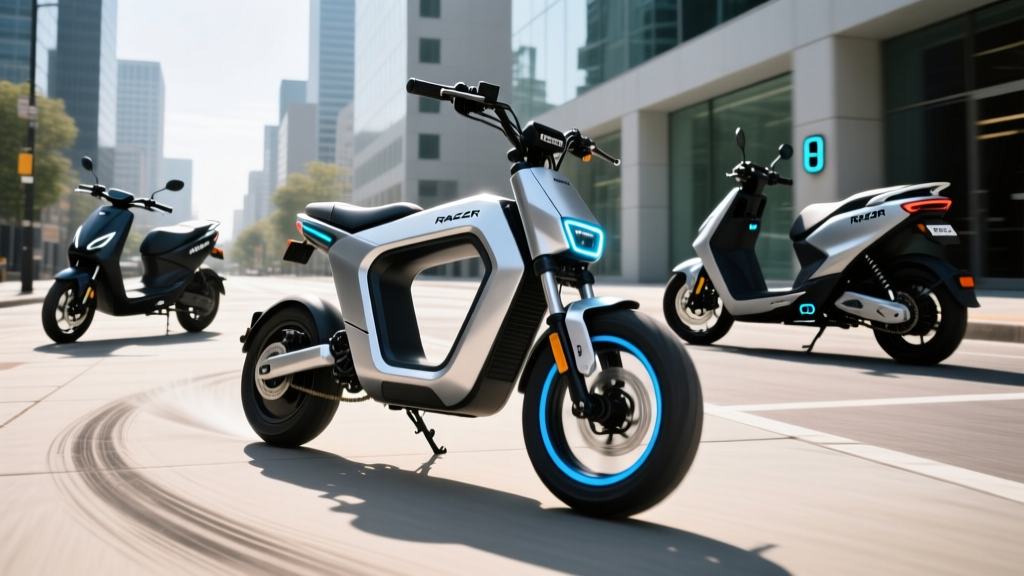
Short answer: A Razor-style electric pocket bike (e.g., Razor MX350/MX400/MX650) delivers 10–14 miles of real-world range, tops out at 14–17 mph, and fully recharges in 8–12 hours on a standard 120V outlet. Expect to pay $350–$1,000 upfront, pennies per charge, and zero fuel or oil maintenance. It is not a street-legal EV and does not qualify for the federal §30D tax credit. For closed-course kids' riding or driveway fun, it works; for any commute or road use, look at a street-legal electric scooter or moped instead.
What an Electric Pocket Bike Actually Is (and Isn't)
Razor's electric pocket bikes — the MX350, MX400, and MX650 — are scaled-down, battery-powered dirt bikes aimed at riders aged 7–14. They are classified as toys, not motor vehicles. That distinction matters: they cannot be registered, insured for road use, or ridden on public streets in virtually every U.S. jurisdiction.
These are low-speed, lead-acid-battery machines designed for backyard tracks and cul-de-sacs. If you're researching an electric pocket bike Razor model expecting something that replaces a gas mini-moto or commuter scooter, reset expectations now. For road-legal electric two-wheelers, see the decision framework at the end of this guide.
Razor MX Lineup: Specs at a Glance
| Spec | MX350 | MX400 | MX650 |
|---|---|---|---|
| Motor | 250W chain-driven | 350W chain-driven | 650W chain-driven |
| Top Speed | 14 mph | 14 mph | 17 mph |
| Battery | 24V (2×12V 7Ah SLA) | 24V (2×12V 7Ah SLA) | 36V (3×12V 7Ah SLA) |
| Usable Energy | ~0.17 kWh | ~0.17 kWh | ~0.25 kWh |
| Claimed Range (continuous) | ~10 mi / 30 min | ~10 mi / 30 min | ~10 mi / 40 min |
| Real-World Range (stop-start) | 5–7 mi | 5–7 mi | 7–10 mi |
| Charge Time (0–100%) | ~12 hrs | ~12 hrs | ~12 hrs |
| Rider Weight Limit | 140 lbs | 140 lbs | 220 lbs |
| MSRP (approx.) | $350–$400 | $400–$450 | $900–$1,000 |
Sources: Razor official product pages. Range figures reflect typical stop-start riding; continuous-use claims are measured under ideal flat-terrain conditions.
Battery Chemistry: Sealed Lead-Acid vs. Lithium
All current Razor pocket bikes use sealed lead-acid (SLA) batteries, not the lithium-ion (NMC or LFP) cells found in modern EVs and premium e-bikes. This has real ownership consequences:
- Weight: SLA packs add 15–25 lbs of dead weight, hurting power-to-weight ratio.
- Cycle life: Expect 200–300 full charge cycles before noticeable capacity loss (vs. 1,000+ for NMC, 3,000+ for LFP).
- Replacement cost: A new SLA pack runs $40–$90 depending on voltage. Budget for a swap every 1–2 years with regular use.
- Charge speed: SLA chemistry charges slowly and must not be deep-discharged below 50% SoC regularly, or lifespan drops sharply.
Aftermarket lithium conversion kits (24V/36V LiFePO4 packs) exist for $150–$300 and cut charge time to 3–4 hours while doubling usable range. However, they void the warranty and require basic electrical skill to install safely.
Cost Breakdown: Electric Pocket Bike vs. Gas Mini-Moto
| Cost Factor (1 year, 100 hrs use) | Razor MX650 (Electric) | Gas Mini-Moto (50cc 2-stroke) |
|---|---|---|
| Purchase Price | $950 | $1,200–$1,800 |
| Fuel / Electricity | $3–$5 (avg $0.15/kWh) | $120–$180 (gas + 2-stroke oil) |
| Maintenance (oil, spark plug, air filter) | $0 | $60–$100 |
| Battery Replacement (if needed Yr 1) | $70 | N/A |
| Total Year 1 | $1,020–$1,025 | $1,380–$2,080 |
| Annual Running Cost (Yr 2+) | $70–$75 | $180–$280 |
At roughly 0.25 kWh per full charge (MX650) and a national average electricity rate of $0.15/kWh, each "fill-up" costs about $0.04. A comparable gas mini-moto burning 1.5 gallons per 100 hours at $3.50/gallon costs $5.25 in fuel alone — before oil mix. Over 100 hours, the electric pocket bike saves $100–$200 annually in fuel and maintenance.
Real-World Ownership: What First-Time Buyers Miss
Here are the practical realities that spec sheets don't highlight:
- No fast charging. There is no DC fast-charging equivalent. You plug into a standard 120V wall outlet and wait 8–12 hours. Overnight charging is the only practical strategy.
- Range drops in cold weather. SLA batteries lose 20–40% capacity below 40°F. A 10-mile summer range can shrink to 5–6 miles on a cold autumn day.
- No regenerative braking. Unlike EVs with regen, these bikes coast to a stop via mechanical disc or drum brakes. Energy recovery is zero.
- Storage matters. SLA batteries self-discharge at ~5% per month. Store a pocket bike for winter without a maintenance charger and you'll return to a dead pack.
- Noise advantage. At 60–70 dB, the electric motor is dramatically quieter than a 2-stroke engine at 90+ dB — a real factor in residential neighborhoods.
Common Misconceptions
| Myth | Fact |
|---|---|
| "It qualifies for the $7,500 EV tax credit." | No. The IRS §30D credit applies to qualified plug-in electric motor vehicles with 4+ wheels meeting specific MSRP, income, and battery-sourcing requirements. Pocket bikes are classified as off-road toys (IRS §30D rules). |
| "Lithium battery means it charges like a Tesla." | Razor uses SLA chemistry. Even aftermarket LiFePO4 conversions charge at ~100–200W — nowhere near the 50–350 kW DC fast-charging of a four-wheel EV. |
| "10-mile range is enough for neighborhood riding." | For a 30-minute session, yes. But stop-start riding with a heavier rider on inclines can cut range to 5 miles. Plan accordingly. |
| "It's basically an electric motorcycle." | At 14–17 mph and 140–220 lb limits, it's a powered toy. Street-legal electric motorcycles (Zero, LiveWire) start at 60+ mph and $8,000+. |
Decision Framework: Is a Razor Electric Pocket Bike Right for You?
Choose a Razor electric pocket bike if:
- The rider is 7–14 years old and under the weight limit
- Riding will happen on private property or closed tracks only
- You want near-zero maintenance and silent operation
- Budget is under $1,000 and overnight charging works for your schedule
- You accept 5–10 miles of real range per charge
Look elsewhere if:
- You need street-legal transportation (consider a Segway e-bike, Super73, or Razor E Prime electric scooter for bike lanes)
- The rider exceeds 220 lbs or needs speeds above 17 mph
- You need quick turnaround between rides (SLA charge time is a dealbreaker without a spare battery pack)
- You want lithium-ion reliability and 3+ years of battery life without replacement
Frequently Asked Questions
How far can a Razor electric pocket bike actually go?
Razor claims up to 10 miles of continuous use on the MX350/MX400 and 40 minutes on the MX650. In real-world stop-start riding with a rider near the weight limit, expect 5–7 miles for the 24V models and 7–10 miles for the 36V MX650. Hills, cold weather, and aggressive throttle use reduce this further.
How long does it take to charge?
Approximately 12 hours from a fully depleted state on a standard 120V household outlet. The included charger outputs roughly 30–40W. There is no fast-charge option from Razor. Aftermarket lithium battery conversions can reduce this to 3–4 hours.
Can I ride a Razor pocket bike on the street?
No. Razor electric pocket bikes are classified as off-road toys, not motor vehicles. They lack DOT-required equipment (headlights, turn signals, mirrors, horn, VIN) and cannot be registered or insured for road use in any U.S. state.
Do I need to register or insure it?
For off-road use on private property, no registration or insurance is required. However, homeowner's insurance may or may not cover theft or liability — check your policy. Some parks and tracks require proof of insurance for organized events.
How does it compare to a gas-powered mini dirt bike?
A 50cc gas mini-moto (e.g., Honda CRF50, SSR 50) offers more power, 30+ mph top speed, and 50+ mile range, but costs $1,200–$1,800, requires fuel/oil mix, spark plug changes, and generates significant noise. The Razor pocket bike trades performance for simplicity, silence, and $70/year running costs.
What happens when the battery dies?
SLA battery packs typically last 200–300 charge cycles (1–2 years of weekly use). Replacement packs cost $40–$90 and are user-swappable with basic tools. Upgrading to a LiFePO4 aftermarket pack ($150–$300) extends cycle life to 1,000+ and cuts charge time by 75%.