Quick Answer: Electric plane engines (electric aviation motors) in 2026 produce between 100 kW and 400 kW using high-discharge NMC or emerging solid-state battery packs, far more power-dense than typical EV drivetrains but constrained by aviation's extreme weight limits. For EV buyers, the key takeaway is that aviation-grade motor and battery tech is trickling down: higher power-density motors and improved thermal management from electric aircraft R&D are appearing in performance EVs like the Porsche Taycan and Lucid Air. However, electric plane batteries remain impractical for cars due to cost ($800-$1,200/kWh vs. ~$130/kWh for automotive cells) and energy density trade-offs. If you're shopping for an EV today, focus on automotive-proven LFP or NMC packs — aviation tech is years away from consumer vehicles.
What Is an Electric Plane Engine, and Why Should EV Buyers Care?
An electric plane engine — more accurately called an electric aircraft propulsion motor — replaces a piston or turbine engine with one or more electric motors powered by onboard battery packs. In 2026, certified electric aircraft like the Pipistrel Velis Electro (a two-seat trainer with a 57.6 kW motor and 11 kWh battery) and developmental platforms like the Heart Aerospace ES-30 (a 30-seat hybrid-electric regional airliner) represent the current spectrum of electric aviation.
For EV buyers, the relevance isn't about putting an airplane motor in your car. It's about the shared technology pipeline. Electric aviation demands motors that produce maximum power at minimum weight — exactly the engineering challenge that drives EV performance. Companies like magniX, Siemens (now Rolls-Royce), and H3X Technologies build aircraft motors producing 5-10 kW per kilogram, compared to roughly 2-4 kW/kg for most automotive traction motors.
That power-density gap matters because it signals where automotive motors are heading. The 2026 Lucid Air Sapphire's rear motors produce roughly 6.5 kW/kg — approaching aviation territory — and that engineering was partly informed by aerospace motor design principles.
Electric Plane Motors vs. EV Motors: The Numbers
Let's compare what electric aviation motors deliver versus what you'll find in popular 2026 EVs. The physics constraints differ — aircraft prioritize weight above all, while cars balance cost, durability, and efficiency.
| Specification | Electric Aircraft Motor (magniX EPUs) | 2026 Tesla Model 3 Performance | 2026 Hyundai Ioniq 5 N |
|---|---|---|---|
| Peak Power | 200-400 kW (varies by model) | 384 kW (515 hp) | 478 kW (641 hp w/N Grin Boost) |
| Motor Weight | ~40-60 kg (motor only) | ~90 kg (rear motor assembly) | ~95 kg (rear motor assembly) |
| Power Density | 5-10 kW/kg | ~4.3 kW/kg | ~5.0 kW/kg |
| Battery Chemistry | NMC (high-discharge, aviation-grade) | NMC (Panasonic/Samsung) | NMC (SK On) |
| Battery Cost | ~$800-$1,200/kWh | ~$130/kWh | ~$130/kWh |
| Cooling | Liquid + forced air (redundant) | Liquid (heat pump standard) | Liquid (enhanced track cooling) |
| Designed Lifespan | ~2,000-4,000 flight hours | ~200,000+ miles / 8-yr warranty | ~200,000+ miles / 10-yr warranty |
The key insight: aviation motors achieve higher power density by running hotter, using more exotic materials (like direct oil-cooled stators), and accepting shorter lifespans. Your EV motor trades some peak performance for 100,000+ mile durability and affordable replacement — a rational choice for daily driving.
Battery Chemistry: Where Aviation and Automotive Diverge
The biggest gap between electric plane engines and EVs sits in the battery pack. Aviation demands extreme discharge rates — an electric aircraft may need to dump its entire battery in 30-60 minutes at high power, generating enormous heat. That requirement pushes aviation toward high-nickel NMC cells with reinforced thermal management, often at energy densities of 250-300 Wh/kg at the cell level.
Automotive batteries in 2026 split into two practical camps:
| Chemistry | Energy Density (Cell) | Cost/kWh | Cycle Life | Best For |
|---|---|---|---|---|
| LFP (Lithium Iron Phosphate) | ~160-180 Wh/kg | ~$100-$110 | 3,000-5,000 cycles | Daily commuting, budget EVs (Tesla Model 3 RWD, base Ford Mustang Mach-E) |
| NMC (Nickel Manganese Cobalt) | ~230-280 Wh/kg | ~$130-$150 | 1,500-2,500 cycles | Long-range, performance EVs (Model 3 LR, Ioniq 5, Rivian R1S) |
| Aviation-Grade NMC | ~280-320 Wh/kg | ~$800-$1,200 | 500-1,500 cycles | Electric aircraft only — not cost-viable for cars |
| Solid-State (Announced) | ~350-400 Wh/kg (projected) | ~$200-$300 (projected, 2028+) | 1,000-2,000 cycles (projected) | Future EVs — Toyota, Samsung SDI targeting 2027-2028 production |
For EV buyers in 2026, LFP is the smart pick if you charge at home daily and don't need 350+ miles of range. It degrades slower, costs less, and handles frequent 100% charges without damage. NMC is worth the premium if you regularly road-trip or need maximum range from a single charge.
Aviation-grade cells won't appear in your car because the economics don't work. A 75 kWh pack using aviation cells would add $60,000-$90,000 to a vehicle's cost — roughly the price of an entire Tesla Model Y.
Real Costs: What Electric Plane Engine R&D Means for Your Wallet
While you won't be buying an electric aircraft motor for your commute, the R&D investment in electric aviation is influencing EV pricing and capability in measurable ways. Here's how that translates to ownership costs in 2026:
| Cost Category | 2026 EV (Tesla Model 3 LR AWD) | 2026 Gas Car (Toyota Camry LE) | Notes |
|---|---|---|---|
| Base MSRP | $42,380 | $28,855 | EV eligible for up to $7,500 §30D credit (see IRS rules for income/MSRP/sourcing limits) |
| After Federal Credit | ~$34,880 (if eligible) | $28,855 | Credit phases based on battery critical-mineral sourcing; verify at point of sale |
| Fuel/Energy (Annual, 12K mi) | ~$540 (at $0.15/kWh home charging) | ~$1,440 (at $3.60/gal, 30 MPG) | Public DC fast charging raises EV cost to ~$900-$1,100/yr |
| Maintenance (Annual) | ~$200-$350 | ~$600-$900 | EVs skip oil, filters, spark plugs; brake wear reduced by regen |
| Insurance (Annual) | ~$1,800-$2,400 | ~$1,200-$1,600 | EV insurance runs 15-30% higher due to repair costs and battery replacement risk |
| 5-Year Total (est.) | ~$48,500-$54,000 | ~$42,500-$46,000 | EV wins on fuel/maintenance; loses on insurance and upfront cost without credit |
The motor technology trickling down from aviation — better power density, improved thermal management — shows up as better efficiency (more miles per kWh) and faster acceleration, not as a line-item cost increase. You're getting aerospace-derived engineering at automotive prices.
Common Misconceptions About Electric Plane Engines and EVs
Search "electric plane engine" and you'll encounter claims that deserve fact-checking, especially as they relate to your EV purchase decision:
| Myth | Fact |
|---|---|
| "Electric plane batteries will make EVs go 1,000 miles soon" | Aviation batteries prioritize discharge rate and weight, not energy capacity. A 1,000-mile EV would need a ~250 kWh pack weighing 1,500+ kg with current NMC — physically impractical for a sedan. |
| "Electric motors in planes are the same as in cars" | Aviation motors use redundant windings, direct oil cooling, and aerospace-grade inverters. They share basic electromagnetic principles but differ radically in design, certification, and cost. |
| "If planes can go electric, EVs must be mature enough for everyone" | Electric aviation is in its infancy (the Velis Electro has 50 minutes of flight time). EVs are far more mature for ground transport, with 10+ years of real-world data on battery degradation and charging infrastructure. |
| "Solid-state batteries from aviation will fix everything" | Solid-state cells show promise but face manufacturing scale challenges. Toyota targets limited 2027-2028 production; widespread automotive availability is 2029+ at earliest. |
| "Electric plane engines prove EVs are safe in extreme conditions" | Aviation certification (FAA Part 23/25) is far more rigorous than automotive. EV battery safety is strong (per NHTSA crash data), but thermal runaway risk in large packs remains an engineering challenge distinct from aviation's smaller, redundant packs. |
Ownership Realities: What First-Time EV Buyers Should Actually Focus On
Rather than waiting for aviation-derived batteries, here's what matters for your 2026 EV purchase:
Home charging access is the single biggest factor. If you can install a Level 2 (240V) home charger — typically a $500-$1,200 unit plus $800-$2,500 for electrician labor and potential panel upgrades — you'll cover 90%+ of your charging needs overnight at roughly $0.12-$0.18/kWh. Without home charging, public DC fast charging costs $0.30-$0.50/kWh and adds time and inconvenience to your routine.
Cold weather reduces range 15-30%. If you live where winters drop below freezing, a 330-mile EPA-rated EV may deliver 230-280 real-world miles in January. A heat pump (standard on Tesla, Hyundai, and most 2026 EVs) helps but doesn't eliminate the loss. The EPA range sticker at fueleconomy.gov reflects moderate conditions.
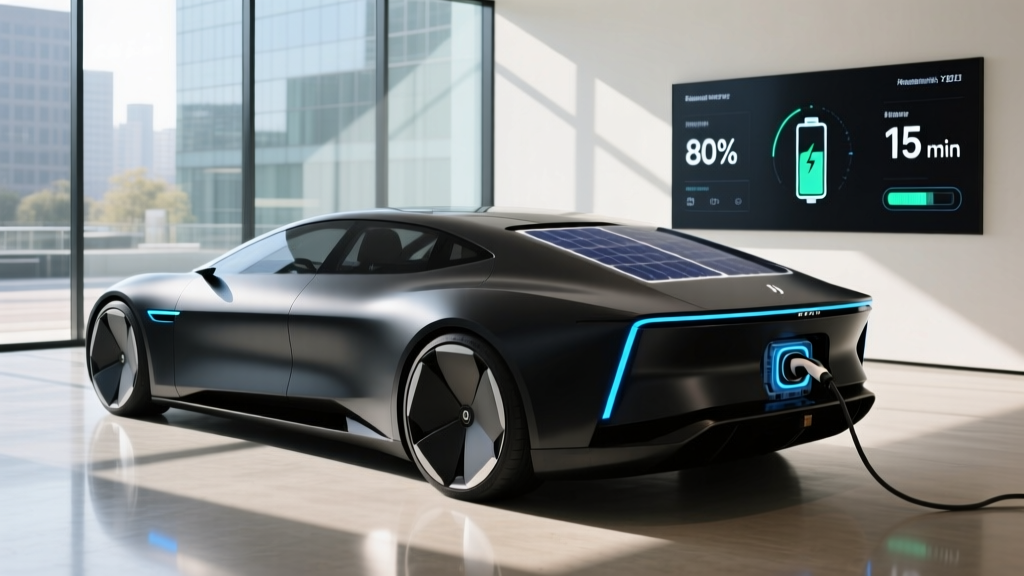
DC fast charging isn't a constant rate. A vehicle rated for "250 kW peak charging" only sustains that rate briefly, typically between 10-40% State of Charge (SoC). Above 80%, charging slows dramatically to protect the battery. A realistic 10-80% session on a 250 kW-capable EV takes 18-28 minutes, not the "15 minutes" some marketing implies.
Battery warranties protect you. Federal law mandates 8-year/100,000-mile battery warranties (10 years in California and CARB states). Most manufacturers guarantee 70% capacity retention over that period. Real-world data from Tesla and Hyundai show most packs retaining 85-92% capacity at 100,000 miles.
EV Decision Framework for 2026 Buyers
- Choose LFP battery (Tesla Model 3 RWD, base Mach-E) if: you charge at home daily, drive under 250 miles/day, want lowest long-term degradation, and prioritize budget.
- Choose NMC long-range (Model 3 LR, Ioniq 5, BMW i4) if: you road-trip monthly, need 300+ miles EPA range, live in a cold climate where range loss matters, or don't have reliable home charging.
- Choose PHEV (Toyota RAV4 Prime, Jeep Wrangler 4xe) if: you lack home charging but want some electric driving, frequently drive 500+ mile trips, or live in a charging desert.
- Wait on solid-state if: you can afford to delay your purchase to 2028-2029 and want potentially 500+ mile range with faster charging — but expect early-adopter pricing above $60,000.
- Don't wait for aviation batteries — they solve different problems (weight, discharge rate) at costs that make no sense for automotive use.
The Bottom Line: Aviation Tech Informs, But Doesn't Replace, Automotive Reality
Electric plane engines in 2026 represent genuine engineering achievement — motors producing 10 kW/kg, batteries surviving extreme discharge cycles, and redundant safety systems that exceed automotive standards. But the constraints of aviation (weight above all, short mission profiles, extreme cost tolerance) make aviation batteries and motors poor fits for consumer vehicles.
What does transfer: improved motor power density, better thermal management algorithms, and advanced inverter designs. These show up in 2026 EVs as quicker 0-60 times, better highway efficiency, and faster DC charging — without aviation-grade costs.
For your purchase decision, ignore the hype around "airplane batteries coming to cars" and focus on proven automotive metrics: EPA range, real-world charging speed (10-80% time, not peak kW), battery chemistry suited to your driving pattern, home charging feasibility, and total cost of ownership over five years. The aerospace industry's R&D dollars are making your EV incrementally better every model year — but the fundamentals of smart EV buying remain grounded in practical, automotive-specific data.
Are electric plane engines more efficient than EV motors?
By power-to-weight ratio, yes — aviation motors achieve 5-10 kW/kg versus 2-5 kW/kg for automotive. But by cost-efficiency, automotive motors win decisively. An EV motor costs $800-$2,000 to manufacture; an equivalent aviation motor costs $30,000-$80,000 due to aerospace certification, redundant systems, and exotic materials.
Will solid-state batteries from electric aviation reach consumer EVs?
Eventually, but not soon. Toyota, Samsung SDI, and QuantumScape target limited automotive solid-state production in 2027-2028, with meaningful volume in 2029+. Aviation may adopt solid-state earlier due to smaller production volumes and higher cost tolerance, but automotive scale requires $100-$150/kWh pricing that's years away.
Can I buy an EV with aviation-derived technology today?
Not directly, but indirectly yes. The Lucid Air's miniaturized motors, Porsche Taycan's 800V architecture, and Tesla's carbon-sleeved rotors all benefit from aerospace-derived engineering principles. You're getting the downstream benefits without aviation pricing.
Does the §30D federal tax credit apply based on battery technology?
Partially. The IRS §30D credit requires that a percentage of critical minerals and battery components be sourced from the US or free-trade-agreement countries. This has nothing to do with aviation-grade vs. automotive-grade chemistry — it's about supply-chain origin. Verify eligibility at purchase, as rules tighten annually through 2032.