Quick Answer: Should You Buy an Electric Pickup?
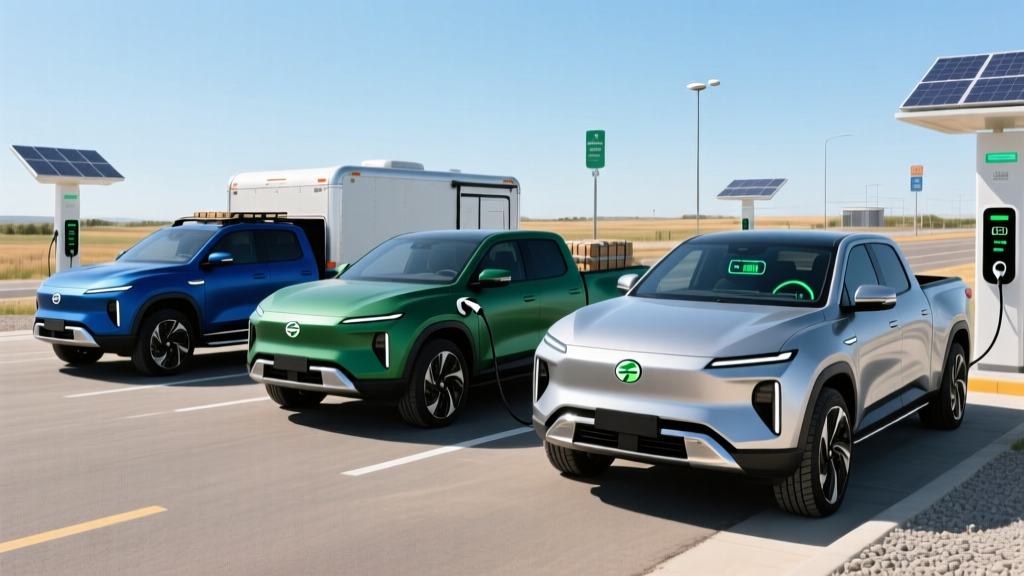
Electric pickups like the Ford F-150 Lightning, Rivian R1T, Chevrolet Silverado EV, and Tesla Cybertruck offer instant torque, 230–400 miles of EPA range, and significantly lower fueling costs — but they tow 30–50% less range than their EPA stickers when hauling heavy trailers. If you have home Level 2 charging, drive mostly unladen or with light loads, and your daily commute is under 200 miles, an electric pickup saves $1,500–$3,000 annually in fuel and maintenance versus a gas V8. If you regularly tow 8,000+ lbs over long distances or lack home charging access, a gas or hybrid truck remains the more practical choice in 2026.
The 2026 Electric Pickup Lineup: Specs at a Glance
The electric truck market has matured considerably since the F-150 Lightning launched in 2022. Here's how the major players stack up on the numbers that matter most to truck buyers.
| Model | EPA Range | Battery (kWh) | Peak DC Charge | 10–80% Time | Towing (lbs) | 0–60 mph | Starting MSRP |
|---|---|---|---|---|---|---|---|
| Ford F-150 Lightning (Ext. Range) | 320 mi | 131 kWh (NMC) | 150 kW | ~41 min | 10,000 | 3.8s | $54,995 |
| Rivian R1T Dual-Motor (Max Pack) | 410 mi | 141 kWh (NMC) | 200 kW | ~36 min | 11,000 | 3.5s | $79,900 |
| Chevrolet Silverado EV (4WT/Extended) | 390 mi | ~200 kWh (NMC) | 350 kW | ~20 min | 10,000 | 4.5s | $57,900 |
| Tesla Cybertruck (AWD) | 340 mi | 123 kWh (NMC) | 250 kW | ~28 min | 11,000 | 4.1s | $79,990 |
| GMC Sierra EV (Denali Edition 1) | 400 mi | ~200 kWh (NMC) | 350 kW | ~22 min | 10,000 | 4.3s | $99,495 |
Sources: EPA / fueleconomy.gov, manufacturer specifications. Range figures are EPA estimates; real-world results vary with temperature, terrain, and payload. MSRPs reflect base trims with destination before any incentives.
Real-World Range: What the EPA Sticker Doesn't Tell You
EPA range estimates are measured under controlled laboratory conditions. For electric pickups — heavy, boxy, and frequently loaded — the real-world gap can be significant.
Real-World Range Expectations
Ford F-150 Lightning (320 mi EPA): Expect ~270–290 mi on a highway road trip at 70 mph in mild weather. In 20°F winter conditions, plan for 200–230 mi. When towing a 5,000-lb travel trailer at highway speed, range drops to 150–180 mi.
Rivian R1T Max Pack (410 mi EPA): Highway driving yields ~340–360 mi. Cold weather cuts this to ~280–310 mi. Towing a 6,000-lb load: ~200–240 mi.
Chevrolet Silverado EV (390 mi EPA): Its massive battery and 800V architecture deliver strong highway efficiency — expect ~330–350 mi unladen. Towing 7,000 lbs: ~180–220 mi.
The physics are straightforward: a truck towing 7,000 lbs is moving 15,000+ lbs total. Energy consumption jumps from roughly 45–50 kWh/100mi (unladen highway) to 80–110 kWh/100mi (heavy tow). This isn't a defect — it's the same proportional range loss a gas truck experiences when towing, though gas trucks refuel in 5 minutes while EV trucks need 20–45 minutes at a DC fast charger.
Charging at Home and on the Road
Electric pickup batteries are enormous — 123 to 200 kWh — which makes home charging infrastructure essential and makes Level 1 (120V) charging essentially useless for daily needs.
| Charging Level | Power | Miles Added/Hour | Full Charge Time (131 kWh) | Best For |
|---|---|---|---|---|
| Level 1 (120V outlet) | 1.4 kW | 3–4 mi/hr | ~90+ hours | Emergency/trickle only |
| Level 2 (240V, 48A) | 11.5 kW | 25–30 mi/hr | ~11–13 hours | Daily home charging |
| Level 2 (240V, 80A) | 19.2 kW | 40–48 mi/hr | ~7–8 hours | Large-battery trucks (F-150 Lightning, Silverado EV) |
| DC Fast Charge | 150–350 kW | N/A | 10–80% in 20–41 min | Road trips |
Home charging reality: Most electric pickup owners need a Level 2 charger on a 60-amp or larger circuit. The F-150 Lightning's onboard charger accepts up to 19.2 kW (80A), meaning a properly equipped garage can add ~200 miles overnight in 5 hours. The Rivian R1T accepts 11.5 kW on Level 2, so a full charge takes longer — roughly 12 hours from empty.
Home installation cost: A Level 2 hardwired charger with a panel upgrade (if your home has a 100-amp service) typically runs $1,200–$3,500 total — including the $400–$700 charger unit, electrician labor, permit, and potential panel upgrade. Homes with existing 200-amp service usually need only $600–$1,200 for the charger circuit and installation. Always consult a licensed electrician for your specific panel capacity.
Public DC fast charging: GM's Ultium-based trucks (Silverado EV, Sierra EV) use an 800V architecture capable of 350 kW peak charging on compatible Electrify America or EVgo stations — adding roughly 100 miles in 10 minutes. The F-150 Lightning tops out at 150 kW, which is adequate but slower. Tesla's Cybertruck charges at 250 kW on the Supercharger network. Note that peak charge rates are sustained only at low state-of-charge; all trucks taper significantly above 80% SoC to protect battery health.
Electric Pickup vs. Gas Truck: 5-Year Cost Comparison
The upfront price of an electric pickup is higher than a comparably equipped gas truck, but the operating costs tell a different story. Here's a data-driven comparison using the Ford F-150 Lightning (Extended Range, ~$60,000 as-equipped) versus a gas F-150 3.5L EcoBoost (~$52,000 as-equipped) driven 15,000 miles/year with 80% home charging.
| Cost Category (5 Years) | F-150 Lightning EV | F-150 Gas (EcoBoost) | Notes |
|---|---|---|---|
| Purchase Price (after incentives) | $52,500* | $52,000 | *Assumes $7,500 §30D point-of-sale credit; eligibility varies |
| Fuel / Electricity | $3,900 | $11,250 | EV: $0.13/kWh home avg; Gas: $3.50/gal, 18 MPG combined |
| Maintenance | $1,800 | $4,500 | EV: no oil changes, fewer brake replacements (regen) |
| Insurance | $9,500 | $7,500 | EV premiums run 15–25% higher on average |
| Depreciation (est.) | $22,000 | $18,000 | EV trucks depreciating faster currently; market evolving |
| 5-Year Total Cost | $89,700 | $93,250 | EV saves ~$3,550 over 5 years in this scenario |
Fuel costs assume 80% home charging at $0.13/kWh and 20% public DC at $0.35/kWh. Gas prices and electricity rates vary significantly by region. See fueleconomy.gov for personalized calculations.
The breakeven point depends heavily on your electricity rates, annual mileage, and whether you qualify for the federal tax credit. If you charge exclusively at home in a low-rate state (e.g., Washington at $0.10/kWh) and drive 20,000 miles/year, savings widen substantially. If you rely entirely on public DC fast charging at $0.40+/kWh, the fuel cost advantage nearly disappears.
Federal Tax Credit and Incentive Rules for Electric Trucks
The IRS §30D Clean Vehicle Credit offers up to $7,500 for qualifying new EVs, and as of 2024, buyers can transfer the credit to the dealer as a point-of-sale discount. However, eligibility is complex and changes regularly.
- MSRP cap: Vans, SUVs, and pickup trucks must have an MSRP at or below $80,000. This excludes the GMC Sierra EV Denali Edition 1 ($99,495) and some Rivian R1T and Cybertruck configurations.
- Buyer income limits: Modified adjusted gross income must not exceed $300,000 (joint), $225,000 (head of household), or $150,000 (single).
- Battery sourcing: The $7,500 credit splits into two halves — $3,750 for critical minerals sourcing and $3,750 for battery component manufacturing. Vehicles with battery components from a "foreign entity of concern" may lose one or both halves. Check the latest IRS guidance before purchasing.
- Point-of-sale transfer: You can assign the credit to the dealer at purchase, reducing your out-of-pocket cost immediately — but if your tax return later shows you didn't qualify, you owe the IRS the full amount back.
Consult a tax professional to verify your specific eligibility. State and utility incentives (ranging from $500 charger rebates to $5,000 purchase incentives in states like Colorado and California) stack on top but vary widely by jurisdiction.
Towing and Payload: The Honest Picture
Electric pickups post impressive towing ratings — 10,000 to 11,000 lbs — and their instant torque makes them feel effortless pulling away from a stop. But sustained highway towing reveals the category's biggest limitation.
What works well: Short-haul towing (boat to the lake, equipment to a job site under 50 miles round-trip) is excellent. The low center of gravity from the floor-mounted battery pack provides superior stability compared to gas trucks. Regenerative braking on downhill grades reduces brake wear dramatically — a real advantage when descending mountain passes with a trailer.
Where limitations show: A 250-mile trip towing 7,000 lbs requires at least one DC fast-charge stop, potentially two in cold weather. Not all charging stations can accommodate truck-and-trailer combinations — you may need to unhitch to reach the charger. The charging curve also matters: while a Silverado EV might peak at 350 kW, it sustains that rate only between roughly 10–40% SoC, then tapers. A realistic 10–80% tow-trip charge stop takes 25–35 minutes.
Payload impact: A full bed load (1,500–1,800 lbs) reduces range by roughly 10–15% — a much smaller penalty than towing because aerodynamics aren't affected. The battery pack's weight already eats into payload capacity; the F-150 Lightning's max payload is ~2,235 lbs versus ~3,325 lbs for a gas F-150.
Common Misconceptions About Electric Pickups
| Myth | Fact |
|---|---|
| "Electric trucks can't tow anything useful." | Rated for 10,000–11,000 lbs, matching many gas half-tons. The limitation is range while towing, not capability. |
| "The battery will need replacing in 5 years." | All major manufacturers warranty batteries for 8 years/100,000 miles with a minimum 70% capacity retention. Data from early Lightnings shows <8% degradation at 60,000 miles. |
| "You'll be stranded with no charging options." | The U.S. has over 70,000 public charging ports as of 2026. Tesla's Supercharger network — now open to Ford and Rivian via NACS adapters — adds 6,000+ reliable fast-charger locations. Plan routes with apps like A Better Routeplanner. |
| "Electric pickups cost more to own in every scenario." | Higher purchase price, but lower fuel and maintenance costs. Break-even typically occurs at year 3–5 depending on mileage, electricity rates, and tax credit eligibility. |
| "They're slow and sluggish." | The F-150 Lightning hits 0–60 in 3.8 seconds. The Rivian R1T Quad-Motor does it in under 3.0 seconds. These are sports-car numbers in a full-size truck. |
Battery Longevity, Warranty, and Replacement Costs
Electric pickup batteries are engineered for longevity, but their massive size means replacement costs are substantial if needed out of warranty.
Warranty coverage: Ford, Rivian, GM, and Tesla all provide 8-year/100,000-mile battery warranties guaranteeing at least 70% of original capacity. Some, like Rivian, extend to 175,000 miles on certain components. This means if your 131 kWh Lightning battery degrades below ~92 kWh within the warranty period, the manufacturer replaces or repairs it at no cost.
Real-world degradation: NMC batteries (used in all current electric pickups) typically lose 8–12% capacity over the first 100,000 miles, with the steepest drop occurring in the first 20,000 miles before leveling off. LFP (lithium iron phosphate) chemistry degrades more slowly but isn't yet offered in full-size electric trucks due to its lower energy density — a critical constraint when packaging 130+ kWh into a truck chassis.
Out-of-warranty replacement: If a battery fails after warranty, expect $18,000–$35,000 for parts and labor depending on the pack size. The Silverado EV's ~200 kWh pack is at the high end. This is a real financial risk for second owners and high-mileage users — factor it into long-term ownership calculations.
Decision Framework: Which Electric Pickup Is Right for You?
Choose Based on Your Actual Use Case
Choose the Ford F-150 Lightning if: You want the most truck-like experience, need Pro Power Onboard (up to 9.6 kW V2L for job-site power or home backup), and value the widest dealer service network. Best for: fleet buyers, contractors, traditional truck buyers going electric.
Choose the Rivian R1T if: You prioritize adventure capability (available quad-motor AWD, tank turns, Gear Tunnel storage), want the longest EPA range (410 mi with Max Pack), and don't mind a premium price. Best for: outdoor enthusiasts, tech-forward buyers, those who rarely tow heavy loads long-distance.
Choose the Chevrolet Silverado EV if: You need the fastest DC charging (350 kW / 800V), want a massive battery for maximum unladen range, and value the available 4-wheel steering for tight maneuvering. Best for: GM loyalists, high-mileage commuters, those who tow moderately and charge often.
Choose the Tesla Cybertruck if: You want the most distinctive design, stainless-steel exoskeleton durability, and access to the Supercharger network natively. The steer-by-wire system is polarizing — test drive before committing. Best for: Tesla ecosystem buyers, tech enthusiasts, those who value performance and don't need traditional truck ergonomics.
Stick with a gas or hybrid truck if: You regularly tow 8,000+ lbs on trips exceeding 200 miles, live in an area with sparse DC fast-charging infrastructure, lack home Level 2 charging access, or need maximum payload capacity for commercial work.
Frequently Asked Questions
Can I charge an electric pickup from a standard 120V outlet?
Technically yes, but practically no. A 120V outlet delivers roughly 1.4 kW, adding only 3–4 miles of range per hour. Fully charging a 131 kWh F-150 Lightning from empty would take over 90 hours. A Level 2 (240V) home charger is effectively mandatory for daily ownership of a full-size electric truck.
How does cold weather affect electric pickup range?
Expect 20–35% range loss in sustained sub-freezing temperatures (below 20°F). This is caused by battery chemistry slowdown and energy used for cabin/pack heating. The F-150 Lightning's 320-mile EPA range drops to roughly 210–250 miles in winter. Preconditioning the battery while plugged in mitigates some of this loss and improves DC fast-charging speeds in cold weather.
Do electric pickups qualify for the $7,500 federal tax credit?
Some configurations do, but eligibility depends on MSRP (must be ≤$80,000 for trucks), buyer income, and battery sourcing requirements under IRS §30D rules. The F-150 Lightning and certain Silverado EV trims have qualified; higher-priced Rivian R1T and Cybertruck configurations may exceed the MSRP cap. Rules change frequently — verify on IRS.gov before purchasing.
What's the real cost to charge an electric pickup at home?
At the U.S. average residential rate of ~$0.16/kWh (as of early 2026), fully charging a 131 kWh F-150 Lightning costs about $21. Driving 15,000 miles/year at 2.0 kWh/mile costs roughly $480 annually in electricity — versus $2,250+ in gasoline for an equivalent gas truck at 18 MPG and $3.50/gallon.
Are electric pickups good for job-site use?
For day-trip job sites within 100 miles of your home charger, they're excellent. The F-150 Lightning's Pro Power Onboard provides up to 9.6 kW of 240V/120V outlet power — enough to run welders, compressors, and saws directly from the truck without a separate generator. For remote multi-day work without charging access, a gas truck or portable generator remains more practical.
How long do electric pickup batteries last?
Based on current data and manufacturer testing, NMC batteries in electric pickups are designed to retain 70–80% of original capacity at 150,000–200,000 miles. Real-world data from early F-150 Lightnings shows approximately 5–8% degradation at 50,000–60,000 miles. Proper care — avoiding frequent 100% charges, minimizing DC fast-charging in extreme heat, and using preconditioning — extends battery life.