Quick Answer: Should You Buy an Electric Personal Watercraft?
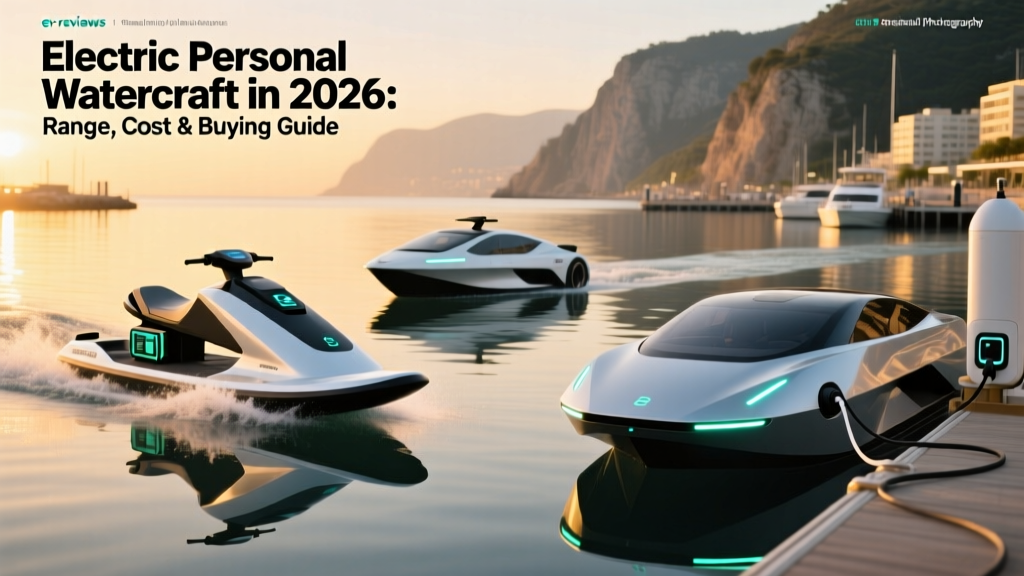
Bottom line for 2026: Electric personal watercraft (ePWCs) like the Taiga Orca and Narke Electrojet deliver 45–60 minutes of ride time per charge, cost roughly $12,000–$18,000, and eliminate fuel, oil, and winterization maintenance. They make sense if you ride on lakes with noise restrictions, have dock access for charging, and prioritize quiet, instant torque over multi-hour endurance riding. If you regularly ride 3+ hours per session, tour open ocean, or lack dockside power, a gas-powered PWC from Sea-Doo or Yamaha remains the more practical choice today.
The electric personal watercraft market has matured past early-adopter territory. Battery energy density improvements and falling lithium costs mean today's ePWCs pack 20–25 kWh battery systems into hulls that weigh comparably to mid-range gas jet skis. But the buying decision is not straightforward — range limitations, charging logistics on the water, and a lack of federal EV tax credit eligibility (the §30D credit applies to highway-capable vehicles, not watercraft) change the math considerably.
This guide breaks down the real numbers behind owning an electric personal watercraft in 2026, compares costs head-to-head with gas alternatives, and gives you a concrete framework for deciding which powertrain fits your riding pattern.
How Electric Personal Watercraft Compare to Gas Jet Skis
Before evaluating specific models, it helps to understand the fundamental trade-offs. Electric PWCs replace the typical 1,500cc supercharged marine engine with a brushless electric motor drawing from a sealed lithium-ion battery pack. The result is instant torque, near-silent operation, and zero direct emissions — but also a fixed energy supply that you cannot refill in five minutes at a marina fuel dock.
| Attribute | Electric PWC (Taiga Orca Performance) | Gas PWC (Sea-Doo RXP-X 325) |
|---|---|---|
| Powertrain | Electric motor, ~160 HP equivalent | 1,630cc supercharged 3-cyl, 325 HP |
| Battery / Fuel | 23.3 kWh usable, NMC lithium-ion | 15.9-gallon fuel tank |
| Range / Ride Time | ~45–60 min aggressive / ~90 min cruise | ~2.5–3.5 hours depending on throttle |
| Top Speed | ~62 mph (100 km/h) | ~67 mph (108 km/h) |
| 0–30 mph | ~3.0 seconds | ~3.6 seconds |
| Weight (dry) | ~595 lbs (270 kg) | ~830 lbs (376 kg) |
| Noise Level | Near-silent (conversation-level) | 75–85 dB at full throttle |
| Base MSRP | $15,490 (Performance trim) | $18,699 |
| "Fuel" Cost per Hour | ~$1.50–$3.00 (electricity) | ~$12–$18 (premium fuel) |
| Annual Maintenance | ~$100–$200 (impeller, seals) | ~$400–$700 (oil, plugs, winterization) |
The acceleration comparison deserves a closer look. Electric motors deliver peak torque at zero RPM, meaning an ePWC launches off the line harder than its horsepower figure suggests. On-water, this translates to sharper carving, faster hole-shot out of turns, and a more responsive feel in choppy conditions. The trade-off is top-end speed, where the gas engine's raw horsepower advantage shows.
Range and Battery: What the Numbers Really Mean
Unlike electric cars, which quote EPA range in miles, electric personal watercraft manufacturers typically specify ride time in minutes. This is because water conditions, rider weight, throttle habits, and wave resistance affect energy consumption far more variably than highway driving affects an EV.
Here is how to translate ride-time claims into real expectations:
Real-World Range Reality: A 23 kWh battery in an ePWC like the Taiga Orca delivers approximately 45 minutes of aggressive riding (full-throttle starts, jump turns, racing) or up to 90 minutes of moderate cruising at 25–30 mph. Cold water (below 55°F / 13°C) reduces usable capacity by roughly 10–15% due to battery thermal losses. Saltwater environments may also trigger more conservative battery management to prevent thermal runaway risk.
Battery chemistry matters for longevity. Most production ePWCs use NMC (nickel manganese cobalt) cells, which offer higher energy density — critical when you are trying to fit maximum kWh into a hull that must remain buoyant and balanced. NMC batteries typically retain 80–85% of original capacity after 1,000 full charge cycles. For a rider who charges once per weekend session, that translates to roughly 15–20 years before significant degradation — well beyond the hull's practical lifespan.
Some manufacturers are exploring LFP (lithium iron phosphate) chemistry for future models, which offers superior cycle life (2,000–3,000 cycles) but lower energy density. In a watercraft where every pound counts, LFP's weight penalty remains a barrier for now.
Charging an Electric PWC: Dock, Home, and Marina
Charging logistics are the single biggest ownership consideration that separates a satisfying ePWC experience from a frustrating one. Unlike filling a gas tank at a marina pump, recharging an electric watercraft requires planning and infrastructure.
| Charging Level | Power (kW) | Time to Full (23 kWh battery) | Typical Location |
|---|---|---|---|
| Level 1 (standard 120V outlet) | ~1.2 kW | ~18–20 hours | Home garage, basic dock outlet |
| Level 2 (240V, 30A circuit) | ~6.6 kW | ~3.5–4 hours | Home dock, upgraded marina slip |
| DC Fast Charge (where available) | ~20–30 kW | ~45 min to 80% | Select marinas, Taiga fast-charge option |
Most ePWC owners charge overnight at home or on a trailer in the garage using a Level 2 (240V) connection. If you store your watercraft on a dock lift, you will need a marine-rated 240V outlet installed at the slip — expect $800–$2,500 for a licensed electrician to run a dedicated 30A circuit to a dock pedestal, depending on distance from your panel and local code requirements. Always use a GFCI-protected outdoor-rated connector near water.
DC fast charging for watercraft is still rare. Taiga Motors offers an optional fast-charge port on the Orca that can add roughly 30 minutes of ride time in a 20-minute stop — useful for all-day lake sessions if your marina has the equipment. But do not expect a network of DC fast chargers at boat ramps the way you find Electrify America stations along highways.
Total Cost of Ownership: Electric vs. Gas PWC Over 5 Years
The purchase price of an electric personal watercraft can look intimidating until you factor in five years of fuel, maintenance, and storage differences. Here is a realistic breakdown based on 50 riding sessions per year (roughly one weekend per week during a typical season).
| Cost Category | Electric PWC (Taiga Orca) | Gas PWC (Sea-Doo RXP-X) |
|---|---|---|
| Purchase Price (MSRP) | $15,490 | $18,699 |
| Sales Tax (est. 7%) | $1,084 | $1,309 |
| Fuel/Energy (5 yrs, 250 sessions) | $625 (at $0.15/kWh avg) | $5,250 (at $4.80/gal, 10 gal/session avg) |
| Maintenance (5 yrs) | $750 | $2,750 |
| Winterization (5 yrs) | $0 (no engine to winterize) | $1,250 ($250/year) |
| Insurance (5 yrs, est.) | $3,750 ($750/yr) | $3,250 ($650/yr) |
| Estimated Resale Value (Year 5) | -$7,000 | -$9,500 |
| Net 5-Year Cost | $14,699 | $22,758 |
The gas PWC costs roughly $8,000 more over five years of ownership despite its higher resale value. The primary savings come from fuel (electricity at ~$1.50–$3.00 per session vs. $12–$18 for premium gasoline) and the elimination of oil changes, spark plug replacements, supercharger maintenance, and annual winterization.
Insurance is typically $50–$150 higher per year for ePWCs, reflecting insurers' uncertainty about battery replacement costs and a smaller claims history dataset. As the electric personal watercraft market grows and actuarial data accumulates, expect premiums to normalize.
Common Misconceptions About Electric Watercraft
| Myth | Fact |
|---|---|
| "The battery will die in 2–3 years." | NMC marine batteries are rated for 1,000+ full cycles with 80%+ capacity retention. At typical recreational use, that is 15+ years before meaningful degradation. |
| "You can't ride in saltwater." | Modern ePWCs are sealed to IP67 or higher. Saltwater riding is supported, though rinsing the hull and jet pump after each session remains essential — same as gas PWCs. |
| "Electric PWCs are slow." | Current models hit 60+ mph with 0–30 mph times under 3 seconds. The instant torque makes them feel faster than gas equivalents in real riding conditions. |
| "You'll get the $7,500 federal EV tax credit." | The IRS §30D credit applies to qualified highway motor vehicles. Personal watercraft do not qualify. Some states offer marine electrification rebates — check your local programs. |
| "If the battery dies on the water, you're stranded." | True — there is no reserve jerry can. But battery management systems reserve a 5–10% buffer and warn riders well before depletion. Towing a dead ePWC is no different from towing a gas PWC that ran out of fuel. |
Decision Framework: Is an Electric PWC Right for You?
Choose an electric personal watercraft if:
- You ride primarily on lakes with noise restrictions or "electric-only" zones (increasingly common in reservoir communities)
- You have dock access with 240V power or can charge on a trailer at home overnight
- Your typical session is under 90 minutes
- You want minimal maintenance — no oil, no winterization, no fuel stabilizer
- You value silent operation for wildlife areas, early-morning rides, or conversation-friendly cruising
- You plan to keep the watercraft 5+ years (amortizing the higher upfront cost)
Stick with a gas PWC if:
- You regularly ride 2+ hours per session or do multi-stop touring
- You launch at remote boat ramps with no charging infrastructure
- You need maximum top speed (65+ mph) for racing or open-ocean conditions
- You want the broadest dealer and service network nationwide
- You prefer the option to refuel in minutes at any marina
- Budget is tight and you want a proven used market with abundant inventory
First-Time ePWC Buyer Checklist
If you have decided an electric personal watercraft fits your needs, here is what to verify before signing a purchase agreement:
- Battery warranty: Confirm the manufacturer offers at minimum a 3-year/500-hour warranty on the battery pack with a stated capacity retention threshold (typically 70–80%).
- Charging compatibility: Verify whether the included charger is Level 1 (120V) or Level 2 (240V) and whether a DC fast-charge port is available or optional.
- Dealer/service proximity: The ePWC dealer network is sparse compared to Sea-Doo or Yamaha. Confirm the nearest authorized service center before buying.
- Trailer compatibility: ePWCs are often lighter than gas equivalents. Ensure your existing trailer's bunk spacing and winch capacity match the hull dimensions.
- Registration and titling: Electric watercraft are registered identically to gas PWCs through your state boating authority. No special EV registration applies.
- Storage plan: Lithium batteries prefer storage at 40–60% state of charge in moderate temperatures. If you store outdoors in freezing climates, confirm the BMS handles cold-weather protection automatically.
Frequently Asked Questions
How long does an electric personal watercraft battery last?
Most production ePWC batteries use NMC lithium-ion cells rated for 1,000+ full charge cycles while retaining 80% of original capacity. At typical recreational use of 30–50 sessions per year, that translates to 15–20 years before the battery degrades to a point where ride time is noticeably reduced. Battery replacement costs, when eventually needed, currently run $3,000–$5,000 depending on the model and pack size.
Can I charge an electric PWC from a standard outlet at the dock?
Yes, using a Level 1 (120V) connection, but a full charge on a 23 kWh battery will take 18–20 hours — effectively overnight only. For same-day turnaround between morning and afternoon sessions, you need a 240V Level 2 circuit, which charges in roughly 3.5–4 hours. Installing a marine-rated 240V outlet at a private dock typically costs $800–$2,500 depending on run length and panel capacity.
Do electric personal watercraft qualify for the federal EV tax credit?
No. The IRS §30D Clean Vehicle Credit applies only to qualified highway motor vehicles with four wheels and a gross vehicle weight under 14,000 lbs. Personal watercraft are classified as recreational marine vessels and are ineligible. Some states and local utilities offer marine electrification incentives — check AFDC's state incentive database for programs in your area.
Is an electric PWC safe in saltwater?
Yes. Production ePWCs are engineered with sealed battery enclosures (typically IP67-rated) and marine-grade corrosion protection. Saltwater operation is supported by manufacturers like Taiga. Post-ride freshwater rinsing of the hull, jet pump, and cooling passages is still required — identical to gas PWC maintenance in saltwater environments.
What happens if I run out of battery on the water?
The battery management system (BMS) provides progressive warnings as state of charge drops, typically limiting top speed at 10% and entering a limp-home mode at 5% to preserve enough energy to motor slowly back to shore or a dock. If you do fully deplete the battery, the watercraft is towed back like any disabled vessel. Unlike gas PWCs, there is no option to carry a spare fuel container — plan your ride time conservatively and monitor the charge display.
How do electric PWCs handle in cold water?
Cold water (below 55°F / 13°C) reduces lithium-ion battery efficiency by roughly 10–15%, meaning shorter ride times in early spring or late fall. Most ePWC battery management systems include thermal regulation to protect cells, but unlike electric cars with active heat pumps, watercraft typically rely on passive thermal management. Store your ePWC battery at 40–60% charge in a climate-controlled space during off-season months for optimal longevity.
For the latest EPA-equivalent marine efficiency data and safety standards, refer to the National Marine Manufacturers Association and your state's boating safety office. As always, consult a licensed electrician for dockside charging installations and a marine surveyor if purchasing a used ePWC to assess battery state of health.