The Quick Answer
Electric personal transport — whether a battery-electric vehicle (BEV), plug-in hybrid (PHEV), or compact electric commuter — makes financial sense for most drivers who can charge at home, drive under 250 miles daily, and qualify for federal or state incentives. A typical EV owner saves $600–$1,200 per year on fuel and maintenance compared to a gas equivalent, with a break-even on higher upfront costs in roughly 3–5 years. However, if you lack reliable home or workplace charging, regularly drive in extreme cold, or need 400+ mile single-trip range without stopping, a PHEV or hybrid may serve you better today.
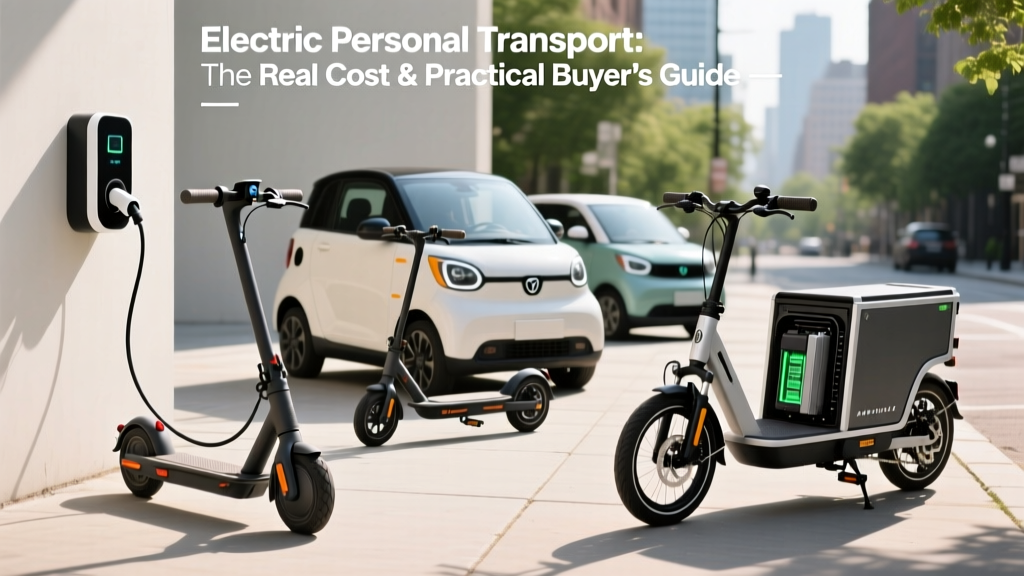
What Counts as Electric Personal Transport?
The term "electric personal transport" spans a wide spectrum. For most car buyers, it means a battery-electric vehicle (BEV) like the Tesla Model Y, Hyundai Ioniq 5, or Chevrolet Equinox EV. But it also includes plug-in hybrids (PHEVs) such as the Toyota RAV4 Prime or Jeep Wrangler 4xe, which blend a gas engine with 30–50 miles of electric-only range. What unites them is the ability to draw energy from the grid rather than — or in addition to — a fuel tank.
For this guide, we'll focus on the vehicles most shoppers actually consider: mainstream BEVs and PHEVs in the $30,000–$55,000 range, with concrete data you can apply to your own situation.
EV vs Gas vs Hybrid: The Numbers Side by Side
Let's compare three realistic options a buyer might cross-shop in 2026: a BEV (Hyundai Ioniq 5 SEL), a PHEV (Toyota RAV4 Prime XSE), and a gas-only baseline (Toyota RAV4 LE). All figures use EPA data from fueleconomy.gov and manufacturer MSRP.
| Metric | Hyundai Ioniq 5 SEL (BEV) | Toyota RAV4 Prime (PHEV) | Toyota RAV4 LE (Gas) |
|---|---|---|---|
| Base MSRP | $43,975 | $44,590 | $30,575 |
| EPA Range / MPG / MPGe | 303 mi / 114 MPGe combined | 42 mi EV + 38 MPG gas | 30 MPG combined |
| Usable Battery | 77.4 kWh (NMC) | 18.1 kWh (NMC) | N/A |
| Max DC Fast Charge | 240 kW (10–80% in ~18 min) | N/A (Level 2 only) | N/A |
| 0–60 mph | 7.2 sec (168 HP, RWD) | 5.7 sec (302 HP, AWD) | 8.1 sec (203 HP) |
| Federal Tax Credit (§30D) | Up to $7,500 (verify sourcing) | Up to $7,500 (verify sourcing) | $0 |
| Annual Fuel/Energy Cost* | ~$550 | ~$650 (mixed EV/gas) | ~$1,700 |
| Annual Maintenance | ~$300 | ~$450 | ~$650 |
| Battery/Powertrain Warranty | 10 yr / 100,000 mi | 10 yr / 150,000 mi (hybrid sys) | 5 yr / 60,000 mi |
*Based on 15,000 miles/year, $0.16/kWh national average electricity, $3.50/gallon gas. Your costs will vary by local utility rate and driving mix.
The BEV and PHEV carry a $13,000–$14,000 higher sticker price than the gas RAV4, but the federal tax credit (when eligible) narrows that gap by up to $7,500. After the credit, annual energy and maintenance savings of roughly $1,000–$1,500 close the remaining gap over 4–6 years. If you drive more than 15,000 miles annually or pay above-average gas prices, the math tips faster.
The Real Cost of Ownership: 5-Year Breakdown
Sticker price is only the opening move. Here's what a realistic 5-year / 75,000-mile ownership cycle looks like, assuming the buyer qualifies for the full §30D credit and charges primarily at home.
| Cost Category (5 Years) | Ioniq 5 (BEV) | RAV4 Prime (PHEV) | RAV4 LE (Gas) |
|---|---|---|---|
| Purchase Price (after §30D credit) | $36,475 | $37,090 | $30,575 |
| Fuel / Energy | $2,750 | $3,250 | $8,500 |
| Maintenance | $1,500 | $2,250 | $3,250 |
| Insurance (avg) | $7,500 | $6,800 | $6,200 |
| Home Charger Install (Level 2) | $1,200 | $1,200 | $0 |
| Total 5-Year Cost | $49,425 | $50,590 | $48,525 |
Key takeaways from this data:
- Insurance runs higher on EVs — typically 10–20% more than gas equivalents, due to higher repair costs and parts pricing. Always get a quote before buying.
- Home Level 2 charger installation averages $800–$2,000 depending on your electrical panel. A 200-amp panel with nearby garage wiring lands at the low end; a panel upgrade to 200A from an older 100A service can push costs to $3,000+.
- Maintenance on a BEV is roughly half that of a gas car: no oil changes, no spark plugs, far less brake wear thanks to regenerative braking.
- Depreciation is the wildcard. EV resale values have been volatile; some models depreciate faster than gas counterparts. Check current trade-in values on the specific model year.
Real-World Ownership: What No Brochure Tells You
Range: EPA Sticker vs Reality
The Ioniq 5's EPA-estimated 303 miles is measured under controlled lab conditions. In real-world driving, expect:
- Mild weather, mixed driving: ~270–290 miles
- Sustained highway (70–80 mph): ~240–260 miles
- Cold weather (below 30°F) with cabin heat: ~200–230 miles
This isn't a flaw — it's physics. Battery internal resistance increases in cold, and cabin heating draws significant energy (3–5 kW) since there's no waste heat from a combustion engine. Models equipped with a heat pump (the Ioniq 5 includes one) mitigate this by 10–15% compared to resistive heating.
Charging Speed: Peak kW Is Not Sustained kW
The Ioniq 5 peaks at 240 kW on a compatible DC fast charger, but that rate holds only roughly between 10–55% state of charge. Above 80%, the charge curve tapers sharply to protect battery health — often dropping below 40 kW. A 10–80% session takes ~18 minutes; going from 80–100% can add another 25+ minutes. Plan road-trip stops around 10–80% charges for maximum efficiency.
Home Charging Access Is the Make-or-Break Factor
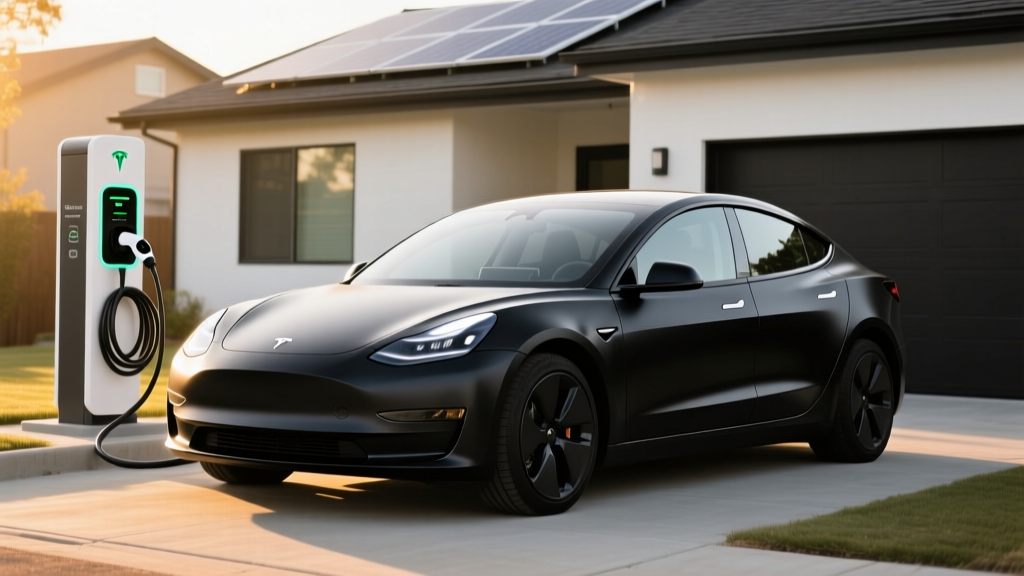
If you can install a Level 2 charger (240V, 32–48 amps) at home, daily EV ownership is effortless — you wake up every morning with a "full tank." If you rely solely on public charging, your experience will depend heavily on your local infrastructure. Check the Alternative Fuels Data Center for charger density in your area. Apartment dwellers without garage access should seriously consider a PHEV, which eliminates range anxiety while still providing electric commuting.
Federal Tax Credit: What You Actually Qualify For
The IRS §30D Clean Vehicle Credit offers up to $7,500, but eligibility is a checklist, not a guarantee. Here's what determines your credit in 2026:
- Income caps: Modified AGI must not exceed $150,000 (single), $225,000 (head of household), or $300,000 (joint).
- MSRP caps: Vans, SUVs, and pickups must be under $80,000; sedans and other vehicles under $55,000.
- Battery sourcing: Increasingly strict percentages of battery components must be manufactured or assembled in North America, and critical minerals must be sourced from the U.S. or free-trade-agreement partners. These thresholds tighten annually.
- Point-of-sale transfer: You can transfer the credit to the dealer at purchase, reducing your out-of-pocket cost immediately rather than waiting for a tax refund.
- Foreign entity of concern (FEOC): Vehicles with battery components from certain foreign entities may be disqualified entirely.
Always verify the specific model's eligibility on the IRS qualified vehicle list before purchasing — it changes as manufacturers adjust supply chains. A tax professional can confirm how the credit interacts with your individual tax situation.
Common Misconceptions, Corrected
| Myth | Fact |
|---|---|
| "EV batteries need replacing every few years and cost $20,000." | Modern NMC and LFP batteries degrade roughly 1–2% per year. Most retain 85–90% capacity at 100,000 miles. Federal law mandates a minimum 8-year/100,000-mile battery warranty (covering defects and capacity loss below ~70%). Full replacements are rare and typically covered. |
| "EVs are worse for the environment because of electricity from coal." | Even on the dirtiest U.S. grids, an EV produces fewer lifetime CO₂ emissions than a comparable gas car, per EPA analysis. As grids decarbonize, the advantage grows. An EV charged on a clean-energy grid produces a fraction of the emissions. |
| "Public charging is unreliable and always broken." | Network reliability varies. Tesla's Supercharger network consistently reports 95%+ uptime. Electrify America and ChargePoint have improved but still see occasional outages. The transition to NACS connectors across all brands is standardizing the experience. |
| "I'll spend hours charging on road trips." | With 200+ kW capable vehicles and chargers now common, a 10–80% stop takes 15–25 minutes — roughly the time for a restroom break and food. Most road-trip drivers add 30–45 minutes total to a 500-mile journey. |
| "EVs are slow and boring to drive." | Electric motors deliver instant torque with no gear shifts. Even non-performance EVs like the Ioniq 5 hit 0–60 in 7.2 seconds — quicker than most gas crossovers. Performance models (Tesla Model 3 Performance, Ioniq 5 N) do it in under 3.5 seconds. |
Decision Framework: Which Electric Personal Transport Is Right for You?
Choose a BEV (full battery-electric) if:
- You have home or workplace Level 2 charging access
- Your daily driving is under 200 miles (most Americans average 37 miles/day)
- You want the lowest ongoing fuel and maintenance costs
- You qualify for the §30D tax credit, narrowing the price gap
- You rarely take 400+ mile single-day trips, or don't mind a 20-minute fast-charge stop
Choose a PHEV (plug-in hybrid) if:
- You lack reliable home charging (e.g., apartment with no garage outlet)
- You want 30–50 miles of electric commuting but unlimited gas-engine range for road trips
- You live in an area with sparse public DC fast-charging infrastructure
- You frequently tow or drive in extreme cold where EV range loss is significant
Stick with a gas vehicle or HEV (standard hybrid) if:
- You drive 400+ miles daily in regions with limited charging
- Your budget is strictly under $25,000 and you cannot access any incentives
- You regularly tow heavy loads (5,000+ lbs) over long distances
First-Time EV Buyer Checklist
- Get an insurance quote on the exact trim before committing — EV premiums vary wildly by model and insurer.
- Audit your electrical panel. Have a licensed electrician confirm whether your home's panel supports a 40–48 amp Level 2 circuit. Budget $800–$2,000 for a straightforward install; more if a panel upgrade is needed.
- Test the actual charging ecosystem near your home and workplace using PlugShare or ChargePoint apps before buying.
- Verify §30D eligibility for the specific VIN you're purchasing — don't rely on generic "qualifies" claims from salespeople.
- Understand the charge curve. Plan road trips around 10–80% fast charges. Charging from 80–100% on DC is painfully slow and rarely worth the wait.
- Precondition the battery before fast charging in cold weather (most EVs do this automatically when you navigate to a charger). This can cut your charge time by 30%+ in freezing temperatures.
- Set charge limits. For daily use, limit charging to 80% on NMC batteries to maximize longevity. LFP batteries (found in some Tesla Model 3/Y Standard Range trims) tolerate 100% daily charging without degradation concerns.
Frequently Asked Questions
How long do EV batteries actually last?
Based on current degradation data, most modern EV batteries retain 85–90% of their original capacity after 100,000 miles and 8–10 years. The federal warranty mandate requires coverage for at least 8 years / 100,000 miles against capacity loss below approximately 70%. Catastrophic failures requiring full replacement are rare and usually covered under warranty. Many early Nissan Leafs and Tesla Model S vehicles are still on their original batteries at 150,000+ miles with 75–80% capacity remaining.
What happens if I can't charge at home?
Public-only charging is viable but less convenient and more expensive. DC fast charging costs roughly $0.30–$0.50/kWh at public stations versus $0.12–$0.18/kWh for home electricity. That cuts your fuel savings roughly in half. You'll also spend 1–2 hours per week at chargers. If home charging isn't possible, a PHEV is often the more practical electrified choice — you get electric commuting range without depending on public infrastructure.
Are EVs more expensive to insure?
Typically yes — 10–20% more than a comparable gas vehicle. The reasons include higher repair costs (specialized parts, high-voltage safety protocols), higher purchase prices, and limited collision repair shops certified for EV work. However, some insurers now offer EV-specific discounts. Always compare quotes from at least three providers, including companies like Tesla Insurance (in available states), Progressive, and GEICO, which have developed EV-specific actuarial models.
Do EVs work in extreme cold?
They work, but with reduced range. Expect a 20–35% range reduction in sustained sub-freezing temperatures, primarily from cabin heating demands and increased battery internal resistance. Mitigation strategies include using a heat pump (standard on most 2024+ EVs), preconditioning the battery while plugged in, using seat/steering wheel heaters instead of cabin air heating, and keeping your state of charge above 20% in cold weather. Many EV owners in Minnesota, Canada, and Scandinavia drive year-round without major issues — but they plan for the range reduction.
What's the difference between kW and kWh?
This is the most common point of confusion. kW (kilowatts) measures power — the rate at which energy flows. A 240 kW DC fast charger delivers energy quickly, like a wide-open fire hose. kWh (kilowatt-hours) measures energy capacity — how much the battery holds. A 77.4 kWh battery stores enough energy to drive roughly 250–300 miles. Think of kW as "gallons per minute" at the pump, and kWh as "gallons in the tank."