Quick Answer: Is an Electric Pedicab Worth It?
An electric pedicab (e-pedicab or electric cycle rickshaw) is a battery-assisted three-wheeled passenger vehicle designed for short-haul urban transport. For fleet operators and independent drivers, the 2026 economics are clear: expect to pay $4,500–$12,000 per unit upfront, with a usable range of 25–50 miles per charge from a 1.0–2.5 kWh lithium battery pack. Compared to gas-powered tuk-tuks or auto-rickshaws, electric pedicabs cut per-mile energy costs by 60–80% and eliminate oil changes, spark plugs, and exhaust maintenance. However, they are not eligible for the federal §30D clean vehicle tax credit (that credit applies to four-wheeled highway-capable vehicles only). The purchase decision comes down to your route distance, charging access, and local regulations.
What Exactly Is an Electric Pedicab?
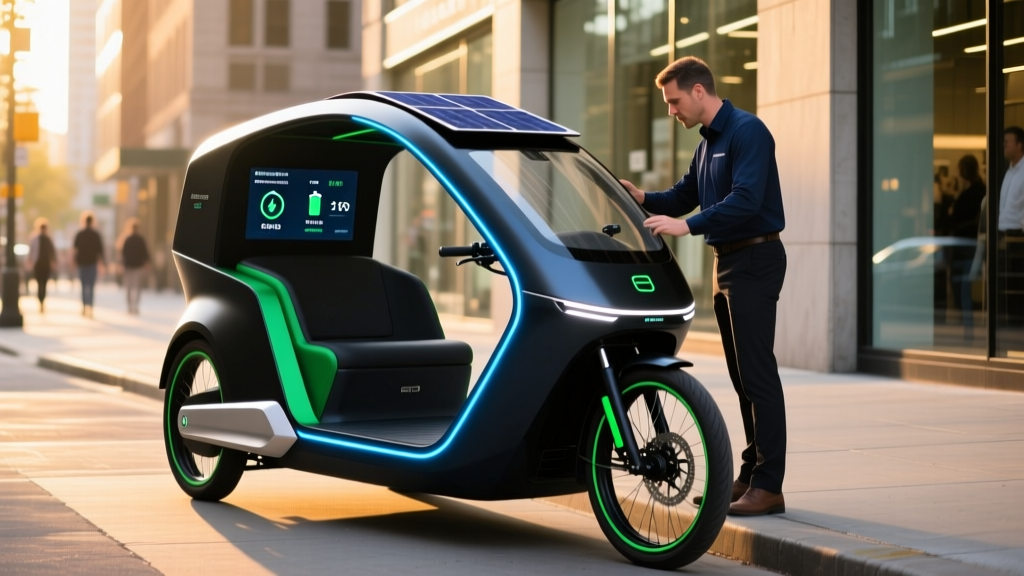
An electric pedicab blends human pedaling with a hub-mounted or mid-drive electric motor (typically 250W–750W) powered by a lithium-ion or LFP (lithium iron phosphate) battery. Unlike a conventional pedicab that relies entirely on rider effort, the electric assist lets operators carry two to three passengers up inclines, maintain 12–18 mph cruising speeds, and complete more trips per shift without fatigue.
In the U.S., electric pedicabs are generally classified as low-speed electric bicycles or neighborhood electric vehicles depending on motor wattage and top speed. Most fall under the Consumer Product Safety Commission's e-bike framework (Class 1 or Class 2) rather than NHTSA vehicle standards. This means no registration, no license plate, and no auto insurance requirement in most jurisdictions — a significant cost advantage over gas-powered alternatives.
Common configurations include:
- Passenger pedicabs: 2–3 riders, bench seating, canopy top — used for tours, events, and bar-district shuttles
- Cargo e-trikes: flatbed or box rear for delivery — growing in last-mile logistics
- Vendor pedicabs: mobile food/cart platforms with custom branding
Electric Pedicab vs. Gas Tuk-Tuk: Cost & Performance Data
The most common comparison for commercial operators is the electric pedicab versus a gas-powered tuk-tuk or auto-rickshaw. Here is how the numbers stack up for a typical urban route operation (15 miles per day, 300 operating days per year):
| Metric | Electric Pedicab | Gas Tuk-Tuk (150cc) |
|---|---|---|
| Upfront Purchase Price | $5,500–$9,000 | $7,000–$11,000 |
| Battery / Engine | 1.5 kWh LFP pack | 150cc single-cylinder |
| Top Speed | 15–20 mph (assisted) | 35–45 mph |
| Range per Full Tank / Charge | 30–45 miles | 120–160 miles |
| Energy / Fuel Cost per Mile | $0.01–$0.03 | $0.12–$0.18 |
| Annual Energy / Fuel Cost (4,500 mi) | $45–$135 | $540–$810 |
| Annual Maintenance | $80–$200 (tires, brakes, chain) | $400–$750 (oil, plugs, filters, exhaust) |
| Registration / Insurance | Usually not required | $300–$600/year |
| 5-Year Total Operating Cost | $3,500–$6,500 | $9,000–$15,000 |
| Emissions | Zero tailpipe | CO₂, NOₓ, particulates |
The per-mile energy savings are substantial. Charging a 1.5 kWh battery from a standard 120V outlet costs roughly $0.18–$0.25 at the U.S. average residential electricity rate of $0.16/kWh (per EIA data). That same distance in a gas tuk-tuk burning 45 MPG at $3.40/gallon costs about $1.13. Over 4,500 miles annually, the electric pedicab saves $500–$700 per year in fuel alone, with additional savings from reduced maintenance and zero registration costs.
Battery, Range, and Charging: The Numbers That Matter
Understanding the difference between kW (power) and kWh (energy) is essential here, just as it is for full-size EVs. The battery capacity in kWh determines how far you can go; the charger power in kW determines how fast you recharge.
| Spec | Budget Models | Mid-Range | Commercial / Fleet |
|---|---|---|---|
| Battery Chemistry | Lead-acid (AGM) | NMC lithium-ion | LFP (lithium iron phosphate) |
| Battery Capacity | 0.8–1.2 kWh | 1.5–2.0 kWh | 2.0–3.0 kWh |
| Real-World Range (loaded) | 15–25 miles | 30–45 miles | 40–60 miles |
| Charge Time (120V standard) | 6–8 hours | 4–6 hours | 3–5 hours |
| Charge Time (240V, if supported) | N/A | 2–3 hours | 1.5–2.5 hours |
| Battery Cycle Life | 300–500 cycles | 800–1,200 cycles | 2,000–3,000 cycles |
| Battery Replacement Cost | $200–$400 | $500–$900 | $800–$1,500 |
| Motor Power | 250W–350W | 500W | 500W–750W |
Real-world range caveat: Manufacturer-claimed ranges of 50–60 miles assume flat terrain, a single lightweight rider, minimal pedal assist, and moderate temperatures. In actual commercial operation — carrying two passengers, frequent stops and starts, hills, and using higher assist levels — expect 60–75% of the sticker range. A pedicab rated for 40 miles may deliver 24–30 miles in heavy urban use. Cold weather (below 40°F) further reduces lithium battery capacity by 15–25%.
LFP vs. NMC trade-offs for pedicabs: LFP batteries are heavier but far more durable (2,000+ cycles vs. ~1,000 for NMC) and safer — they resist thermal runaway. For daily commercial use, LFP is the better long-term investment despite higher upfront cost. Budget operators running seasonal routes may find NMC acceptable.
Real-World Ownership: What First-Time Buyers Must Know
Before committing to an electric pedicab purchase, work through these practical considerations:
Charging Access
Unlike a full-size EV that might need a 240V Level 2 home charger, most electric pedicabs charge from a standard 120V household outlet. The onboard charger is typically 200W–400W, meaning a full charge draws about the same power as a large television. You do not need an electrician or panel upgrade for a single unit. However, if you plan to run a fleet of 5–10 pedicabs charging simultaneously overnight, consult an electrician — you may need dedicated 20A circuits to avoid tripping breakers.
Climate and Seasonality
Electric pedicab operations in northern U.S. cities face a hard reality: lithium batteries lose capacity in cold weather, and riders don't want open-air transport in January. Most operators in cities like Chicago, New York, and Minneapolis run a 6–8 month season (April through October/November). Budget for off-season battery storage — keep packs at 50–60% state of charge in a climate-controlled space to prevent degradation. Lead-acid batteries are especially vulnerable to cold-weather sulfation and should not be stored discharged.
Local Regulations
Electric pedicab legality varies by municipality. Some cities require a pedicab license or permit (e.g., New York City, San Francisco, New Orleans), while others classify them under e-bike rules. Speed limits, operating zones, and passenger capacity restrictions differ widely. Check your city's department of transportation or business licensing office before purchasing. The NHTSA does not regulate low-speed electric trikes under 20 mph, but local ordinances fill that gap.
Maintenance Reality
Electric pedicabs are mechanically simple but not maintenance-free. Expect to service:
- Tires: Heavy loads wear rear tires fast — budget $60–$120 per tire, replacement every 2,000–4,000 miles
- Brake pads: Disc brakes on loaded trikes wear in 3,000–5,000 miles ($20–$40 per set)
- Chain / belt drive: Lubrication monthly, replacement annually ($30–$60)
- Electrical connections: Corrosion checks quarterly, especially in coastal or rainy climates
Cost Breakdown: 5-Year Fleet Ownership Economics
Here is a detailed 5-year cost projection for a single electric pedicab in commercial passenger service, compared to a gas tuk-tuk equivalent:
| Cost Category | Electric Pedicab (Mid-Range) | Gas Tuk-Tuk (150cc) |
|---|---|---|
| Purchase Price | $7,000 | $9,000 |
| Energy / Fuel (5 years, 22,500 mi total) | $450 | $3,375 |
| Maintenance (5 years) | $700 | $2,750 |
| Battery Replacement (year 3–4) | $700 | N/A |
| Registration / Insurance (5 years) | $0–$500 | $2,250 |
| Engine Rebuild / Major Repair | N/A | $800–$1,500 |
| 5-Year Total | $8,850–$9,350 | $18,175–$19,625 |
| Cost per Mile | $0.39–$0.42 | $0.81–$0.87 |
The electric pedicab's total cost of ownership is roughly half that of the gas alternative over five years. The largest savings come from fuel displacement and maintenance reduction. The battery replacement at year 3–4 is the one major mid-life expense unique to the electric option, but even with that factored in, the economics favor electric.
Tax credit note: The federal §30D clean vehicle credit (up to $7,500) does not apply to electric pedicabs, as they are not highway-capable four-wheeled motor vehicles per IRS rules. Some state and local clean-air or small-business incentive programs may offer rebates for electric commercial equipment — check with your state energy office.
Common Misconceptions About Electric Pedicabs
| Myth | Fact |
|---|---|
| "They can't handle hills with passengers." | A 500W–750W mid-drive motor with pedal assist can climb 8–12% grades at 8–10 mph with two passengers. Hub motors struggle more; mid-drive leverages the bike's gears. |
| "Batteries die after a year." | LFP packs rated for 2,000+ cycles last 4–6 years at daily charge/discharge. NMC lasts 2–4 years. Only cheap lead-acid packs degrade within 1–2 years. |
| "You need a special charging station." | Standard 120V outlets work. No Level 2 charger or electrical upgrade needed for 1–3 units. |
| "They're too slow for real business." | 12–18 mph is ideal for dense tourist and entertainment districts where car traffic moves at similar speeds. Trip turnover matters more than top speed. |
| "You get the $7,500 EV tax credit." | False. §30D applies to on-road four-wheeled vehicles only. Electric pedicabs do not qualify. |
| "Rain will destroy the electronics." | Quality units use IP65-rated motor controllers and sealed connectors. They handle rain fine. Avoid submerging the battery or pressure-washing electrical components. |
Decision Framework: Which Electric Pedicab Is Right for You?
Choose Your Scenario
Choose a budget lead-acid e-pedicab ($4,500–$6,000) if:
- You operate seasonally (4–6 months/year) in a flat city
- Daily routes are under 15 miles
- You have 1–2 units and can accept battery replacement every 1–2 years
- Upfront cost is your primary constraint
Choose a mid-range NMC lithium e-pedicab ($6,000–$8,500) if:
- You operate 8–10 months/year with moderate hills
- Daily routes are 15–30 miles
- You want a balance of weight savings and cost
- You're comfortable with battery replacement at year 3–4
Choose a commercial LFP e-pedicab ($8,500–$12,000) if:
- You run a fleet of 3+ units year-round
- Daily routes are 25–50 miles (may need a mid-day top-up charge)
- You want 5+ year battery life with minimal capacity loss
- Safety and thermal stability are priorities (LFP resists thermal runaway)
- Total cost of ownership matters more than sticker price
Stick with a gas tuk-tuk if:
- Your routes exceed 50 miles daily with no mid-day charging opportunity
- You operate in extreme cold (below 10°F) regularly
- You need highway-speed capability (35+ mph) for mixed-traffic roads
- Local regulations prohibit electric trikes in your operating zone
Frequently Asked Questions
How fast can an electric pedicab go?
Most electric pedicabs reach 15–20 mph with motor assist. U.S. e-bike classification generally caps Class 1 and Class 2 at 20 mph. Some commercial models with 750W motors can hit 25 mph on flat ground, but this may push them into a different regulatory category requiring registration in some jurisdictions.
Can I charge an electric pedicab from a regular wall outlet?
Yes. Nearly all electric pedicabs charge from a standard 120V household outlet. A full charge on a 1.5 kWh battery takes 4–6 hours. The power draw is roughly 200W–400W — comparable to a desktop computer. No special electrical work is required for single-unit charging.
How long does the battery last before replacement?
LFP lithium batteries last 2,000–3,000 charge cycles, translating to 5–8 years of daily commercial use before capacity drops below 80%. NMC lithium packs last 800–1,200 cycles (2–4 years). Lead-acid batteries last 300–500 cycles (1–2 years). Replacement costs range from $200 (lead-acid) to $1,500 (large LFP pack).
Do electric pedicabs qualify for any tax credits or incentives?
They do not qualify for the federal §30D clean vehicle tax credit, which requires a four-wheeled, highway-capable vehicle. However, some state clean-energy programs, local business-improvement districts, and municipal green-fleet grants may cover electric pedicabs. Check your state energy office and local small-business development center.
What happens if the battery runs out mid-route?
Unlike a gas vehicle that leaves you stranded, an electric pedicab can still be pedaled without motor assist. It's heavier than a regular bike (typically 150–250 lbs empty), so pedaling without assist is strenuous but possible for short distances. Smart operators plan routes within 70% of rated range and keep a backup charged battery if running a fleet.
Are electric pedicabs street-legal?
In most U.S. jurisdictions, electric pedicabs operating under 20 mph fall under e-bike regulations and are legal on streets and bike lanes without registration or a driver's license. However, commercial passenger-for-hire operations often require a local business license, pedicab permit, and liability insurance. Regulations vary significantly by city — always verify with your local transportation authority before launching a service.