The Quick Answer: What Is the 'Electric Panda'?
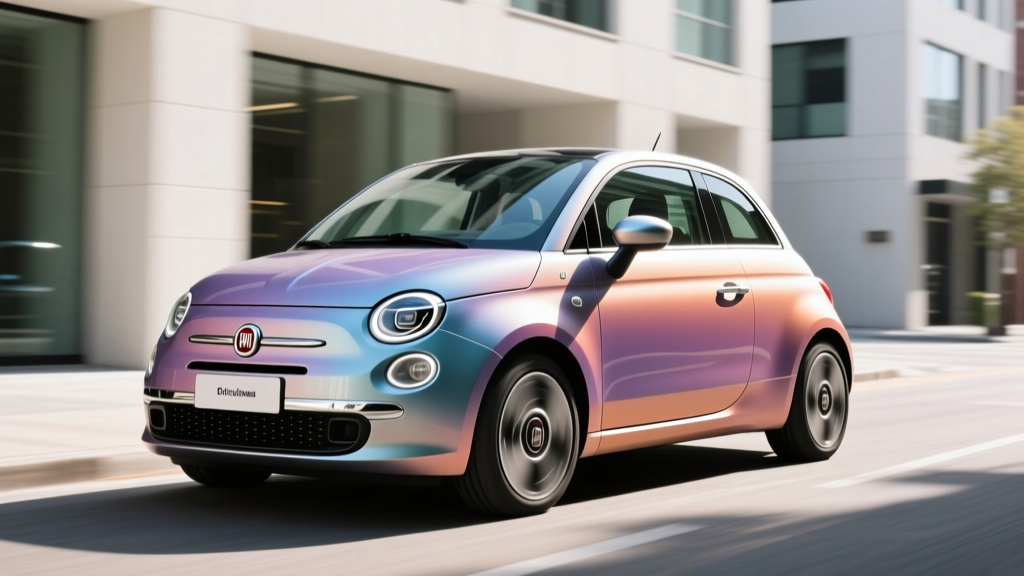
When American EV shoppers search for the electric panda, they're almost always referring to the Fiat 500e — Fiat's compact electric city car that channels the same cheerful, minimalist spirit as the classic Panda but with a fully electric powertrain. The 2026 Fiat 500e carries a starting MSRP of approximately $36,500, delivers an EPA-estimated 149 miles of range from its 42 kWh (usable) NMC battery, and targets urban commuters who want a stylish, easy-to-park EV. If you're cross-shopping subcompact EVs, this guide gives you the exact numbers to decide whether the 500e fits your driving life — or whether a hybrid or a longer-range EV makes more financial sense.
Range, Battery, and Efficiency: The Numbers That Matter
The 2026 Fiat 500e is built on a dedicated EV platform with a floor-mounted 42 kWh usable lithium-ion (NMC chemistry) battery pack. Here is the official efficiency profile:
| Spec | Value |
|---|---|
| EPA Range | 149 miles |
| Battery (usable) | 42 kWh, NMC |
| Efficiency | 116 MPGe combined (29 kWh/100 mi) |
| Motor Output | 118 hp / 162 lb-ft torque |
| 0–60 mph | ~8.6 seconds |
| Max DC Fast Charge | 85 kW (CCS/NACS adapter available) |
| 10–80% DC Fast Charge | ~35 minutes |
| Level 2 Charge Rate | 11 kW (~4.5 hours, 0–100%) |
| Battery Warranty | 8 years / 100,000 miles |
| Base MSRP (La Prima trim) | $36,500 |
Real-World Range Reality Check
The EPA sticker says 149 miles, but real-world results depend heavily on conditions:
- City driving (mild weather): 145–155 miles — regenerative braking recaptures energy in stop-and-go traffic.
- Highway (70 mph, 75°F): Expect ~115–130 miles. Small EVs lose efficiency disproportionately at speed due to aero drag.
- Cold weather (30°F, mixed driving): 100–120 miles. The 500e uses a heat pump, which helps, but NMC batteries still lose 15–25% capacity in freezing temps.
Bottom line: if your daily round-trip commute exceeds 90 miles or you regularly drive highways in winter, this car will require mid-day top-ups or route planning.
EV vs. Gas vs. Hybrid: How the 500e Stacks Up
The most common question from first-time EV buyers: does going electric actually save money compared to a gas subcompact or a hybrid? Let's compare the 500e against two realistic alternatives — the gasoline Fiat 500 (discontinued in the US but representative of the segment) and the Toyota Prius hybrid.
| Metric | Fiat 500e (2026) | Gas Subcompact (e.g., Honda Fit-class) | Toyota Prius (HEV) |
|---|---|---|---|
| MSRP | $36,500 | ~$22,000 | ~$29,500 |
| Federal Tax Credit (§30D) | Up to $7,500* | $0 | $0 |
| Effective Price After Credit | ~$29,000 | ~$22,000 | ~$29,500 |
| Fuel/Energy Cost per Mile | $0.04–$0.06 (home L2) | $0.12–$0.15 (gas) | $0.07–$0.09 (gas) |
| Annual Fuel (12,000 mi) | $480–$720 | $1,440–$1,800 | $840–$1,080 |
| Annual Maintenance | ~$300 | ~$800 | ~$600 |
| 5-Year Fuel + Maint. Total | $3,900–$5,100 | $11,000–$13,000 | $7,200–$8,400 |
* Federal §30D credit eligibility depends on MSRP caps (sedans ≤$55,000), buyer income limits ($150K single / $300K joint AGI), and battery critical-mineral sourcing requirements. Verify current-year rules at IRS.gov before purchasing. The 500e's Italian-built battery sourcing has been a moving target — confirm with your dealer at point of sale.
Charging Costs and Infrastructure: What You'll Actually Spend
Charging economics are the single biggest ownership variable. Here's a realistic cost breakdown based on national averages:
| Charging Scenario | Cost per Full Charge (42 kWh) | Cost per Mile |
|---|---|---|
| Home Level 2 (avg $0.16/kWh) | $6.72 | $0.045 |
| Home Level 2 (time-of-use off-peak $0.09/kWh) | $3.78 | $0.025 |
| Public DC Fast (avg $0.40/kWh) | $16.80 | $0.11 |
| Public Level 2 (avg $0.25/kWh) | $10.50 | $0.07 |
Home charging installation: If you need a 240V Level 2 home charger (recommended for daily use), budget $800–$2,500 for a hardwired unit including electrician labor and permits. If your home's electrical panel is already 200A with spare breaker slots, you'll be on the low end. A panel upgrade to 200A can add $1,500–$3,000. Always get a quote from a licensed electrician before purchasing.
Charging speed reality: The 500e peaks at 85 kW on DC fast charging, but like all EVs, it follows a charge curve — it sustains peak rate only between roughly 10–50% State of Charge, then tapers significantly. Expect a 10–80% session to take approximately 35 minutes at a 150+ kW station. For daily driving, most owners charge overnight at home and rarely use DC fast charging except on road trips.
Real-World Ownership: Who Should (and Shouldn't) Buy This EV
The 500e is not a one-size-fits-all vehicle. Its compact size, modest range, and urban efficiency profile make it ideal for some buyers and a poor fit for others.
Decision Framework: Is the 500e Right for You?
Choose the Fiat 500e if:
- Your daily commute is under 60 miles round-trip
- You have access to home or workplace Level 2 charging
- You primarily drive in urban/suburban environments
- You want a second car for errands and commuting alongside a larger vehicle
- You value low running costs and easy parking over range and cargo space
Look at a longer-range EV or PHEV if:
- Your daily driving exceeds 80 miles regularly
- You live in an apartment or area without reliable home/workplace charging
- You frequently take highway road trips over 200 miles
- You live in a cold climate where winter range loss of 20–30% would leave you under 100 usable miles
- You need cargo space for gear, kids, or pets (the 500e offers only ~8.5 cu ft behind rear seats)
Home Charging Access Is the Make-or-Break Factor
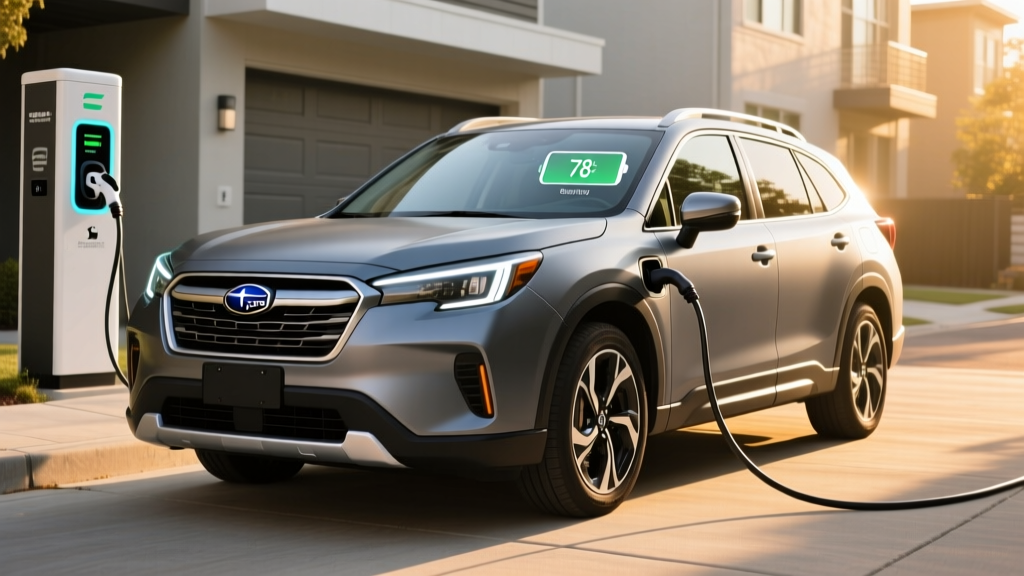
The single most important question before buying any EV is: can I charge at home? If you have a garage, driveway, or dedicated parking spot with access to a 240V outlet, the 500e is remarkably convenient — plug in at night, wake up to a full battery every morning at a cost of roughly $4–7. If you rely exclusively on public charging, your per-mile cost roughly doubles or triples, and the convenience advantage disappears.
Common Misconceptions About Subcompact EVs
| Myth | Fact |
|---|---|
| "149 miles of range isn't enough for anyone." | The average American drives ~37 miles per day (FHWA data). For a commuter car with home charging, 149 miles provides a comfortable 3–4 day buffer between charges. |
| "EV batteries need replacing every few years." | NMC batteries in modern EVs like the 500e are warrantied for 8 years/100,000 miles against capacity loss below 70%. Real-world degradation data from similar platforms shows ~8–12% capacity loss over 5 years/75,000 miles. |
| "The tax credit makes it basically free." | The §30D credit is non-refundable and subject to income caps, MSRP limits, and battery-sourcing requirements. Many buyers qualify for less than the full $7,500 — or nothing at all. Always verify at IRS.gov. |
| "Small EVs are slow and unsafe." | The 500e hits 60 mph in 8.6 seconds — adequate for highway merging. It earned strong marks in European NCAP testing; check IIHS for US crash-test ratings when available for the current model year. |
| "Public charging is always broken." | Reliability varies by network. Tesla Superchargers (now accessible via NACS adapter) report ~95%+ uptime. Electrify America and ChargePoint are improving but can be inconsistent in rural areas. Plan routes with apps like PlugShare or A Better Routeplanner. |
5-Year Total Cost of Ownership Breakdown
Let's run the full ownership math for a 2026 Fiat 500e versus a comparable gas subcompact over 5 years and 60,000 miles, assuming home Level 2 charging at $0.14/kWh average:
| Cost Category | Fiat 500e | Gas Subcompact |
|---|---|---|
| Purchase Price (after credit) | $29,000 | $22,000 |
| Home Charger Install | $1,500 | $0 |
| Fuel/Energy (5 years) | $3,360 | $9,000 |
| Maintenance (5 years) | $1,500 | $4,000 |
| Insurance (5 years, avg) | $7,500 | $5,500 |
| Depreciation (est.) | $12,000 | $9,000 |
| 5-Year Total | $54,860 | $49,500 |
| Cost per Mile (all-in) | $0.91 | $0.83 |
The EV wins decisively on fuel and maintenance but loses ground on insurance (typically 15–25% higher for EVs), depreciation (subcompact EVs depreciate faster than established gas models), and upfront cost. Over a longer 7–8 year ownership period, the 500e's lower operating costs begin to close the gap — especially if gas prices rise or you have access to cheap off-peak electricity.
Insurance note: EV insurance premiums are generally higher due to battery replacement costs in collision claims. Get quotes from your insurer before purchasing — the difference can be $300–$600/year depending on your state and driving record.
What First-Time EV Buyers Must Know Before Purchasing
If the 500e (or any EV) is your first electric vehicle, here are the practical realities no brochure will tell you:
- kW vs. kWh: This is the #1 confusion for new EV owners. kWh (kilowatt-hours) measures battery capacity — how much energy the car stores (like gallons in a gas tank). kW (kilowatts) measures charging power — how fast energy flows in (like the flow rate of a gas pump). The 500e has a 42 kWh battery and charges at up to 85 kW.
- Charge curve taper: That 85 kW peak only applies at low state of charge. Above 80%, charging slows dramatically to protect the battery. Plan DC fast sessions to 80%, not 100%.
- Preconditioning: If you set a departure time in the 500e's app, the car will warm (or cool) the battery while still plugged in. This preserves range and enables faster DC charging when you hit the road.
- One-pedal driving: The 500e's regenerative braking can slow the car to a stop without touching the brake pedal in most city driving. It takes a day to adjust, then you'll prefer it.
- Tire wear: EVs are heavier and deliver instant torque. Expect to replace tires 10–20% sooner than on a comparable gas car. Budget accordingly.
Frequently Asked Questions
Is the Fiat 500e the same as the 'electric panda'?
Not officially. Fiat never sold a vehicle called the "Electric Panda" in the US market. However, the Fiat 500e occupies the same niche — a small, affordable, city-friendly EV — that an electrified Panda would. Some EV forums and European media informally refer to the 500e as an "electric panda" due to its size and character. If Fiat introduces a Panda EV to the US market in the future, we'll update this guide.
Can I road-trip the 500e?
Yes, but with planning. At 149 miles EPA range (and ~120 real-world highway miles), you'll need to stop every 90–110 miles for a 30–35 minute DC fast charge. This works for occasional road trips but isn't ideal as a primary long-distance vehicle. If road trips are frequent, consider a 250+ mile EV or keep a gas/hybrid car as your second vehicle.
Does the 2026 Fiat 500e qualify for the $7,500 federal tax credit?
Eligibility is not guaranteed and changes frequently. The §30D credit requires the vehicle to meet battery-sourcing and critical-mineral thresholds, the buyer must fall under income caps ($150K single / $300K joint modified AGI), and the vehicle MSRP must be under $55,000 for sedans. Because the 500e is manufactured in Italy, its battery-sourcing compliance has varied by model year. Check the latest eligibility list at fueleconomy.gov and confirm with your dealer before signing.
How long will the 500e's battery last?
Fiat warranties the battery for 8 years or 100,000 miles against capacity dropping below 70%. Based on degradation data from similar NMC packs, expect roughly 85–90% state of health after 5 years of typical use. A full battery replacement (if needed out of warranty) would cost approximately $8,000–$12,000 at current pricing, though this is rare within the first 10 years.
What's the best way to charge a 500e at home?
Install a Level 2 (240V) home charger rated at 32–40 amps on a 50-amp circuit. This delivers up to 11 kW to the 500e, fully replenishing the 42 kWh battery in about 4–5 hours overnight. Popular, reliable units include the ChargePoint Home Flex, Emporia Vue, and Wallbox Pulsar Plus. Budget $500–$700 for the unit and $500–$1,800 for professional installation depending on your panel and wiring distance.