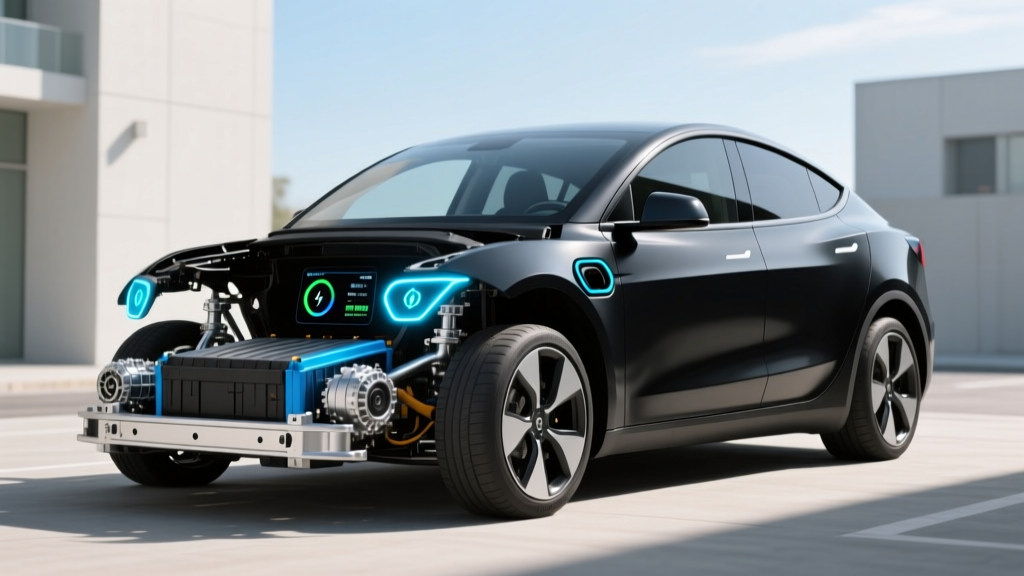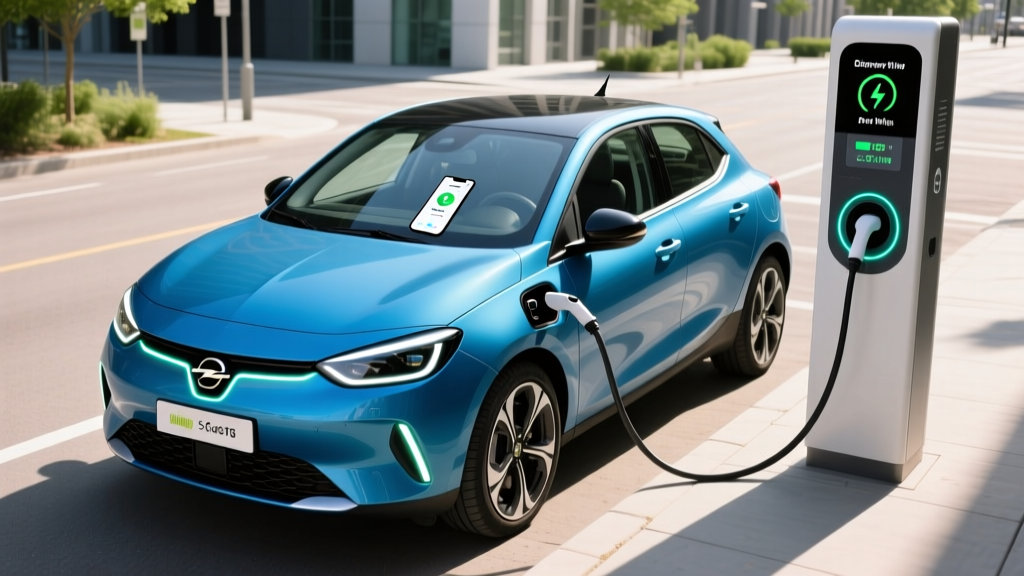
The Opel Corsa has been one of Europe's best-selling small cars for decades. The all-electric variant, now in its refreshed second generation on the Stellantis e-CMP platform, competes directly with the Renault Zoe, Peugeot e-208, and Volkswagen ID.2. If you're researching the electric Opel Corsa as a potential daily driver, this guide breaks down everything from real-world range to five-year ownership economics — with the numbers that actually matter.
Range, Battery, and Efficiency: What the Sticker Doesn't Tell You
The 2026 Corsa Electric uses a 51 kWh (usable) lithium-ion NMC battery pack paired with a single front-mounted electric motor producing 156 hp (115 kW) and 192 lb-ft of torque. Opel quotes a WLTP range of 227 miles (366 km). For context, the official Opel spec sheet confirms this figure for the standard trim with 16-inch wheels.
But WLTP testing tends to overstate range compared to real-world driving — especially for US readers accustomed to the more conservative EPA cycle. Here's what to actually expect:
| Driving Scenario | Estimated Range |
|---|---|
| WLTP (official sticker) | 227 mi / 366 km |
| City/suburban, mild weather | 210–225 mi / 340–360 km |
| Highway (70 mph / 110 km/h) | 160–180 mi / 260–290 km |
| Cold weather (below 32°F / 0°C), mixed | 150–170 mi / 240–275 km |
| Worst-case (cold + highway + hills) | 130–150 mi / 210–240 km |
Efficiency in mixed driving averages around 15.5 kWh/100 km (roughly 4.0 mi/kWh). This is respectable for the segment but trails the Renault Zoe's slightly lighter platform. The Corsa Electric lacks a heat pump as standard equipment on base trims — a notable omission that can increase cold-weather energy consumption by 15–25% when cabin heating is active. Opel offers the heat pump as part of an optional winter package.
Charging Speed and Infrastructure Compatibility
Understanding the difference between kW (power, or how fast energy flows) and kWh (energy, or how much the battery stores) is essential. The Corsa Electric's 51 kWh battery can accept up to 100 kW of DC fast-charging power at peak.
| Charging Level | Power (kW) | Speed (miles added per hour) | Typical Use Case |
|---|---|---|---|
| Level 1 (domestic socket, 230V) | ~2.3 kW | ~9 mi/hr (14 km/hr) | Emergency / overnight top-up |
| Level 2 (wallbox, 7.4 kW single-phase) | 7.4 kW | ~29 mi/hr (47 km/hr) | Home / workplace daily charging |
| Level 2 (11 kW three-phase) | 11 kW | ~43 mi/hr (70 km/hr) | Home (three-phase supply) / public AC |
| DC Fast Charge (peak) | 100 kW | ~120 mi in 28 min (10–80%) | Road trips / rapid top-ups |
The 10–80% DC fast-charge time of approximately 28 minutes is adequate but not class-leading. The charge curve tapers noticeably above 80% State of Charge (SoC), as is typical for NMC chemistry — expect 80–100% to take an additional 20+ minutes. For comparison, the Hyundai Kona Electric (long-range) achieves 10–80% in roughly 41 minutes but at a lower peak rate, while the VW ID.3 with its MEB platform can sustain higher rates longer.
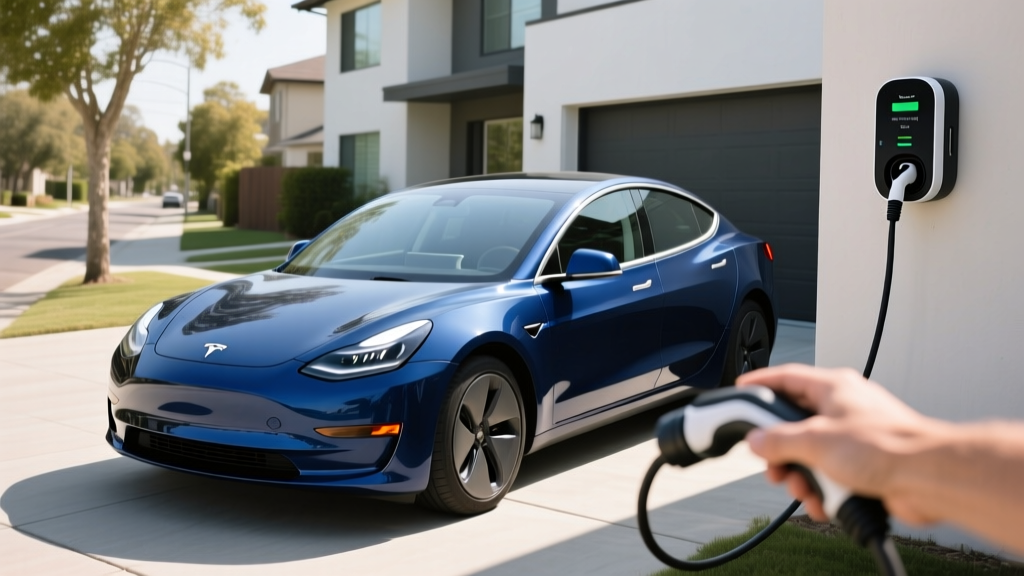
The Corsa Electric uses a CCS2 connector standard across European markets. It is compatible with Ionity, Shell Recharge, Allego, and most major European DC networks. For home charging, a 7.4 kW single-phase wallbox (such as a Wallbox Pulsar Plus or Opel's own branded unit) will fully recharge the battery from empty in approximately 7.5 hours — practical for overnight use.
Electric Opel Corsa vs. Gas Corsa vs. Renault Zoe: The Numbers
Opel continues to sell the Corsa with a 1.2-liter turbocharged petrol engine alongside the electric variant. Here's how they compare on the metrics that matter for ownership decisions:
| Metric | Corsa Electric (2026) | Corsa 1.2 Turbo (Gas) | Renault Zoe E-Tech (2026) |
|---|---|---|---|
| Powertrain | BEV, 156 hp | 1.2L turbo, 130 hp | BEV, 135 hp |
| Battery / Tank | 51 kWh (NMC) | 44L fuel tank | 52 kWh (NMC) |
| Range (official) | 227 mi WLTP | ~435 mi (5.1 L/100km) | 239 mi WLTP |
| 0–62 mph | 8.1 sec | 8.7 sec | 9.5 sec |
| DC Fast Charge (peak) | 100 kW | N/A | 50 kW |
| Base Price (Germany) | ~€34,900 | ~€22,500 | ~€35,200 |
| Cost per km (fuel/electricity)* | €0.04–0.07 | €0.10–0.14 | €0.04–0.07 |
| Battery Warranty | 8 yr / 100,000 mi (70% SoH) | N/A | 8 yr / 100,000 mi (70% SoH) |
*Electricity cost based on €0.30/kWh home rate; fuel cost based on €1.80/L petrol. Actual costs vary by region and tariff.
The electric Corsa commands a significant upfront premium over the gas version — roughly €12,400 more at base. However, per-km operating costs are 50–65% lower when charging at home. The break-even point depends heavily on annual mileage and local electricity pricing. At 15,000 km/year with home charging at €0.30/kWh, the Corsa Electric saves approximately €900–1,200 annually in energy costs versus the petrol model. Factor in reduced maintenance (no oil changes, fewer brake replacements thanks to regenerative braking), and the real annual savings approach €1,200–1,500.
Five-Year Ownership Cost Breakdown
Total cost of ownership (TCO) is where the electric Corsa makes its strongest case — provided you can charge at home. Here's a realistic five-year projection for a driver covering 15,000 km/year in Germany:
| Cost Category (5 Years) | Corsa Electric | Corsa 1.2 Gas |
|---|---|---|
| Purchase Price (base) | €34,900 | €22,500 |
| National EV Incentive (Germany, Umweltbonus)** | -€0 (program ended 2023) | N/A |
| Home Wallbox + Installation | €1,200–1,800 | €0 |
| Energy/Fuel (75,000 km) | €3,500–4,200 | €7,500–9,000 |
| Maintenance (5 years) | €800–1,200 | €2,500–3,500 |
| Insurance (avg.) | €4,500–5,500 | €3,800–4,500 |
| Vehicle Tax (5 years) | €0 (exempt through 2030) | €500–650 |
| Estimated 5-Year Total | €44,900–48,100 | €36,800–40,150 |
| Estimated Resale Value (after 5 yr) | €14,000–17,000 | €9,000–11,000 |
| Net Cost After Resale | €27,900–34,100 | €25,800–31,150 |
**Germany's Umweltbonus federal EV subsidy ended in December 2023. Other European countries may still offer incentives — check local programs. Insurance tends to be 10–20% higher for EVs due to repair-cost differentials, though this gap is narrowing.
The net cost gap after accounting for resale value narrows to approximately €2,000–3,000 over five years. For higher-mileage drivers (20,000+ km/year), the electric Corsa can break even or come out ahead. The calculus also shifts favorably if your employer offers free workplace charging or if you have access to cheap overnight electricity tariffs (e.g., €0.15–0.20/kWh off-peak rates available through providers like Tibber or Octopus Energy in select markets).
What First-Time EV Buyers Need to Know About the Corsa Electric
If you're transitioning from a petrol car, several ownership realities deserve attention before signing a purchase agreement:
Home charging is nearly essential. The Corsa Electric is a small-battery EV designed for daily commuting and moderate road trips. Without home or workplace charging, you'll rely on public DC chargers at €0.45–0.70/kWh — erasing most of the cost advantage over petrol. A 7.4 kW home wallbox costs €800–1,200 for the unit plus €400–800 for professional installation by a licensed electrician, depending on your electrical panel's capacity and distance from the parking spot.
Regenerative braking changes how you drive. The Corsa Electric offers two regen levels: standard (mild, similar to engine braking) and B-mode (stronger, approaching one-pedal driving in city traffic). Most owners adapt within a week, and the benefit is measurable — brake pad life typically extends to 80,000–100,000+ km versus 40,000–60,000 km on the gas version.
Plan road trips around charging stops. With real-world highway range of 160–180 miles and 28-minute fast-charge stops, a 400 km motorway trip requires one 20–30 minute charging break. Preconditioning the battery (available via the Opel Connect app when you set a departure time or navigate to a charger) improves charge speed in cold weather — without it, the first 5–10 minutes of a DC session may be limited to 40–50 kW until the battery warms up.
Battery degradation is modest but real. NMC batteries in the e-CMP platform typically lose 5–10% capacity over the first 100,000 km based on fleet data from similar Stellantis vehicles (Peugeot e-208, DS 3 E-Tense). Opel's warranty guarantees at least 70% State of Health (SoH) at 8 years or 100,000 miles — meaning a worst-case replacement scenario is covered, though out-of-warranty battery replacement currently runs €8,000–12,000 if needed beyond that window.
- Choose the Corsa Electric if: You drive under 200 km/day, have access to home or workplace charging, primarily commute in urban/suburban settings, and want to minimize per-km operating costs.
- Consider the gas Corsa instead if: You regularly drive 300+ km without stopping, lack reliable charging access, live in an area with very high electricity rates, or need the lowest possible upfront purchase price.
- Look at the Renault Zoe or VW ID.3 if: You need slightly more range (Zoe: 239 mi WLTP, ID.3 Pro: ~260 mi WLTP) or faster sustained DC charging (ID.3 peaks at 170 kW on MEB platform).
Common Misconceptions About the Electric Opel Corsa
| Myth | Fact |
|---|---|
| "The range is too small for real use." | 227 mi WLTP covers the average European driver's weekly commuting on a single charge. The average daily commute in the EU is under 40 km (25 mi). |
| "EV batteries need replacing every few years." | NMC batteries in the e-CMP platform show 5–10% degradation over 100,000 km. Most will retain 85–90% capacity at 8 years. The warranty covers below-70% SoH. |
| "Charging takes too long." | Home Level 2 charging overnight (7.5 hours) is effectively zero downtime. DC fast charging adds ~120 miles in 28 minutes — comparable to a lunch stop. |
| "EVs are worse in winter." | Range drops 20–35% in freezing temperatures, which is real. But EVs start instantly in cold weather (no engine cranking), and cabin preheating while plugged in preserves range. |
| "The Corsa Electric qualifies for a US tax credit." | The Opel Corsa is not sold in the United States and does not qualify for the US federal §30D tax credit. This vehicle is available only in European and select international markets. |
Interior, Technology, and Safety
The 2026 Corsa Electric carries over the updated interior introduced with the facelift: a 10-inch digital instrument cluster and a 10-inch central touchscreen running Opel's latest IntelliLink infotainment system with wireless Apple CarPlay and Android Auto. Build quality is solid for the segment, though hard plastics dominate the lower dashboard and door panels — consistent with the Corsa's positioning as a value-oriented supermini.
Cargo space measures 267 liters (9.4 cu ft) behind the rear seats, expanding to approximately 1,042 liters (36.8 cu ft) with the 60/40 rear seats folded. This is unchanged from the gas Corsa — the battery pack sits beneath the floor and doesn't intrude on passenger or cargo volume. There is no front trunk (frunk).
Safety equipment includes standard automatic emergency braking, lane-keeping assist, traffic sign recognition, and driver attention monitoring. Adaptive cruise control with stop-and-go functionality is available on higher trims. Note that these features constitute SAE Level 1 driver assistance — the driver must remain fully engaged at all times. The Corsa Electric has not been separately crash-tested by Euro NCAP as an EV variant, but the Corsa platform scored four stars in prior testing.
Frequently Asked Questions
Can I buy the electric Opel Corsa in the United States?
No. Opel does not sell vehicles in the US market. The Corsa Electric is available across Europe and select international markets. US buyers looking for a similar compact EV should consider the Chevrolet Equinox EV, Nissan Leaf, or Mini Cooper SE as alternatives.
How long does it take to charge the Corsa Electric at home?
Using a 7.4 kW single-phase wallbox, a full charge from 0–100% takes approximately 7.5 hours. On a standard 230V domestic outlet (2.3 kW), a full charge takes over 22 hours — practical only for topping up, not full recharges. An 11 kW three-phase connection reduces the time to roughly 5 hours.
What happens if the battery degrades significantly?
Opel warrants the battery for 8 years or 100,000 miles (whichever comes first), guaranteeing at least 70% State of Health. If degradation exceeds 30% within that window, Opel will repair or replace the battery at no cost. Real-world data from similar Stellantis e-CMP vehicles suggests most batteries retain 85–90% capacity at the 8-year mark under normal use.
Is the Corsa Electric cheaper to run than the gas Corsa?
Yes, on a per-kilometer basis — electricity costs roughly €0.04–0.07/km (at home rates) versus €0.10–0.14/km for petrol. Combined with lower maintenance and zero road tax in many European countries, annual savings of €1,200–1,500 are typical for a driver covering 15,000 km/year. However, the higher purchase price means total cost parity takes 4–6 years depending on mileage and incentives.
Does the Corsa Electric have a heat pump?
Not as standard equipment on the base trim. A heat pump is available as part of an optional winter package. Without it, cabin heating in cold weather draws directly from the traction battery, which can reduce range by 15–25% in sub-zero conditions. We recommend the heat pump option for buyers in northern European climates.