Quick Answer: Is an Electric Off Road Vehicle Right for You?
The best electric off road vehicle for most buyers in 2026 is the Rivian R1S Dual-Motor (EPA 371 miles, starting around $79,900) for its blend of range, ground clearance, and charging speed. If you need maximum rock-crawling torque and don't mind 250+ miles of range, the GMC Hummer EV SUV delivers 830 hp and CrabWalk capability. For budget-conscious trail runners who still want a gas backup, the Jeep Wrangler 4xe PHEV (EPA 22 miles electric, 49 MPGe) remains a practical bridge. Expect real-world trail range to drop 25–40% below EPA depending on terrain, elevation, and temperature. Home Level 2 charging is nearly essential for off-road EV ownership; public DC fast-charging near trailheads remains sparse in most U.S. regions.
The 2026 Electric Off Road Vehicle Landscape
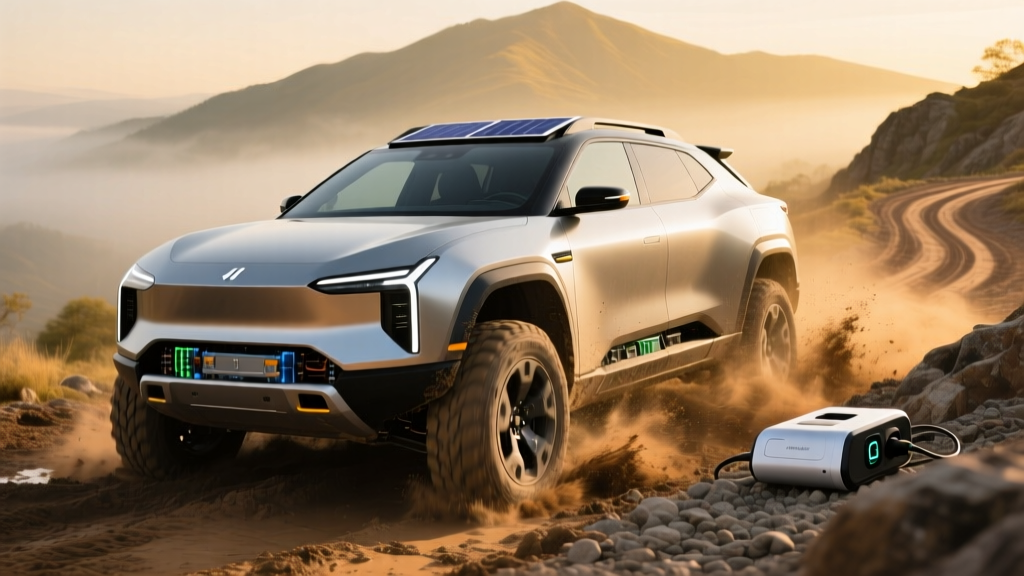
Electric off-road vehicles have matured from novelty to genuine trail machines. Three platforms dominate the U.S. market, each with a distinct philosophy:
- Rivian R1S — A purpose-built electric SUV with a quad- or dual-motor skateboard, air suspension, and a 149 kWh (usable ~140 kWh) NMC battery pack on the Max configuration.
- GMC Hummer EV SUV — A 9,000-lb Ultium-based behemoth with extractable Watts to Freedom mode, adaptive air ride, and three-motor torque vectoring.
- Jeep Wrangler 4xe — A plug-in hybrid pairing a 2.0L turbo with a 17.3 kWh battery for short electric-only loops, preserving the Wrangler's solid-axle trail pedigree.
The upcoming Rivian R2S (announced for late 2026, starting near $45,000) promises a more affordable compact off-roader, but final EPA range and trail specs remain preliminary. Tesla's Cybertruck, while capable, is primarily a pickup and falls outside this SUV-focused guide.
Spec Showdown: Range, Power, and Trail Hardware
| Spec | Rivian R1S Dual-Motor Max | GMC Hummer EV SUV 3X | Jeep Wrangler 4xe Rubicon |
|---|---|---|---|
| Powertrain | BEV, Dual-Motor AWD | BEV, Tri-Motor AWD | PHEV, 2.0L Turbo + Electric |
| EPA Range / Electric-Only | 371 mi (BEV) | 314 mi (BEV) | 22 mi electric / 49 MPGe |
| Battery (usable) | ~140 kWh NMC | ~212 kWh NMC (Ultium) | 17.3 kWh NMC |
| Horsepower / Torque | 665 hp / 829 lb-ft | 830 hp / 1,200 lb-ft | 375 hp / 470 lb-ft |
| 0–60 mph | ~3.5 sec | ~3.0 sec (WTF mode) | ~6.0 sec |
| Ground Clearance (max) | 14.9 in (air susp.) | 15.9 in (adaptive) | 10.8 in |
| Max DC Fast Charge | 220 kW peak | ~350 kW peak (800V capable) | N/A (Level 2 only) |
| 10–80% DC Charge Time | ~30 min | ~28 min | ~2.5 hr (Level 2) |
| Towing Capacity | 7,700 lb | 7,500 lb | 3,500 lb |
| Base MSRP (2026 est.) | $79,900 | $104,500 | $56,990 |
| Battery Warranty | 8 yr / 175,000 mi | 8 yr / 100,000 mi | 8 yr / 100,000 mi |
Sources: fueleconomy.gov, Rivian specs, GMC Hummer EV, Jeep Wrangler 4xe.
Real-World Range on the Trail: What the EPA Sticker Won't Tell You
EPA vs. Trail Reality: The Rivian R1S Max posts a 371-mile EPA combined rating. On moderate off-road terrain (forest service roads, 3–8% grades, 40°F), expect 230–280 miles before needing a charge. Aggressive rock crawling with frequent low-range stops can cut that to 160–200 miles. The Hummer EV SUV's 314-mile EPA figure translates to roughly 200–250 miles on mixed trail/pavement due to its 9,000-lb curb weight and 37-inch tires.
Three factors crush off-road EV range that don't appear on any window sticker:
- Elevation gain — Climbing 3,000 feet of elevation consumes roughly 3–5 kWh per 1,000 feet in a heavy SUV. A 6,000-foot mountain pass can eat 20+ kWh — equivalent to 50–60 miles of flat highway driving.
- Low-speed technical terrain — Rock crawling at 2–5 mph draws sustained high current from the motors without the benefit of regenerative braking. Expect 1.5–2.0 kWh/mile on Moab-style slickrock, versus 0.30–0.35 kWh/mile on the highway.
- Cold-weather trail use — At 25°F, NMC battery chemistry loses 20–30% of usable capacity without preconditioning. Rivian's heat pump mitigates this better than resistive heating, but plan for a 25% range reduction in winter mountain conditions.
Charging Infrastructure: The Trail-Access Problem
Here's the uncomfortable truth: DC fast-charging near major U.S. trailheads is still sparse. Moab, UT has Electrify America and Tesla Supercharger stations. Sedona, AZ has a growing network. But the trailheads of Colorado's San Juans, Utah's Uintas, and most national forest staging areas have zero public charging.
| Charging Level | Power | Miles Added/Hour | Where You'll Use It |
|---|---|---|---|
| Level 1 (120V) | 1.4–1.9 kW | 3–5 mi/hr | Emergency trickle at a cabin or campsite |
| Level 2 (240V) | 7.7–19.2 kW | 20–55 mi/hr | Home garage, hotel, some campgrounds |
| DC Fast Charge | 50–350 kW | 150–800+ mi/hr | Highway corridors, gateway towns |
Practical strategy: Install a Level 2 home charger (40–48 amp, ~$1,200–$2,500 including electrician) and plan trail trips in loops that pass through towns with DC fast chargers. The Rivian R1S's NACS port gives access to 20,000+ Tesla Superchargers — a significant advantage over CCS-only vehicles for remote travel. The Hummer EV uses CCS, with access to Electrify America and EVgo networks, which are denser along interstates but thinner in mountain regions.
For the Wrangler 4xe, charging is straightforward: a standard 120V outlet adds ~8 miles of electric range overnight, and a Level 2 fills the 17.3 kWh battery in about 2.5 hours. You'll rarely need public charging for the electric portion.
Total Cost of Ownership: EV Off-Roader vs. Gas Equivalent
| Cost Factor (5 Years / 75,000 mi) | Rivian R1S Dual-Motor | Toyota 4Runner TRD Pro (Gas Baseline) |
|---|---|---|
| Purchase Price (MSRP) | $79,900 | $56,990 |
| Federal Tax Credit (§30D) | Up to $7,500* | $0 |
| Fuel / Electricity | $4,800 (home L2 at $0.14/kWh avg) | $11,250 (17 MPG avg, $3.40/gal) |
| Maintenance | $1,800 (tires, cabin filter, fluid top-offs) | $4,500 (oil, filters, brakes, diff fluid) |
| Insurance (avg.) | $12,500 ($2,500/yr) | $8,500 ($1,700/yr) |
| Estimated Depreciation | $28,000 (~35%) | $18,000 (~32%) |
| Total 5-Year Cost | ~$121,000 | ~$82,740 |
*§30D credit eligibility depends on buyer income caps ($150K single / $300K joint), MSRP limits ($80K for SUVs), battery sourcing rules, and point-of-sale transfer. Verify at IRS.gov and consult a tax professional.
The EV off-roader costs roughly $38,000 more over five years, driven primarily by higher purchase price, steeper insurance premiums, and faster depreciation. Fuel and maintenance savings recover about $9,150 of that gap. If you drive fewer miles, the gap widens. If gas prices spike or you drive 20,000+ miles/year, the gap narrows.
Common Misconceptions About Electric Off Road Vehicles
| Myth | Fact |
|---|---|
| "EVs can't handle water crossings." | Rivian R1S wading depth is rated at 42.7 inches with air suspension raised — deeper than most gas SUVs. There's no air intake to hydrolock. Battery packs are IP67-sealed. |
| "You'll get stranded on the trail." | With proper trip planning (loop routes near chargers, 20% SoC reserve), stranding is rare. Rivian's built-in route planner factors elevation and terrain. Carry a portable Level 1 cord for emergency 120V trickle from any cabin or generator. |
| "EVs are too heavy for soft terrain." | The Hummer EV weighs 9,000 lbs — a real concern in deep sand and mud. But instant torque and precise throttle control often outperform gas drivetrains on rock. Rivian's 7,100-lb weight is closer to a loaded 4Runner. Tire choice and pressure matter more than weight alone. |
| "Regenerative braking doesn't work off-road." | One-pedal driving is less useful on loose surfaces where you want to coast. Both Rivian and Hummer allow you to disable or reduce regen for trail driving. On descents, regen acts as engine braking and can recover meaningful energy — Rivian owners report 10–15% range recovery on long downhill sections. |
| "Battery replacement will cost $30,000." | Current NMC replacement packs run $15,000–$25,000 depending on size, but catastrophic failure within the 8-year/100K+ mile warranty period is rare. Degradation data from 2022–2025 Rivian and Ultium vehicles shows 8–12% capacity loss at 100,000 miles — well within the 70% retention warranty threshold. |
Decision Framework: Which Electric Off Road Vehicle Fits You?
Choose the Rivian R1S if:
- You want the best balance of range (371 mi EPA), charging speed (220 kW), and trail capability
- You drive 12,000+ miles/year including weekend trail trips
- You have or can install a Level 2 home charger (NEMA 14-50 or hardwired 60A circuit)
- NACS Supercharger access matters for remote road trips
- Budget allows $80K–$100K after options
Choose the GMC Hummer EV SUV if:
- Maximum power (830 hp), ground clearance (15.9 in), and presence are your priorities
- You primarily trail-drive within 150 miles of home and charge at base camp
- You have a garage that fits a 17-foot-long, 9,000-lb vehicle
- You can absorb $105K+ MSRP and higher electricity costs from a 212 kWh pack
Choose the Jeep Wrangler 4xe if:
- You want electric for daily commuting (22 mi) but need unlimited gas range for remote expeditions
- You prioritize solid-axle articulation, aftermarket support, and proven trail durability
- Your budget is under $60K and you want to avoid range-planning entirely
- You don't have reliable home charging and need the flexibility of gas stations
First-Time EV Off-Road Buyer Checklist
- Home charging audit: Get a licensed electrician to assess your panel. A 200-amp service with spare capacity handles a 48A Level 2 charger. Panel upgrades add $1,500–$4,000.
- Tire strategy: Factory all-terrain tires compromise range by 5–10%. Aggressive mud-terrains can cut range 15–20%. Consider two sets — highway rubber for daily driving, dedicated trail tires for weekends.
- Trail trip planning: Download PlugShare and A Better Routeplanner. Map DC fast chargers within 50 miles of your trailhead. Always arrive at a charger with 10–15% SoC buffer.
- Cold-weather preconditioning: Set your departure time in the Rivian or Hummer app while plugged in. This warms the battery for optimal regen and fast-charging speed — critical when trailhead temps are below freezing.
- Insurance shopping: Get quotes before purchasing. EV off-roaders cost 30–50% more to insure than gas equivalents due to repair complexity and battery replacement risk. Geico, Progressive, and Hagerty now offer specialized EV policies.
- Tax credit verification: The §30D credit has MSRP caps ($80,000 for SUVs), buyer income limits, and battery critical-mineral sourcing requirements that change annually. The R1S Dual-Motor Max currently qualifies; verify the Hummer EV's eligibility each year at IRS.gov.
Frequently Asked Questions
Can I tow a trailer with an electric off road vehicle?
Yes, but towing cuts range dramatically. The Rivian R1S is rated for 7,700 lb, but towing a 4,000-lb camper reduces real-world range by 35–50%. Expect 180–220 miles highway with a loaded trailer. Plan charging stops every 150 miles. The Hummer EV's massive 212 kWh battery provides more towing buffer but charges slower proportionally.
How long do off-road EV batteries last?
NMC batteries in the Rivian and Hummer EV are warranted for 8 years or 100,000–175,000 miles (depending on brand) against dropping below 70% capacity. Real-world data from early Rivian R1T owners shows approximately 5–8% degradation at 60,000 miles. Frequent DC fast charging above 200 kW and regular 100% charges accelerate degradation slightly — keeping daily SoC between 20–80% extends longevity.
Are electric off road vehicles safe in rollover scenarios?
EV skateboard architectures place the battery low in the chassis, creating a very low center of gravity. The Rivian R1S received a 5-star overall NHTSA safety rating. The heavy battery does increase total vehicle mass, which means more kinetic energy in a collision — but the rigid battery structure also acts as a reinforcement member. Check NHTSA ratings and IIHS scores for specific model-year data.
What happens if I damage the battery on the trail?
Both Rivian and GM engineer substantial underbody skid plates — the R1S uses a structural battery enclosure with titanium and composite shielding. Still, a severe rock strike or impact can damage the pack. Rivian's adventure network includes mobile service units, and GM's Ultium packs are designed for module-level repair rather than full-pack replacement. Comprehensive insurance with low deductibles is strongly recommended for trail use.
Is a plug-in hybrid (Wrangler 4xe) a better choice than a full EV for off-roading?
It depends on your access to charging and how remote your trails are. The 4xe eliminates range anxiety entirely — you can drive 300+ miles on gas after depleting the 22-mile electric buffer. But you sacrifice the instant low-speed torque precision, one-pedal descent control, and deep wading advantages of a full BEV. If you trail-drive more than 150 miles from the nearest DC fast charger regularly, the 4xe is the pragmatic choice in 2026.