Quick Answer: What Are Electric Neighborhood Vehicles?
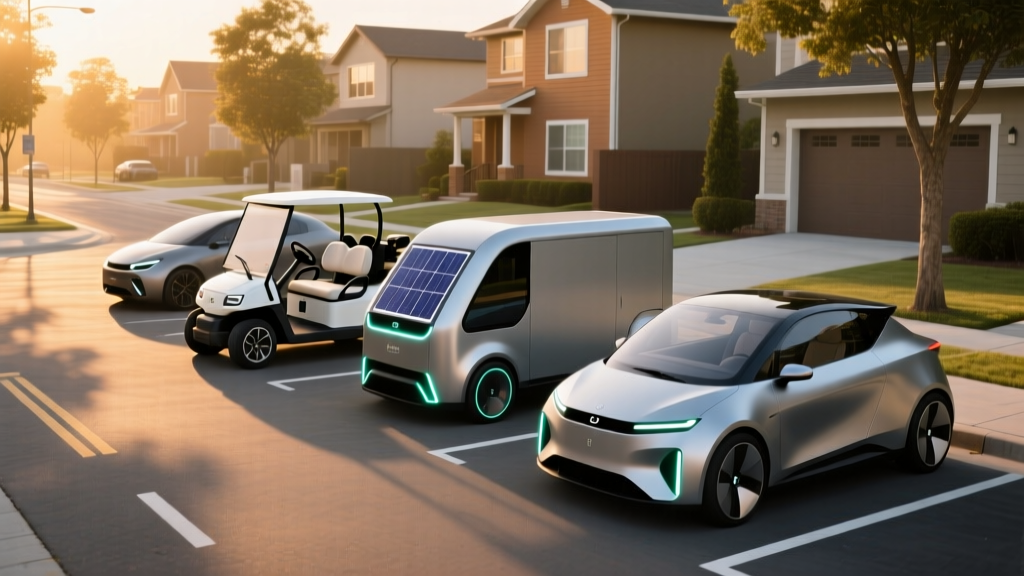
Electric neighborhood vehicles — formally called Low-Speed Vehicles (LSVs) under Federal Motor Vehicle Safety Standard (FMVSS) No. 500 — are street-legal, four-wheeled electric vehicles capped at a top speed of 20–25 mph. They're designed for short trips in planned communities, retirement neighborhoods, beach towns, and college campuses. Most offer 30–60 miles of real-world range from lithium-ion or lead-acid battery packs, cost between $9,000 and $20,000, and charge on a standard 120V household outlet. They are not highway-capable and are not eligible for the federal §30D clean vehicle tax credit, though some states offer separate LSV incentives.
What Qualifies as an Electric Neighborhood Vehicle?
The term "electric neighborhood vehicle" covers a specific regulatory class. Under NHTSA's FMVSS No. 500, an LSV must meet these requirements:
- Four wheels
- Top speed greater than 20 mph but not greater than 25 mph
- Gross vehicle weight rating (GVWR) under 3,000 lbs
- Required safety equipment: headlamps, turn signals, tail lamps, stop lamps, reflex reflectors, exterior mirrors, parking brake, windshield (glazed), VIN, and seat belts
This is a critical distinction. A golf cart is not an LSV unless it's been manufactured or modified to meet FMVSS 500 standards. A Neighborhood Electric Vehicle (NEV) is simply an LSV that happens to be battery-electric. When shopping, always confirm the vehicle carries a valid 17-character VIN and that the manufacturer certifies FMVSS 500 compliance — otherwise, it's legally a golf cart and may not be street-legal in your jurisdiction.
Top Electric Neighborhood Vehicles: 2026 Specs at a Glance
Here's how the most popular LSV-class electric vehicles compare on paper and in practice. All ranges are manufacturer-estimated; real-world figures vary based on terrain, temperature, and passenger load.
| Model | Battery (kWh) | Chemistry | Est. Range (mi) | Top Speed (mph) | Charge Time (120V) | Base MSRP |
|---|---|---|---|---|---|---|
| GEM e2 (Polaris) | 11.5 | LFP | ~30–35 | 25 | 6–8 hours | $12,495 |
| GEM e4 (Polaris) | 11.5 | LFP | ~28–32 | 25 | 6–8 hours | $14,995 |
| GEM e6 (Polaris) | 14.4 | LFP | ~35–42 | 25 | 8–10 hours | $17,995 |
| Club Car Onward EV (LSV trim) | 7.7 (Li-ION) | LFP | ~25–30 | 25 | 6–7 hours | $14,500 |
| Cruise Car Eco (Kandi) | 12.0 | NMC | ~35–45 | 25 | 7–9 hours | $11,995 |
| Wiz (Wiz Manufacturing) | 10.0 | LFP | ~30–38 | 25 | 6–8 hours | $9,995 |
Key takeaway on battery chemistry: Most current LSVs have shifted to LFP (lithium iron phosphate) packs because they tolerate daily full-charge cycles better than NMC, don't require complex thermal management, and offer longer cycle life (2,000–3,000 cycles vs ~1,000–1,500 for NMC). Since LSV owners typically charge to 100% every night, LFP is the right chemistry here — even though its lower energy density would be a problem in a highway-speed EV.
Real-World Range: What to Actually Expect
Manufacturer range claims for LSVs assume flat terrain, a single occupant, moderate temperatures (65–75°F), and speeds around 15–20 mph. In practice, several factors compress that number:
- Hills and inclines: LSV motors are typically 3–8 kW (4–11 hp). Climbing even moderate grades can cut range by 20–30%.
- Passenger load: A 4-seat LSV carrying four adults (600+ lbs of payload) will see 15–25% range reduction vs solo driving.
- Cold weather: Below 40°F, expect 20–35% range loss. LFP chemistry handles cold slightly better than NMC at low discharge rates, but these vehicles rarely have active battery heating.
- Accessory draw: Headlights, heater, and especially air conditioning pull directly from the traction battery and can shave 5–10 miles off range.
For most LSV use cases — a 2-mile trip to the community pool, a 3-mile run to the grocery store — even a diminished 20-mile real-world range is more than sufficient. The problem arises when buyers assume "35-mile range" means they can run errands all day without thinking about it. Plan around 60–70% of advertised range as your daily usable budget to preserve battery longevity and account for conditions.
Charging: Simple, But Slow
Unlike full-size EVs that require Level 2 home chargers and can use DC fast charging, electric neighborhood vehicles charge exclusively on Level 1 (120V AC) via a standard household outlet. This is both their advantage and their limitation.
| Charging Level | Power (kW) | Typical LSV Charge Time (0–100%) | Infrastructure Needed |
|---|---|---|---|
| Level 1 (120V standard outlet) | 0.8–1.5 kW | 6–10 hours | Standard 15A or 20A outlet, dedicated circuit recommended |
| Level 2 (240V) | N/A — most LSVs don't support it | N/A | Not applicable for most models |
| DC Fast Charging | N/A | N/A | Not supported — no CCS/NACS port |
Practical charging advice: Install a dedicated 20A, 120V outlet in your garage or carport on its own circuit. Sharing a circuit with other appliances risks tripping the breaker mid-charge. A licensed electrician will typically charge $200–$500 for this installation, depending on panel proximity. You do not need a panel upgrade for LSV charging — the draw is comparable to a space heater.
Because LSV batteries are small (7–15 kWh), overnight Level 1 charging is entirely sufficient. You'll wake up to a full battery every morning. There's no need for the 240V Level 2 infrastructure that full-size EV owners invest $800–$2,000+ to install.
Cost Breakdown: LSV vs Gas Golf Cart vs Compact Car
The financial case for an electric neighborhood vehicle depends on what you're comparing it against. Here's a five-year ownership comparison for typical neighborhood use (3,000 miles/year):
| Cost Category | Electric LSV (e.g., GEM e4) | Gas Golf Cart (Street-Legal) | Used Compact Car (e.g., 2020 Honda Fit) |
|---|---|---|---|
| Purchase Price | $14,995 | $10,000–$13,000 | $14,000–$18,000 |
| Fuel/Energy (5 yr) | $450–$600 | $1,800–$2,400 | $3,500–$4,500 |
| Maintenance (5 yr) | $300–$500 | $1,500–$2,500 | $2,000–$3,500 |
| Insurance (5 yr avg) | $1,500–$2,500 | $1,200–$2,000 | $4,000–$6,000 |
| Registration (5 yr) | $250–$500 | $250–$500 | $500–$750 |
| 5-Year Total | $17,495–$19,095 | $14,750–$20,400 | $24,000–$32,750 |
Energy cost math: At the US average electricity rate of ~$0.16/kWh, fully charging a 11.5 kWh LSV battery costs roughly $1.84. Over 3,000 miles/year at an efficiency of ~0.3 kWh/mile, that's about $144/year in electricity. A comparable gas golf cart burning 0.5 gallons per 10 miles at $3.50/gallon costs roughly $525/year in fuel. The LSV saves $350–$400/year on energy alone.
Maintenance advantage: Electric LSVs have no engine oil, spark plugs, air filters, fuel filters, exhaust systems, or transmissions to service. Annual maintenance is typically limited to brake inspections, tire rotation, windshield washer fluid, and cabin air filter replacement. Budget $60–$100/year. Gas golf carts need oil changes ($50–$80 each, 2–3 times/year for regular use), belt replacements, and carburetor or fuel-injection service.
Federal Tax Credit: Does an LSV Qualify?
No. Electric neighborhood vehicles do not qualify for the IRS §30D Clean Vehicle Credit (up to $7,500). The credit requires the vehicle to have a gross vehicle weight rating and be classified as a motor vehicle for highway use with a maximum speed capability exceeding 25 mph in a way that qualifies under the Internal Revenue Code. Since LSVs are capped at 25 mph by federal regulation, they fall outside §30D eligibility.
However, some states and local jurisdictions offer separate incentives for LSVs or neighborhood electric vehicles. Examples include:
- Certain Florida municipalities offer registration fee waivers for NEVs in designated communities
- Some utility companies provide rebates for Level 1 charging equipment or off-peak charging programs
- A handful of states previously offered point-of-sale rebates for NEVs — check your state's energy office or DMV for current programs
Always verify current incentive availability through your state's official energy or transportation agency, as these programs change frequently.
Common Misconceptions About Electric Neighborhood Vehicles
| Myth | Fact |
|---|---|
| "LSVs are just fancy golf carts." | LSVs must meet FMVSS 500 safety standards (seat belts, VIN, lighting, mirrors, windshield). Golf carts do not. Driving an uncertified golf cart on public roads is illegal in most jurisdictions. |
| "I can drive my LSV on any road." | LSVs are generally restricted to roads with posted speed limits of 35 mph or less (varies by state). They are not permitted on highways or high-speed arterials. |
| "The battery will need replacing every 2–3 years." | Modern lithium-ion LSV batteries (LFP or NMC) are rated for 1,500–3,000 charge cycles. At daily charging, that's 4–8+ years before significant capacity loss. Lead-acid batteries, still sold on budget models, do degrade faster (300–500 cycles). |
| "I need a special license or endorsement." | In most states, a standard driver's license is sufficient to operate an LSV. However, some states have specific requirements — check your state DMV. |
| "LSVs are exempt from insurance." | Most states that allow LSVs on public roads require at minimum liability insurance (personal injury protection and property damage liability). Coverage costs are typically $25–$50/month. |
| "I can take it on the highway to the next town." | Absolutely not. At 25 mph with minimal crash protection, an LSV on a 45+ mph road is extremely dangerous and illegal. |
Who Should Buy an Electric Neighborhood Vehicle (and Who Shouldn't)
Decision Framework: Is an LSV Right for You?
Choose an electric neighborhood vehicle if:
- You live in a planned community, retirement village, gated neighborhood, or small town where daily errands are within 5–10 miles
- Your typical routes use roads posted at 35 mph or below
- You have a garage, carport, or covered parking area with access to a 120V outlet
- You want a second vehicle for local trips to avoid putting miles on your primary car
- You value near-zero maintenance and low operating costs over speed and range
- You don't need to carry more than 2–6 people and modest cargo
Do NOT choose an LSV if:
- Your daily driving includes roads above 35 mph or highways
- You need to drive in winter conditions with snow, ice, or sustained sub-freezing temperatures (LSVs have minimal weather sealing and no crash structure for slippery-road incidents)
- You need to travel more than 15–20 miles round-trip on a regular basis
- You need this to be your only vehicle
- You live in a jurisdiction that does not permit LSVs on public roads (some states and municipalities still restrict or ban them)
First-Time LSV Buyer Checklist
If you've decided an electric neighborhood vehicle fits your needs, here's what to verify before signing a purchase agreement:
- FMVSS 500 compliance: Confirm the vehicle has a valid 17-character VIN, manufacturer's certificate of origin, and explicit FMVSS 500 certification. Without these, you cannot title or register it for road use.
- Battery chemistry: Insist on lithium-ion (preferably LFP). Avoid lead-acid unless the price discount is substantial and you accept 2–3 year replacement cycles at $800–$1,500 per pack.
- Battery warranty: Look for a minimum 3-year/30,000-mile warranty on the traction battery. Top manufacturers offer 5 years.
- State legality: Check your state's DMV website for LSV registration requirements. Some states require additional equipment (e.g., a slow-moving vehicle emblem, specific mirror configurations).
- Insurance quote: Get an insurance quote before purchasing. Some carriers don't write LSV policies; specialty insurers like Hagerty or Progressive often do.
- Dealer support and parts: LSV manufacturers are smaller than mainstream automakers. Verify there's an authorized service center within reasonable distance, and that replacement parts (especially battery modules and controllers) are available.
- Test drive on your actual routes: Pay attention to how the vehicle handles hills, braking distance at 25 mph, and visibility in traffic. LSVs sit low and are less visible than full-size vehicles.
FAQ: Electric Neighborhood Vehicles
How fast can an electric neighborhood vehicle go?
Federal law caps LSVs at a maximum speed of 25 mph. Some models are governed to 20 mph and can be dealer-adjusted to 25. They cannot be legally modified to exceed 25 mph while retaining LSV classification.
Can I drive an LSV in the rain?
Most modern LSVs come with enclosed or semi-enclosed cabins, windshield wipers, and basic weather sealing. They handle rain adequately for short trips. However, they lack the weather insulation of a full-size car — expect wind noise, limited climate control, and reduced comfort in heavy rain or extreme heat.
How long do LSV batteries last before replacement?
Lithium-ion LSV batteries (LFP or NMC) typically last 5–10 years before degrading to 70–80% of original capacity. Replacement costs range from $2,000 to $5,000 depending on the model and pack size. Lead-acid batteries last 2–4 years and cost $800–$1,500 to replace.
Do I need a driver's license to operate an LSV?
Yes, in most states. A standard driver's license is typically sufficient — no special endorsement is required. However, requirements vary by state, so confirm with your local DMV.
Can an LSV be my only vehicle?
Practically, no. An LSV cannot handle highway driving, long-distance travel, severe weather, or large cargo/passenger loads. It works best as a secondary vehicle for local trips, supplementing a primary car or SUV.
Are electric neighborhood vehicles safe?
LSVs meet minimum federal safety standards (seat belts, lighting, mirrors, windshield) but are not crash-tested by NHTSA or IIHS the way full-size vehicles are. They offer far less occupant protection than a car in a collision. Safe operation depends on staying on low-speed roads, wearing seat belts, and driving defensively given the vehicle's low profile and limited visibility to larger vehicles.