Quick Answer: Is the Electric Mustang Truck Worth It in 2026?
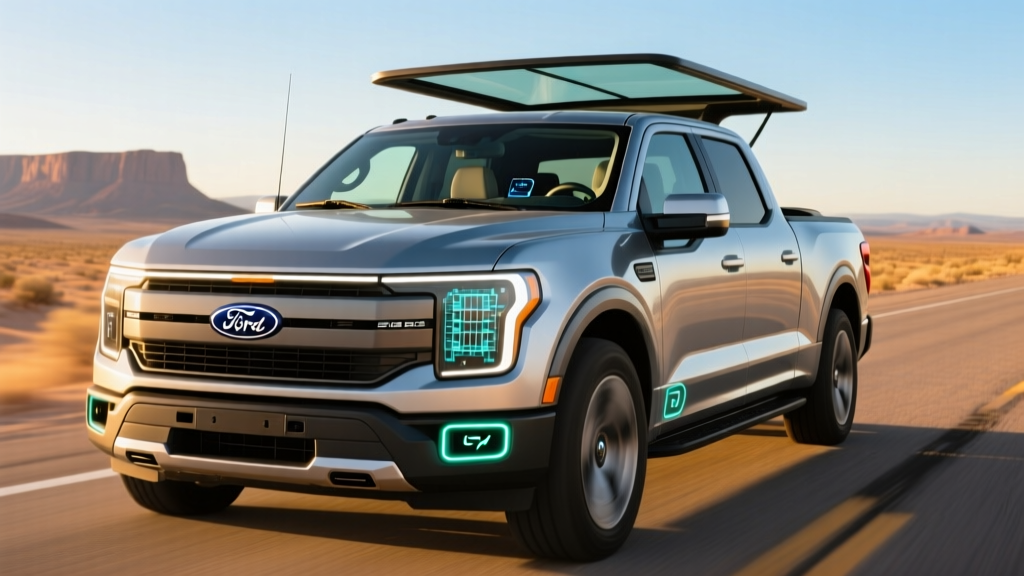
When shoppers search for an "electric Mustang truck," they're almost always looking for the Ford F-150 Lightning — Ford's all-electric full-size pickup that shares the Mustang Mach-E's EV platform DNA and Ford's performance branding. (Ford has not released a vehicle literally badged "Electric Mustang Truck.") The 2026 F-150 Lightning starts around $54,995 for the Pro trim with the standard-range battery and climbs past $96,000 for a fully loaded Platinum with the extended-range pack. EPA range spans 240 to 320 miles depending on battery and trim. It tows up to 10,000 lbs, hits 0-60 mph in roughly 3.8 seconds (extended-range AWD), and qualifies for the federal §30D tax credit — up to $7,500 — though income caps, MSRP limits, and battery-sourcing rules apply. If you have home Level 2 charging, drive under 250 miles daily, and need truck capability without the fuel bill, the Lightning remains the strongest electric pickup on the market.
What Exactly Is the "Electric Mustang Truck"?
Ford's electric pickup is officially the F-150 Lightning. The "Lightning" nameplate is borrowed from Ford's performance truck heritage (the gas SVT Lightning of the 1990s–2000s), while the electric powertrain architecture shares engineering lineage with the Mustang Mach-E. That overlap in branding and platform technology is why many buyers colloquially call it the electric Mustang truck. Regardless of what you call it, the vehicle is a body-on-frame full-size pickup — not a unibody crossover — and it competes directly with the Rivian R1T, Chevrolet Silverado EV, and the Tesla Cybertruck.
For 2026, Ford offers the Lightning across five trims: Pro, XLT, Lariat, Flash, and Platinum. Two battery packs are available: a 98 kWh usable standard-range pack (LFP chemistry on Pro and XLT trims) and a 131 kWh usable extended-range pack (NMC chemistry on Lariat, Flash, and Platinum). All trims come with dual-motor all-wheel drive as standard.
Range, Efficiency, and Real-World Expectations
EPA estimates are a starting point — not a guarantee. Here's what the 2026 Lightning delivers on paper and what you should plan for in daily driving:
| Configuration | Battery (usable kWh) | Chemistry | EPA Range | Real-World Highway | Cold-Weather Est. | MPGe (combined) |
|---|---|---|---|---|---|---|
| Pro / XLT Std-Range | 98 kWh | LFP | 240 mi | ~200–215 mi | ~170–185 mi | 78 MPGe |
| XLT / Lariat Ext-Range | 131 kWh | NMC | 320 mi | ~265–285 mi | ~220–240 mi | 73 MPGe |
| Flash / Platinum Ext-Range | 131 kWh | NMC | 300 mi | ~250–270 mi | ~205–225 mi | 70 MPGe |
Why the gap? The F-150 Lightning is a 6,500+ lb brick pushing through the air at 70 mph. Highway efficiency drops sharply compared to city driving where regenerative braking recovers energy. In sub-freezing temperatures, expect 20–30% range loss due to battery thermal management demands and cabin heating, even with the Lightning's standard heat pump. If your daily commute is 80 miles round-trip with home charging, the standard-range pack is sufficient. If you regularly tow or drive 200+ miles between charging stops, the extended-range pack is worth the ~$10,000 upcharge.
For verified EPA figures, cross-reference fueleconomy.gov before purchasing — trim-level equipment (wheel size, tow package) can shift the number by 10–15 miles.
Charging Speed: Home and DC Fast Charging
The Lightning uses the NACS (Tesla-style) connector as of the 2025 model year, giving it native access to Tesla Supercharger V3 and V4 stations without an adapter — a major practical advantage over CCS-equipped competitors.
| Charging Level | Power (kW) | Miles Added per Hour | Typical Use Case | Est. Cost |
|---|---|---|---|---|
| Level 1 (120V household) | 1.4 kW | ~3–4 mi/hr | Overnight trickle; emergency top-off | ~$0.14/kWh (varies) |
| Level 2 (240V home charger) | 11.5 kW (standard) / 19.2 kW (w/ dual onboard chargers) | ~30–48 mi/hr | Daily home charging; full overnight fill | ~$0.12–0.18/kWh |
| DC Fast Charge (public) | Peak 150 kW (std) / 150 kW (ext) | ~180–220 mi in 30 min | Road trips; 10–80% in ~38–44 min | ~$0.30–0.55/kWh |
Charging-curve reality check: The Lightning's peak DC charge rate is around 150 kW — not the 250+ kW some competitors claim. That peak sustains only between roughly 10–40% state of charge (SoC). Above 60%, the curve tapers significantly; above 80%, it slows to under 50 kW to protect battery longevity. Plan road-trip stops around 10–80% charges (~38–44 minutes) rather than 0–100% fills.
Home charging installation is the single biggest ownership variable. The standard 80-amp Ford Mobile Power Cord requires a 100-amp dedicated circuit. Expect $1,200–$3,500 for a licensed electrician to install a NEMA 14-50 outlet or hardwired Level 2 station, depending on panel capacity and run length. If your home has a 100-amp main panel, a $2,000–$5,000 panel upgrade to 200 amps may be necessary. Always get a quote from a licensed electrician before committing to the vehicle.
Cost of Ownership: Lightning vs Gas F-150
The sticker price is only the opening move. Here's how the electric Mustang truck stacks up against a comparably equipped gas F-150 XLT SuperCrew 4x4 over five years and 75,000 miles:
| Cost Category | 2026 F-150 Lightning XLT Ext-Range | 2026 F-150 XLT 3.5L EcoBoost 4x4 |
|---|---|---|
| Base MSRP | $69,995 | $52,495 |
| Federal §30D Tax Credit | Up to -$7,500 (see eligibility) | $0 |
| Effective Purchase Price | ~$62,495 | $52,495 |
| Fuel/Energy (75k mi) | ~$4,200 (home L2 @ $0.15/kWh) | ~$10,500 (18 MPG avg @ $3.50/gal) |
| Maintenance (75k mi) | ~$1,200 (tires, cabin filter, fluid top-offs) | ~$3,800 (oil, filters, brakes, trans fluid) |
| Insurance (5-yr avg) | ~$11,500 | ~$8,500 |
| Est. 5-Year Depreciation | ~$28,000 | ~$22,000 |
| 5-Year Total Cost | ~$107,395 | ~$97,295 |
The Lightning costs roughly $10,000 more over five years in this scenario — driven primarily by higher depreciation and insurance premiums. However, the fuel and maintenance savings are substantial: ~$8,900 less spent on energy and upkeep. Your personal numbers shift dramatically based on local electricity rates, solar ownership, annual mileage, and whether you qualify for the full tax credit. High-mileage drivers (20,000+ mi/yr) close the gap faster.
Federal Tax Credit Eligibility (§30D) — 2026 Rules
The F-150 Lightning is assembled in Dearborn, Michigan, and has historically qualified for the full $7,500 federal credit. But eligibility is not automatic. Per IRS §30D rules, you must meet all of the following:
- MSRP cap: Pickup trucks must have an MSRP at or below $80,000 (Pro, XLT, Lariat trims qualify; Platinum typically exceeds the cap).
- Buyer income limits: Modified AGI must not exceed $150,000 (single), $225,000 (head of household), or $300,000 (joint filers).
- Battery sourcing: A percentage of critical minerals and battery components must be sourced from the U.S. or FTA-partner countries — thresholds tighten annually. Verify current-year compliance on the IRS qualified vehicles list before purchase.
- Point-of-sale transfer: You can apply the credit as an immediate dealer discount (reducing your out-of-pocket) or claim it on your tax return.
Always consult a tax professional and check the IRS qualified-vehicle list at the time of purchase — sourcing requirements and eligible configurations can change mid-year.
Common Misconceptions About the Electric Mustang Truck
| Myth | Fact |
|---|---|
| "It's literally called the Electric Mustang Truck." | The official name is Ford F-150 Lightning. It shares platform DNA with the Mustang Mach-E but is not branded as a Mustang. |
| "Electric trucks can't tow." | The Lightning tows up to 10,000 lbs (extended-range, Max Trailer Tow Package). However, towing at capacity cuts range by 40–50%. Plan accordingly. |
| "You'll be stranded without charging." | With 320 miles of EPA range and access to 20,000+ Tesla Superchargers (via native NACS), route planning is manageable for most trips. Rural charging deserts remain a real limitation in parts of the Mountain West and rural South. |
| "The battery will need replacing in 5 years." | Ford warranties the battery for 8 years / 100,000 miles against degradation below 70% of original capacity. Industry data shows most EV batteries retain 85–90% capacity at 100k miles. |
| "It charges as fast as a Tesla." | The Lightning peaks at ~150 kW DC; the Cybertruck and some Tesla models sustain 250+ kW. Expect 10–80% in ~38–44 min vs ~15–20 min for the fastest-charging competitors. |
Real-World Ownership Considerations
Home Charging Access Is Non-Negotiable
If you cannot install a Level 2 charger at home (renter, apartment dweller, street parking), the Lightning becomes significantly less practical. Public DC fast charging at $0.35–$0.55/kWh erases the fuel-cost advantage over gas, and relying on it daily adds 30–45 minutes to your routine. Confirm your home charging situation before ordering.
Climate Matters
Owners in northern states (Minnesota, Maine, Colorado) should budget for 20–30% winter range loss. The Lightning's heat pump helps, but resistive cabin heating at sub-zero temperatures is an energy hog. Garage parking and preconditioning while plugged in mitigate this significantly.
Driving Patterns
The Lightning excels as a daily-driver truck: commuting, school runs, hardware-store hauls, and weekend towing under 200 miles. It struggles as a long-haul tow rig — if you regularly tow a 7,000-lb trailer 300+ miles, you'll stop to charge every 100–120 miles. For that use case, a diesel or hybrid pickup remains more practical.
Decision Framework: Should You Buy the F-150 Lightning?
Choose the F-150 Lightning if:
- You have (or can install) a 240V Level 2 home charger
- Your daily driving is under 250 miles and you take road trips 3–5 times per year
- You want a full-size truck with instant torque, a 2,239-lb payload, and a front trunk (frunk) with 14.1 cu ft of lockable storage
- You qualify for the §30D tax credit (income and MSRP caps)
- You value Pro Power Onboard — the Lightning can output up to 9.6 kW of 240V power to run tools, appliances, or even back-feed your home during an outage (with the Ford Intelligent Backup Power system)
Look elsewhere if:
- You cannot charge at home and public infrastructure in your area is sparse
- You regularly tow heavy loads over 200+ miles between stops
- Your budget is under $50,000 (consider a used 2022–2023 Lightning or a hybrid F-150 PowerBoost instead)
- You need third-row seating — the Lightning seats five; the Rivian R1T also seats five, but larger SUVs like the Kia EV9 offer three rows
Frequently Asked Questions
Is Ford making an electric truck called the Mustang?
No. Ford's electric truck is the F-150 Lightning. The Mustang name is used on the Mustang Mach-E (an electric SUV) and the gas Mustang coupe/convertible. The Lightning shares EV platform engineering with the Mach-E but carries the F-150 nameplate.
How long does it take to charge the F-150 Lightning at home?
On a 240V Level 2 charger at 11.5 kW, a full 10–100% charge of the extended-range 131 kWh battery takes approximately 10–12 hours. With the available 19.2 kW dual onboard charger, that drops to roughly 7–8 hours. Either way, overnight charging covers virtually any daily driving need.
What is the real-world range when towing?
When towing a 5,000–7,000 lb trailer at highway speeds, expect 130–170 miles from the extended-range pack — roughly a 45–55% reduction from the EPA sticker. Aerodynamic drag and rolling resistance at load are the primary range killers. Use Ford's built-in range estimator (which factors in trailer weight and terrain) for trip planning.
Does the F-150 Lightning qualify for the $7,500 tax credit in 2026?
The Lightning has historically qualified, but eligibility depends on current-year battery-sourcing thresholds, your income, and the specific trim's MSRP. The Pro, XLT, and Lariat (under $80,000 MSRP) are most likely to qualify. Always verify on the IRS qualified clean vehicles page at the time of purchase.
What's the warranty on the Lightning's battery?
Ford covers the high-voltage battery for 8 years or 100,000 miles, whichever comes first, against defects and capacity degradation below 70% of original capacity. The rest of the vehicle carries a 3-year/36,000-mile bumper-to-bumper warranty and a 5-year/60,000-mile powertrain warranty.
How does the Lightning compare to the Rivian R1T and Chevy Silverado EV?
The Lightning is the most affordable and most "traditional truck" of the three — familiar F-150 styling, a usable frunk, and broad dealer support. The Rivian R1T is more compact, more off-road capable, and starts around $69,900, but has a smaller bed and no dealer network. The Chevy Silverado EV (4WT and RST trims) offers up to 440 miles of EPA range on the top trim but starts higher and has limited availability. For most buyers wanting a daily-driver electric truck, the Lightning's combination of price, capability, and Supercharger access makes it the safest choice.