Quick Answer: Are Electric Motorcycles for Adults Worth It in 2026?
Electric motorcycles for adults make sense if you commute under 80 miles round-trip, have access to a standard 120V outlet at home, and prioritize low running costs and near-silent operation over long-distance touring. Expect real-world range between 60 and 160 miles depending on battery size and riding style, with Level 2 charging filling a depleted pack in 1–2 hours. Purchase prices run $8,000–$30,000+, and electricity costs roughly $0.01–$0.03 per mile versus $0.08–$0.15 per mile for gas equivalents. However, electric motorcycles do not qualify for the federal §30D EV tax credit (that applies to four-wheeled vehicles only), and highway-speed range drops significantly compared to city riding.
Electric motorcycles have matured considerably over the past several model years, with established brands like Zero Motorcycles and Harley-Davidson's LiveWire division now offering machines that rival mid-displacement gas bikes in straight-line performance while undercutting them dramatically in maintenance and fueling costs. But "electric motorcycles for adults" covers a wide spectrum — from urban commuter scooters to full-faired sport bikes — and the right choice depends heavily on your riding pattern, charging access, and budget.
What Exactly Qualifies as an Electric Motorcycle for Adults?
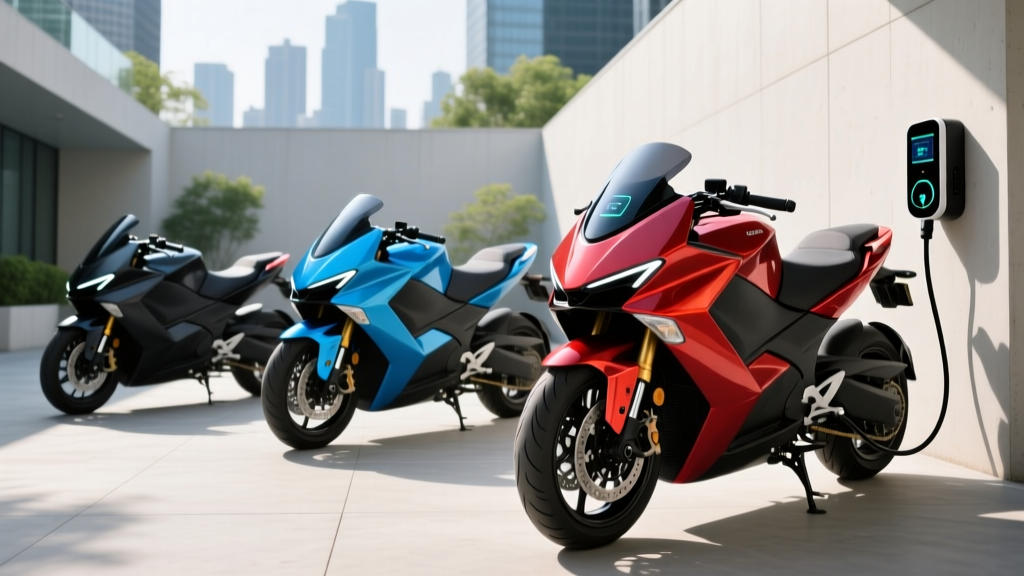
When we talk about electric motorcycles for adults, we're referring to two-wheeled (and sometimes three-wheeled) battery-electric vehicles with motorcycle-class power outputs — typically 10 kW to 80+ kW (roughly 13 to 110+ horsepower). These are distinct from electric bicycles, e-scooters, and low-speed neighborhood vehicles. They require a motorcycle endorsement on your driver's license, registration, and insurance just like any gas-powered motorcycle.
The key specs that separate adult-class electric motorcycles from lighter electric two-wheelers include:
- Battery capacity: 7 kWh to 20+ kWh usable (versus 0.5–2 kWh on e-bikes)
- Top speed: 80–120+ mph (versus 20–28 mph on Class 1–3 e-bikes)
- Vehicle weight: 350–550 lbs (versus 40–80 lbs for e-bikes)
- Highway-legal: Full DOT compliance, license plate, turn signals, mirrors
As of the 2026 model year, the primary manufacturers selling street-legal electric motorcycles in the U.S. include Zero Motorcycles (the market leader), LiveWire (Harley-Davidson's electric spinoff), Energica (Italian sport bikes), and a handful of smaller players like Ryvid and Ultraviolette. Chinese brands like NIU dominate the electric scooter segment but are less prevalent in full motorcycle categories stateside.
Range, Battery, and Charging: The Real Numbers
Range is the single most scrutinized spec on any electric vehicle, and motorcycles are no exception. But motorcycle range ratings work differently than cars. Manufacturers typically cite "city range" and "highway range" separately because the aerodynamic penalty at speed hits a motorcycle — with its exposed rider creating massive drag — far harder than a car.
| Model | Battery (kWh usable) | City Range (mi) | Highway Range (mi) | Combined (mi) | Level 2 Charge Time (0–95%) | Peak DC Fast Charge |
|---|---|---|---|---|---|---|
| Zero SR/S (17.3 kWh) | 15.8 | 161 | 82 | ~110 | ~2.5 hrs (w/ Charge Tank) | N/A (Level 2 only) |
| Zero SR (15.6 kWh) | 14.4 | 156 | 78 | ~105 | ~2.0 hrs | N/A |
| LiveWire ONE | 15.4 | 146 | 70 | ~95 | ~1.0 hr | DC Fast: 0–80% in ~40 min |
| LiveWire S2 Del Mar | 10.5 | 100 | 53 | ~70 | ~1.5 hrs | DC Fast: 0–80% in ~35 min |
| Energica Ego+ RS | 21.5 | 160 | 90 | ~120 | ~3.5 hrs | DC Fast: 0–80% in ~30 min |
Real-world caveat: These manufacturer-stated ranges assume moderate speeds and temperate conditions. In practice, sustained 75 mph highway riding in 40°F weather can cut combined range by 35–45%. If your commute is 50 miles each way at highway speed in winter, a Zero SR/S with 82 miles of stated highway range may leave you with a dangerously thin buffer. Plan for roughly 65–75% of stated city range as your realistic daily usable distance in mixed riding.
Charging Infrastructure for Motorcycles
Most electric motorcycles charge via standard J1772 (Level 2) or a basic 120V household outlet (Level 1). Here's what that looks like in practice:
| Level | Power (kW) | Typical Miles Added per Hour | Equipment Needed |
|---|---|---|---|
| Level 1 (120V outlet) | 0.8–1.3 kW | 5–10 mi/hr | Standard household outlet; onboard charger cord included |
| Level 2 (240V) | 3.3–7.2 kW | 25–55 mi/hr | Home Level 2 station or public J1772 charger |
| DC Fast Charge (select models) | 15–25 kW | 80–130 mi/hr | CCS1 public station (LiveWire, Energica) |
A critical difference from electric cars: most electric motorcycles do not support DC fast charging. Zero Motorcycles, the market leader, charges exclusively via Level 1 and Level 2 AC. Only LiveWire and Energica currently offer DC fast-charge capability on select models, and even then at relatively modest 15–25 kW rates compared to the 150–350 kW rates common in EVs. This means long-distance touring on an electric motorcycle requires careful planning and longer stops.
Electric Motorcycle vs. Gas Motorcycle: Cost & Performance Data
The most common question from riders considering the switch: how does an electric motorcycle stack up against a comparable gas bike in cost and performance? Let's compare a Zero SR/S against a popular mid-weight gas sport-tourer, the Kawasaki Ninja 650.
| Factor | Zero SR/S (Electric) | Kawasaki Ninja 650 (Gas) |
|---|---|---|
| Base MSRP | $21,795 | $8,399 |
| Fuel/Energy Cost per Mile | $0.015 (at $0.14/kWh) | $0.09 (at $3.80/gal, 42 MPG) |
| Annual Fuel/Energy (8,000 mi/yr) | $120 | $720 |
| 5-Year Fuel/Energy Total | $600 | $3,600 |
| Annual Maintenance | $50–$100 (tires, brake fluid, chain) | $300–$500 (oil, filters, chain, valves) |
| 5-Year Maintenance Total | $250–$500 | $1,500–$2,500 |
| 5-Year Total Running Cost | $850–$1,100 | $5,100–$6,100 |
| 0–60 mph | ~3.5 seconds | ~4.0 seconds |
| Horsepower | 110 hp (peak) / 140 lb-ft torque | 68 hp / 47 lb-ft torque |
| Range (realistic mixed) | ~100 miles | ~200 miles (3.6-gal tank) |
| Weight | 494 lbs | 421 lbs |
The verdict: The electric motorcycle wins decisively on running costs — saving $4,000–$5,000 over five years in fuel and maintenance — and on instant torque delivery. But the gas bike costs $13,000+ less upfront, offers double the range, refuels in 3 minutes, and weighs 70 lbs less. The purchase-price gap is large enough that the electric bike's running-cost savings won't close it within a typical ownership period unless you ride high annual mileage.
5-Year Total Cost of Ownership Breakdown
| Cost Category | Zero SR/S | Kawasaki Ninja 650 |
|---|---|---|
| Purchase Price | $21,795 | $8,399 |
| Insurance (5 yrs avg) | $4,500 | $3,000 |
| Fuel/Energy (5 yrs) | $600 | $3,600 |
| Maintenance (5 yrs) | $375 | $2,000 |
| 5-Year Total | $27,270 | $16,999 |
| Cost per Mile (all-in) | $0.68 | $0.42 |
Federal and State Incentives: What Actually Applies
This is where many electric motorcycle buyers encounter disappointment. The federal §30D Clean Vehicle Credit — which provides up to $7,500 for qualifying electric cars and trucks — does not apply to electric motorcycles. Per IRS guidelines, §30D is limited to four-wheeled vehicles with a gross vehicle weight rating under 14,000 lbs.
However, there is a separate provision: the §30D alternative — IRC §30(e), the Qualified Alternative Fuel Motor Vehicle Credit — historically covered two- and three-wheeled electric vehicles at 10% of the purchase price, up to $2,500. This credit has expired and been reinstated in various forms over the years. As of early 2026, check current IRS guidance or consult a tax professional to confirm whether a two/three-wheeled EV credit is active for the current tax year.
- ✗ Federal §30D credit ($7,500) — NOT eligible (4-wheel vehicles only)
- ? Federal two/three-wheel EV credit (up to $2,500) — verify current-year status with IRS or tax professional
- ? State incentives — vary widely; California's CVRP has historically offered rebates for zero-emission motorcycles (check California Energy Commission for current availability)
- ? Utility company rebates — some electric utilities offer $200–$500 for EV motorcycle purchases or home charger installation
- ? Local air-district incentives — certain metro areas offer additional rebates for zero-emission vehicles
Common Misconceptions About Electric Motorcycles
| Myth | Fact |
|---|---|
| "Electric motorcycles are just fast bicycles" | Adult-class models like the Zero SR/S produce 110 hp and reach 124 mph — comparable to 600cc–1000cc gas sport bikes. They require a motorcycle license, registration, and insurance. |
| "You can charge at any EV station" | Most public DC fast chargers use CCS1 or NACS connectors designed for cars. Electric motorcycles typically use J1772 (Level 2 AC only). Only select models (LiveWire, Energica) support DC fast charging via CCS1. |
| "The battery will need replacing in a few years" | Zero Motorcycles warranties their battery for 5 years with unlimited mileage. Real-world degradation data from owners shows roughly 10–15% capacity loss after 80,000+ miles. Lithium-ion motorcycle packs are engineered for 1,000+ full charge cycles. |
| "Electric bikes have no maintenance" | While there's no oil, filter, spark plug, or valve adjustment, you still need tire replacements (often more frequent due to instant torque), brake fluid changes, chain/belt service, and suspension maintenance. Budget $50–$100/year minimum. |
| "They're silent, so they're safer" | The near-silent operation at low speed is actually a safety concern — pedestrians and other drivers may not hear you approaching. Many riders add an aftermarket horn or rely on visual conspicuity (bright gear, headlight modulators). |
Real-World Ownership Considerations
Home Charging Access
The single biggest ownership advantage for electric motorcycles is home charging convenience. Unlike electric cars, which may require a 240V Level 2 installation costing $500–$2,000, most electric motorcycles charge adequately on a standard 120V household outlet. A Zero SR with a 14.4 kWh usable battery gains roughly 6–8 miles of range per hour on Level 1 — meaning an overnight charge (10 hours) adds 60–80 miles, sufficient for most daily commutes.
If you want faster turnaround, a Level 2 home station (240V, typically 3.3–7.2 kW for motorcycle onboard chargers) fills most packs in 1–2 hours. Installation of a dedicated 240V circuit by a licensed electrician typically runs $300–$800 if your electrical panel has capacity, or $1,500–$3,000+ if a panel upgrade is needed.
Climate and Riding Season
Electric motorcycles face unique cold-weather challenges compared to electric cars:
- No waste heat: A gas motorcycle's engine radiates heat that warms the rider. An electric motorcycle produces almost no waste heat, so all rider heating must come from battery-powered heated grips, seats, or gear — drawing 50–150 watts continuously and reducing range by 5–15%.
- Battery chemistry: Lithium-ion cells lose capacity and accept charge more slowly below 40°F. Expect 15–25% range reduction in winter riding, compounding the heating draw.
- Charging in cold: Most electric motorcycle batteries lack active thermal management (unlike Tesla or Hyundai EVs). Cold-soaked batteries charge more slowly and shouldn't be fast-charged below freezing without preconditioning — which most motorcycle systems don't support.
If you ride year-round in northern climates, plan for roughly 50–60% of your summer range in deep winter. A Zero SR/S rated at 110 combined miles may deliver only 55–65 miles in 25°F conditions at highway speed.
Insurance Costs
Electric motorcycle insurance tends to run 30–50% higher than comparable gas motorcycles, primarily due to higher replacement values and a smaller actuarial data pool. Expect annual premiums of $700–$1,200 for a Zero SR/S or LiveWire ONE, depending on your age, riding history, location, and coverage level. Get quotes before purchasing — the insurance premium difference can add $2,000–$3,000 over five years compared to an equivalent gas bike.
Decision Framework: Which Electric Motorcycle (If Any) Is Right for You?
Choose an Electric Motorcycle If:
- Your daily round-trip commute is under 80 miles (with access to charging at home or work)
- You ride primarily in urban/suburban environments where regenerative braking extends range and stop-and-go riding is efficient
- You have a garage or dedicated parking with a 120V outlet for overnight charging
- You value low running costs — electricity at $0.01–$0.03/mile versus $0.08–$0.15/mile for gas
- You want instant torque and quiet operation for a refined riding experience
- You ride 5,000+ miles per year, making the fuel savings more meaningful
Stick with a Gas Motorcycle If:
- You regularly ride 150+ miles in a day or take multi-day touring trips
- You lack reliable overnight charging access (street parking, no outlet, apartment without EV infrastructure)
- Your budget is under $10,000 — the used gas market offers far more options at this price
- You ride primarily in cold/wet climates where range loss and lack of waste heat are significant drawbacks
- You want maximum model selection — the gas motorcycle market offers hundreds of models across every category; electric options remain limited to ~15–20 street-legal models
- Resale value certainty matters — electric motorcycle depreciation curves are still being established, while gas bikes have decades of predictable resale data
Model Recommendations by Use Case (2026)
- Best commuter: Zero S (14.4 kWh) — $18,795, ~105 combined miles, proven reliability, lightest in class at 430 lbs
- Best sport-tourer: Zero SR/S — $21,795, full fairing, wind protection, 110 hp, best highway range in the Zero lineup
- Best urban/streetfighter: LiveWire S2 Del Mar — $15,499, ~70 combined miles, DC fast-charge capable, scrambler styling, 440 lbs
- Best premium/sport: Energica Ego+ RS — $28,000+, ~120 combined miles, DC fast charge, 171 hp, Italian build quality
- Best budget entry: Ryvid Atlas — $8,495, ~75 miles range, lightweight 260 lbs, removable battery for apartment dwellers
Frequently Asked Questions
Do electric motorcycles qualify for the $7,500 federal EV tax credit?
No. The IRS §30D Clean Vehicle Credit applies only to four-wheeled vehicles. Electric motorcycles may qualify for a separate two/three-wheeled alternative fuel vehicle credit (up to $2,500), but this credit has historically lapsed and been reinstated intermittently. Verify current-year availability at IRS.gov or with a tax professional before relying on it in your purchase math.
How long do electric motorcycle batteries last?
Zero Motorcycles warranties their Z-Force battery for 5 years with unlimited miles, guaranteeing a minimum capacity threshold. Real-world owner data from forums and long-term tests suggests 10–15% degradation after 80,000–100,000 miles. The battery is the most expensive single component — out-of-warranty replacement runs $3,000–$5,000+ depending on capacity — so warranty coverage is a key purchase factor.
Can I take an electric motorcycle on a road trip?
It's possible but requires significant planning. With typical ranges of 60–120 miles and limited DC fast-charge support, you'll need to plot Level 2 charging stops every 60–90 minutes. Each Level 2 stop adds 1–2 hours. For riders who tour occasionally, a gas motorcycle or a plug-in hybrid approach (not currently available in motorcycles) remains more practical. Electric motorcycles excel as daily commuters and weekend riders within their range envelope.
What's the difference between kW and kWh on a motorcycle spec sheet?
kW (kilowatts) measures power — how fast energy is delivered or consumed. Motor power is rated in kW (e.g., 82 kW ≈ 110 hp), and charging speed is measured in kW (e.g., a 7.2 kW Level 2 charger). kWh (kilowatt-hours) measures energy capacity — the size of the "fuel tank." A 15.8 kWh battery holds 15.8 kilowatt-hours of energy. Think of kW as the width of a hose and kWh as the size of the bucket.
Are electric motorcycles cheaper to insure?
Generally, no. Electric motorcycles carry higher insurance premiums than comparable gas bikes — typically 30–50% more — because of their higher purchase prices and limited repair-network familiarity. Always get an insurance quote before committing to a purchase.
Do I need a special charger at home?
Not necessarily. Most electric motorcycles ship with a Level 1 (120V) charging cord that plugs into any standard household outlet. This provides 5–10 miles of range per hour of charging, which is sufficient for overnight replenishment if your daily ride is under 60–80 miles. A Level 2 (240V) home station speeds this to 25–55 miles per hour but requires electrical installation. Consult a licensed electrician for any 240V circuit work.
Electric motorcycles for adults have crossed the threshold from curiosity to viable daily transportation — for the right rider. If your commute fits within the range envelope, you can charge at home, and you accept the higher upfront cost in exchange for dramatically lower running expenses and a uniquely smooth, torquey riding experience, the 2026 lineup offers genuine options. Just go in with eyes open about the range limitations, the cold-weather penalties, and the fact that the federal tax credit that makes electric cars so compelling does not apply here. Run your own numbers, test ride before buying, and match the bike to your actual riding pattern — not the one you imagine.