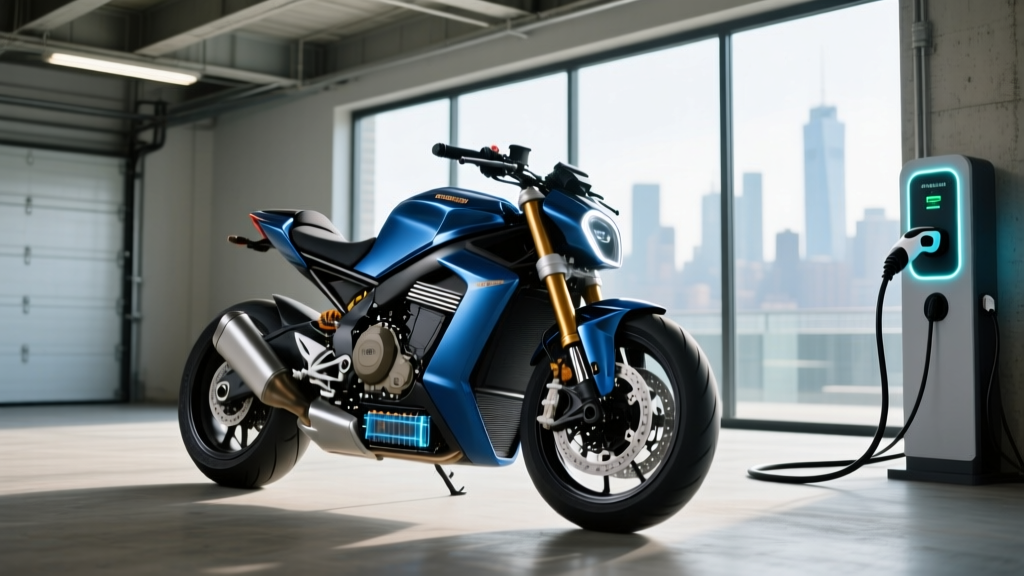
If you're searching for good electric motorcycles, the short answer is: they exist, but the market is small, expensive, and limited in range compared to electric cars. In 2026, the most capable electric motorcycles — like the Zero SR/S and LiveWire ONE — offer 130-160 miles of real-world range, 0-60 times under 4 seconds, and prices starting around $22,000-$30,000. However, they lack federal EV tax credits, have minimal fast-charging infrastructure, and face steep insurance costs. For most buyers researching electrified transportation, a used electric car or plug-in hybrid delivers far more practical value per dollar.
Why Electric Motorcycles Are a Niche in 2026
The electric motorcycle market remains a fraction of the broader EV landscape. While electric cars from Tesla, Hyundai, Ford, and others benefit from massive R&D budgets, federal incentives, and expanding charging networks, electric motorcycles operate in a different reality:
- No federal tax credit: The IRS §30D clean vehicle credit applies only to four-wheeled vehicles with a gross vehicle weight rating under 14,000 lbs. Motorcycles are excluded entirely.
- Limited model selection: Fewer than 10 serious electric motorcycle manufacturers sell street-legal models in the U.S. as of 2026, compared to over 80 electric car models.
- Charging infrastructure gap: Public DC fast chargers are designed for cars. Most electric motorcycles rely on Level 1 (standard 120V outlet) or Level 2 home charging, with no access to Tesla Superchargers or Electrify America stations.
- Range limitations: Physics constrains battery size on two wheels. The largest production electric motorcycle batteries hover around 15-17 kWh usable capacity — roughly one-fifth of a mid-size electric car's pack.
Top Electric Motorcycles: Specs at a Glance
| Model | Price (MSRP) | Battery (kWh) | City Range | Highway Range | 0-60 mph | Charge Time (Level 2) |
|---|---|---|---|---|---|---|
| Zero SR/S | $23,995 | 15.8 kWh (Z-Force) | 161 mi | 82 mi | 3.3 sec | ~3 hours (0-100%) |
| LiveWire ONE | $21,999 | 15.4 kWh (Revel) | 146 mi | 70 mi | 3.0 sec | ~2.5 hours (0-100%) |
| Energica Ego+ | $29,590 | 21.5 kWh | 261 mi | 143 mi | 3.0 sec | ~3.5 hours (0-100%) |
| Zero FXE (urban) | $12,995 | 7.2 kWh | 100 mi | 50 mi | 4.2 sec | ~4 hours (0-100%) |
Real-world range caveat: Manufacturer "city range" figures assume stop-and-go riding with heavy regenerative braking. Highway riding at 70+ mph cuts range roughly in half due to aerodynamic drag and no regen benefit. Cold weather (below 40°F) further reduces range by 15-25%.
Electric Motorcycle vs Electric Car: Cost Comparison
For buyers weighing an electric motorcycle against an electric car, the economics heavily favor four wheels:
| Factor | Electric Motorcycle (e.g., Zero SR/S) | Electric Car (e.g., 2026 Chevy Equinox EV LT) |
|---|---|---|
| Base MSRP | $23,995 | $33,000 |
| Federal Tax Credit (§30D) | $0 (ineligible) | Up to $7,500 (income/MSRP/sourcing rules apply) |
| Effective Price After Credit | $23,995 | ~$25,500 |
| Real-World Highway Range | ~82 miles | ~275 miles |
| Public Fast Charging | Not available | Yes (CCS/NACS networks) |
| Cargo Capacity | Minimal (saddlebags) | ~65 cu ft (rear seats folded) |
| Annual Insurance (avg.) | $1,800-$2,400 | $1,400-$1,800 |
| Weather Practicality | Limited (rain/cold/snow) | Year-round |
The data shows a stark reality: after the federal tax credit, a practical electric car with 3x the range, full weather protection, cargo space, and access to public charging networks costs roughly the same as a high-end electric motorcycle. This is why most EV buying guides — including those on fueleconomy.gov — focus exclusively on four-wheeled vehicles.
Real-World Ownership: What First-Time Buyers Should Know
If you're committed to an electric motorcycle despite the economics, here's what ownership actually looks like in 2026:
Home Charging Is Mandatory
Unlike electric cars, which can use public DC fast chargers for road trips, electric motorcycles rely almost entirely on home charging. You'll need:
- Level 1 (120V standard outlet): Adds ~8-12 miles of range per hour. A full charge from empty takes 8-12 hours on most models. Adequate if you ride less than 50 miles daily and can charge overnight.
- Level 2 (240V, like a dryer outlet): Adds ~30-50 miles per hour. Requires a dedicated circuit and professional installation ($500-$1,500 depending on panel capacity and wiring distance). Cuts full-charge time to 2-4 hours.
Renters and apartment dwellers without garage access face a significant barrier. Unlike electric cars, which can use workplace or public charging, electric motorcycles have no equivalent infrastructure.
Insurance Costs More Than You'd Expect
Electric motorcycles carry higher insurance premiums than gas motorcycles for several reasons:
- Higher repair costs (specialized battery and motor components)
- Limited repair shop network
- Theft risk (high-value, lightweight)
- Rider demographics (electric motorcycle buyers tend to be older, higher-income, which insurers price differently)
Expect to pay $1,800-$2,400 annually for comprehensive coverage on a $24,000 electric motorcycle — roughly 30-50% more than an equivalent gas motorcycle.
Resale Value Is Uncertain
Electric motorcycles are too new and too niche to establish reliable depreciation curves. Early adopters report 40-60% depreciation after three years, compared to 30-40% for mainstream electric cars. If you plan to sell or trade in within five years, this is a significant financial risk.
Common Misconceptions About Electric Motorcycles
| Myth | Fact |
|---|---|
| "Electric motorcycles are cheaper than electric cars." | After the §30D tax credit, many electric cars cost the same or less than electric motorcycles — with far more range and utility. |
| "You can charge at public stations." | Public DC fast chargers are designed for cars. Electric motorcycles lack standardized fast-charging ports and cannot use Tesla Superchargers, Electrify America, or EVgo networks. |
| "Range is fine for commuting." | If your commute is under 40 miles round-trip and you have home charging, yes. But highway riding, cold weather, and detours quickly expose the 70-90 mile real-world highway range limit. |
| "Maintenance is zero." | Electric motorcycles eliminate oil changes and spark plugs, but still require tire replacement (every 3,000-8,000 miles), brake fluid, chain/belt maintenance, and eventual battery replacement ($4,000-$8,000). |
Decision Framework: Should You Buy an Electric Motorcycle?
Use this framework to determine if an electric motorcycle fits your situation:
Choose an electric motorcycle if:
- You already own a car (electric or gas) for longer trips and bad weather
- Your daily riding is under 50 miles, mostly in urban/suburban areas
- You have secure garage access with a dedicated 120V or 240V outlet
- You value instant torque, quiet operation, and minimal maintenance for recreational riding
- You understand the total cost will exceed $30,000 (purchase + insurance + charging setup) with uncertain resale value
Choose an electric car instead if:
- This is your primary vehicle
- You need year-round transportation in varied weather
- You take road trips longer than 100 miles
- You want access to federal tax credits and public charging infrastructure
- You need cargo space or passenger capacity
- You're optimizing for cost per mile of range (electric cars deliver 3-4x more range per dollar after incentives)
Frequently Asked Questions
Do electric motorcycles qualify for any tax incentives?
At the federal level, no. The IRS §30D clean vehicle credit applies only to four-wheeled vehicles. Some states and local utilities offer rebates for electric motorcycles (typically $500-$2,000), but these vary widely and change frequently. Check your state's energy office and local utility websites for current programs.
How long do electric motorcycle batteries last?
Most manufacturers quote 500-1,000 full charge cycles before the battery degrades to 80% capacity. For a rider putting on 5,000 miles per year with a 100-mile real-world range, that's roughly 50 charge cycles annually — suggesting a 10-20 year battery lifespan under normal use. However, extreme heat, frequent fast charging (if available), and deep discharges accelerate degradation. Zero Motorcycles and LiveWire offer 5-year/unlimited-mile battery warranties.
Can I take an electric motorcycle on a road trip?
Realistically, no. With 70-90 miles of highway range and no public fast-charging network, you'd need to plan routes around Level 2 charging stops (2-4 hours each) or overnight stays. This makes road trips impractical compared to gas motorcycles (200+ mile range, 5-minute fuel stops) or electric cars (250+ mile range, 20-30 minute DC fast charges).
What's the cheapest electric motorcycle available in 2026?
The Zero FXE starts at $12,995, but it's a lightweight urban commuter with a 7.2 kWh battery and roughly 50 miles of real-world highway range. For a full-size electric motorcycle with 80+ miles of highway range, expect to spend $22,000-$30,000.
Are electric motorcycles faster than gas motorcycles?
In straight-line acceleration, yes — electric motorcycles deliver instant torque and typically hit 0-60 mph in 3.0-3.5 seconds, rivaling high-performance gas sport bikes. However, top speed is often electronically limited to 90-120 mph to preserve range, and sustained high-speed riding drains the battery rapidly. For track days or canyon carving, gas motorcycles still offer longer range and faster refueling.
For authoritative information on electric vehicle incentives and efficiency ratings, consult fueleconomy.gov (EPA) and IRS.gov §30D guidelines.