Quick Answer: What Electric Mitsubishi Options Exist in 2026?
Mitsubishi's electrified lineup in the US for 2026 centers on the Outlander PHEV — a plug-in hybrid with 38 miles of electric-only range, a 20 kWh battery, and a combined 248 hp. Mitsubishi does not currently sell a fully electric vehicle (BEV) in the United States. If you want zero-tailpipe-emission driving from Mitsubishi, the Outlander PHEV is the closest option, starting at approximately $40,495 MSRP. For a pure EV, you'll need to look at competitors like the Hyundai Ioniq 5, Tesla Model Y, or Chevrolet Equinox EV.
The 2026 Mitsubishi Outlander PHEV: Specs, Range, and Real-World Numbers
The Outlander PHEV remains Mitsubishi's flagship electrified vehicle and one of the few affordable plug-in hybrid SUVs on the market. It pairs a 2.4-liter four-cylinder engine with twin electric motors and a 20 kWh lithium-ion battery pack (NMC chemistry). Here's the full spec breakdown:
| Specification | 2026 Outlander PHEV |
|---|---|
| Powertrain | 2.4L I4 + twin electric motors |
| Combined Output | 248 hp / 332 lb-ft torque |
| Battery Capacity | 20 kWh (NMC) |
| EPA Electric-Only Range | 38 miles |
| Real-World EV Range (highway/cold) | ~28-33 miles |
| EPA Combined MPGe (EV mode) | 64 MPGe |
| Gas-Only MPG (combined) | 26 MPG |
| Total Range (EV + gas) | ~400 miles |
| DC Fast Charge (CHAdeMO) | Peak ~22 kW, 0-80% in ~38 min |
| Level 2 Charge (J1772) | ~3.3 kW, full charge in ~6.5 hrs |
| 0-60 mph | ~7.1 seconds |
| Drivetrain | Standard AWD (S-AWC) |
| Cargo Volume | 33.5 cu ft (behind 2nd row) |
| Towing Capacity | 1,500 lbs |
| Base MSRP (ES trim) | $40,495 |
| Battery Warranty | 10 years / 100,000 miles |
| Powertrain Warranty | 10 years / 100,000 miles |
Real-World Range vs. EPA Sticker
The EPA rates the Outlander PHEV at 38 miles electric-only. In real-world testing, expect 30-35 miles in mild weather on mixed driving, dropping to 25-28 miles in winter conditions (below 35°F) or sustained highway speeds above 70 mph. The battery's usable capacity is roughly 17 kWh — Mitsubishi buffers the remainder to protect long-term battery health.
How the Outlander PHEV Compares to Gas SUVs and Full EVs
Buyers cross-shopping an electric Mitsubishi are typically deciding between three paths: stick with a gas SUV, go PHEV, or jump to a full BEV. Here's how those options stack up against each other on cost and practicality:
| Factor | Outlander PHEV | Outlander Gas (2.5L) | Hyundai Ioniq 5 (BEV) |
|---|---|---|---|
| Base MSRP | $40,495 | $29,495 | $42,600 |
| Federal Tax Credit (§30D) | Up to $3,750* | $0 | Up to $7,500* |
| Annual Fuel/Energy Cost | ~$900-1,200 | ~$1,800-2,200 | ~$600-800 |
| EPA Range / MPGe | 38 mi EV + 26 MPG gas | 27 MPG combined | 303 mi / 114 MPGe |
| Home Charging Needed? | Recommended (120V works) | No | Essential (Level 2) |
| Maintenance Cost (5-yr) | ~$2,500 | ~$3,500 | ~$1,200 |
*Federal tax credit eligibility depends on MSRP caps, buyer income limits, and battery component/critical mineral sourcing rules under IRS §30D. PHEVs require at least 7 kWh of battery capacity to qualify; the Outlander PHEV's 20 kWh pack meets this threshold. The credit amount for PHEVs is calculated based on battery capacity and sourcing compliance — verify current eligibility at irs.gov. Check with a tax professional for your specific situation.
Cost Breakdown: What Ownership Actually Costs Over 5 Years
Let's run real numbers for a 2026 Outlander PHEV versus the gas-only Outlander and a comparable BEV, assuming 15,000 miles per year and national average electricity/gas prices:
| Cost Category (5 Years) | Outlander PHEV | Outlander Gas | Ioniq 5 BEV |
|---|---|---|---|
| Purchase Price (after credit est.) | $36,745 | $29,495 | $35,100 |
| Fuel / Electricity | $5,250 | $10,000 | $3,500 |
| Maintenance | $2,500 | $3,500 | $1,200 |
| Insurance (avg) | $8,500 | $7,500 | $9,000 |
| Depreciation (est.) | $14,000 | $12,000 | $15,500 |
| 5-Year Total Cost | $66,995 | $62,495 | $64,300 |
The PHEV occupies a middle ground: lower fuel and maintenance costs than gas, but not as low as a full EV. The gas Outlander wins on upfront price, while the Ioniq 5 wins on operating costs. Your break-even point depends heavily on how much of your driving stays within the 38-mile electric envelope.
Key insight: If 80%+ of your daily driving is under 35 miles round-trip and you charge at home nightly, the PHEV operates as an EV most days, and the gas engine only fires on longer trips. If you regularly drive 50+ miles daily without charging access, you'll burn gas like any other hybrid — diminishing the PHEV's advantage.
Charging the Outlander PHEV: What You Need to Know
The Outlander PHEV uses a J1772 connector for Level 1 and Level 2 AC charging, and a CHAdeMO connector for DC fast charging. This is notable — CHAdeMO is being phased out across the industry in favor of CCS and NACS (Tesla's standard). While CHAdeMO stations still exist, their availability is declining.
| Charging Level | Power (kW) | Connector | Time (0-100%) | Miles of EV Range/Hour |
|---|---|---|---|---|
| Level 1 (120V household) | ~1.4 kW | J1772 | ~14 hours | ~4 miles |
| Level 2 (240V home/public) | ~3.3 kW | J1772 | ~6.5 hours | ~9 miles |
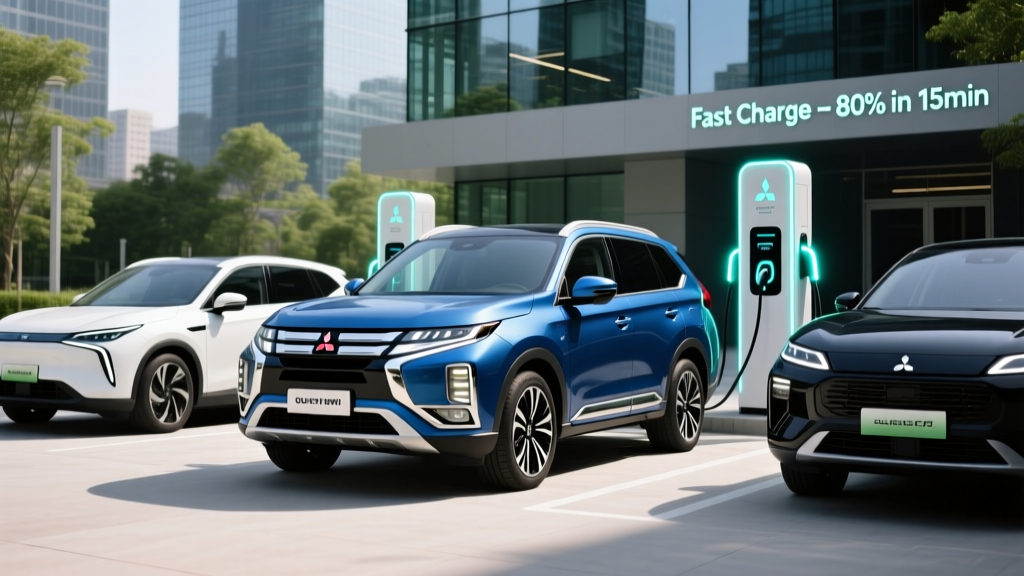
| DC Fast Charge | Peak ~22 kW | CHAdeMO | ~38 min (0-80%) | N/A |
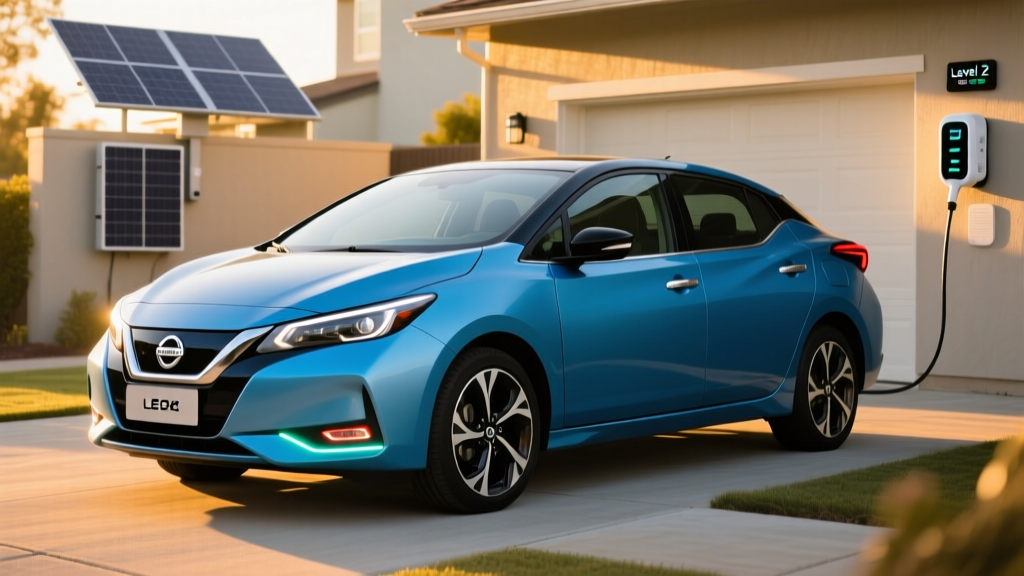
Home charging reality: Most PHEV owners find Level 1 (standard 120V outlet) sufficient for overnight charging, since you're only replenishing 20 kWh. A full Level 1 charge takes about 14 hours, but you rarely arrive at 0% — plugging in each evening with 10-15 miles of range remaining tops the battery off by morning. A Level 2 home charger ($500-$1,200 installed) is a convenience upgrade, not a necessity like it is for full BEVs.
CHAdeMO limitation: The DC fast-charging speed of ~22 kW is slow by modern standards (many BEVs hit 150-250 kW). On a road trip, you'll rely on the gas engine rather than stopping to fast-charge. This is by design — PHEVs aren't built for electric-only road tripping.
Common Misconceptions About Electric Mitsubishi Vehicles
| Myth | Fact |
|---|---|
| "Mitsubishi makes a fully electric car" | Mitsubishi does not sell a BEV in the US market as of 2026. The Outlander PHEV is their only electrified option. Mitsubishi has announced future EV plans globally, but nothing is confirmed for US sale. |
| "PHEVs are just complicated gas cars" | A PHEV driven primarily within its EV range and charged nightly operates as an EV 70-90% of the time for many owners. The gas engine is a backup for longer trips. |
| "The battery will need expensive replacement" | Mitsubishi covers the PHEV battery for 10 years/100,000 miles. PHEV batteries are smaller and undergo shallower cycles than BEV batteries, typically degrading more slowly. Replacement cost, if needed out of warranty, is estimated at $4,000-$6,000 — significantly less than a full BEV pack. |
| "I need a Level 2 charger at home" | For a PHEV with a 20 kWh battery, Level 1 (120V) overnight charging is often adequate. Level 2 is a convenience, not a requirement. |
| "The Outlander PHEV qualifies for the full $7,500 tax credit" | The §30D credit for PHEVs is calculated differently than for BEVs and depends on battery capacity and critical-mineral sourcing. The actual credit may be less than $7,500. Check current IRS rules and confirm with a tax professional. |
Who Should Buy the Outlander PHEV — and Who Should Look Elsewhere
Decision Framework: Is the Electric Mitsubishi Right for You?
Choose the Outlander PHEV if:
- Your daily commute is under 35 miles round-trip and you can charge at home (even on a 120V outlet)
- You want EV-like daily driving but need gas flexibility for road trips or rural driving
- You want standard AWD for snow/ice without the range penalty a BEV takes in cold weather
- You're not ready to commit to full EV ownership but want to reduce fuel consumption
- You value Mitsubishi's 10-year/100,000-mile powertrain and battery warranty
Look at a full BEV instead if:
- You want zero tailpipe emissions and zero gas-engine maintenance (no oil changes, no spark plugs)
- Your daily driving exceeds 40 miles and you want to maximize electric operation
- You want faster DC charging (150+ kW) for road trips
- You want access to the full $7,500 federal tax credit (many BEVs qualify; PHEV credits are often lower)
- You want the lowest possible per-mile energy cost
Stick with the gas Outlander if:
- You cannot charge at home and have no reliable Level 2 access near work
- Your budget is strictly under $30,000
- You drive very low annual miles (under 8,000) where fuel savings won't offset the PHEV premium
What First-Time Electrified Vehicle Buyers Should Know
If the Outlander PHEV is your first step away from a purely gas-powered vehicle, here's what to expect:
Driving pattern matters more than specs. A PHEV's value proposition lives or dies on your routine. If you charge nightly and drive 30 miles a day, you'll visit a gas station a few times a year. If you skip charging or drive 60+ miles daily, you're essentially driving a heavy hybrid with mediocre gas mileage (26 MPG combined is below what competitors like the Toyota RAV4 Hybrid achieve at 39 MPG combined).
Cold weather reduces EV range — but the gas engine compensates. In sub-freezing temperatures, expect 20-30% less electric range (roughly 25-28 miles instead of 38). Unlike a full EV where range loss causes anxiety, the PHEV's gas engine seamlessly takes over. You'll burn more fuel in winter, but you won't be stranded.
Insurance may cost more. Electrified vehicles typically carry insurance premiums 10-20% higher than their gas counterparts due to higher repair costs for battery and powertrain components. Get quotes before purchasing.
Tax credit rules are complex and change frequently. Under the current IRS §30D guidelines, eligibility depends on your adjusted gross income (caps: $150K single / $300K joint), vehicle MSRP limits ($80K for SUVs/PHEVs), battery component sourcing, and critical mineral requirements. The point-of-sale transfer option lets you apply the credit as a down-payment reduction at the dealer. Always verify current-year rules — they shift with new regulatory guidance.
Plan for the long game on depreciation. Mitsubishi's resale values historically lag Toyota and Honda. According to industry data, the Outlander PHEV retains roughly 45-50% of its value after 5 years. Compare this to the Toyota RAV4 Prime PHEV, which retains closer to 60% — though the RAV4 Prime also carries a higher starting price and longer wait times at dealers.
Frequently Asked Questions
Does Mitsubishi make a fully electric car in 2026?
No. As of 2026, Mitsubishi does not sell a battery-electric vehicle (BEV) in the United States. The Outlander PHEV is their only electrified model available to US buyers. Mitsubishi has discussed global EV plans under the Renault-Nissan-Mitsubishi Alliance, but no US-market BEV has been confirmed with a release date.
How much does it cost to charge the Outlander PHEV at home?
Charging the 20 kWh battery from empty to full on Level 1 (120V) costs roughly $2.50-$3.50 at the national average electricity rate of ~$0.16/kWh. That translates to approximately $0.07-$0.09 per electric mile — about one-third the per-mile cost of gasoline at current prices. Over a year of daily charging, expect to spend $400-$600 on electricity for EV-mode driving.
Is the Outlander PHEV better than the Toyota RAV4 Prime?
It depends on your priorities. The RAV4 Prime offers 42 miles of EV range and 38 MPG combined on gas (vs. 38 miles and 26 MPG for the Outlander PHEV), making it more efficient overall. However, the RAV4 Prime starts around $44,000 and has historically been difficult to find at MSRP due to high demand. The Outlander PHEV is typically easier to purchase at or near sticker price and offers standard AWD with Mitsubishi's strong warranty coverage. For fuel efficiency, the RAV4 Prime wins. For availability and value, the Outlander PHEV has the edge.
What happens if I never charge the Outlander PHEV?
The vehicle operates as a conventional hybrid, using the gas engine and regenerative braking to manage the battery. You'll get roughly 26 MPG combined — respectable but not class-leading for a hybrid. You'll also miss the entire point of the PHEV premium. If you cannot or will not charge, a standard hybrid (like the Outlander gas model or a Toyota RAV4 Hybrid) is a smarter financial choice.
What is the Outlander PHEV's battery warranty?
Mitsubishi covers the main drive battery for 10 years or 100,000 miles, whichever comes first. The warranty covers defects and capacity loss below a specified threshold (typically 60-70% of original capacity, per Mitsubishi's warranty documentation). This is one of the longest PHEV battery warranties in the industry.
Can I use a Tesla Supercharger with the Outlander PHEV?
No. The Outlander PHEV uses CHAdeMO for DC fast charging and J1772 for AC charging. Tesla Superchargers use the NACS connector. There is no widely available adapter for CHAdeMO-to-NACS. You'll need to use Electrify America, EVgo, ChargePoint, or other networks with CHAdeMO connectors for public DC charging.