The Quick Answer: Your Electric Minivan Options in 2026
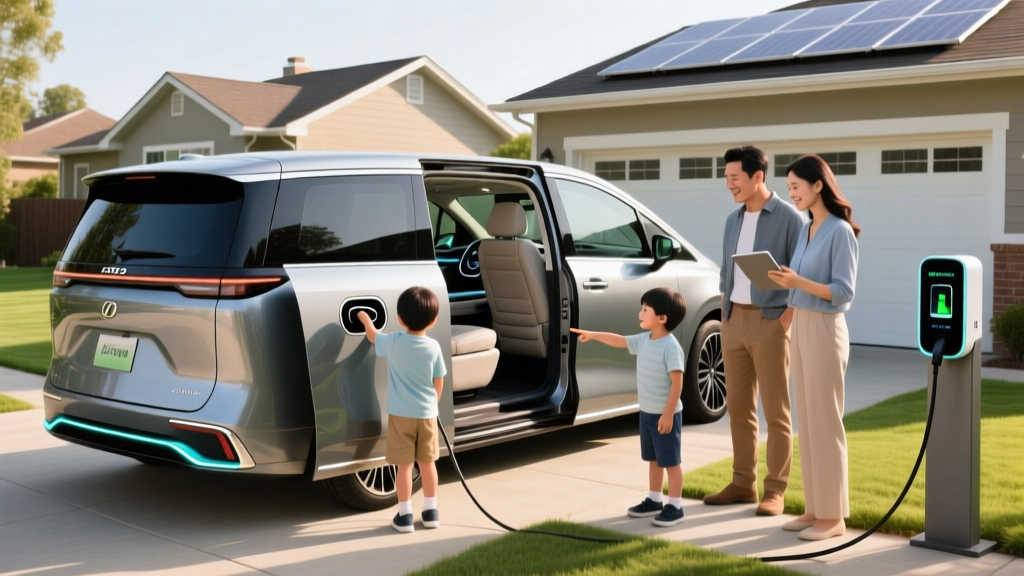
If you're searching for an electric minivan in the US market today, the reality is narrow: there is currently no fully electric (BEV) minivan sold new in the United States. The closest electrified family hauler you can buy right now is the Chrysler Pacifica Hybrid (PHEV), which offers 32 miles of electric-only range before its gas engine kicks in, starting around $51,095. For families willing to look beyond the traditional minivan body style, the Kia EV9 (a 3-row electric SUV starting at $54,900) and Honda Prologue ($47,400) offer the most minivan-like interior volume in a battery-electric package. Fully electric minivans from brands like Volvo (EM90) and Zeekr (MIX) exist globally but are not sold in the US as of 2026.
Why the Electric Minivan Market Is So Limited
The minivan segment has always been a low-volume, price-sensitive category. Automakers prioritize electrifying high-volume SUVs and trucks first because that's where the profit margins and regulatory credit math work best. A fully electric minivan requires a large battery pack (likely 100+ kWh to deliver acceptable range in a heavy, boxy vehicle), which pushes the MSRP well above what typical minivan buyers — families watching budgets — are willing to pay.
Stellantis (Chrysler's parent) has signaled interest in a fully electric Pacifica successor, but no production timeline has been confirmed. Meanwhile, the minivan's traditional buyer demographic — families needing easy-access sliding doors, a low load floor, and maximum cargo volume — is increasingly being served by 3-row electric SUVs like the Kia EV9 and Hyundai Ioniq 9, which sacrifice some minivan utility (no sliding doors, higher step-in height) for available BEV powertrains.
Your Real Options: PHEV Minivan vs. 3-Row Electric SUV
Since a pure BEV minivan isn't on dealer lots, here's how the two practical alternatives stack up for a family buyer in 2026:
| Spec | Chrysler Pacifica Hybrid | Kia EV9 Land (RWD) |
|---|---|---|
| Powertrain | Plug-in hybrid (3.6L V6 + electric motors) | Battery electric (single motor RWD) |
| Electric-only range | 32 miles (EPA) | N/A (BEV) |
| Total range (gas + electric) | 520+ miles | 304 miles (EPA combined) |
| Battery capacity | 16 kWh (usable ~13 kWh), NMC | 100 kWh (usable ~96 kWh), NMC |
| MPGe (electric mode) | 82 MPGe | 89 MPGe |
| MPG (gas-only mode) | 30 MPG combined | N/A |
| Max DC fast charge | N/A (Level 2 AC only) | 236 kW peak |
| Level 2 charge time (0-100%) | ~2 hours | ~9.5 hours |
| 10-80% DC fast charge | N/A | ~24 minutes |
| Horsepower | 262 hp combined | 215 hp |
| 0-60 mph | ~7.1 sec | ~8.2 sec |
| Cargo (behind 3rd row) | 32.3 cu ft | 20.2 cu ft |
| Cargo (max, seats folded) | 140.5 cu ft | 81.7 cu ft |
| Sliding rear doors | Yes (power) | No (conventional) |
| Starting MSRP | $51,095 | $54,900 |
| Federal tax credit (§30D) | Not eligible (PHEV battery <7 kWh) | Up to $7,500 (check sourcing) |
| Drivetrain warranty | 5 yr / 60,000 mi | 10 yr / 100,000 mi |
Key takeaway: The Pacifica Hybrid wins on pure family utility — sliding doors, more cargo space, and zero range anxiety thanks to the gas engine. The EV9 wins on fuel/energy cost savings, performance smoothness, and available federal tax credits. According to fueleconomy.gov, the Pacifica Hybrid achieves 82 MPGe in electric mode and 30 MPG combined on gas, while the EV9 delivers 89 MPGe across its full battery.
Real Cost Breakdown: 5-Year Ownership Comparison
For a family driving 15,000 miles per year (a realistic figure for a minivan/SUV used for school runs, activities, and road trips), here's how costs stack up over five years. We're comparing the Pacifica Hybrid (assuming 70% of daily driving is within the 32-mile electric range) against the EV9 (all-electric) and a gas-only Honda Odyssey as a baseline.
| Category | Pacifica Hybrid | Kia EV9 Land | Honda Odyssey (gas) |
|---|---|---|---|
| Purchase price (MSRP) | $51,095 | $54,900 | $41,920 |
| Federal tax credit | $0 | -$7,500* | $0 |
| Effective purchase | $51,095 | $47,400 | $41,920 |
| Fuel/energy (5 years) | $4,800 | $5,400 | $10,500 |
| Maintenance (5 years) | $3,200 | $1,500 | $3,800 |
| Insurance (5 years) | $9,500 | $10,800 | $8,200 |
| Est. depreciation | $22,000 | $26,000 | $18,000 |
| Total 5-yr cost | $90,595 | $91,100 | $82,420 |
*Federal §30D credit of $7,500 assumes the buyer meets IRS income limits (AGI ≤$150k single / ≤$300k joint), the vehicle meets battery critical-mineral and component sourcing requirements, and the MSRP does not exceed $80,000 for SUVs/vans. Verify current eligibility before purchase.
What the numbers reveal: The EV9 and Pacifica Hybrid land in nearly the same 5-year total cost territory, with the EV9 pulling ahead on fuel and maintenance savings but giving back ground on depreciation and insurance. Both cost roughly $8,000-$9,000 more over five years than the gas Odyssey — a gap that narrows if gas prices rise or if you qualify for additional state/local incentives. The EV9's energy cost assumes a national average electricity rate of $0.17/kWh and a mix of 80% home Level 2 charging and 20% public DC fast charging at ~$0.40/kWh.
Real-World Ownership: What First-Time EV Buyers Must Know
If you're leaning toward the Kia EV9 (or any BEV) as your family hauler, these are the ownership realities that spec sheets don't highlight:
Home Charging Is the Foundation
Over 80% of EV charging happens at home. For the EV9's 100 kWh battery, a standard 120V outlet (Level 1, ~1.4 kW) adds roughly 3-4 miles of range per hour — essentially useless for a family vehicle that needs daily replenishment. You'll need a Level 2 home charger (240V, 48A circuit) delivering up to 11.5 kW, which fully recharges the EV9 overnight in about 9.5 hours. Installation costs typically range from $800 to $2,500 depending on panel capacity and wiring distance. If your home has a 100A electrical panel, budget an additional $1,500-$3,000 for a panel upgrade — a common gotcha for first-time EV owners.
Real-World Range Is Not the EPA Sticker
The EV9 Land RWD carries an EPA range of 304 miles. In real-world family use, expect:
- Summer mixed driving: ~270-290 miles (5-10% below EPA)
- Highway at 75 mph: ~240-260 miles (aerodynamic drag hits large, boxy vehicles hard)
- Cold weather (below 32°F): ~200-240 miles (15-35% loss depending on severity and cabin heat usage)
For a family that takes regular road trips exceeding 250 miles, you'll need to plan DC fast-charging stops. The EV9's 236 kW peak charge rate is impressive — 10-80% in roughly 24 minutes at a compatible 350 kW charger — but remember that charge speed tapers significantly above 80%. Charging from 80-100% can add another 20+ minutes. On Electrify America or Tesla Supercharger networks (via adapter for CCS-equipped vehicles), plan for one 25-30 minute stop on a 400-mile trip.
Cold-Weather Charging Penalty
Battery chemistry (NMC in the EV9) charges much slower when cold. Without preconditioning the battery before plugging in, your first 10-15 minutes of DC fast charging in winter may be limited to 40-60 kW instead of the peak 236 kW. The EV9's battery preconditioning feature (activated when you navigate to a charger in the infotainment system) mitigates this, but you must use it proactively.
Common Misconceptions About Electric Family Vehicles
| Myth | Fact |
|---|---|
| "An electric minivan exists — I just haven't found it." | No fully electric minivan is sold in the US as of 2026. The Volvo EM90 and Zeekr MIX are electric minivans sold in China and Europe only. |
| "PHEVs are the worst of both worlds." | The Pacifica Hybrid's 32-mile electric range covers most school-run and errand loops emissions-free, while the gas engine eliminates range anxiety on road trips. For one-car families without reliable public charging, a PHEV is often the most practical electrified choice. |
| "I'll save thousands immediately by going electric." | Upfront costs remain higher for EVs. Savings accrue over 5-7 years through lower fuel and maintenance costs. Federal tax credits help, but eligibility is not guaranteed — always verify current IRS §30D requirements. |
| "EV batteries need replacing every few years." | Modern NMC batteries are engineered for 150,000-200,000+ miles with gradual capacity loss (typically 10-15% over 10 years). Kia's 10-year/100,000-mile battery warranty covers defects and excessive degradation (below ~70% capacity). |
| "A 3-row SUV is the same as a minivan." | Third-row access, cargo volume with all seats up, and load-floor height are meaningfully worse in SUVs. The EV9 offers 20.2 cu ft behind the third row vs. the Pacifica's 32.3 cu ft. Sliding doors — a minivan staple — don't exist on any mainstream electric SUV. |
Decision Framework: Which Electrified Family Vehicle Fits You?
Choose the Chrysler Pacifica Hybrid (PHEV) if:
- You need true minivan utility: power sliding doors, low step-in height, and maximum cargo volume (140.5 cu ft)
- Your daily driving is mostly under 30 miles but you take regular road trips over 300 miles
- You don't have reliable access to home or workplace charging
- You have more than two children or regularly haul bulky gear (strollers, hockey bags, instruments)
- You want to reduce emissions on daily trips without any range anxiety
Choose the Kia EV9 (or another 3-row BEV SUV) if:
- You can install a Level 2 charger at home and most daily driving is under 200 miles
- You want to minimize ongoing fuel and maintenance costs
- You qualify for the full $7,500 federal tax credit (check income and sourcing rules)
- You're willing to trade some cargo volume and sliding doors for a smooth, quiet, zero-tailpipe-emissions drivetrain
- You plan to keep the vehicle 7+ years to amortize the higher purchase price and realize full depreciation lifecycle
Wait for a true electric minivan if:
- You absolutely need sliding doors AND a fully electric powertrain
- You can hold off 2-3 years for potential entries from Stellantis, Hyundai, or others
- Your current vehicle still serves your family's needs adequately
What's Coming: Announced Electric Minivans and Large EVs
The electric minivan pipeline for the US market remains thin but not empty:
- Stellantis (Chrysler/Dodge): Has confirmed plans for electrified minivans on the STLA Large platform, potentially including a BEV Pacifica successor. No firm date; industry estimates point to 2027-2028 at the earliest. Specs are preliminary.
- Hyundai Ioniq 9: A large 3-row electric SUV (not a minivan) expected for the US market, built on the E-GMP platform alongside the Kia EV9. Anticipated to offer a similar ~300-mile EPA range and 350 kW DC fast-charging capability.
- Volvo EM90: An all-electric luxury minivan currently sold in China. Volvo has not confirmed US availability. If it arrives, expect a price well above $70,000.
None of these are available for purchase today. Treat any specs as preliminary until EPA certification and official MSRP announcements are published.
Frequently Asked Questions
Is there a fully electric minivan I can buy in the US in 2026?
No. As of 2026, no automaker sells a fully electric (BEV) minivan in the United States. The Chrysler Pacifica Hybrid is a plug-in hybrid (PHEV) minivan with 32 miles of electric-only range. The closest fully electric alternatives are 3-row SUVs like the Kia EV9 and Honda Prologue.
Does the Chrysler Pacifica Hybrid qualify for the $7,500 federal tax credit?
No. Under current IRS §30D rules, plug-in hybrid vehicles must have a battery capacity of at least 7 kWh to qualify. The Pacifica Hybrid's battery is 16 kWh gross (~13 kWh usable), which meets the capacity threshold, but the vehicle must also satisfy critical-mineral and battery-component sourcing requirements, MSRP caps ($80,000 for vans/SUVs), and buyer income limits. As of 2026, the Pacifica Hybrid does not meet the sourcing requirements and is not listed as eligible on the IRS clean vehicle credit list. Always verify on the official IRS qualified vehicles list before purchasing.
How much does it cost to charge the Kia EV9 at home?
The EV9's usable battery capacity is approximately 96 kWh. At the US national average residential electricity rate of ~$0.17/kWh, a full charge costs about $16.30 and delivers roughly 300 miles of EPA-rated range. That works out to about $0.054 per mile — compared to roughly $0.14 per mile for a gas minivan getting 22 MPG at $3.10/gallon. Over 15,000 miles per year, home charging the EV9 saves roughly $1,300 versus gassing up an Odyssey.
Can I tow with an electric minivan or 3-row EV SUV?
The Kia EV9 is rated to tow up to 5,000 lbs (AWD models) or 2,000 lbs (RWD). However, towing significantly reduces range — expect a 30-50% reduction depending on trailer weight and aerodynamics. The Pacifica Hybrid is rated for 3,600 lbs of towing and faces less range concern since the gas engine handles long-haul towing without charging stops.
What happens if I don't have home charging access?
Relying entirely on public DC fast charging is possible but costly and inconvenient. Public DC fast charging typically costs $0.30-$0.50/kWh, roughly doubling or tripling the per-mile cost versus home charging. For the EV9, exclusively public charging could push annual fuel costs to $2,500-$3,500 — erasing much of the cost advantage over gas. If you can't install a home charger, the Pacifica Hybrid (which can run on gas indefinitely) is the more practical electrified choice.
Are electric vehicles more expensive to insure?
Generally, yes. EV insurance premiums run 10-25% higher than equivalent gas vehicles due to higher repair costs (specialized labor, battery protection requirements) and higher replacement values. For the EV9, expect annual premiums in the $2,000-$2,400 range depending on your state, driving record, and coverage level, versus $1,600-$1,900 for a gas Odyssey. Shop quotes from multiple insurers — some now offer EV-specific discounts.