If you're considering electric minis — subcompact, city-focused battery-electric vehicles — the short answer is that they make excellent second cars or urban commuters, provided you have reliable home charging and realistic range expectations. Most 2026 electric minis deliver between 100 and 150 miles of EPA-rated range on batteries around 30–40 kWh, charge from 10–80% in 30–40 minutes on DC fast chargers, and start under $30,000 before incentives. They cost roughly $0.04–$0.06 per mile to fuel on home electricity versus $0.12–$0.16 per mile for a comparable gas subcompact. But if you regularly drive highway stretches over 100 miles one-way, live in an apartment without charging access, or endure harsh winters, the limitations become real fast. Below, we break down every number you need to decide.
What Exactly Are Electric Minis?
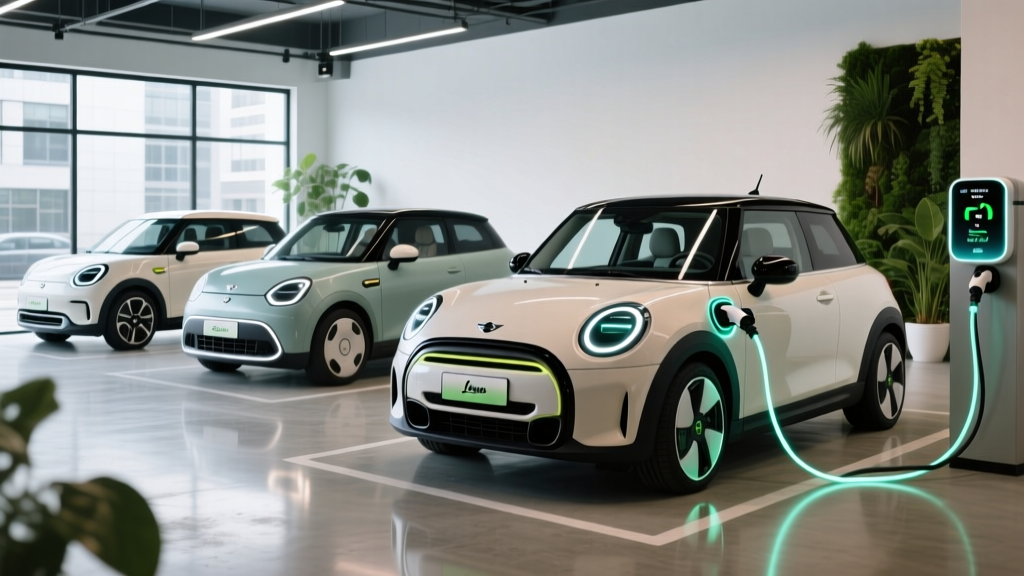
Electric minis are the smallest category of battery-electric vehicles (BEVs) — think subcompacts like the Mini Cooper SE, Fiat 500e, and emerging models from Asian manufacturers expanding into the US market. They prioritize affordability, tight turning circles, and low running costs over range and cargo space. In 2026, the segment has matured with better battery chemistry and faster charging than the early 2020s models, but the physics of a small battery pack still set hard limits.
Quick Specs Snapshot: 2026 Electric Minis Segment
- EPA range: 114–150 miles (real-world highway: 85–120 miles)
- Battery capacity: 28–42 kWh usable (mostly NMC chemistry; some LFP variants)
- DC fast charge (10–80%): 28–40 minutes at 50–95 kW peak
- Level 2 home charge (0–100%): 4–6 hours at 7.2–11 kW
- Base MSRP: $28,900–$36,500 before incentives
- 0–60 mph: 6.5–9.0 seconds
- MPGe combined: 105–120 MPGe
Electric Minis vs. Gas Subcompacts: The Cost Comparison
The purchase decision usually comes down to this: do the fuel and maintenance savings of an electric mini offset its higher sticker price and range limitations compared to a gas-powered subcompact like the Honda Fit (discontinued but representative) or a Toyota Yaris-class vehicle? Let's run the numbers over five years and 60,000 miles.
| Cost Category | Electric Mini (2026) | Gas Subcompact (30 MPG combined) |
|---|---|---|
| Purchase price (base MSRP) | $31,500 | $22,000 |
| Federal tax credit (§30D, if eligible) | –$3,750 to –$7,500* | $0 |
| Fuel cost (60k miles) | $2,700 (home charging @ $0.15/kWh) | $7,000 ($3.50/gal, 30 MPG) |
| Maintenance (60k miles) | $900 (cabin filter, tires, wipers) | $3,200 (oil, brakes, filters, belts) |
| Insurance (5-year average) | $7,500 | $6,000 |
| Net 5-year cost | ~$30,850–$34,600 | ~$38,200 |
*Federal §30D credit eligibility depends on MSRP caps (under $55,000 for sedans/hatchbacks), buyer income limits ($150k single / $300k joint), battery critical-mineral sourcing, and point-of-sale transfer availability. Always verify current rules at IRS.gov and consult a tax professional.
The electric mini wins on operating cost by a wide margin — roughly $4,300 less in fuel and $2,300 less in maintenance over five years. Insurance runs higher (typically 15–25% more for EVs due to repair cost structures), but the net savings still land between $3,600 and $7,350 over the ownership period, depending on your tax-credit eligibility. The break-even point against a $22,000 gas car arrives around year three for most buyers.
Real-World Range: What the EPA Sticker Doesn't Tell You
An EPA range of 114–150 miles sounds adequate for city commuting, but three factors compress that number in practice:
Highway driving: Electric minis lose efficiency at sustained speeds above 65 mph because they lack multi-speed transmissions and their small frontal area advantage disappears against aerodynamic drag. Expect 15–20% below EPA combined figures on a 70-mph highway run — so a 140-mile EPA rating delivers roughly 112–119 real highway miles in mild weather.
Cold weather: Battery chemistry slows in freezing temperatures, and cabin heating draws directly from the traction battery. In sustained 20°F weather, expect a 25–35% range reduction. That 140-mile EPA car drops to 91–105 miles of usable range. If your one-way commute is 50 miles in a Minnesota winter, you're charging every single day.
Charging curve taper: Most electric minis peak at 50–95 kW on DC fast chargers but only sustain that rate between roughly 10% and 50% state of charge (SoC). Above 60%, the charge rate drops sharply to protect the battery. A "30-minute 10–80% charge" is realistic, but 80–100% can take nearly as long as the first 70%. Plan your road stops accordingly.
Common Misconceptions About Electric Minis
| Myth | Fact |
|---|---|
| "150 miles of range is enough for anyone" | It covers ~85% of daily US commutes, but any 100+ mile round trip, detour, or cold snap makes it tight. Road trips require planning. |
| "They charge as fast as bigger EVs" | Most peak at 50–95 kW, not the 200–350 kW of larger platforms. A 10–80% charge takes 30–40 min vs. 15–20 min for a Hyundai Ioniq 5 or Tesla Model 3. |
| "Small battery means it'll degrade fast" | Modern thermal management and LFP chemistry options yield 8-year/100,000-mile battery warranties with 70%+ capacity retention guarantees. Actual degradation averages 2–3% per year. |
| "You can't road-trip in an electric mini" | You can, but you'll stop every 90–120 miles for 30+ minutes. It's feasible for leisure trips, impractical for time-sensitive travel. |
| "The tax credit makes them almost free" | Credit ranges $0–$7,500 depending on battery sourcing and your income. Many models qualify for partial credit ($3,750). Always verify before buying. |
Charging at Home: The Make-or-Break Factor
Electric minis live and die by home charging access. Their smaller batteries mean faster Level 2 fills — a 32 kWh pack reaches full from empty in about 4.5 hours on a 7.2 kW Level 2 home charger, which is convenient overnight. But if you live in an apartment, condo, or street-parking situation without reliable charging, an electric mini becomes a daily logistics challenge.
Level 1 (120V standard outlet): Adds roughly 3–5 miles of range per hour. Fully charging a 32 kWh battery from empty takes 20–28 hours. This works if you drive under 30 miles daily and plug in every night, but it's a poor primary strategy.
Level 2 (240V dedicated circuit): Adds 20–30 miles per hour at 7.2–11 kW. Installation costs $800–$2,500 depending on panel capacity and run length. A 200-amp panel usually handles a Level 2 charger without upgrade; older 100-amp panels may need a $1,500–$3,000 upgrade.
Public DC fast charging: At $0.30–$0.48 per kWh on networks like Electrify America or EVgo, your fuel cost rises to $0.08–$0.12 per mile — still cheaper than gas, but the savings gap narrows considerably. Relying solely on public charging also adds 2–4 hours per week in charging time for a typical commuter.
| Factor | Electric Mini | Gas Subcompact |
|---|---|---|
| Refueling time (full "tank") | 4.5 hours (Level 2 home) or 35 min (DC fast) | 5 minutes |
| Cost per mile (fuel) | $0.04–$0.06 (home) / $0.08–$0.12 (public DC) | $0.12–$0.16 |
| Refueling infrastructure needed | Home Level 2 strongly recommended | Gas stations everywhere |
| Cold-weather range loss | 25–35% reduction | ~5–10% MPG reduction |
| Maintenance events per year | 1 (cabin filter, tire rotation) | 2–3 (oil, filters, brakes) |
Who Should Buy an Electric Mini — And Who Shouldn't
The decision framework for electric minis is straightforward if you're honest about your driving patterns:
Choose an Electric Mini If:
- Your daily round-trip commute is under 60 miles
- You have access to Level 2 home charging (garage, driveway, or workplace)
- This is a second car, or you have another vehicle for long trips
- You live in a mild-to-moderate climate (rare sub-20°F weeks)
- You prioritize low running costs and easy parking over cargo space
- Your budget is $25,000–$35,000 after incentives
Look at a Larger EV or PHEV Instead If:
- You regularly drive 100+ miles one-way without charging stops
- You rely on street parking with no charging access
- You live in a region with sustained sub-freezing winters and this is your only car
- You need to carry four adults or significant cargo
- You tow anything (electric minis typically have no towing rating)
- You want one vehicle that does everything without planning
Battery Longevity, Warranty, and Replacement Costs
First-time EV buyers often worry about battery replacement. Here's what the data shows for the electric mini segment in 2026:
Warranty: Federal law mandates a minimum 8-year/100,000-mile battery warranty for EVs, and most manufacturers guarantee 70% capacity retention over that period. Some brands extend to 10 years. This means if your 32 kWh pack drops below ~22 kWh of usable capacity within the warranty window, the manufacturer replaces or refurbishes it at no cost.
Real-world degradation: Data from fleet monitoring services shows modern NMC and LFP packs in small EVs lose approximately 2–3% of capacity per year under normal use. After 8 years, expect roughly 80–85% of original capacity — well above warranty thresholds. LFP (lithium iron phosphate) chemistry, now appearing in some electric minis, trades slightly lower energy density for longer cycle life and less degradation, making it a strong fit for the segment.
Out-of-warranty replacement: If you keep the car past 100,000 miles and the battery eventually needs replacement, expect $5,000–$8,000 for a small-pack electric mini (compared to $12,000–$20,000 for larger EVs). This is a meaningful cost to budget for in years 10–15 of ownership, though many packs outlast the vehicle itself.
What First-Time EV Buyers Must Know Before Purchasing
If an electric mini is your first EV, these practical realities don't always appear in brochures:
1. Preconditioning matters. Most electric minis can warm or cool the battery before fast charging, which significantly improves charge speed. If your car offers scheduled preconditioning, use it — especially in cold weather. Skipping it can double your DC fast-charge time.
2. kW is not kWh. Kilowatts (kW) measure power — how fast energy flows. Kilowatt-hours (kWh) measure energy — how much the battery holds. A 50 kW charger fills a 32 kWh battery in roughly 40 minutes (with taper). Confusing these is the most common new-EV-owner mistake.
3. Regen braking changes how you drive. Most electric minis offer regenerative braking that recaptures energy when you lift off the accelerator. Many drivers adapt to "one-pedal driving" within a week, but the strength varies by model. Test-drive in stop-and-go traffic before buying.
4. Insurance costs more. EV insurance premiums run 15–25% higher than equivalent gas cars due to higher repair costs, specialized parts, and total-loss thresholds. Get a quote before signing a purchase agreement — the $100/month savings in fuel can be offset by $30–$50/month in additional insurance.
5. Check the connector. The US market is transitioning to NACS (North American Charging Standard, used by Tesla's Supercharger network). Some 2026 electric minis ship with CCS1 connectors, which require an adapter for Supercharger access. Confirm what your model includes and whether the manufacturer provides a NACS adapter.
Frequently Asked Questions
Do electric minis qualify for the $7,500 federal tax credit?
Some do, but eligibility under IRS §30D rules depends on the vehicle's battery sourcing (critical minerals and component manufacturing), your adjusted gross income (under $150,000 single / $300,000 joint), and the MSRP cap ($55,000 for hatchbacks/sedans). Many electric minis qualify for the partial $3,750 credit because they meet one of two sourcing requirements but not both. The credit can now be transferred to the dealer at point of sale, reducing your purchase price directly. Verify eligibility on the fueleconomy.gov tax credit page for the specific model year.
Can I take an electric mini on a road trip?
Yes, but plan for stops every 90–120 miles lasting 30–40 minutes each. A 300-mile trip that takes 4.5 hours in a gas car will take 6–7 hours in an electric mini. It works for leisurely weekend trips but is frustrating for time-sensitive travel. Most owners use a second vehicle or rent for long drives.
How does an electric mini compare to a plug-in hybrid (PHEV)?
A PHEV gives you 25–40 miles of electric-only range for daily commuting, then switches to a gas engine for longer trips — eliminating range anxiety entirely. If you can't install home charging or regularly drive over 100 miles, a PHEV like the Toyota Prius Prime (44 miles EV range, 52 MPG combined on gas) may be a better fit. The trade-off: PHEVs still require oil changes and have higher maintenance costs, and they don't qualify for the full $7,500 EV credit (some qualify for $3,750).
What happens if the battery dies on a road trip?
Unlike a gas car that can take a fuel can, a depleted EV requires a tow to the nearest charger. Most electric minis give multiple low-battery warnings and enter a reduced-power "limp mode" well before full depletion. Roadside assistance coverage (often included for 3–5 years with new EVs) handles this scenario. The real prevention habit: never let SoC drop below 15% when traveling.
Are electric minis safe?
Modern electric minis include standard ADAS (advanced driver assistance systems) like automatic emergency braking, lane-keeping assist, and blind-spot monitoring. Their small size means less crash mass, but low centers of gravity from floor-mounted batteries improve rollover resistance. Check IIHS and NHTSA ratings for specific models — ratings vary significantly within the segment.
Electric minis occupy a specific and honest niche: affordable, low-cost-to-run urban transportation for drivers with home charging and predictable commutes. They won't replace a family SUV or handle cross-country road trips, but for the right use case — a city commuter, a second car, or a budget-conscious buyer ready to leave gas behind — they deliver the lowest cost-per-mile of any vehicle category on the road in 2026.