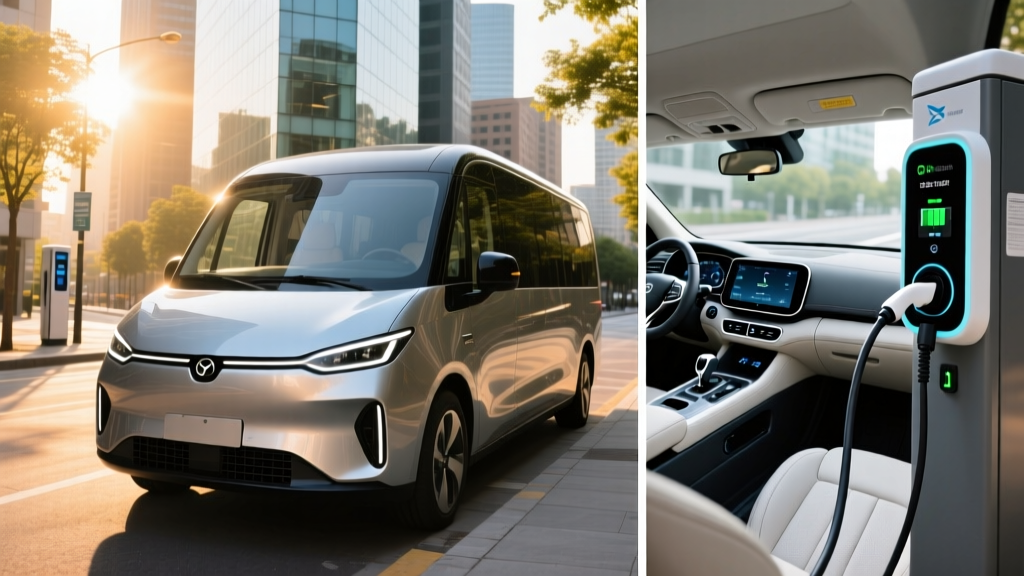
If you're researching an electric minibus for family hauling, shuttle service, or fleet use, here's the practical reality: purpose-built electric minibuses in the US market remain extremely limited as of 2026, with most buyers actually looking at three-row electric SUVs or passenger electric vans that serve the minibus role. Vehicles like the Mercedes-Benz EQV (available in select markets), the Volkswagen ID. Buzz (3-row passenger configuration), and commercial platforms like the Ford E-Transit passenger variant are the closest equivalents. Expect 200–260 miles of EPA range, battery packs from 77–91 kWh, DC fast charging between 130–170 kW, and base pricing from $52,000 to $75,000 before any federal tax credits. The real decision isn't just which model — it's whether your daily routes, charging access, and climate make electrification viable for a vehicle this size.
Quick Answer: Is an Electric Minibus Right for You?
An electric minibus makes financial sense if you drive 30–80 miles daily on predictable routes, have access to Level 2 home or depot charging, and operate in moderate climates. You'll save $2,500–$4,500 annually on fuel and maintenance versus a gas equivalent. If you regularly exceed 250 miles in a single trip, live in extreme cold without garage charging, or lack any off-street charging, a hybrid or conventional minibus remains the pragmatic choice for now.
What Qualifies as an Electric Minibus in 2026?
The term "electric minibus" covers a range of vehicles that don't always carry that exact badge in the US market. Here's what buyers actually consider when searching for one:
- Three-row electric passenger vans: The Volkswagen ID. Buzz (LWB, 3-row) seats seven and offers 234 miles of EPA range with a 91 kWh (usable ~86 kWh) NMC battery. Base MSRP starts around $59,995 for the Pro S trim.
- Electric passenger vans for shuttle/fleet use: The Ford E-Transit passenger wagon variant provides up to 126 miles of EPA range with a 68 kWh usable battery — designed for depot-based routes, not road trips. MSRP starts near $52,000.
- Three-row electric SUVs serving minibus duty: The Kia EV9 (300-mile EPA range, 100.0 kWh battery, from $54,900) and the Hyundai Ioniq 9 (announced for late 2026, ~300+ mile target range) fill the family-hauler role.
- Commercial minibuses (15-passenger):strong> Companies like GreenPower and Lightning eMotors build battery-electric shuttle buses on commercial chassis, typically with 120–180 kWh battery packs, 150–200 mile range, and pricing from $180,000–$280,000. These are fleet-only purchases, often subsidized by state clean-air grants.
For most private buyers and small businesses, the VW ID. Buzz and Kia EV9 represent the realistic electric minibus options in 2026. Let's break down what ownership actually looks like.
Electric Minibus vs. Gas Minivan: The Numbers
Let's compare the closest electric and gas equivalents head-to-head using the VW ID. Buzz against the Honda Odyssey and Toyota Sienna hybrid — the two benchmarks in this segment.
| Spec | VW ID. Buzz (2025/2026) | Toyota Sienna Hybrid (2026) | Honda Odyssey (2026) |
|---|---|---|---|
| Powertrain | BEV, 282 hp (RWD) | HEV, 245 hp combined | Gas V6, 280 hp |
| EPA Range / Fuel Economy | 234 mi range; 87 MPGe | 36 MPG combined | 22 MPG combined |
| Energy Capacity | 91 kWh battery (86 usable) | 13.5 gal fuel tank | 19.5 gal fuel tank |
| Refueling / Charging Time | 10–80% in ~26 min at 170 kW DC | ~5 min at gas station | ~5 min at gas station |
| Seating | 7 passengers | 7–8 passengers | 8 passengers |
| Cargo (behind 3rd row) | 18.6 cu ft | 33.5 cu ft | 32.8 cu ft |
| Base MSRP | $59,995 | $39,185 | $41,090 |
| Estimated Federal Tax Credit | Up to $7,500 (§30D, eligibility varies) | $0 | $0 |
| Annual Fuel/Energy Cost (15,000 mi) | ~$780 (at $0.15/kWh avg) | ~$1,750 (at $3.50/gal) | ~$2,385 (at $3.50/gal) |
| Estimated Annual Maintenance | ~$300 | ~$600 | ~$750 |
The price gap is significant: the ID. Buzz costs roughly $20,000 more upfront than a Sienna hybrid. But annual energy and maintenance savings of $2,000–$2,700 mean the breakeven point arrives around year 6–8 without incentives, or year 3–4 if you qualify for the full §30D federal tax credit of up to $7,500. State incentives (like California's CVRP or Colorado's innovative motor vehicle credit) can accelerate payback further — check your state's energy office for current amounts.
Total Cost of Ownership: 5-Year Breakdown
Purchase price alone tells a misleading story. Here's a realistic 5-year / 75,000-mile ownership comparison, assuming 15,000 miles driven annually, $0.15/kWh average home electricity, and $3.50/gallon gas.
| Cost Category | VW ID. Buzz (EV) | Toyota Sienna (HEV) | Honda Odyssey (Gas) |
|---|---|---|---|
| Purchase Price (base MSRP) | $59,995 | $39,185 | $41,090 |
| Federal Tax Credit | –$7,500 (if eligible) | $0 | $0 |
| Effective Purchase Price | $52,495 | $39,185 | $41,090 |
| Home Charger Install (Level 2) | $1,200–$2,500 | $0 | $0 |
| 5-Year Energy/Fuel Cost | $3,900 | $8,750 | $11,925 |
| 5-Year Maintenance | $1,500 | $3,000 | $3,750 |
| 5-Year Insurance (est. avg) | $9,500 | $7,200 | $7,500 |
| Estimated 5-Year Depreciation | $22,000 | $14,500 | $16,000 |
| 5-Year Total Cost | ~$91,095–$92,395 | ~$72,635 | ~$80,265 |
Key takeaways: Even with the tax credit and energy savings, the electric minibus costs $10,000–$19,000 more over five years. The financial case strengthens if gas prices rise above $4/gallon, if you drive more than 15,000 miles annually, or if you can access cheaper overnight electricity (some utilities offer $0.08–$0.10/kWh EV rates). Insurance premiums for EVs remain 15–25% higher on average due to repair costs and parts pricing — get quotes before purchasing.
Range, Charging, and the Real-World Caveats
The EPA rates the VW ID. Buzz at 234 miles of range. Real-world experience tells a more nuanced story, and this matters more for a minibus that often carries heavy passenger and cargo loads.
EPA Range vs. Reality: VW ID. Buzz
EPA sticker: 234 miles
Real-world highway (65–75 mph, moderate weather): ~195–210 miles
Fully loaded (7 passengers + cargo, summer): ~185–200 miles
Cold weather (below 30°F, cabin heat): ~155–175 miles
Worst case (cold + loaded + highway): ~145–160 miles
Plan routes using the worst-case figure. A 234-mile EPA rating means a comfortable 150-mile one-way trip in ideal conditions — not a 234-mile trip.
Charging speeds matter more than peak numbers suggest. The ID. Buzz supports up to 170 kW DC fast charging on CCS (or NACS via adapter on newer builds). But charging follows a curve, not a flat rate:
- 10–30% SoC: Sustains near 170 kW peak — adds ~100 miles in ~10 minutes
- 30–60% SoC: Tapers to ~130–140 kW — still brisk
- 60–80% SoC: Drops to ~80–100 kW — the "taper zone"
- 80–100% SoC: Slows dramatically to ~25–40 kW — avoid charging past 80% on road trips
The published 10–80% time of approximately 26 minutes assumes optimal battery temperature (preconditioning engaged) and a capable 170+ kW charger. On a 50 kW charger — still common at many locations — expect 60–80 minutes for the same session. Always precondition the battery via the vehicle's navigation system before arriving at a DC fast charger; skipping this step in cold weather can double your charge time.
Level 2 home charging at 11 kW (48A on a 240V/60A circuit) replenishes the full 86 kWh usable battery in roughly 8 hours — practical for overnight charging. Installation costs typically run $1,200–$2,500 for a standard panel, or $3,500–$6,000 if your home needs a panel upgrade from 100A to 200A service. Always get a licensed electrician's assessment before purchasing.
Federal Tax Credit Eligibility: What Actually Applies
The §30D Clean Vehicle Credit can provide up to $7,500 off your tax liability (or as a point-of-sale rebate transferred to the dealer) — but eligibility for any given electric minibus depends on several factors that change regularly. As of 2026, the IRS requirements include:
- Buyer income caps: Modified AGI ≤ $300,000 (joint), $225,000 (head of household), $150,000 (single)
- MSRP caps: Vans, SUVs, and trucks ≤ $80,000; sedans ≤ $55,000
- Battery component sourcing: Increasing percentages of battery components must be manufactured or assembled in North America (phased annually)
- Critical minerals: Increasing percentages of critical minerals must be sourced from the US or FTA partners
- Final assembly: Must occur in North America
- FEOC exclusion: No battery components from a "foreign entity of concern" (effective 2024); no critical minerals from FEOC (effective 2025)
The VW ID. Buzz is assembled in Hanover, Germany — which means it does not qualify for the §30D credit as of current rules, since final assembly must occur in North America. The Kia EV9, assembled in West Point, Georgia, may qualify for partial or full credit depending on the specific trim's battery sourcing. Always verify current eligibility on fueleconomy.gov before relying on the credit in your purchase math, and consult a tax professional for your specific situation.
Common Misconceptions About Electric Minibuses
| Myth | Fact |
|---|---|
| "EV batteries need replacing every 5 years" | Modern NMC and LFP batteries are warrantied for 8 years/100,000 miles at ≥70% capacity retention (IRS requires this minimum for credit eligibility). Real-world degradation data from Tesla, Hyundai, and Kia fleets shows ~8–12% loss over 100,000 miles. Full replacement (rare) costs $10,000–$18,000 for a pack this size. |
| "An electric minibus can tow just as much as a gas one" | The ID. Buzz is rated for ~2,200 lbs towing. The gas Honda Odyssey manages 3,500 lbs. Towing also cuts EV range by 30–50% depending on trailer weight and aerodynamics. If you tow frequently, this matters enormously. |
| "I'll save money immediately" | Higher purchase price, home charger installation, and insurance premiums mean year-one costs are higher. Savings accumulate over years 2–7+. Run your own numbers with local electricity rates and annual mileage. |
| "Public charging is unreliable everywhere" | Network reliability varies enormously. Tesla Superchargers (now open to NACS-equipped non-Teslas) report ~99% uptime. Electrify America and EVgo average 85–92%. Plan routes around reliable networks and always have a backup charger identified. |
| "Cold weather makes EVs unusable" | Cold reduces range 20–35% in sub-freezing conditions — real and significant, but manageable. Heat pumps (standard on many 2026 models) recover 5–10% of that loss. Garage charging and preconditioning mitigate further. Millions of EVs operate in Norway and Canada year-round. |
Decision Framework: Should You Buy an Electric Minibus?
Buy Electric If:
- Your daily driving is under 80 miles round-trip with predictable routes
- You have Level 2 charging at home, a depot, or workplace
- You live in a moderate climate OR have indoor/garage charging
- You drive 15,000+ miles annually (higher mileage = faster payback)
- You value quiet operation, zero tailpipe emissions, and instant torque for merging
- You qualify for the §30D credit on a North American–assembled model, bringing effective price closer to $50,000
Stick With Gas or Hybrid If:
- You regularly drive 250+ miles in a single day without time for a 30-minute charge stop
- You live in an apartment or condo without any charging access and your area has sparse public infrastructure
- You tow more than 2,000 lbs regularly
- You need maximum cargo space behind the third row (gas minivans still lead here by 40–80%)
- Your budget is strictly under $45,000 — the Sienna hybrid offers excellent efficiency at a much lower entry price
- You operate in extreme cold (below 0°F regularly) without garage parking
Consider a PHEV Minivan (When Available):
- You want 30–40 miles of electric-only range for school runs and errands, plus a gas engine for road trips. The Chrysler Pacifica Hybrid (32 miles electric, 30 MPG combined on gas) remains the only PHEV minivan in 2026 and starts at ~$51,000. It bridges the gap for buyers not ready to commit fully to electric.
What First-Time Electric Minibus Buyers Must Know
If you're transitioning from a gas minivan to an electric minibus, these ownership realities will affect your daily life:
1. Charging is a lifestyle adjustment, not just a car feature. You'll plug in every night at home, like charging a phone. If you can't install a Level 2 charger (240V, 48A recommended for a battery this size), daily ownership becomes significantly harder. Confirm your electrical panel capacity before committing — a licensed electrician can assess this for $150–$300.
2. Route planning replaces fuel stops. On road trips, you'll use apps like A Better Routeplanner or the vehicle's built-in navigation to identify DC fast chargers along your route. Budget 25–35 minutes per charge stop, every 150–180 miles of real-world driving. This is manageable but requires a mindset shift from "fill up anywhere in 5 minutes."
3. Regenerative braking changes how you drive. Most electric minibuses offer adjustable regen levels, up to one-pedal driving in some models. Expect a 1–2 week adaptation period. Once adapted, you'll use the friction brakes far less — saving on pad and rotor wear, which is part of the maintenance savings story.
4. Tire costs are higher. Electric minibuses are heavy (the ID. Buzz weighs ~5,800 lbs) and deliver instant torque. Expect tire wear 20–30% faster than on a comparable gas minivan. Budget $1,200–$1,800 for a set of EV-optimized tires every 30,000–40,000 miles.
5. Battery health monitoring is simple but worth doing. Check your State of Health (SoH) reading in the vehicle's battery management menu periodically. Avoid routinely charging to 100% on DC fast chargers — keeping daily charging between 20–80% on Level 2 maximizes long-term battery longevity. Most modern battery management systems handle this automatically, but awareness helps.
Frequently Asked Questions
Is there a true 15-passenger electric minibus available for private purchase?
Not as of 2026. The 15-passenger electric minibuses available (from GreenPower, Lightning eMotors, and others) are commercial/fleet vehicles priced at $180,000–$280,000 and typically sold to transit agencies, schools, and shuttle companies. For private buyers needing 7–8 seats, the VW ID. Buzz, Kia EV9, or similar three-row electric SUVs are the practical options.
How long does it take to charge an electric minibus at home?
On a Level 2 home charger (11 kW / 48A), a full charge from 10% to 100% takes approximately 8 hours for a ~86 kWh battery (VW ID. Buzz). Most owners charge overnight and wake to a full battery every morning. On a standard 120V Level 1 outlet, the same charge would take 4–5 days — impractical for daily use. Plan for Level 2 installation.
What happens if the battery fails out of warranty?
Federal law mandates that EV batteries carry a minimum warranty of 8 years/100,000 miles with at least 70% capacity retention. Most manufacturers match or exceed this. Complete battery failure outside warranty is rare but would cost $10,000–$18,000 for a minibus-sized pack. Individual module replacement (if supported by the manufacturer) can cost $2,000–$5,000. Third-party EV battery repair shops are becoming more common and can often replace individual cells or modules at a fraction of full-pack cost.
Can I use a Tesla Supercharger with a non-Tesla electric minibus?
Yes — Tesla has opened its Supercharger network to NACS-equipped non-Tesla vehicles, and CCS-equipped vehicles can use an approved NACS adapter. The VW ID. Buzz ships with CCS but Tesla-approved adapters are available. Superchargers typically offer 150–250 kW and report the highest reliability of any public network. Confirm adapter compatibility with your specific vehicle before purchasing.
Are electric minibuses safe in crashes?
EVs generally perform well in crash testing due to their low center of gravity (battery pack mounted under the floor) and rigid battery enclosure structures. The Kia EV9 earned the IIHS Top Safety Pick+ rating. Check iihs.org and NHTSA ratings for specific model-year scores. Battery thermal runaway risk is extremely low — statistically far lower than gasoline fire risk in ICE vehicles, according to NHTSA incident data.