The Short Answer
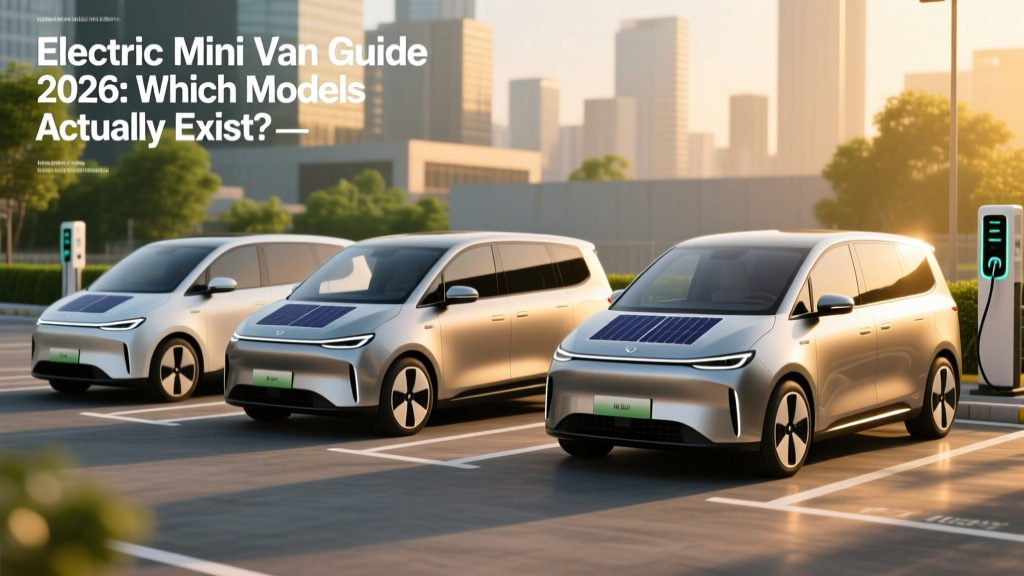
As of 2026, there is no fully electric (BEV) minivan sold new in the United States. Your closest options are the Chrysler Pacifica Plug-In Hybrid (32 miles electric-only, then gas) and the Volkswagen ID. Buzz (a retro-styled electric passenger van with 234 miles of EPA range). If you need a true 7-seat electric family hauler today, you'll be looking at 3-row electric SUVs like the Kia EV9 or Rivian R1S instead. This guide breaks down exactly what's available, what it costs, and how to decide.
Why the Electric Mini Van Market Is Still So Thin
Minivans occupy a difficult spot for electrification. They need large interior volumes (which means big, heavy bodies), 7-8 seat capacity, and family-friendly pricing. Automakers have prioritized electric SUVs and sedans where margins are higher and platforms are easier to adapt. Chrysler's parent company Stellantis has teased a fully electric Pacifica replacement but nothing is on sale yet. Honda's upcoming electric 3-row SUV is positioned as a minivan alternative but hasn't reached showrooms.
The result: families searching for an "electric mini van" in 2026 are really choosing between a plug-in hybrid minivan, an electric passenger van that seats fewer people, or a 3-row electric SUV. Let's compare what each option actually delivers.
What's Actually Available: The 2026 Lineup
| Vehicle | Type | Seats | Electric Range | Battery | Base MSRP |
|---|---|---|---|---|---|
| Chrysler Pacifica PHEV | Plug-in Hybrid | 7 | 32 mi (EV only) | 16 kWh (NMC) | $51,095 |
| VW ID. Buzz (LWB) | BEV | 7 (optional) | 234 mi (EPA) | 91 kWh usable (NMC) | $61,545 |
| Kia EV9 (3-row SUV) | BEV | 7 | 279 mi (EPA) | 100 kWh (NMC) | $56,395 |
| Rivian R1S (Tri Motor) | BEV | 7 | 321 mi (EPA) | 141 kWh (NMC) | $83,900 |
Sources: fueleconomy.gov, manufacturer press sites. Prices reflect base trims before destination charges and before any incentives.
Chrysler Pacifica PHEV — The Only True Plug-In Minivan
The Pacifica PHEV remains the only minivan with a plug in 2026. Its 32-mile electric-only range covers school runs, grocery trips, and most local driving without burning a drop of gas. Once the battery depletes, the 3.6L V6 hybrid system kicks in, delivering a combined 30 MPG — respectable for a 4,700-lb vehicle. Total range exceeds 500 miles.
On a Level 2 home charger (7.2 kW), the Pacifica's small 16 kWh battery replenishes in roughly 2 hours. DC fast charging is not supported — this is a plug-in hybrid, not a BEV, so you won't need highway fast chargers.
VW ID. Buzz — The Electric Passenger Van
The long-wheelbase ID. Buzz is the closest thing to an electric minivan on sale, though VW positions it as a lifestyle van. With the optional third row, it seats 7, but cargo space behind the third row is tight (about 18 cu ft vs. the Pacifica's 32 cu ft). The 91 kWh usable battery delivers an EPA-estimated 234 miles of range.
Charging peaks at 200 kW DC, reaching 10-80% in approximately 26 minutes. On a Level 2 home charger at 11 kW, a full charge takes about 9 hours. The ID. Buzz uses the CCS1 connector (not NACS), though VW has committed to NACS adapters for future Supercharger access.
Cost Breakdown: Electric Mini Van vs. Gas Minivan
Let's compare 5-year ownership costs for the Pacifica PHEV against a gas-only Honda Odyssey, assuming 15,000 miles/year, $3.50/gallon gas, and $0.14/kWh home electricity.
| Cost Category | Chrysler Pacifica PHEV | Honda Odyssey (Gas) |
|---|---|---|
| Base MSRP | $51,095 | $39,635 |
| Fuel/Energy (5 yr) | $4,800 (mostly home charging) | $12,250 (gas at 22 MPG combined) |
| Maintenance (5 yr) | $2,600 | $3,800 |
| Insurance (5 yr avg) | $9,500 | $8,200 |
| Federal Tax Credit | Up to $7,500 (§30D)* | $0 |
| Est. 5-Year Net Cost | $60,495 | $63,885 |
*Tax credit eligibility depends on your income, the vehicle's MSRP cap ($80,000 for vans/SUVs), battery sourcing requirements, and current IRS §30D rules. The Pacifica PHEV's credit availability varies by model year — confirm with your tax professional and the IRS Clean Vehicle Provisions page before purchasing.
The Pacifica PHEV breaks even around year 4 on fuel and maintenance savings alone, even without the tax credit. If you qualify for the full credit, the math tips in your favor from day one.
Charging at Home: What You Actually Need
Whether you choose the Pacifica PHEV or the ID. Buzz, home charging is the foundation of daily convenience. Here's what installation realistically costs:
| Item | Pacifica PHEV (16 kWh) | ID. Buzz (91 kWh) |
|---|---|---|
| Level 2 Charger (hardware) | $400-$650 | $400-$700 |
| Electrician (240V/50A install) | $800-$2,000 | $800-$2,500 |
| Electrical panel upgrade (if needed) | $0-$2,500 | $0-$2,500 |
| Permit & inspection | $50-$200 | $50-$200 |
| Total install range | $1,250-$5,350 | $1,250-$5,900 |
The Pacifica PHEV's smaller battery means you can get away with a lower-amperage circuit (32A is plenty). The ID. Buzz benefits from a full 48A charger to maximize its 11 kW onboard charging capability. If your home has a 200-amp electrical panel with spare capacity, expect the lower end of these ranges. Older homes with 100-amp panels may need an upgrade — get a quote from a licensed electrician before committing.
Common Misconceptions, Corrected
| Myth | Fact |
|---|---|
| "There's a fully electric Chrysler Pacifica" | Stellantis has announced future EV plans but sells no BEV minivan as of 2026. The only electrified Pacifica is the PHEV. |
| "The VW ID. Buzz is a minivan" | It's a passenger van with minivan-like features but less cargo space and a higher price than a traditional minivan. |
| "EVs cost more to insure, always" | EV insurance premiums run 10-20% higher on average, but the gap varies by model, driver history, and insurer. Shop quotes before buying. |
| "I need a BEV to save money" | A PHEV like the Pacifica saves $1,500-$2,000/year in fuel for typical suburban families who charge at home — without any range anxiety on road trips. |
| "Cold weather kills all EV range" | Cold weather reduces BEV range 15-30% depending on severity and preconditioning. The Pacifica PHEV loses less EV range because its battery is smaller and the gas engine provides heat. |
Decision Framework: Which Electric Mini Van Is Right for You?
Choose the Chrysler Pacifica PHEV if:
- You need a true 7-seat minivan with full cargo capability (stow-and-go seating, 32+ cu ft behind the third row)
- Most of your daily driving is under 30 miles and you can charge at home
- You take road trips and don't want to plan around DC fast chargers
- Your budget is $50,000-$60,000
- You want the simplest path to fuel savings without lifestyle changes
Choose the VW ID. Buzz if:
- You're drawn to the retro design and want a fully electric vehicle
- Your household drives under 200 miles/day and can charge at home
- You don't regularly fill all 7 seats plus cargo
- You live in an area with reliable DC fast charging for longer trips
- You're willing to pay a $10,000+ premium over a gas minivan for zero tailpipe emissions
Choose a 3-Row Electric SUV (Kia EV9, Rivian R1S) if:
- You want full BEV range (279-321 mi EPA) with 7 seats
- You can accept SUV cargo height and less interior volume than a minivan
- You need AWD or off-road capability (Rivian)
- You're budget-flexible ($56K-$84K)
What First-Time EV Buyers Should Know
If this is your first electrified vehicle, three things will determine your satisfaction more than any spec sheet:
1. Home charging access is non-negotiable for daily convenience. Public charging works for road trips, but 90%+ of EV charging happens at home. If you live in an apartment or condo without charging access, a PHEV (which can run on gas when you can't plug in) is a far safer bet than a BEV.
2. The federal tax credit is not guaranteed. Under current IRS §30D rules, eligibility depends on your adjusted gross income (caps at $150K single / $300K joint for vans/SUVs), the vehicle's MSRP (under $80,000 for vans/SUVs), battery component and critical mineral sourcing requirements, and whether the manufacturer has hit any phase-out thresholds. The credit can now be transferred to the dealer at point of sale, reducing your purchase price directly — but only if all requirements are met. Confirm eligibility on the IRS website before signing.
3. Plan for real-world range, not EPA stickers. The ID. Buzz's 234-mile EPA rating is achievable in mild weather with city/suburban driving. On a 75-mph highway drive in January, plan for 170-185 miles between charges. Preconditioning the battery before fast charging (a feature the ID. Buzz supports) is essential to hit advertised charge speeds.
Frequently Asked Questions
Is there a fully electric minivan I can buy in 2026?
No. The only plug-in minivan on sale is the Chrysler Pacifica PHEV. The VW ID. Buzz is a fully electric passenger van with available 7-seat configuration, but it's classified as a van, not a minivan, and offers less cargo versatility.
How much does it cost to charge the VW ID. Buzz at home?
A full charge of the 91 kWh usable battery at $0.14/kWh costs about $12.74. At an efficiency of roughly 2.2 miles/kWh, that's about $0.064 per mile — compared to $0.16 per mile for a gas minivan at 22 MPG and $3.50/gallon.
Can the Chrysler Pacifica PHEV drive on electric only?
Yes, for up to 32 miles (EPA) on battery power alone. This covers most daily errands. After that, the gas engine engages and the vehicle operates as a conventional hybrid at 30 MPG combined.
Does the VW ID. Buzz support DC fast charging?
Yes, at up to 200 kW peak. A 10-80% charge takes approximately 26 minutes under optimal conditions (preconditioned battery, warm weather). Charge speed tapers significantly above 80% — plan your road-trip stops to charge only to 80% unless you need the extra range.
What's the battery warranty on these vehicles?
The Pacifica PHEV carries a 10-year/100,000-mile battery warranty. The VW ID. Buzz battery is warranted for 8 years/100,000 miles with a minimum 70% capacity retention threshold. Both are industry-standard coverage levels.
Will a fully electric Chrysler minivan ever come out?
Stellantis has committed to a broad EV lineup by 2030, and industry reports suggest a next-generation electric Pacifica is in development. However, as of early 2026, it remains unannounced with no confirmed specs, pricing, or timeline. We'll update this guide when official details are available.