The Quick Answer: Electric Mini Trucks in 2026
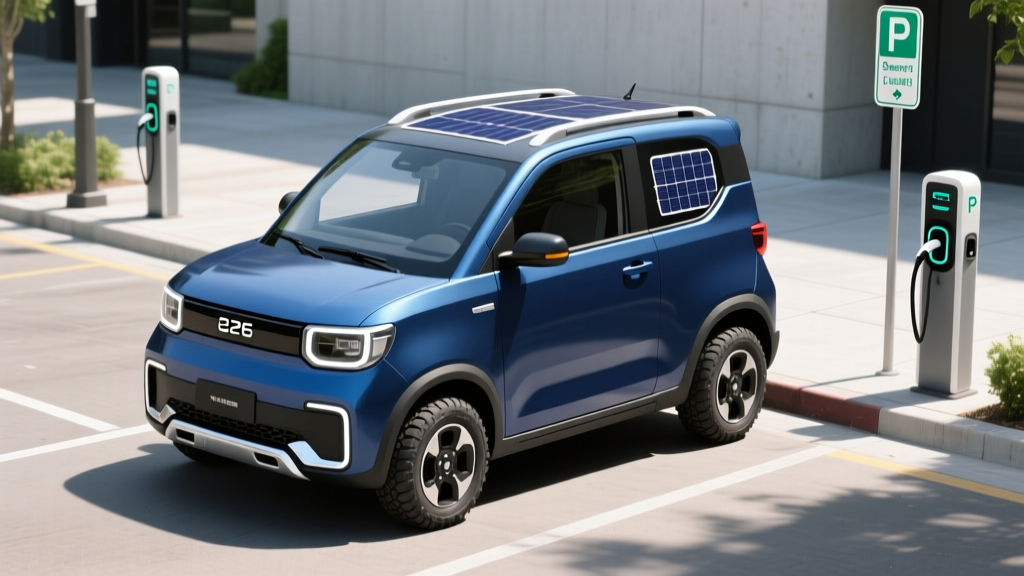
If you're searching for an electric mini truck for sale, most options fall into the Low-Speed Vehicle (LSV) or Neighborhood Electric Vehicle (NEV) category — street-legal on roads with speed limits up to 35 mph, with top speeds around 25 mph. Expect to pay $10,000–$20,000 for a new unit, get 40–60 miles of real-world range from a 10–15 kWh lithium battery pack, and charge fully overnight on a standard 120V outlet. These are not highway vehicles. They excel as campus runabouts, farm/ranch utility haulers, gated-community errand runners, and last-mile delivery carts — but they are not a replacement for a full-size pickup.
What Exactly Is an Electric Mini Truck (and What It Isn't)
The term "electric mini truck" covers a fragmented market. Most vehicles sold under this label in the U.S. are classified by the NHTSA as Low-Speed Vehicles (LSVs) under Federal Motor Vehicle Safety Standard (FMVSS) No. 500. This classification dictates what they can and cannot do:
- Maximum speed: 20–25 mph (federally mandated ceiling for LSVs)
- Legal roads: Streets with posted speed limits of 35 mph or less (state laws vary — some allow up to 45 mph with local ordinances)
- Required equipment: Headlamps, turn signals, tail lamps, stop lamps, reflex reflectors, exterior mirrors, parking brake, windshield (AS-1 or AS-5 glazing), VIN, and seat belts
- Not required: Airbags, crash-test compliance, ABS, or the full suite of FMVSS passenger-car standards
This is a critical distinction. An LSV electric mini truck is not a scaled-down Ford Maverick. It's a purpose-built, low-speed utility platform — closer to a road-legal golf cart with a cargo bed than a conventional truck. Brands currently selling or distributing electric mini trucks in the U.S. include Club Car (Utilitrak), Polaris (Ranger EV variants), Columbia ParCar, and various importers of Chinese-manufactured LSVs sold under badges like EVantage, Bintelli, and Bigfoot.
2026 Electric Mini Truck Models: Specs at a Glance
Below is a comparison of representative models available or orderable in the U.S. market as of early 2026. Note that the LSV market is fragmented, and specs vary by dealer configuration and battery option.
| Spec | Club Car Utilitrak (2026) | Bintelli Beyond 4P Truck | Columbia ParCar Electric Utility |
|---|---|---|---|
| Classification | LSV / NEV | LSV | LSV / Off-road option |
| Top Speed | 25 mph | 25 mph | 25 mph |
| Battery (usable) | ~11.5 kWh (Lithium-ion) | ~12.0 kWh (Lithium-ion) | ~10.0 kWh (Lead-acid or Li-ion option) |
| EPA Range (est.) | ~50 miles | ~55 miles | ~35–45 miles (lead-acid); ~50 (Li-ion) |
| Charge Time (120V) | 8–10 hours | 8–10 hours | 8–12 hours (lead-acid slower) |
| Payload Capacity | ~800 lbs | ~880 lbs | ~1,000 lbs |
| Cargo Bed | ~4.5 ft flatbed | ~4 ft bed w/ drop sides | ~5 ft flatbed option |
| Base MSRP (est.) | $15,000–$18,000 | $12,000–$15,000 | $11,000–$16,000 |
| Warranty | 2 yr vehicle / 5 yr battery | 2 yr limited | 1–2 yr depending on config |
Real-World Range Warning
The "50-mile range" figures above assume flat terrain, moderate temperatures (60–80°F), light payload, and stop-and-go driving under 25 mph. Expect 30–40% range loss if you're hauling near max payload, driving on hilly terrain, or operating in temperatures below 40°F. Lead-acid battery models lose capacity faster over time — anticipate 30–50% capacity degradation within 3–5 years, versus 10–20% over 8 years for lithium-ion packs.
Electric Mini Truck vs. Gas Utility Vehicle: The Cost Breakdown
Many buyers cross-shop electric mini trucks against gas-powered UTVs (like the Honda Pioneer, Kawasaki Mule, or Polaris Ranger gas models) or even used compact pickups. Here's how the economics compare over 5 years of ownership, assuming 3,000 miles driven per year (typical for campus, farm, or neighborhood use).
| Cost Factor (5-Year) | Electric Mini Truck (Li-ion, ~$14,000) | Gas UTV (~$12,000) | Used Compact Gas Pickup (~$15,000) |
|---|---|---|---|
| Purchase Price | $14,000 | $12,000 | $15,000 |
| Fuel / Energy (15,000 mi total) | $540 (at $0.12/kWh, ~300 Wh/mi) | $2,250 (at $3.50/gal, ~30 mpg) | $2,625 (at $3.50/gal, ~25 mpg) |
| Maintenance | $200 (brake inspection, tire rotation) | $1,800 (oil, filters, belts, plugs) | $2,500 (full ICE service schedule) |
| Insurance (est.) | $1,500 ($300/yr LSV policy) | $1,200 ($240/yr off-road/liability) | $4,500 ($900/yr standard auto) |
| 5-Year Total Cost | $16,240 | $17,250 | $24,625 |
The electric mini truck wins on operating cost — fuel savings alone approach $1,700 over 5 years versus a gas UTV. However, the gas UTV has a lower entry price and no range limitation for remote property work. The used compact pickup offers highway capability and crash safety that neither alternative provides.
Charging: What You Actually Need at Home
One advantage of the electric mini truck segment: you almost never need a dedicated Level 2 charger. Most LSV electric trucks ship with an onboard charger that plugs into a standard 120V / 15A household outlet. Here's what that looks like in practice:
| Charging Level | Power (kW) | Miles Added Per Hour | Full Charge Time (12 kWh pack) |
|---|---|---|---|
| Level 1 (120V outlet) | ~1.2–1.4 kW | ~4–5 miles/hr | 8–10 hours |
| Level 2 (240V, if equipped) | ~3.3 kW | ~10–12 miles/hr | 3.5–4 hours |
For most buyers, a standard outdoor-rated 120V outlet near a garage or carport is sufficient. Charge overnight, drive during the day. No panel upgrade, no electrician visit, no $1,500 installation cost — a stark contrast to full-size EV ownership.
That said, if you plan to run the truck hard during the day (e.g., farm work with multiple partial discharges), a Level 2 upgrade lets you opportunity-charge during lunch. Most LSVs use a standard J1772 connector for Level 2, but confirm with your dealer — some import models use proprietary connectors.
Federal Tax Credits: Does an Electric Mini Truck Qualify?
This is where buyer expectations need recalibration. Under IRS §30D clean vehicle credit rules, the $7,500 federal tax credit applies to new qualified plug-in electric vehicles with a gross vehicle weight rating (GVWR) under 14,000 lbs and a battery capacity of at least 7 kWh. Most electric mini trucks meet these thresholds on paper.
§30D Credit Checklist for Electric Mini Trucks
- ✅ Battery capacity ≥ 7 kWh (most Li-ion LSVs qualify)
- ✅ GVWR under 14,000 lbs (all LSVs qualify)
- ✅ Final assembly in North America — many imported Chinese LSVs fail this requirement
- ✅ MSRP under $80,000 for trucks (all LSVs qualify)
- ✅ Buyer income under $150K single / $300K joint filers
- ✅ Critical minerals and battery component sourcing requirements (varies by manufacturer)
- ✅ Manufacturer must have filed required IRS documentation — many small LSV makers have not
The practical reality: While an electric mini truck technically meets the battery-capacity and weight thresholds, the North American final-assembly and battery-sourcing rules eliminate most Chinese-manufactured imports. Club Car (assembled in Georgia) and Columbia ParCar (assembled in Wisconsin) are more likely to qualify, but always verify the specific VIN on the fueleconomy.gov credit lookup tool before purchasing. The credit can be transferred to the dealer as a point-of-sale discount if all requirements are met.
Common Misconceptions About Electric Mini Trucks
| Myth | Fact |
|---|---|
| "It's just a golf cart — anyone can drive it." | LSVs require a valid driver's license, registration, and insurance in most states. They are titled motor vehicles, not recreational equipment. |
| "I can take it on the highway." | LSVs are federally restricted from roads with speed limits above 35 mph (some states allow 45 mph). No LSV is highway-legal at 65+ mph. |
| "The battery will need replacing in 2 years." | Lithium-ion LSV batteries typically last 8–10 years before reaching 80% capacity. Lead-acid batteries degrade faster (3–5 years). Always choose Li-ion if budget allows. |
| "It qualifies for the full $7,500 tax credit." | Only if it passes North American assembly and battery-sourcing rules. Many imported LSVs do not qualify. Verify by VIN before purchase. |
| "I can tow a trailer with it." | Most LSVs have tow ratings of 500–1,000 lbs max. This is light-duty yard work, not boat-hauling territory. |
| "It charges like a Tesla." | LSVs use basic onboard chargers at 1.2–3.3 kW. There is no DC fast charging capability. Plan for hours, not minutes. |
Real-World Ownership: Who Should (and Shouldn't) Buy One
Decision Framework: Is an Electric Mini Truck Right for You?
Choose an electric mini truck if:
- Your daily driving is under 30 miles on roads ≤ 35 mph
- You need a cargo bed for tools, feed, packages, or landscaping materials
- You have access to a 120V outlet for overnight charging
- You operate on a campus, farm, gated community, military base, or resort property
- You want near-zero maintenance and $0.03–0.05 per mile "fuel" cost
- Noise and exhaust emissions matter (indoor facilities, residential areas, early-morning work)
Do NOT choose an electric mini truck if:
- You need to drive on roads with speed limits above 35 mph regularly
- You need crash protection, airbags, or highway-capable safety features
- You need to tow more than 1,000 lbs
- You operate in extreme cold (below 20°F) with no heated storage — range will plummet
- You need more than 2 seats (most LSV trucks are 2-passenger; a few offer 4)
- You need a vehicle that holds resale value like a mainstream brand — the LSV resale market is thin and dealer-dependent
Climate and Terrain Considerations
Electric mini trucks are most popular in Sun Belt states, coastal communities, and tropical environments — and for good reason. LFP and NMC lithium batteries lose 20–35% of usable capacity below freezing, and LSVs lack the sophisticated thermal management systems found in full-size EVs. If you're in Minnesota or Montana, a gas UTV may be more practical for winter work. In Florida, Arizona, or Southern California, an electric mini truck can operate year-round with minimal range fluctuation.
Hilly terrain also matters. A fully loaded LSV climbing grades will draw significantly more current, cutting range by 25–40% compared to flat-ground estimates. If your property has steep elevation changes, spec a larger battery option or reduce your expected range accordingly.
Insurance and Registration
LSVs must be titled, registered, and insured in most states, but insurance is typically far cheaper than a standard auto policy — often $200–$400 per year for liability coverage through specialty insurers like Progressive or Hagerty. Some homeowners' policies can be endorsed to cover LSVs on private property. Check your state's DMV for specific registration requirements, as a handful of states have additional inspection or equipment mandates beyond the federal FMVSS 500 baseline.
Frequently Asked Questions
Are electric mini trucks street-legal?
Yes, if they meet the federal LSV classification (FMVSS 500) and your state permits LSVs on the roads you plan to use. Most states allow LSVs on roads with speed limits up to 35 mph. A few states and local jurisdictions extend this to 45 mph roads. They are not legal on highways or interstates.
How much does it cost to charge an electric mini truck?
At the U.S. average residential electricity rate of ~$0.16/kWh (2026 EIA data), fully charging a 12 kWh battery costs approximately $1.92. Over a year of 3,000 miles driven at ~300 Wh/mile, annual energy cost is roughly $144 — compared to $350+ in gasoline for an equivalent gas UTV.
Can I buy a used electric mini truck?
Yes, and the used market can offer significant savings — expect to pay $5,000–$10,000 for a 3–5-year-old lithium-ion model. However, battery health is the critical variable. Request a battery capacity test or state-of-health (SoH) reading before purchasing. A used lead-acid model is rarely worth buying unless the batteries have been recently replaced (a $2,000–$4,000 expense).
Do electric mini trucks qualify for the federal EV tax credit?
Some do, but not all. The vehicle must meet §30D requirements including North American final assembly, battery-sourcing rules, and manufacturer IRS documentation. Club Car and Columbia ParCar models are more likely to qualify than imported brands. Always verify the specific VIN on fueleconomy.gov before relying on the credit in your purchase decision.
What's the difference between an LSV and a golf cart?
Golf carts are not federally classified as motor vehicles and are typically limited to private property or specific local-ordinance roads. LSVs are federally regulated, require a VIN, title, registration, insurance, and meet specific safety equipment standards (lights, mirrors, seat belts, windshield). An LSV can be driven on qualifying public roads; a golf cart generally cannot.
How long do electric mini truck batteries last?
Lithium-ion packs in LSVs typically retain 80%+ capacity for 8–10 years or 2,000–3,000 charge cycles. Lead-acid batteries last 3–5 years and 500–800 cycles before significant degradation. Replacement cost for a lithium pack ranges from $3,000–$6,000 depending on the model; lead-acid replacements run $1,500–$3,000.
Sources: NHTSA FMVSS 500 LSV standards (nhtsa.gov), IRS §30D clean vehicle credit guidance (irs.gov), U.S. Energy Information Administration electricity pricing (eia.gov). Specifications are representative of 2026 model-year offerings and vary by dealer configuration. Always confirm exact specs with the manufacturer or authorized dealer before purchase.