The Quick Answer: Electric Mini Pickup Trucks in 2026
If you're searching for a compact, affordable electric pickup for urban errands, light hauling, and short commutes, your 2026 options are extremely limited but evolving. The segment is dominated by one player: the Slate Auto Slate (announced for late 2026 delivery, starting around $20,000 before incentives). Ford's Maverick remains hybrid-only for now, and the discontinued Hyundai Santa Cruz never went electric. For buyers who need a truck today, the closest electrified alternatives are plug-in hybrid compact SUVs or stepping up to the mid-size Ford F-150 Lightning (EPA 230–320 mi, ~$55,000+). If you can wait and your daily driving stays under 150 miles, a true electric mini pickup truck may finally arrive in driveways by early 2027.
What Exactly Is an Electric Mini Pickup Truck?
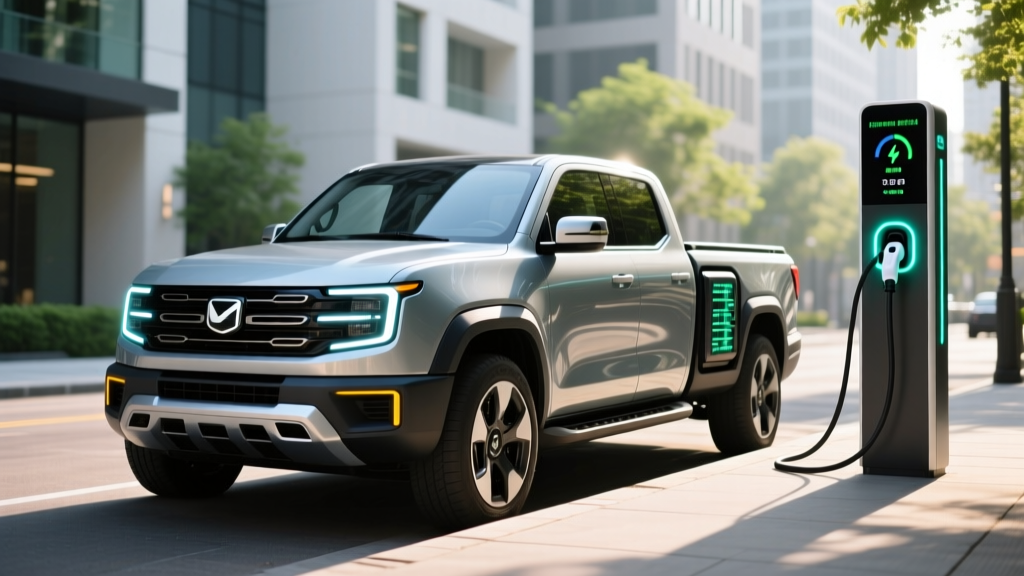
The term "electric mini pickup truck" describes a battery-electric vehicle (BEV) with a compact unibody frame, a short bed (typically 4–5 feet), and a footprint smaller than mid-size trucks like the Ford Ranger or Toyota Tacoma. Think of it as the electric equivalent of the classic Ford Ranchero or Subaru Baja — designed for city driving, light cargo, and weekend projects rather than heavy towing or off-road work.
The appeal is straightforward: lower purchase price than a full-size electric truck, easier parking, car-like efficiency (often 3+ mi/kWh), and enough bed space for hardware-store runs or a couple of dirt bikes. The trade-off is payload and range. Most concepts and early prototypes in this class target 150–250 miles of EPA range and 1,000–1,500 lbs of payload — adequate for 90% of light-truck use cases, but not a replacement for a work-site hauler.
What's Actually Available to Buy Right Now?
Here's the honest reality for 2026: no mainstream automaker currently sells a dedicated electric mini pickup truck in the United States. Here's the landscape:
| Model | Status | Est. Price | Est. EPA Range | Notes |
|---|---|---|---|---|
| Slate Auto Slate | Announced (deliveries late 2026/early 2027) | ~$20,000 base | ~150–200 mi (preliminary) | Micro-truck, customizable bed, startup |
| Ford Maverick Hybrid | On sale (HEV only) | $28,000–$38,000 | 500+ mi (gas+electric) | Not a BEV; 42 MPG combined |
| Hyundai Santa Cruz | Discontinued (2025) | N/A | N/A | Never offered as EV |
| Ford F-150 Lightning | On sale | $55,000–$90,000+ | 230–320 mi | Full-size, not "mini" |
| Rivian R2T (rumored) | Unannounced | TBD | TBD | Speculation only as of 2026 |
The Slate Auto Slate is the closest thing to a true electric mini pickup truck entering the market. Based in Long Beach, California, Slate Auto has positioned the Slate as a bare-bones, modular micro-truck with a starting price near $20,000. Specs remain preliminary, and production timelines for EV startups are notoriously fluid — treat any delivery date with caution until VINs are rolling off the line.
Electric Mini Truck vs. Gas Compact Truck: The Numbers
Since the only near-term electric mini pickup truck option (Slate) hasn't published final EPA data, let's compare the segment's benchmark — the Ford Maverick Hybrid — against what a comparable BEV mini truck would cost to operate, using reasonable estimates based on similar lightweight EVs like the Nissan Leaf and Chevrolet Bolt EUV.
| Metric | Ford Maverick Hybrid (2026) | Est. Electric Mini Truck (200 mi range) |
|---|---|---|
| Base MSRP | $28,345 | ~$20,000–$28,000 |
| Fuel / Energy Cost per Mile | ~$0.08 (gas at $3.20/gal, 42 MPG) | ~$0.04 (electricity at $0.14/kWh, 3.5 mi/kWh) |
| Annual Fuel Cost (12,000 mi) | ~$960 | ~$480 |
| 5-Year Fuel Cost | ~$4,800 | ~$2,400 |
| Maintenance (5-Year Est.) | ~$3,500 (oil, brakes, filters) | ~$1,500 (tires, cabin filter, wipers) |
| Federal Tax Credit (§30D) | $0 (hybrid, not PHEV/BEV) | Up to $7,500 (if eligible) |
| EPA Combined Efficiency | 42 MPG | ~115 MPGe est. |
| Towing Capacity | 2,000 lbs | ~1,000–1,500 lbs est. |
The math favors the electric mini pickup truck on operating costs: roughly $480/year in energy savings plus significantly lower maintenance. Over five years, that's $2,400 in fuel savings and $2,000 in maintenance savings — about $4,400 total. Factor in a potential $7,500 federal tax credit (more on eligibility below), and the EV can break even or come out ahead on total cost of ownership despite a potentially higher sticker price.
However, the Maverick Hybrid wins on flexibility: 500+ miles of total range, no charging infrastructure needed, and proven long-term reliability. If you regularly drive beyond 200 miles in a day, tow near capacity, or live in a charging desert, the hybrid remains the pragmatic choice in 2026.
Real Costs of Owning an Electric Mini Pickup Truck
Let's break down the full five-year cost picture for a hypothetical $25,000 electric mini truck versus the $28,345 Maverick Hybrid. We'll assume 12,000 miles/year, home charging at the national average of $0.14/kWh, and standard insurance.
| Cost Category (5 Years) | Electric Mini Truck ($25K base) | Ford Maverick Hybrid |
|---|---|---|
| Purchase Price | $25,000 | $28,345 |
| Federal Tax Credit (§30D) | −$7,500 (if eligible) | $0 |
| Net Purchase Cost | $17,500 | $28,345 |
| Home Charger Install (Level 2) | $800–$2,000 | $0 |
| Fuel / Electricity (5 yr) | $2,400 | $4,800 |
| Maintenance (5 yr) | $1,500 | $3,500 |
| Insurance (5 yr est.) | $7,500 | $6,000 |
| Depreciation (est.) | ~$8,000 | ~$10,000 |
| 5-Year Total Cost | ~$29,700–$31,700 | ~$42,645 |
Key takeaways:
- The §30D tax credit is the swing factor. If the vehicle qualifies (battery sourcing, MSRP under $80,000 for trucks, buyer income under $300K joint / $150K single) and you can apply it at point of sale, the effective price drops dramatically. Always verify current-year rules at IRS.gov before purchasing, as sourcing requirements tighten annually.
- Insurance runs 15–25% higher for EVs due to repair costs and battery replacement risk. Get quotes before committing.
- Home Level 2 charging is nearly essential for convenient ownership. A 240V, 32-amp home charger (7.7 kW) adds roughly 25–30 miles of range per hour of charging — enough to fully replenish a 50–60 kWh battery overnight. Installation by a licensed electrician typically costs $800–$2,000 if your panel has capacity, or $2,500–$5,000+ if you need a panel upgrade.
- Depreciation is uncertain for a new startup like Slate Auto. Established brands hold value better; first-year products from new companies carry risk.
Charging Realities: What a Mini EV Truck Owner Needs to Know
A smaller battery (likely 50–65 kWh in this class) means faster charging times but shorter range. Here's what to expect at each charging level:
| Charging Level | Power (kW) | Miles Added per Hour | Use Case |
|---|---|---|---|
| Level 1 (120V household) | 1.4 kW | ~4–5 mi/hr | Emergency / overnight trickle |
| Level 2 (240V home) | 7.7–11.5 kW | ~25–40 mi/hr | Daily home charging |
| DC Fast Charge (public) | 50–100 kW (est.) | ~150–200 mi/hr peak | Road trips; 10–80% in ~30–40 min |
Important nuance: Peak DC fast-charge rates (kW) are not sustained. A truck that peaks at 100 kW may only hold that rate from 10–50% state of charge (SoC), then taper significantly to protect the battery. Expect a 10–80% session to take 30–40 minutes at a properly rated station. Smaller batteries also mean fewer DC fast-charging stops on road trips — but more frequent stops overall due to shorter range.
Cold-weather reality: In freezing temperatures (below 32°F), expect 20–30% range reduction due to battery chemistry limitations and cabin heating demands. A 200-mile EPA-rated mini truck may deliver only 140–160 real-world miles in a January commute. A heat pump (if equipped) mitigates this by 5–10%. Always plan for worst-case range in cold climates.
Common Misconceptions About Electric Mini Trucks
| Myth | Fact |
|---|---|
| "Electric trucks can't tow anything." | A compact EV truck can tow 1,000–1,500 lbs — enough for a small trailer, jet skis, or a motorcycle. Towing does cut range by 30–50%, however. |
| "You'll need to replace the battery for $20K in a few years." | Modern LFP and NMC batteries are warrantied for 8 years/100,000 miles minimum (federal mandate). Real-world degradation data shows most EV batteries retain 85–90% capacity after 100,000 miles. Replacement is rare and typically covered under warranty. |
| "Charging takes too long for a truck." | At home on Level 2, charging happens while you sleep — zero active time. On road trips, a 30-minute DC fast charge adds 100–150 miles, which aligns with a rest stop. |
| "EVs are worse for the environment because of battery mining." | Lifecycle analyses from the EPA consistently show EVs produce fewer total emissions over their lifetime than gas vehicles, even accounting for battery production. The grid is also getting cleaner each year. |
| "A mini electric truck can't handle real work." | For 90% of truck owners who use their bed for home improvement runs, gear hauling, and recreational cargo, 1,000+ lbs of payload and a 4-foot bed is sufficient. For daily job-site use with heavy materials, a mid-size or full-size truck (electric or gas) remains the right tool. |
First-Time EV Buyer Essentials
If this would be your first electric vehicle, here's what you need to know before purchasing any electric mini pickup truck:
- Confirm home charging access first. Do you have a garage, carport, or driveway where a Level 2 (240V) charger can be installed? Renters and apartment dwellers face real barriers. Without reliable home charging, EV ownership becomes significantly less convenient and more expensive (relying on public DC fast charging at $0.30–$0.50/kWh).
- Audit your daily driving. Track your miles for two weeks. If 95% of your days fall under 100 miles round-trip, a 150–200 mile range truck covers you with margin. If you regularly exceed that, you'll need to plan charging stops or reconsider.
- Understand the tax credit before you buy. The IRS §30D credit has strict requirements: buyer income caps ($300K joint, $225K head of household, $150K single), MSRP caps ($80,000 for trucks/vans/SUVs), and battery component/critical mineral sourcing rules that tighten each year. The credit can be transferred to the dealer at point of sale as a price reduction. Not every EV qualifies — always check the fueleconomy.gov database for the specific model and trim.
- Get insurance quotes early. EV insurance premiums are typically 15–25% higher than equivalent gas vehicles. This can erase some of the fuel savings, especially for younger drivers.
- Test the charging ecosystem. Download apps for Electrify America, EVgo, and ChargePoint. Map the DC fast chargers along your most common routes. If you live in a rural area with sparse public charging, an EV — especially a shorter-range mini truck — may not be practical yet.
Decision Framework: Should You Buy an Electric Mini Pickup Truck?
Choose an electric mini pickup truck if:
- You can install a Level 2 charger at home
- Your daily driving is under 100 miles round-trip
- You need a truck bed occasionally but not for heavy daily work
- You want the lowest possible operating cost per mile
- You qualify for the §30D federal tax credit (or state incentives)
- You're willing to wait for the Slate Auto Slate (late 2026/early 2027) or similar
Choose a gas or hybrid compact truck (like the Ford Maverick Hybrid) if:
- You regularly drive more than 200 miles in a single day
- You tow near 2,000 lbs frequently
- You lack reliable home charging access
- You live in a region with limited public DC fast-charging infrastructure
- You need a truck immediately and can't wait for startup production timelines
- You frequently drive in extreme cold where range loss compounds
Step up to a full-size electric truck (F-150 Lightning, Rivian R1T) if:
- You need 250+ miles of range, 5,000+ lbs towing, and a full 5.5–6 ft bed
- Your budget allows $55,000+ before incentives
- You want an established product with a dealer network and proven reliability data
What's Next for the Electric Mini Truck Segment
The compact electric truck space is poised for growth, but timelines remain uncertain. Industry reports suggest that if the Slate Auto Slate achieves production and positive reception, larger automakers may follow with their own entries by 2028–2029. Toyota, Honda, and Stellantis have all filed patents related to compact electric truck platforms, but none have announced production vehicles as of 2026.
For now, the electric mini pickup truck remains a niche, forward-looking category. Buyers who fit the use case — urban or suburban drivers with home charging, light cargo needs, and patience for a developing market — have one viable option on the horizon. Everyone else is better served by the proven efficiency of the Maverick Hybrid or the capability of a full-size electric truck.
Is there an electric mini pickup truck I can buy today?
Not from a mainstream automaker as of early 2026. The Slate Auto Slate is the most promising option, with deliveries targeted for late 2026 or early 2027. The Ford Maverick is available as a hybrid (not a plug-in or full EV), and full-size electric trucks like the F-150 Lightning are on sale but don't fit the "mini" category.
How much does an electric mini pickup truck cost?
The Slate Auto Slate targets a starting price around $20,000, making it one of the most affordable new EVs if it reaches production. With the §30D federal tax credit (up to $7,500, if eligible), the effective price could drop to approximately $12,500 — though credit eligibility depends on income, battery sourcing, and MSRP rules that change annually.
What range can I expect from an electric mini truck?
Based on preliminary specs and comparable lightweight EVs, expect 150–200 miles EPA-rated. Real-world highway driving at 70+ mph typically yields 10–15% less than EPA, and cold weather (below freezing) can reduce range by 20–30%. Plan for 120–150 real-world miles in mixed conditions.
Can an electric mini truck tow?
Yes, but modestly. Expect 1,000–1,500 lbs of towing capacity in this class — suitable for a small utility trailer, kayak trailer, or light camper. Towing significantly reduces range (by 30–50%), so long towing trips will require careful charging planning.
Is a hybrid truck better than an electric mini truck?
It depends on your use case. The Ford Maverick Hybrid offers 42 MPG combined, 500+ miles of range, no charging dependency, and immediate availability — making it the better choice for high-mileage drivers, frequent towers, and those without home charging. An electric mini truck wins on operating cost (about half the fuel cost per mile), lower maintenance, and potential tax credit savings, but sacrifices range and flexibility.
What battery chemistry will mini electric trucks use?
Most affordable EVs in this price range use LFP (lithium iron phosphate) batteries. LFP offers excellent cycle life (3,000+ cycles), lower cost, and no cobalt, but with slightly lower energy density than NMC chemistry. This means a slightly heavier or larger pack for the same range, but longer overall battery lifespan — a good trade-off for a budget-oriented truck.