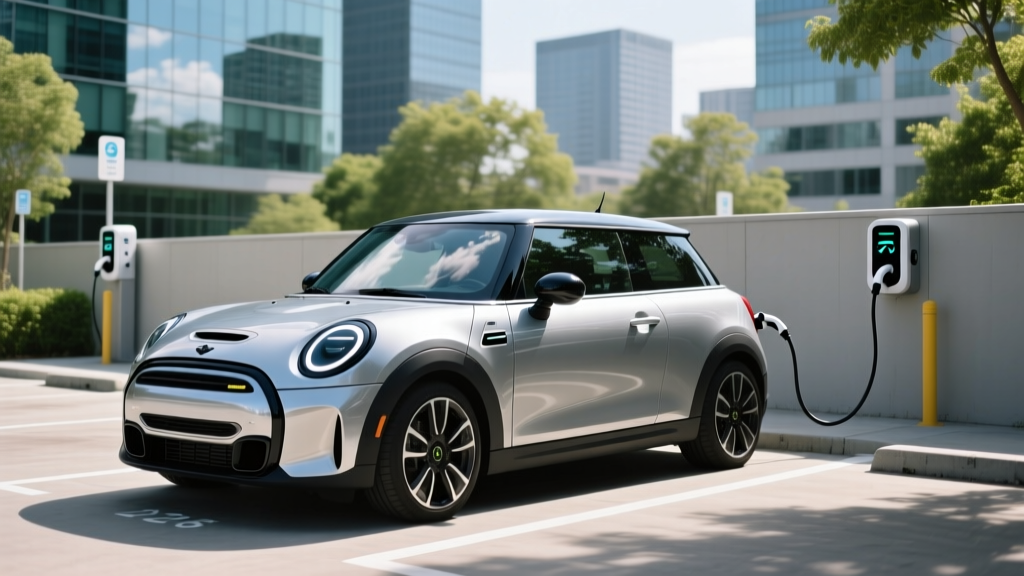
The Mini Cooper Electric (now in its third EV generation on the dedicated J01 platform) delivers the brand's iconic go-kart handling with a fully electric powertrain. But beyond the charm and the 114 MPGe EPA rating, prospective buyers need hard numbers. What does the electric Mini Cooper cost to own over five years? After accounting for purchase price, federal and state incentives, home charging, insurance premiums, and depreciation, the answer is more nuanced than the sticker price alone suggests.
This guide breaks down every ownership cost layer for the 2025–2026 Mini Cooper Electric lineup — the Cooper SE (Classic, Signature, Iconic trims) and the higher-performance John Cooper Works (JCW) Electric — using current EPA data, IRS §30D tax-credit rules, and real-world charging economics.
2026 Mini Cooper Electric: Pricing & Trim Overview
The current-generation Mini Cooper Electric is built on BMW Group's new front-wheel-drive EV architecture. It comes in two power outputs and multiple trims, each with a 54.2 kWh gross battery (approximately 49.9 kWh usable) using NMC (nickel manganese cobalt) chemistry. EPA range varies by trim and wheel size.
| Trim | Horsepower | 0-60 mph | EPA Range | Base MSRP |
|---|---|---|---|---|
| Cooper SE Classic | 181 hp | 6.7 sec | 146 mi | $30,900 |
| Cooper SE Signature | 181 hp | 6.7 sec | 146 mi | $33,900 |
| Cooper SE Iconic | 181 hp | 6.7 sec | 137 mi | $36,900 |
| John Cooper Works Electric | 255 hp | 5.9 sec | 130 mi | $41,900 |
5-Year Total Cost of Ownership Breakdown
To understand the true electric Mini Cooper cost over a typical ownership period, we modeled five years / 60,000 miles of driving using national averages for electricity, insurance, and maintenance. We compared the Cooper SE Signature ($33,900 MSRP) against a gasoline Mini Cooper Hardtop 2-Door (base ~$28,900 MSRP, EPA 32 MPG combined) as a baseline.
| Cost Category | Mini Cooper SE Signature (EV) | Mini Cooper Hardtop (Gas) |
|---|---|---|
| Purchase Price (MSRP) | $33,900 | $28,900 |
| Federal Tax Credit (§30D) | −$7,500 (if eligible) | $0 |
| Net Purchase After Credit | $26,400 | $28,900 |
| Fuel/Energy (5 yrs) | $2,940 | $7,500 |
| Insurance (5 yrs) | $9,600 | $7,800 |
| Maintenance (5 yrs) | $1,400 | $3,200 |
| Estimated Depreciation | $11,200 | $10,100 |
| Total 5-Year Cost | $21,540 | $28,500 |
Assumptions: $0.14/kWh national average electricity (EIA 2025 data), $3.50/gal gasoline, 15,000 miles/year, home Level 2 charging predominant. Actual costs vary significantly by region, driving pattern, and credit eligibility. Depreciation estimated from early J01-generation residual-value trends and comparable subcompact EVs.
The EV's higher insurance and depreciation costs are substantially offset by fuel and maintenance savings, especially when the full $7,500 federal credit applies. Without the credit, the 5-year TCO gap narrows to roughly $500–$1,000 in the EV's favor — still a win, but less dramatic.
Federal Tax Credit: IRS §30D Eligibility Rules
The federal EV tax credit under IRS §30D can reduce your effective purchase price by up to $7,500, but eligibility depends on several requirements that change annually. As of the 2025–2026 tax year, here's what determines qualification:
- MSRP Cap: The vehicle must have an MSRP at or below $55,000 for sedans/hatchbacks (the Mini Cooper Electric qualifies across all trims).
- Buyer Income Limits: Modified adjusted gross income (MAGI) must not exceed $150,000 (single filer), $225,000 (head of household), or $300,000 (joint filers).
- Battery Component Sourcing: A percentage of battery components must be manufactured or assembled in North America (threshold increases each year — 80% for 2025, 90% for 2026).
- Critical Minerals: A percentage of critical minerals must be sourced from the US or a free-trade-agreement country (80% for 2025, 90% for 2026).
- Point-of-Sale Transfer: Since January 2024, you can transfer the credit to the dealer at purchase, receiving it as an immediate price reduction rather than waiting to claim it on your tax return.
- Foreign Entity of Concern (FEOC) Restriction: Vehicles with battery components from a FEOC (effective 2024) or critical minerals from a FEOC (effective 2025) are disqualified.
State, Local, and Utility Incentives
Beyond the federal credit, many states and utilities offer additional rebates that can meaningfully reduce the electric Mini Cooper cost:
- California: Up to $7,000 through the Clean Fuel Reward and additional CVRP incentives for income-qualified buyers.
- Colorado: State tax credit of up to $5,000 for new EVs (income-dependent).
- New York: Drive Clean Rebate of up to $2,000 at point of sale.
- Utility Rebates: Many utilities (e.g., PG&E, ConEdison, Xcel Energy) offer $300–$1,500 rebates for EV purchase and/or Level 2 home charger installation.
These vary significantly by ZIP code, income level, and utility service area. Check afdc.energy.gov for your specific location's available incentives.
Charging Cost vs. Gasoline: The Per-Mile Math
The most consistent savings area for the Mini Cooper Electric is energy cost. Here's the direct comparison using the Cooper SE Signature (114 MPGe combined, approximately 3.1 miles/kWh) and the gas Mini Hardtop (32 MPG combined).
| Scenario | Mini Cooper SE (EV) | Mini Hardtop (Gas) |
|---|---|---|
| Home Charging / Regular Fuel ($0.14/kWh, $3.50/gal) | $0.045/mile | $0.109/mile |
| Public DC Fast Charging ($0.40/kWh avg) | $0.129/mile | $0.109/mile |
| Off-Peak Utility Rate ($0.08/kWh) | $0.026/mile | $0.109/mile |
| Annual Cost (12,000 mi, home charging) | $540 | $1,308 |
At typical home-charging rates, the Mini Cooper SE costs roughly $0.045 per mile — less than half the $0.109/mile of its gasoline counterpart. Over 12,000 miles annually, that's approximately $768 in energy savings per year. However, if you rely predominantly on public DC fast charging at $0.35–$0.48/kWh (common at Electrify America and EVgo stations), the EV can actually cost more per mile than gasoline. Home charging access is critical to capturing the fuel savings.
The Mini Cooper SE supports up to 95 kW DC fast charging (CCS or NACS, depending on model year and adapter availability), achieving a 10–80% charge in approximately 28 minutes. Level 2 AC charging maxes out at 11 kW, adding roughly 30 miles of range per hour — enough to fully replenish overnight on a standard 240V home circuit.
Maintenance Savings: What You'll Never Pay For Again
EV powertrains eliminate several recurring maintenance expenses that gasoline owners take for granted. The Mini Cooper Electric's single-speed reduction gear and electric motor have far fewer wear components than an internal combustion engine.
| Service Item | Mini Cooper SE (EV) | Mini Hardtop (Gas) |
|---|---|---|
| Oil Changes (every 7,500 mi) | Not required | ~$640 (8 changes × $80) |
| Brake Pad Replacement | Rarely needed (regen braking) | ~$400–$600 |
| Transmission Fluid | Not applicable | ~$200 |
| Spark Plugs | Not applicable | ~$300 |
| Engine Air Filter | Not applicable | ~$100 |
| Cabin Air Filter | ~$150 (2 replacements) | ~$150 (2 replacements) |
| Tire Rotation | ~$200 (4 rotations) | ~$200 (4 rotations) |
| Wiper Blades / Misc. | ~$100 | ~$100 |
| Total Estimated | ~$450 | ~$2,090 |
The regenerative braking system on the Mini Cooper SE handles most deceleration, meaning the friction brake pads and rotors experience minimal wear — many EV owners report original brake pads lasting well beyond 80,000 miles. Combined, the five-year maintenance savings typically run $1,500–$2,000 compared to the gas Mini Hardtop.
One cost to note: EVs tend to wear tires faster due to instant torque delivery and heavier curb weight. Budget for a tire replacement around 35,000–45,000 miles (~$600–$900 for a set of four all-season tires in the Mini's 17–18 inch sizes).
Insurance Costs: The Uncomfortable Reality
Insurance is where the electric Mini Cooper cost equation gets less favorable. National data consistently shows EVs cost 15–25% more to insure than their gasoline equivalents. For the Mini Cooper SE, expect annual premiums in the $1,700–$2,100 range depending on your ZIP code, driving record, and coverage level — compared to $1,400–$1,700 for the gas Hardtop.
Why the premium?
- Higher repair costs: EV battery packs and power electronics are expensive to repair or replace after a collision. Even minor rear-end damage can trigger a battery safety inspection.
- Specialized labor: Fewer body shops have high-voltage EV repair certification, driving up labor rates.
- Parts availability: EV-specific components (charge port assemblies, inverter modules) have longer lead times and higher unit costs.
- Total-loss thresholds: Insurers may declare an EV a total loss at lower damage thresholds due to battery replacement cost, which feeds into premium calculations.
Shop multiple insurers before purchase — companies like Geico, Progressive, and Tesla's own insurance program (where available) sometimes offer more competitive EV rates. Bundling home and auto can also reduce the premium gap.
Depreciation & Resale Value Trends
EV depreciation has been volatile. Early-generation EVs lost value rapidly due to battery degradation fears and rapid technology obsolescence. The current-generation Mini Cooper Electric (J01 platform) benefits from a more competitive range, modern battery chemistry, and broader consumer EV acceptance — but subcompact EVs still depreciate somewhat faster than comparable gasoline hatchbacks in the first three years.
Based on current market data and comparable vehicles:
- Year 1: ~15–18% depreciation (partially offset by the tax credit reducing your effective cost basis)
- Year 3: ~40–48% cumulative depreciation
- Year 5: ~55–62% cumulative depreciation
For a $33,900 Cooper SE Signature, expect a 5-year residual value of approximately $12,800–$15,200. The gas Hardtop typically retains 60–65% of value at year 5 (residual ~$17,300–$18,800 on a $28,900 MSRP).
Key factors that help Mini EV resale: the brand's strong enthusiast following, limited EV competition in the premium subcompact segment, and BMW's 8-year/100,000-mile battery warranty (covering capacity below 70% of original). Factors that hurt: the relatively modest 146-mile EPA range compared to larger EVs, and the accelerating pace of EV range improvements making older models less desirable.
Mini Cooper Electric Battery & Warranty Coverage
The 54.2 kWh (gross) NMC battery pack is covered by BMW/Mini's high-voltage warranty: 8 years or 100,000 miles, whichever comes first, against defects and capacity loss below 70% of original usable capacity. Based on industry NMC degradation curves, expect approximately 8–12% capacity loss over the first five years under normal use — meaning your 146-mile range might settle to roughly 130–135 miles by year 5, which remains practical for daily commuting.
To maximize battery longevity:
- Avoid routinely charging to 100% — set a daily limit of 80–90% for regular use
- Minimize repeated DC fast charging sessions (use Level 2 for daily needs)
- Use the vehicle's preconditioning feature before fast charging in cold weather to optimize charge speed and reduce battery stress
- Don't leave the vehicle at very low SoC (below 10%) for extended periods
Frequently Asked Questions
How much does it really cost to own an electric Mini Cooper over 5 years?
With the full $7,500 federal tax credit and predominantly home charging, the 5-year total cost of ownership for a Cooper SE Signature is approximately $21,500 — roughly $7,000 less than the gas Mini Hardtop over the same period. Without the tax credit, the savings shrink to approximately $500–$1,000, driven primarily by fuel and maintenance savings offset by higher insurance.
Do I qualify for the $7,500 federal EV tax credit on the Mini Cooper Electric?
It depends on your income (under $150K single / $300K joint), the vehicle's battery sourcing compliance with current-year FEOC and critical-mineral thresholds, and the MSRP cap (under $55K for hatchbacks — all Mini trims qualify). Because the Mini Cooper Electric is assembled in China, FEOC-related battery component rules may affect eligibility. Always verify on fueleconomy.gov for the specific model year and consult a tax professional.
How much do I save on fuel and maintenance compared to a gas Mini?
With home charging at national average electricity rates ($0.14/kWh), expect approximately $768 per year in fuel savings over the gas Hardtop. Maintenance savings add another $300–$400 annually thanks to eliminated oil changes, reduced brake wear from regenerative braking, and fewer moving parts. Combined, that's roughly $1,100–$1,200 in annual operating savings.
Are EVs more expensive to insure than gas cars?
Yes, typically 15–25% more for equivalent coverage. For the Mini Cooper SE, expect $300–$500 more per year in insurance premiums compared to the gas Hardtop. Higher repair costs, specialized labor requirements, and battery replacement expense drive the difference. Shop multiple insurers to minimize the gap.
How well does the Mini Cooper Electric hold its value?
Current projections suggest 55–62% depreciation over five years — steeper than the gas Hardtop's 35–40% depreciation. However, the tax credit reduces your effective purchase price, partially offsetting the higher depreciation rate. The 8-year battery warranty provides resale confidence, and the Mini brand's enthusiast following supports demand in the used market.