The Quick Answer
The 2026 Mini Electric Convertible (officially the Mini Cooper SE Convertible) delivers an EPA-estimated 146 miles of range from its 54 kWh (usable ~50.5 kWh) NMC lithium-ion battery, starting at $42,900 MSRP. It charges at up to 95 kW DC fast charging (10–80% in approximately 30 minutes) and 11 kW on Level 2. This is a niche, urban-focused open-air EV — ideal as a second car for fair-weather commuting in mild climates, but its sub-150-mile range and lack of federal tax credit eligibility (due to European assembly) make it a poor fit for single-car households or cold-weather drivers.
What Is the Electric Mini Convertible?
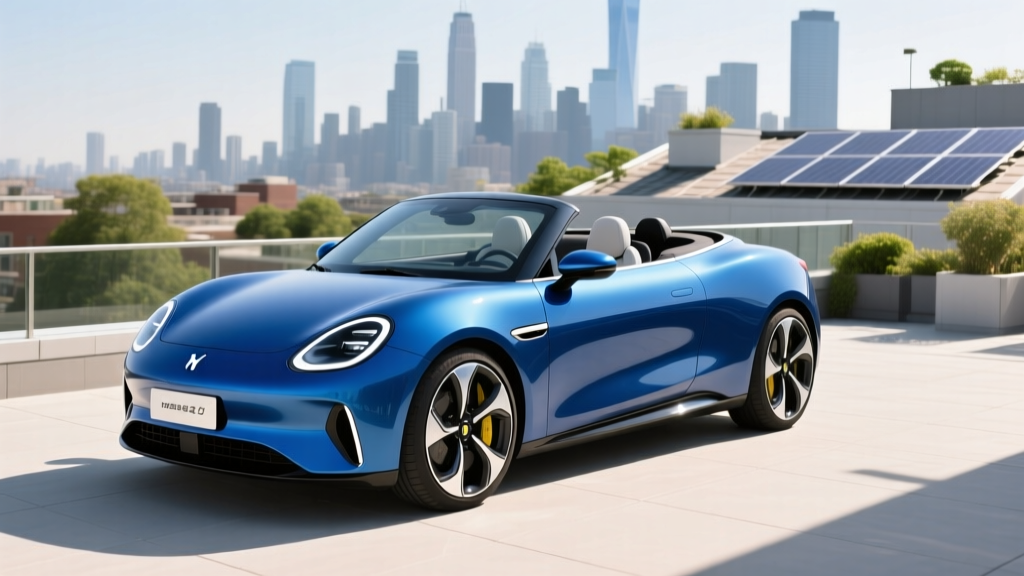
Mini introduced the all-electric Cooper SE Convertible for select global markets, combining the brand's iconic drop-top silhouette with a battery-electric powertrain. For the US market, the 2026 model year represents the first serious availability of an open-air electric Mini, built on the same J01 platform as the hardtop Mini Cooper Electric.
The convertible retains the compact footprint Mini is known for — roughly 152 inches long with a power-folding soft top that retracts in about 18 seconds at speeds up to 19 mph. Inside, you get the round OLED center display, Mini Operating System 9, and a heated steering wheel that matters more in a convertible than in any hardtop.
This is not a Tesla Roadster competitor. The electric Mini Convertible produces 215 horsepower and 273 lb-ft of torque from its single front-mounted motor, achieving a 0–60 mph time of approximately 6.9 seconds. It's quick off the line in city traffic, but the emphasis is on fun, efficiency, and style — not straight-line performance.
Range, Battery, and Real-World Efficiency
The headline number — 146 miles EPA — requires context. Here's the full powertrain breakdown:
| Specification | 2026 Mini Cooper SE Convertible |
|---|---|
| EPA Range | 146 miles |
| Battery Capacity (Gross / Usable) | 54 kWh / ~50.5 kWh |
| Battery Chemistry | NMC (Nickel Manganese Cobalt) |
| EPA Efficiency | 114 MPGe combined (29 kWh/100 mi) |
| Motor | Single front-mounted permanent magnet |
| Horsepower / Torque | 215 hp / 273 lb-ft |
| 0–60 mph | ~6.9 seconds |
| Top Speed | 106 mph (electronically limited) |
| Drivetrain | Front-wheel drive |
| Curb Weight | ~3,600 lbs |
Real-World Range Expectations
EPA Sticker: 146 miles
Real-World City (mild weather, top up): 135–145 miles — regenerative braking in stop-and-go traffic helps recover energy, and the convertible's lower weight vs. larger EVs works in its favor.
Real-World Highway (65–70 mph, top down): 110–125 miles — aerodynamic drag from the open cabin and higher speeds reduce efficiency noticeably. Expect roughly 3.5–4.0 miles per kWh on the highway.
Cold Weather (below 40°F, top up, heater on): 95–115 miles — NMC chemistry loses roughly 25–35% range in freezing temperatures without preconditioning. The heat pump (standard on US models) mitigates some cabin-heating loss, but battery chemistry limits remain.
Bottom line: Plan for 100–120 miles of usable range on most mixed-driving days, and treat 80 miles as your practical buffer before needing to charge if you're driving highway speeds in winter.
The 54 kWh NMC pack sits in a T-shaped configuration under the floor and rear seats. Mini equips the car with a liquid-cooled thermal management system and battery preconditioning for DC fast charging — when you navigate to a charger via the onboard system, the battery warms itself to accept peak charge rates more quickly.
Charging Speeds and Infrastructure
Charging is where the Mini's urban-oriented design becomes most apparent. It's adequate for daily top-ups but not built for cross-country road trips.
| Charging Level | Power (kW) | Time (10–80%) | Miles Added per Hour |
|---|---|---|---|
| Level 1 (120V household outlet) | ~1.4 kW | ~36+ hours (full) | ~4–5 mi/hr |
| Level 2 (240V home/public) | 11 kW (max) | ~4.5 hours | ~30–33 mi/hr |
| DC Fast Charge (peak) | 95 kW | ~30 minutes | ~180–200 mi/hr (peak rate) |
Charge curve reality check: The Mini peaks near 95 kW only between roughly 10–40% state of charge. From 40–60%, it sustains around 65–75 kW, and from 60–80%, it tapers to approximately 40–50 kW. This is why the 10–80% time is ~30 minutes rather than the theoretical ~20 minutes a sustained 95 kW rate would suggest. Above 80%, charging slows dramatically to protect the NMC cells — expect 80–100% to take an additional 35–40 minutes on DC fast charge.
Home charging practicality: A Level 2 home charger is essentially mandatory for this car. At 11 kW, you'll add roughly 130 miles overnight (8 hours) — more than enough for daily use. A standard 120V outlet adds only about 35 miles in 8 hours, which is insufficient if you drive more than a short commute.
Connector note: The 2026 Mini Cooper SE Convertible uses the CCS1 (Combined Charging System) connector for DC fast charging and J1772 for Level 2 in North America. Mini has not adopted NACS (Tesla's connector) for this model year. If you rely on Tesla Superchargers, you'll need a CCS-to-NACS adapter (sold separately, ~$200–$250) and must verify Supercharger compatibility on the Tesla app, as not all stalls support non-Tesla vehicles.
Electric Mini Convertible vs. Gas Mini Convertible vs. Alternatives
The most direct comparison is the gas-powered Mini Cooper Convertible. Here's how they stack up on paper and in practice:
| Factor | 2026 Mini Cooper SE Convertible (EV) | 2026 Mini Cooper S Convertible (Gas) |
|---|---|---|
| Starting MSRP | $42,900 | $36,400 |
| Federal Tax Credit (§30D) | $0 (assembled in Netherlands/Germany) | N/A |
| EPA Range / Tank Range | 146 miles | ~370 miles (11.6 gal tank) |
| Fuel/Energy Cost per Mile | ~$0.04–$0.06 (home charging) | ~$0.14–$0.17 (premium gas at $3.80/gal, 28 MPG combined) |
| Annual Fuel Cost (12,000 mi) | ~$480–$720 | ~$1,680–$2,040 |
| 0–60 mph | 6.9 sec | 6.3 sec |
| Maintenance (annual avg) | ~$200–$350 | ~$600–$900 |
| CO₂ Tailpipe Emissions | Zero | ~315 g/mi |
The EV carries a $6,500 price premium at the base level and cannot qualify for the federal §30D tax credit because final assembly occurs in Europe (the IRS maintains a list of qualifying vehicles and assembly locations). This means the effective purchase gap is the full $6,500.
However, the EV recovers cost through fuel savings — approximately $1,000–$1,300 per year if you charge primarily at home at national average electricity rates (~$0.16/kWh). Over 5 years, that's $5,000–$6,500 in fuel savings, roughly closing the purchase gap. Maintenance savings add another $1,500–$2,500 over the same period (no oil changes, fewer brake replacements due to regenerative braking, no spark plugs or timing chains).
Compared to other open-air EVs: The electric Mini Convertible has almost no direct rivals. The Fiat 500e Cabrio is not sold in the US. The MG Cyberster is not available in North America. If you want a drop-top EV in the US market in 2026, the Mini is essentially your only option under $100,000. The nearest alternative in spirit is a used Tesla Model 3 with an aftermarket convertible conversion (rare, voids warranty) or waiting for potential future offerings.
Total Cost of Ownership: 5-Year Breakdown
Let's model 5 years / 60,000 miles of ownership for the electric Mini Convertible vs. the gas Cooper S Convertible. Electricity cost assumes $0.16/kWh average home charging; gas assumes $3.80/gallon premium.
| Cost Category | Mini Cooper SE Convertible (EV) | Mini Cooper S Convertible (Gas) |
|---|---|---|
| Purchase Price (MSRP) | $42,900 | $36,400 |
| Federal Tax Credit | $0 | $0 |
| State Incentives (varies) | $0–$2,000 (check your state) | $0 |
| Fuel/Energy (5 yr) | $2,400–$3,600 | $8,400–$10,200 |
| Maintenance (5 yr) | $1,000–$1,750 | $3,000–$4,500 |
| Insurance (5 yr avg) | $7,500–$9,500 | $6,000–$8,000 |
| Home Charger Install (Level 2) | $800–$2,000 (one-time) | $0 |
| Estimated Depreciation (5 yr) | ~$18,000–$22,000 | ~$14,000–$17,000 |
| Estimated 5-Year Total Cost | $55,600–$69,750 | $53,800–$66,100 |
Key takeaways:
- The EV's higher insurance premiums (typically 15–25% more for EVs due to higher repair costs and battery replacement risk) partially offset fuel savings.
- Depreciation is the largest cost for both vehicles, and the EV's higher starting price means larger absolute depreciation dollars, even at similar percentage rates.
- Over 5 years, total costs are roughly comparable — the EV may cost $1,000–$3,500 more overall depending on your local electricity rates, insurance market, and how the EV holds resale value.
- If your state offers an additional EV rebate ($1,000–$4,000 in states like California, Colorado, or Massachusetts), the EV can come out ahead financially.
Who Should Buy the Electric Mini Convertible (And Who Shouldn't)
This car is not for everyone. Here's a practical decision framework based on real ownership patterns:
Choose the Electric Mini Convertible If:
- You have reliable Level 2 home charging (garage or driveway with a 240V circuit) — this is non-negotiable given the 146-mile range.
- This is a second or third car in your household, not your only vehicle for long trips.
- Your daily commute is under 60 miles round-trip, even accounting for real-world range loss.
- You live in a mild climate (Southern California, Florida, Texas, Southeast) where cold-weather range loss is minimal and top-down driving is practical most of the year.
- You value the open-air experience and want the only affordable drop-top EV available in the US market.
- You prioritize low running costs and zero tailpipe emissions over maximum range or performance.
Look Elsewhere If:
- You rely on street parking without charging access — Level 1 charging from a 120V outlet is painfully slow for this battery size.
- This would be your only car — 146 miles of range creates real trip-planning friction for anything beyond daily commuting.
- You live in a cold climate (Upper Midwest, Northeast, Mountain West) where winter range drops to ~100 miles and top-down driving is impractical half the year.
- You regularly drive more than 80 miles one-way without a reliable mid-route charging option.
- You need back seats for adults — the Mini Convertible's rear seats accommodate children or groceries, not grown passengers on anything beyond a short hop.
- You expected the $7,500 federal tax credit — the car does not qualify under current IRS §30D rules due to non-US final assembly.
Common Misconceptions About the Electric Mini Convertible
| Myth | Fact |
|---|---|
| "146 miles is enough for anyone — most people drive 30 miles a day." | While the average US commute is ~35 miles round-trip (fueleconomy.gov), real-world factors — cold weather, highway driving, HVAC use, battery aging — can cut range by 25–35%. A 146-mile EPA rating means ~100 usable miles in challenging conditions, which is tight for many drivers. |
| "It qualifies for the $7,500 federal tax credit." | It does not. The §30D credit requires final assembly in North America. The Mini Cooper SE Convertible is assembled in Europe. Some state-level incentives may apply, but the federal credit is off the table. |
| "DC fast charging at 95 kW means a full charge in 30 minutes." | The 95 kW rate is a peak, sustained only from ~10–40% SoC. A 10–80% charge takes ~30 minutes; 10–100% takes over an hour. Charge-curve taper is the reality of all lithium-ion batteries. |
| "I can charge it from any regular outlet and be fine." | A 120V Level 1 outlet adds roughly 4–5 miles of range per hour. If you drive 40 miles and plug in at night, you'll recover only 35–40 miles in 8 hours — a net loss if you drive more than that daily. Level 2 home charging is essential. |
| "EV batteries need replacement every few years." | Mini provides an 8-year/100,000-mile battery warranty guaranteeing at least 70% capacity retention. Real-world NMC degradation data from similar platforms suggests 10–15% capacity loss over 8 years/100,000 miles under normal use. Full replacement (rarely needed) would cost approximately $8,000–$12,000 out of warranty. |
First-Time EV Buyer: What You Need to Know
If the electric Mini Convertible is your first EV, here are the ownership realities that differ from gas cars:
1. Home charging setup is your first purchase. Budget $800–$2,000 for a quality Level 2 charger (240V, 32–48 amp) plus electrician installation. If your electrical panel is at capacity, a panel upgrade can add $1,500–$3,000. Always get a licensed electrician to assess your home's capacity before committing to the car. (Final electrical specifications should be confirmed by your licensed electrician — panel capacity and local code vary.)
2. Learn kW vs. kWh immediately. The battery holds 54 kWh of energy (think: gallons in a tank). The charger delivers power in kW (think: gallons per minute at the pump). A 95 kW charger fills the battery faster than a 50 kW charger — but the battery's acceptance rate tapers as it fills up.
3. Preconditioning matters. When you set a departure time in the Mini's app or navigation, the car warms or cools the battery while still plugged in. This preserves range (you're not using battery power to heat the cabin) and enables faster DC charging. Make preconditioning a habit.
4. Plan road trips around chargers, not gas stations. With 146 miles of range, you'll need to stop every ~90–110 miles on highway road trips. Use apps like PlugShare or A Better Routeplanner to verify DC fast charger availability along your route. The CCS connector means you'll use Electrify America, EVgo, and ChargePoint networks — not Tesla Superchargers (unless you have an adapter and verified compatibility).
5. Regenerative braking changes how you drive. The Mini offers adjustable regen levels. In its strongest setting, you can drive mostly without touching the brake pedal (often called "one-pedal driving"), which extends range in city traffic and reduces brake wear.
Battery Warranty and Longevity
Mini backs the Cooper SE Convertible's high-voltage battery with an 8-year / 100,000-mile warranty (whichever comes first), guaranteeing at least 70% of original capacity. If the battery drops below 70% state of health within that period, Mini will repair or replace the affected modules at no cost.
The rest of the vehicle carries a 4-year / 50,000-mile bumper-to-bumper limited warranty and 4 years of complimentary scheduled maintenance — which, for an EV, primarily means cabin air filter replacement, brake fluid checks, and tire rotation.
For long-term ownership beyond the warranty period, NMC batteries in liquid-cooled systems like the Mini's typically retain 80–85% capacity at 150,000 miles based on fleet data from similar platforms. Charging habits matter: routinely charging to 100% and letting the battery sit at full charge accelerates degradation. Mini's software allows you to set a maximum charge limit (80% is ideal for daily use) to extend battery life.
Pricing, Trims, and Availability
For the 2026 model year, the Mini Cooper SE Convertible is offered in a single well-equipped trim:
- Signature Plus trim: $42,900 MSRP (includes destination charge)
- Standard equipment: 10.1-inch round OLED display, heated front seats, heated steering wheel, wireless Apple CarPlay/Android Auto, adaptive cruise control, lane-keeping assist, parking assistant, LED headlights, power soft top
- Available packages: Premium Package ($2,000 — adds Harman Kardon audio, head-up display, panoramic glass roof panel behind soft top), Driver Assistance Package ($1,200 — adds surround-view camera, active park assist)
With all options, a fully loaded electric Mini Convertible can approach $46,000–$47,000 before any state incentives. Delivery began in limited US markets in late 2025, with broader availability in spring 2026. Check with your local Mini dealer for allocation — convertible production volumes are typically lower than hardtop models.
Note on incentives: While the federal §30D credit does not apply, some states and utilities offer their own EV rebates. California's CVRP, Colorado's EV tax credit, and various utility company rebates may reduce your effective cost by $1,000–$5,000. Consult your state's energy office or a tax professional for current eligibility.
Frequently Asked Questions
Does the electric Mini Convertible qualify for the $7,500 federal tax credit?
No. Under current IRS §30D rules, the vehicle must undergo final assembly in North America to qualify. The Mini Cooper SE Convertible is assembled in Europe. It does not appear on the IRS list of qualifying vehicles. Some buyers may benefit from state-level incentives or utility rebates — check your local programs.
Can I take the electric Mini Convertible on a road trip?
Yes, but with planning. At highway speeds, expect ~110–125 miles between DC fast-charging stops. A 10–80% charge takes about 30 minutes at a 95+ kW station. A 300-mile trip would require 2–3 charging stops, adding roughly 60–90 minutes to your travel time. It's doable for occasional trips, but not convenient compared to a gas car or a 300+ mile EV.
Is the soft top insulated enough for winter driving?
Modern multi-layer fabric soft tops provide reasonable insulation, but they cannot match a metal roof. Expect more cabin noise at highway speeds and slightly higher HVAC energy use in extreme cold. The heated seats and heated steering wheel help offset this, but range will still drop 25–35% in freezing temperatures regardless of top position.
How does insurance cost compare to the gas Mini Convertible?
EV insurance premiums typically run 15–25% higher than equivalent gas models, driven by higher repair costs (specialized body shops, battery safety protocols) and higher vehicle MSRP. For the Mini Cooper SE Convertible, expect annual premiums of $1,500–$1,900 depending on your driving record, location, and coverage level — compared to $1,200–$1,600 for the gas Cooper S Convertible. Shop quotes from multiple insurers before purchasing.
What happens if the battery degrades significantly?
Mini's 8-year/100,000-mile battery warranty covers capacity loss below 70%. In practice, liquid-cooled NMC batteries in moderate climates typically lose 10–15% capacity over 8 years, meaning you'd still have roughly 125 miles of range from the original 146. If you plan to keep the car beyond the warranty period, a full battery replacement (rarely needed) would cost approximately $8,000–$12,000 at current pricing.
Can I charge the Mini Convertible at Tesla Superchargers?
Not natively. The Mini uses a CCS1 connector, while Tesla Superchargers use NACS. You can purchase a CCS-to-NACS adapter (~$200–$250), but you must verify that the specific Supercharger station supports non-Tesla vehicles through the Tesla app. Tesla's Supercharger network expansion to non-Tesla EVs is ongoing but not universal as of 2026.
Is the electric Mini Convertible a good first EV?
It can be — if you have home Level 2 charging, a short commute, and another vehicle in the household for longer trips. It's a poor first EV if you lack home charging, live in a cold climate, or need the car to handle all driving scenarios including road trips. For a first and only EV, a 250+ mile range vehicle (like a Hyundai Ioniq 5, Tesla Model 3, or Chevrolet Equinox EV) offers far more flexibility.
Sources: EPA range and efficiency data from fueleconomy.gov; federal tax credit eligibility rules from IRS.gov §30D; vehicle specifications from Mini USA official press materials. All pricing and specifications reflect 2026 model year information available at time of publication and are subject to change.