Should You Buy the Electric Mercedes G-Wagon?
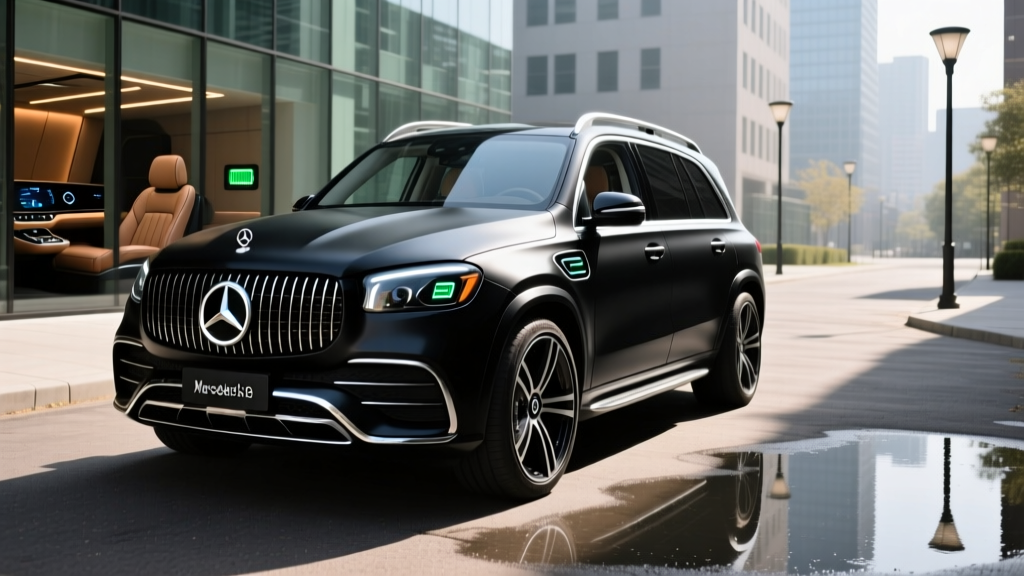
The short answer: The 2026 Mercedes-Benz G 580 with EQ Technology (the electric G-Wagon) delivers 576 hp, a 244-mile EPA range, and genuine off-road capability — but at a $172,000 starting MSRP and with 2.9-ton curb weight, it is a luxury statement, not an efficiency play. Buy it if you want silent, instant-torque G-Class capability and can charge at home. Skip it if you regularly tow heavy loads, drive in extreme cold, or need 400+ miles between stops.
Mercedes-Benz did something radical with the G 580 EQ: it kept the ladder frame, the boxy silhouette, and the three differential locks — but replaced the twin-turbo V8 with four individually controlled electric motors. The result is a vehicle that can do a 360-degree tank turn on a trail yet still waft through a neighborhood in near silence. But the physics of pushing a 6,400-lb brick through the air at 70 mph still apply. Here is the data-driven breakdown.
Range, Battery, and Real-World Efficiency
The G 580 EQ uses a 116 kWh usable lithium-ion (NMC) battery pack mounted low in the ladder frame. Mercedes quotes a WLTP range of up to 473 km (~294 miles) for the European spec, but the US EPA sticker settles at 244 miles. That number requires context.
EPA Range: 244 miles
Real-world highway (70 mph, 75°F): ~195–215 miles
Cold weather (30°F, highway): ~160–180 miles
Efficiency: 48 MPGe combined / 70 kWh per 100 miles
The G-Wagon's aerodynamics — roughly a rolling cinder block with a Cd around 0.53 — dominate energy consumption at highway speeds. Around town, regenerative braking recovers enough energy to stretch range closer to the EPA figure. On a 200-mile road trip at 75 mph, plan for a charging stop. This is not a road-trip king; it is a metropolitan luxury SUV that happens to be trail-rated.
Charging: Home and DC Fast Charging
The G 580 EQ supports both AC Level 2 and DC fast charging via a CCS1 port (NACS adapter available through Mercedes-Benz for Tesla Supercharger access starting 2025 model year onward).
| Charging Level | Power | Miles Added per Hour | Notes |
|---|---|---|---|
| Level 1 (120V) | ~1.4 kW | ~3–4 mi/hr | Emergency only — 60+ hrs for full charge |
| Level 2 (240V, 48A) | 11.5 kW | ~32 mi/hr | Full charge in ~10 hrs; overnight ideal |
| DC Fast Charging | 200 kW peak | ~170 mi in 15 min (10–80%) | Tapers heavily above 80% SoC |
The 200 kW peak charge rate is solid but not class-leading. The charge curve matters more than peak: expect 200 kW from roughly 10–40% SoC, tapering to ~120 kW by 60%, and ~50 kW above 80%. A 10–80% session takes about 32 minutes at a functioning 350 kW Electrify America or EVgo station. In cold weather without preconditioning, add 10–15 minutes.
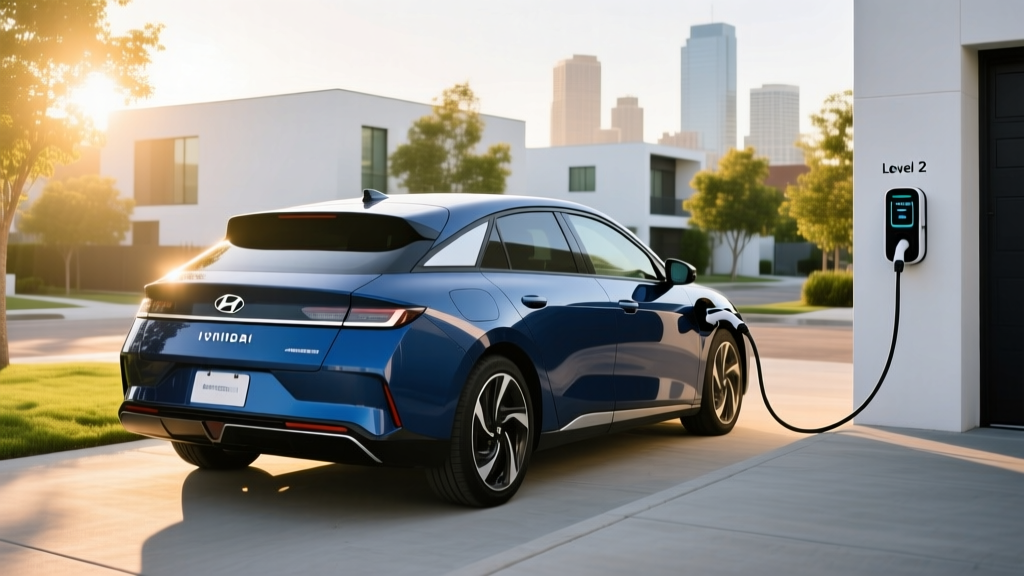
Home charging is essential for this vehicle. With 48A Level 2, you add roughly 32 miles per hour of charging — enough to replenish a day's driving overnight. Running on Level 1 (standard 120V outlet) is impractical; you would need 60+ hours to fill the 116 kWh pack. Budget $800–$2,000 for a professional Level 2 home installation (240V/60A circuit, hardwired Wallbox or ChargePoint), or up to $4,000 if your electrical panel needs a 200A upgrade.
Performance and Capability
| Spec | G 580 EQ Technology | G 550 (Gas) |
|---|---|---|
| Powertrain | Quad-motor AWD | 3.0L turbo I6 + 48V mild hybrid |
| Horsepower | 576 hp | 443 hp |
| Torque | 859 lb-ft | 413 lb-ft |
| 0–60 mph | 4.6 seconds | 5.5 seconds |
| Curb Weight | ~6,400 lbs | ~5,400 lbs |
| Top Speed | 118 mph (governed) | 130 mph (governed) |
| Ground Clearance | 9.5 in | 9.5 in |
| Wading Depth | 33.5 in (G-Mode) | 27.6 in |
| Towing Capacity | Not yet rated (est. ~4,500 lbs) | 7,700 lbs |
| EPA Range / Fuel Economy | 244 mi / 48 MPGe | 17 MPG combined |
The quad-motor setup enables features no gas G-Wagon can match: G-Turn (360-degree tank turns via counter-rotating wheels), G-Steering (torque vectoring that tightens turning radius on trails), and G-Rock (crawling mode with individual wheel articulation). The electric powertrain's instant torque and silence make low-speed rock crawling more controllable than the gas version.
However, the 1,000-lb weight penalty shows up in braking distances and tire wear. Expect higher tire replacement costs — these are heavy-duty all-terrain tires on a 6,400-lb vehicle.
Price, Tax Credits, and Total Cost of Ownership
The 2026 G 580 with EQ Technology starts at $172,000 MSRP (including destination). Well-optioned examples with the Exclusive Package, Night Package, and 20-inch AMG wheels push past $190,000.
§30D Federal Tax Credit Eligibility (2026 rules):
- MSRP cap for SUVs: $80,000 — The G 580 at $172,000 exceeds this cap. No federal purchase credit.
- Income cap: $300,000 AGI (married filing jointly) — moot given MSRP cap.
- Battery sourcing requirements: Mercedes uses CATL- and EVE-sourced cells; critical mineral compliance is partial.
- State incentives: Check your state — California's CVRP is income-capped and vehicle-price-capped; the G 580 likely does not qualify.
Do not buy this vehicle expecting government incentives. The price is what you pay.
5-Year Cost of Ownership: G 580 EQ vs G 550 Gas
| Cost Category | G 580 EQ (Electric) | G 550 (Gas) | Notes |
|---|---|---|---|
| Purchase Price | $172,000 | $149,000 | G 580 carries ~$23k premium |
| Fuel / Energy (75,000 mi) | $7,200 | $19,800 | Electric at $0.15/kWh; gas at $4.20/gal, 17 MPG |
| Maintenance | $3,500 | $6,500 | EV: no oil, plugs, or transmission service |
| Insurance (5-yr avg) | $22,000 | $18,500 | EV premiums 15–20% higher on average |
| Depreciation (est.) | $85,000 | $65,000 | Luxury EVs depreciate steeper; G-Class holds unusually well |
| 5-Year Total | $289,700 | $258,800 | G 580 costs ~$31k more over 5 years |
Key takeaway: You save roughly $12,600 on energy and $3,000 on maintenance over 5 years, but the higher purchase price, steeper depreciation, and elevated insurance premiums wipe out those savings. The G 580 is not a financial decision — it is an experiential one. Per fueleconomy.gov, the annual fuel cost for the G 580 EQ is approximately $1,450 vs $3,950 for the G 550.
Real-World Ownership Considerations
Home Charging Access
If you have a garage or dedicated parking with 240V access, the G 580 is a pleasant daily companion — plug in at night, wake up with 200+ miles. If you rely exclusively on public charging, the 244-mile range and 32-minute fast-charge sessions become a friction point, especially in charging-desert regions. This vehicle demands home charging.
Climate Impact
The 116 kWh NMC battery loses 20–30% range in sustained sub-freezing temperatures. In Denver or Minneapolis winters, expect 160–180 real-world highway miles. The G 580 includes a heat pump for cabin heating, which mitigates some cold-weather efficiency loss, but battery chemistry is chemistry — cold slows ion movement regardless of engineering.
Driving Patterns
City and suburban driving plays to the G 580's strengths: regenerative braking recovers energy, the instant torque makes merging effortless, and the cabin is whisper-quiet. Highway road trips expose the aerodynamic penalty. If your routine is 90% metro-area with occasional 150-mile excursions, it works. If you regularly drive 300+ miles between cities, the gas G 550 (400+ mile range) or a plug-in hybrid remains more practical.
Common Misconceptions
| Myth | Fact |
|---|---|
| "The electric G-Wagon can't off-road." | It has three virtual diff locks, 33.5 inches of wading depth (more than the gas version), and torque vectoring that the gas G-Class cannot match. It is trail-capable. |
| "I'll get the $7,500 federal tax credit." | The G 580's $172,000 MSRP far exceeds the §30D SUV cap of $80,000. No federal purchase credit applies. Consult a tax professional per IRS guidelines. |
| "It charges in 15 minutes." | 10–80% takes ~32 minutes at peak rate. Peak 200 kW is not sustained — the charge curve tapers significantly above 60% SoC. |
| "Electric means no maintenance." | Tires, cabin filters, brake fluid, coolant, and wiper blades still need service. The 6,400-lb weight accelerates tire wear. |
| "The battery will need replacing soon." | Mercedes-Benz warranties the high-voltage battery for 8 years/100,000 miles (retaining ≥70% capacity). NMC packs typically degrade 10–15% over 150,000 miles based on current fleet data. |
Decision Framework: Is the Electric G-Wagon Right for You?
Choose the G 580 EQ (Electric) if:
- You have reliable home Level 2 charging (240V garage or driveway).
- Your daily driving is under 150 miles and mostly metro/suburban.
- You want the quietest, most torque-rich G-Class experience available.
- Off-road capability with instant electric torque control matters to you.
- The $172,000+ price tag and ~$290k 5-year cost do not strain your finances.
Choose the G 550 (Gas) if:
- You regularly drive 300+ miles between stops or live in a charging-desert region.
- You need a rated towing capacity (7,700 lbs vs the G 580's unrated/est. ~4,500 lbs).
- You want to spend $23,000 less at purchase and face gentler depreciation.
- You live in extreme cold (regular sub-20°F) where range loss compounds.
Consider a different luxury EV entirely if:
- Range and efficiency are priorities — the Rivian R1S (352 mi EPA) or BMW iX xDrive50 (324 mi EPA) offer far more range at lower prices.
- You want three rows of seating — the G-Class is strictly a two-row, four-seat vehicle.
Frequently Asked Questions
What is the real-world range of the electric Mercedes G-Wagon?
The EPA rates it at 244 miles. In real-world highway driving at 70 mph in mild weather, expect 195–215 miles. In cold weather (below 30°F), plan for 160–180 miles. The boxy aerodynamics are the primary range limiter at speed.
Does the G 580 EQ qualify for any federal tax credits?
No. The IRS §30D clean vehicle credit caps SUV eligibility at $80,000 MSRP. The G 580 starts at $172,000, well above that threshold. Some state or local utility rebates may apply — check your jurisdiction's official resources.
How long does it take to charge the G 580 at home?
With a 48A Level 2 home charger (11.5 kW), a full charge from empty takes approximately 10 hours. Most owners will plug in overnight and add 150–200 miles in 5–6 hours, which covers typical daily use.
Can the electric G-Wagon tow a trailer?
Mercedes-Benz has not published an official US towing rating for the G 580 EQ at this time. The gas G 550 is rated for 7,700 lbs. Based on European homologation data, expect the G 580 to be rated around 4,500–5,000 lbs when the US rating is finalized — adequate for a small boat or utility trailer, not a large camper.
How does insurance cost compare to the gas G-Wagon?
Electric vehicles typically carry 15–20% higher insurance premiums due to battery replacement costs and specialized repair requirements. Expect annual premiums of $4,000–$5,000 for the G 580 vs $3,200–$4,200 for the G 550, depending on your profile and location. Get quotes from multiple insurers before purchasing.
What is the battery warranty?
Mercedes-Benz covers the high-voltage battery for 8 years or 100,000 miles (whichever comes first), guaranteeing it will retain at least 70% of its original usable capacity. If capacity drops below that threshold within the warranty period, Mercedes will repair or replace the pack at no cost.