Quick Answer: The 2026 electric Mercedes car lineup spans four core model families: the compact EQB (3-row SUV, ~245 mi EPA, ~$54,000), the midsize EQE Sedan & SUV (~305 mi EPA, ~$76,000), and the flagship EQS Sedan & SUV (~390 mi EPA, ~$105,000). None currently qualify for the full §30D federal tax credit due to battery-sourcing rules, so plan your purchase around sticker price and any applicable state incentives. Expect real-world highway range to fall 10–15% below EPA estimates, and budget $1,200–$2,500 for a home Level 2 charger installation.
The 2026 Electric Mercedes Car Lineup at a Glance
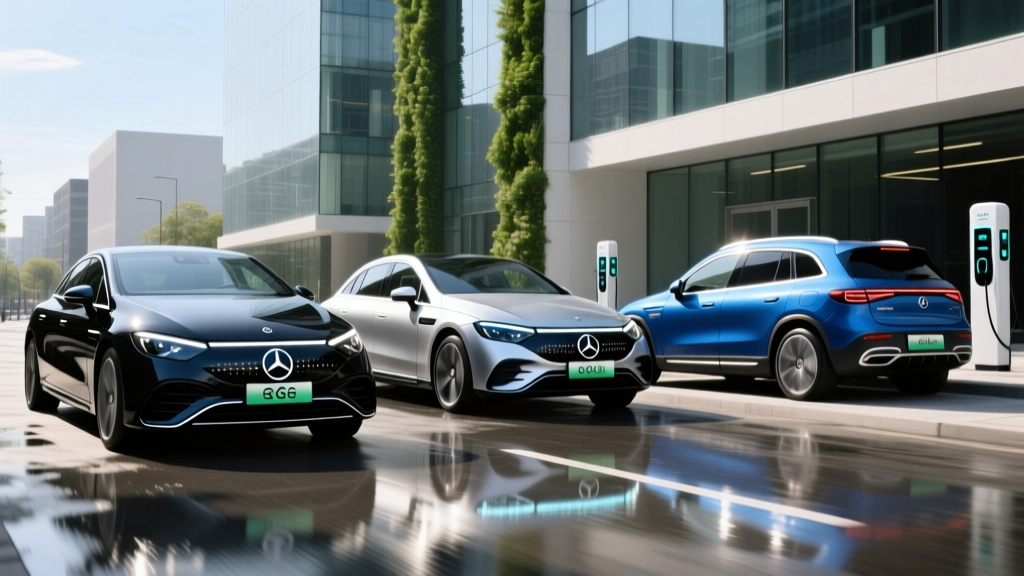
Mercedes-Benz has committed fully to its EQ electric sub-brand, and by the 2026 model year the lineup has matured past early-adopter quirks into a structured portfolio. If you're searching for an electric Mercedes car, here's the current roster with the figures that matter most:
| Model | Battery (kWh usable) | EPA Range | Peak DC Charge (kW) | 10–80% Time | 0–60 mph | Starting MSRP |
|---|---|---|---|---|---|---|
| EQB 300 4MATIC | 66.5 (NMC) | 245 mi | 100 kW | ~32 min | 7.7 sec | $54,050 |
| EQE 350+ Sedan | 90.6 (NMC) | 305 mi | 170 kW | ~32 min | 6.2 sec | $76,050 |
| EQE 350 4MATIC SUV | 90.6 (NMC) | 279 mi | 170 kW | ~32 min | 6.4 sec | $78,050 |
| EQS 450+ Sedan | 118.0 (NMC) | 390 mi | 200 kW | ~31 min | 5.9 sec | $105,550 |
| EQS 450 4MATIC SUV | 118.0 (NMC) | 330 mi | 200 kW | ~31 min | 5.7 sec | $106,550 |
Sources: fueleconomy.gov, Mercedes-Benz USA press specifications. All figures reflect 2026 model-year data where published; some trims carry over from late-2025 certification.
A few things jump out from this table. First, Mercedes uses NMC (nickel-manganese-cobalt) chemistry across the board — this gives strong energy density but means you'll want to follow the 20–80% daily charge recommendation to minimize long-term degradation. Second, DC fast-charging speeds are moderate by 2026 standards. The EQS peaks at 200 kW, which is respectable, but rivals like the Lucid Air (300+ kW peak) and Hyundai Ioniq 5 (240 kW on 800V architecture) charge noticeably faster on compatible stations.
Real-World Range: What the EPA Sticker Doesn't Tell You
EPA vs. Reality: The EQS 450+ Sedan's 390-mile EPA estimate is among the highest of any luxury EV. But on a 75-mph highway loop in 40°F weather, expect closer to 310–330 miles. In mild conditions (65°F, mixed driving), owners consistently report 350–370 miles before needing a charge. The EQB, with its smaller battery and boxier aerodynamics, drops to roughly 190–210 miles on cold-weather highway trips.
Range loss comes from three main factors:
- Speed: Aerodynamic drag scales with the square of velocity. The EQS Sedan's slippery 0.20 Cd coefficient helps, but 80 mph still cuts range ~15% versus the EPA mixed cycle.
- Temperature: NMC batteries lose efficiency below 40°F. Without preconditioning, expect 20–30% range loss in sub-freezing weather. All EQ models include a heat pump, which recovers some of this.
- Terrain: Mountain driving with sustained climbs can temporarily slash range by 30%+, though regenerative braking on descents recovers a portion.
If your commute is 40 miles round-trip with home charging, even the EQB's real-world 200-mile winter range is more than adequate. Range becomes a planning factor only on road trips exceeding 250 miles between reliable DC fast-charging stops.
Charging at Home and on the Road
Every electric Mercedes car in the 2026 lineup ships with a NACS (North American Charging Standard) port, giving you native access to Tesla Supercharger stations via the Mercedes me Charge network integration. This was a significant shift from the CCS1 ports on 2022–2024 models.
| Level | Power (kW) | Miles Added/Hour | Typical Use Case |
|---|---|---|---|
| Level 1 (120V household) | 1.4 kW | 3–5 mi/hr | Overnight top-off, emergencies |
| Level 2 (240V, 48A home charger) | 11.5 kW | 30–40 mi/hr | Daily home charging — full overnight refill |
| DC Fast Charge (EQS peak) | 200 kW | ~180 mi in 15 min | Road-trip stops at Superchargers / Electrify America |
Home Charging Installation Costs
| Item | Estimated Cost | Notes |
|---|---|---|
| Level 2 EVSE (Mercedes Wallbox or ChargePoint Home Flex) | $500–$750 | 48A, NACS or J1772 with adapter |
| Electrician labor (240V/60A circuit run) | $600–$1,800 | Varies by panel proximity; garage vs. exterior wall |
| Electrical panel upgrade (if needed) | $1,500–$3,000 | Required if your panel is 100A or maxed out |
| Permit & inspection | $50–$250 | Varies by municipality |
| Total (no panel upgrade) | $1,150–$2,800 | Most homes with 200A service |
Most EQ owners charge at home nightly, waking to a full battery. A 48-amp Level 2 charger refills the EQS's 118 kWh battery from 20% to 80% in roughly 7 hours — perfect for overnight. Consult a licensed electrician for your specific panel capacity before purchasing equipment.
Cost of Ownership: Electric Mercedes vs. Gas Equivalent
Let's compare the EQE 350+ Sedan against its closest internal-combustion sibling, the E 350 sedan, over a 5-year/75,000-mile ownership period.
| Cost Category | EQE 350+ Sedan (EV) | E 350 Sedan (Gas) |
|---|---|---|
| Purchase price (MSRP) | $76,050 | $60,550 |
| Federal tax credit (§30D) | $0 (sourcing rules) | $0 |
| Fuel/energy (75k mi) | $3,750 (home charging, $0.15/kWh avg) | $9,375 (26 MPG combined, $3.25/gal) |
| Maintenance (5 yr) | $1,800 (cabin filter, wipers, brake fluid, tires) | $4,200 (oil, filters, brakes, spark plugs) |
| Insurance (5 yr avg) | $14,500 | $11,250 |
| Estimated depreciation (5 yr) | $38,000 | $27,000 |
| 5-Year Total Cost | ~$134,100 | ~$112,375 |
Insurance estimates based on national averages for luxury midsize sedans. Depreciation based on 3-year residual trends from Edmunds and Kelley Blue Book. Actual costs vary by state, driving record, and mileage.
The honest takeaway: the EQE costs roughly $22,000 more over 5 years than the gas E-Class, driven primarily by higher purchase price, steeper depreciation, and elevated insurance premiums. You save approximately $8,000 on fuel and maintenance, but that doesn't fully offset the premium. This math improves if your state offers a rebate (California's CVRP, Colorado's state credit) or if electricity rates in your area are below $0.12/kWh.
The value proposition of an electric Mercedes car isn't purely financial — it's about refinement. The EQE delivers near-silent acceleration, instant torque, and a cabin free of engine vibration. Whether that's worth the premium depends on your priorities.
Federal Tax Credit & Incentive Reality Check
§30D Federal EV Tax Credit — 2026 Rules (per IRS.gov):
- MSRP cap: Sedans must be ≤$55,000; SUVs/pickups ≤$80,000. The EQB SUV may qualify on price; EQE and EQS exceed the cap.
- Income cap: AGI ≤$150,000 (single), ≤$300,000 (joint).
- Battery sourcing: Critical minerals and battery components must meet phased-in domestic/free-trade-partner thresholds. As of 2026, most Mercedes EQ models use supply chains that do not fully comply, reducing or eliminating the credit.
- Point-of-sale transfer: If eligible, you can transfer the credit to the dealer for an upfront price reduction.
Bottom line: do not count on the $7,500 federal credit when budgeting for an electric Mercedes car. Check the latest eligibility list on fueleconomy.gov before signing a purchase agreement, as sourcing compliance can change mid-year.
Common Misconceptions — Myth vs. Fact
| Myth | Fact |
|---|---|
| "EV batteries need replacing every 5 years." | Mercedes warranties EQ batteries for 10 years / 155,000 miles against degradation below 70% capacity. Real-world data from older EQ models shows ~8–10% loss at 100,000 miles. |
| "I can't road-trip an EQ because charging takes too long." | The EQS adds ~180 miles in 15 minutes at a 200 kW-capable station. Plan 20-minute stops every 3 hours — comparable to gas-station rest breaks. |
| "Electric Mercedes cars are self-driving." | Mercedes Drive Pilot is a SAE Level 3 system approved in Nevada and California for highway traffic jams up to 40 mph under specific conditions. It is NOT full self-driving — you must remain available to resume control. Most EQ models ship with Level 2 driver-assist (adaptive cruise + lane centering), which requires constant driver engagement. |
| "Home charging is too expensive to install." | Most homes with 200A panels need $1,150–$2,800 for a professional Level 2 install. That cost is offset within 2–3 years by fuel savings versus gas. |
| "Cold weather makes EVs unusable." | Range drops 20–30% in sub-freezing temps. Preconditioning the battery while plugged in mitigates this. EQ models with heat pumps lose less range than older EVs without them. |
SAE Automation Levels — Quick Refresher:
Level 2: Driver-assist (steering + acceleration support). Driver must monitor at all times. Standard on most EQ models.
Level 3: Conditional automation. The car handles all driving tasks in approved scenarios (e.g., traffic jams under 40 mph). Driver must be ready to take over. Mercedes Drive Pilot — limited availability.
Level 4: Driverless in defined areas (e.g., Waymo robotaxis). Not available in consumer Mercedes vehicles.
Decision Framework: Which Electric Mercedes Car Is Right for You?
Choose the EQB if: You need a compact 3-row SUV under $60K, your daily driving stays under 150 miles, and you want the lowest entry price into the Mercedes EV lineup. Best for families who need occasional third-row seating and mostly drive locally.
Choose the EQE Sedan if: You want a midsize luxury daily driver with strong real-world range (~270+ mi highway), premium ride quality, and you regularly drive 200–300 miles between charges. The sweet spot for commuters who take occasional road trips.
Choose the EQE SUV if: You need the cargo space and ride height of an SUV but want the EQE's efficiency and tech. Expect ~30 miles less range than the sedan due to weight and aerodynamics.
Choose the EQS Sedan if: Maximum range is your priority (390 mi EPA), you value flagship-level luxury, and budget is flexible above $100K. Ideal for executives and long-distance commuters who want the fewest charging stops possible.
Choose the EQS SUV if: You need full-size luxury SUV space with 3 rows and 300+ miles of range. Towing capacity up to 3,500 lbs. Best for families who road-trip frequently and want maximum comfort.
Look elsewhere if: You need the fastest DC charging speeds (consider Hyundai Ioniq 5/6 or Kia EV6/EV9 on 800V architecture), you require full federal tax-credit eligibility (consider Tesla, Ford, or GM models with compliant sourcing), or your budget is below $50,000.
What First-Time EV Buyers Should Know Before Signing
If this is your first electric vehicle, a few ownership realities differ sharply from the gas-car experience:
- Home charging is non-negotiable for convenience. Relying solely on public charging adds 30–60 minutes per week and costs 2–3× more per kWh than home electricity. Confirm your home can support a 240V/48A circuit before delivery day.
- Tires wear faster. EVs are heavy and produce instant torque. Expect to replace tires every 25,000–35,000 miles. Budget $1,200–$2,000 for a set of Michelin Pilot Sport EV or equivalent.
- Insurance costs more. EV repair costs and battery-replacement risk push premiums 15–30% above equivalent gas models. Get quotes before committing.
- Preconditioning matters. Set your departure time in the Mercedes me app so the battery warms up while plugged in. This preserves range in cold weather and enables faster DC charging.
- Regenerative braking changes your driving. All EQ models offer adjustable regen. Start with moderate regen and work up to one-pedal-style driving over a few weeks.
Frequently Asked Questions
Does any electric Mercedes car qualify for the $7,500 federal tax credit in 2026?
As of early 2026, most Mercedes EQ models do not qualify for the full §30D credit due to battery component and critical-mineral sourcing requirements. The EQB SUV may partially qualify depending on its MSRP and the buyer's income, but sourcing compliance remains a barrier. Always verify current eligibility at fueleconomy.gov and consult a tax professional before relying on the credit.
How long does the battery in a Mercedes EQ last?
Mercedes covers the high-voltage battery for 10 years or 155,000 miles against capacity loss below 70%. Industry data from similar NMC packs suggests 8–12% degradation at 100,000 miles under normal use. Following the 20–80% daily charge guideline and avoiding repeated DC fast-charging in extreme heat will extend longevity. A full battery replacement outside warranty currently costs $18,000–$28,000 depending on the model.
Can I use Tesla Superchargers with a Mercedes EQ?
Yes. The 2026 EQ lineup ships with a native NACS charge port, giving direct access to Tesla's Supercharger network (now branded as part of the broader open network). You can also use Electrify America, EVgo, and ChargePoint stations with the appropriate connector. For older EQ models with CCS1 ports, Mercedes offers a NACS adapter.
Is the Mercedes EQS worth the premium over the EQE?
The EQS delivers ~85 more miles of EPA range, a noticeably quieter cabin, rear-axle steering for tighter turns, and a more spacious interior. If you regularly drive 300+ miles between charges or prioritize flagship luxury, the ~$29,000 premium is justified. If your daily driving stays under 200 miles, the EQE offers 90% of the experience at a significantly lower price.
What's the real-world MPGe of the EQE 350+?
The EPA rates the EQE 350+ Sedan at 96 MPGe combined (28 kWh/100 mi). In real-world mixed driving, owners report 88–94 MPGe. Highway-only driving at 75+ mph drops efficiency to roughly 82–86 MPGe. For reference, the gas E 350 achieves 27 MPG combined — the EQE converts energy roughly 3.5× more efficiently.